

P0747 on 2016-2021 Hyundai Tucson: Pressure Control Solenoid 'A' Stuck On Causes and Fixes
This code indicates the transmission's Pressure Control Solenoid 'A' is stuck on, causing harsh shifting, particularly in models with the 6-speed automatic. The most common fix is replacing the faulty solenoid and the internal transmission wiring harness. This is a job for a professional, as it requires accessing internal transmission components.
- P0747 is a serious transmission code indicating a pressure control solenoid is stuck on, causing harsh and damaging shifts.
- Do not continue to drive the vehicle, as this can quickly lead to severe internal transmission damage requiring a full rebuild or replacement.
- The most probable cause is a failed solenoid, but low/dirty fluid and a faulty internal wiring harness are also common culprits.
- The recommended professional repair is to replace both the faulty solenoid and the internal wiring harness at the same time.
- This is not a DIY-friendly repair and should be handled by a qualified transmission shop.
What's Unique About the 2016-2021 Hyundai Tucson
The 2016-2021 Tucson was available with different automatic transmissions, including a 6-speed (A6MF1 family) and a 7-speed dual-clutch (DCT). While P0747 is a generic code, it is most relevant to the traditional hydraulic 6-speed automatic. The 7-speed DCT has its own set of well-documented issues, like shuddering and hesitation from a stop, but these are typically addressed by software updates or clutch actuator replacements rather than solenoid codes like P0747. For the 6-speed automatic, Hyundai has issued service bulletins for similar solenoid codes on other models (like TSB 22-AT-005H) that recommend replacing both the solenoid and the internal valve body wiring harness. This suggests the harness is a known weak point that can become brittle and fail, making its replacement a wise preventative measure when addressing any solenoid-related code.
Symptoms You May Notice
- Harsh, jerky, or delayed gear shifts.
- Transmission getting stuck in one gear ('limp mode').
- Illuminated Check Engine Light or transmission warning lamp.
- Transmission slipping, where engine RPMs rise without an increase in speed.
- Transmission overheating.
- Vehicle fails to accelerate from a stop.
- Replacing the transmission's high-pressure oil pump when the fault is actually the much cheaper solenoid or its wiring.
- Mistaking the harsh shifting from P0747 on a 6-speed automatic with the characteristic shudder or hesitation common to the 7-speed DCT, leading to incorrect diagnostic paths.
Most Likely Causes
- Failed Pressure Control Solenoid 'A' 🔴 High Probability → Shop Transmission Valve Body The solenoid can fail mechanically (plunger gets stuck) or electrically (internal short circuit). This is the most direct cause of the code and a common wear item in the A6MF1 transmission family.
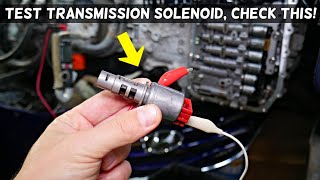
How to confirm: A technician can use a scan tool to command the solenoid on and off while monitoring pressure. They can also disconnect it and measure its internal resistance with a multimeter, which should typically be around 5.1 ohms for linear solenoids in the A6MF1.
Typical fix: Replace the Pressure Control Solenoid 'A'. This part is located on the transmission's valve body.
Est. part cost: $50-$150 - Low or Dirty Transmission Fluid 🟡 Medium Probability → Shop Transmission Assembly Over time, transmission fluid breaks down and can become contaminated with clutch material and metal shavings. This dirty fluid can cause the fine mechanical parts of a solenoid to stick or clog passages in the valve body.
How to confirm: Check the transmission fluid level and condition. The fluid should be bright red and clear, not brown, black, or have a burnt smell. Note that many modern transmissions like those in the Tucson do not have a traditional dipstick and must be checked via a fill/check plug. 🎬 Watch: How to change the transmission fluid on a Tucson
Typical fix: Perform a transmission fluid and filter change using Hyundai-specific fluid (e.g., SP-IV or as specified for the exact transmission). If the fluid is very contaminated, this may be a symptom of a larger issue.
Est. part cost: $80-$200 - Faulty Internal Transmission Wiring Harness 🟡 Medium Probability → Shop Transmission Assembly Hyundai TSB 22-AT-005H for related codes on various models explicitly recommends replacing the internal harness along with the solenoid, indicating it's a known failure point that can become brittle from heat cycles and cause shorts or open circuits.
How to confirm: Visually inspect the harness for damage, corrosion, or loose pins when the transmission pan is removed. A continuity test can be performed from the TCM connector to the solenoid connector.
Typical fix: Replace the internal valve body wiring harness. This is typically done at the same time as the solenoid replacement. 🎬 See this step-by-step transmission solenoid replacement walkthrough
Est. part cost: $100-$250 - Faulty Transmission Control Module (TCM) ⚪ Low Probability → Shop Transmission Assembly The driver circuit within the TCM that controls the solenoid can fail, but this is rare.
How to confirm: This is a process of elimination. The TCM is only condemned after the fluid, solenoid, and all wiring have been thoroughly tested and confirmed to be good. A scan tool communication test can also check the module's responsiveness.
Typical fix: Replace and reprogram the Transmission Control Module (TCM) or Powertrain Control Module (PCM).
Est. part cost: $600-$1200
Rare But Worth Checking
- Clogged Valve Body Passages or Failing Oil Pump: → Shop Transmission Valve Body If the transmission fluid is found to be heavily contaminated with metal shavings, it suggests a larger mechanical failure. The P0747 code is just a symptom of this more severe issue, which may require a full transmission rebuild or replacement.
Diagnosis Steps
- Check and record any other stored fault codes with a quality OBD-II scanner.
- Inspect the transmission fluid level and condition. If the fluid is low, burnt, or very dirty, address this first, as it can cause solenoid issues.
- Visually inspect the external transmission wiring harness and connectors for any signs of damage, corrosion, or loose connections.
- If the fluid and external wiring are okay, the next step is to gain access to the valve body by removing the transmission oil pan.
- Visually inspect the internal wiring harness for signs of damage, especially for brittle or cracked insulation.
- Test the resistance of Pressure Control Solenoid 'A' with a multimeter and compare it to the manufacturer's specifications (typically around 5.1 ohms for linear solenoids in the A6MF1). An infinite or zero reading indicates a failed solenoid.
- If the solenoid resistance is out of spec or if the harness is damaged, replace the faulty component(s). It is highly recommended to replace both the solenoid and the harness at the same time per Hyundai's strategy in TSB 22-AT-005H.
- If the solenoid and wiring test good, the issue may be a clogged valve body or, in rare cases, the TCM itself.
Parts You'll Likely Need
- Pressure Control Solenoid
(OEM #46313-3B030 (Verify with VIN, common but not universal))— This is the component directly identified by the fault code as being stuck on. It is the most common point of failure.
Trusted brands: Hyundai (OEM)
OEM price range: $70-$180
Aftermarket price range: $50-$120 - Transmission Valve Body Wiring Harness
(OEM #e.g., 46307-3BXXX (Varies by transmission, verify with VIN))— This harness is a known failure point on many Hyundai models and is recommended for replacement by related TSBs when servicing solenoids to prevent repeat failures.
Trusted brands: Hyundai (OEM)
OEM price range: $100-$250
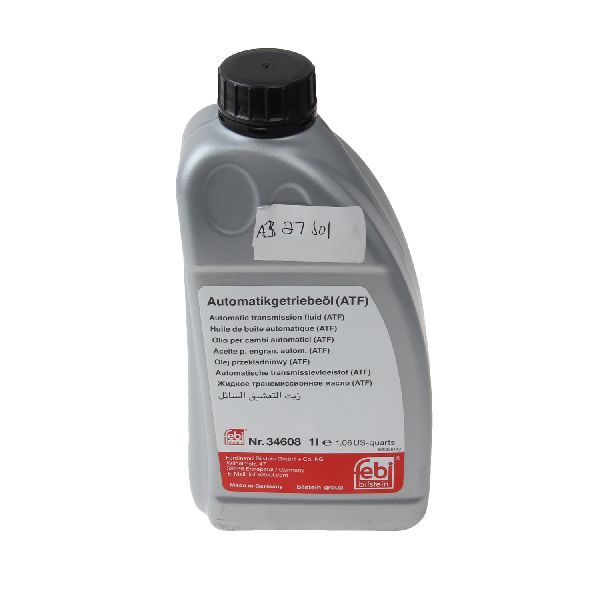
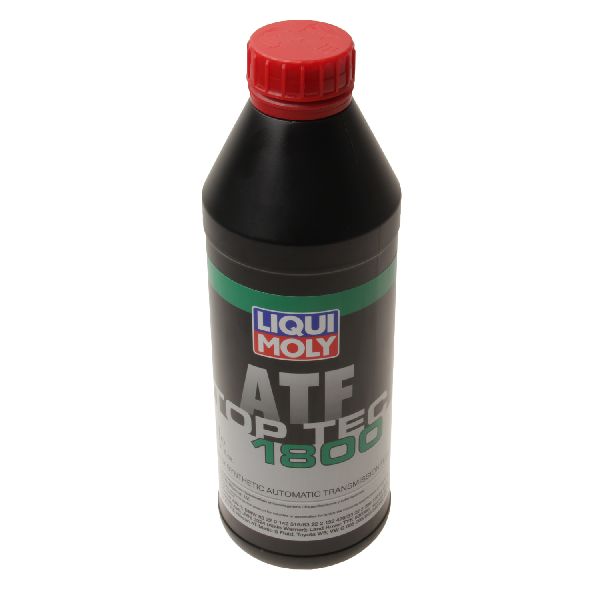
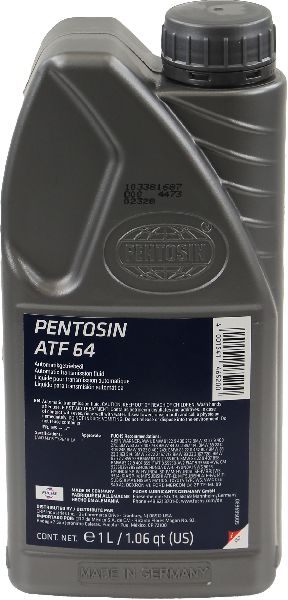
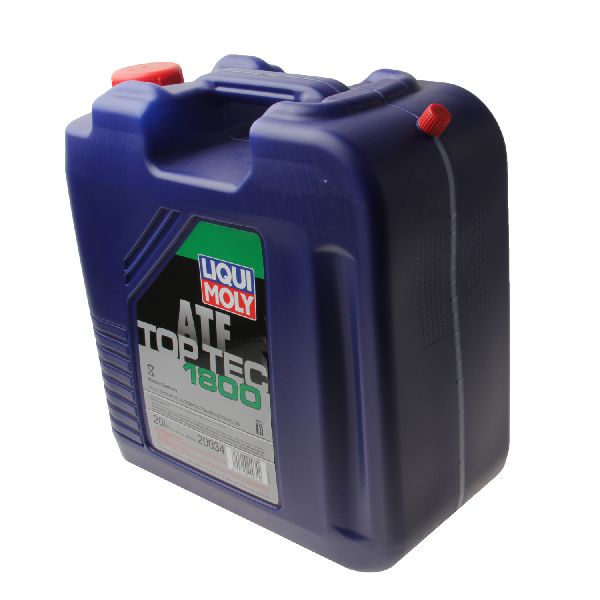
Aftermarket price range: $80-$150 - Automatic Transmission Fluid — The transmission must be drained to perform the repair, requiring a fluid refill. Using the correct OEM-spec fluid (Hyundai SP-IV for the 6-speed) is critical for transmission health.
Trusted brands: Hyundai SP-IV (or as specified)
OEM price range: $15-$25 per quart
Aftermarket price range: $10-$20 per quart
Related Codes That Often Appear With This One
- P0700 — P0700 is a generic code that simply means the Transmission Control Module (TCM) has stored a fault. It acts as a 'check engine light' for the transmission system and will almost always appear alongside a specific code like P0747.
- P0746, P0748 — These codes are also for Pressure Control Solenoid 'A'. P0746 indicates a performance/range issue, while P0748 indicates an electrical circuit fault. Seeing them together can help determine if the problem is purely mechanical (stuck) or electrical (wiring/coil).
Technical Service Bulletins (TSBs) & Recalls
- TSB 22-AT-005H: While not explicitly for P0747, this TSB for other Hyundai models with similar 8-speed and other transmissions advises replacing the internal wiring harness along with a faulty solenoid for a list of other electrical DTCs (like P074800). This establishes a known repair pattern from Hyundai for solenoid electrical faults, making harness replacement a best practice.
- TSB 20-AT-021H: This TSB addresses judder/vibration in the 7-speed DCT at low speeds and outlines a procedure to update the TCU software or replace the dual-clutch assembly, highlighting the different failure mode of the DCT compared to the 6-speed automatic.
Platform-Specific Known Issues
- Distinction between 6-speed Auto and 7-speed DCT: It is critical to distinguish which transmission the vehicle has. The P0747 code primarily applies to the conventional 6-speed automatic (A6MF1). The 7-speed DCT has different, more common issues like shuddering from a stop, which are often addressed by software updates (per TSB 20-AT-021H) or clutch pack/actuator replacement, not solenoid replacement for this code.
Mechanic-Grade Diagnostic Values
- Resistance of linear pressure control solenoids (VFS) — expected: 5.1 Ohms. Failure: A reading significantly higher or lower than 5.1 Ohms, or an open/infinite reading, indicates a failed solenoid coil.
- Resistance of on/off shift solenoids — expected: 10-11 Ohms. Failure: A reading outside this range indicates a fault with the on/off solenoid.
- TCM to Solenoid Harness Continuity — expected: Near 0 Ohms. Failure: High resistance or an open circuit (infinite ohms) indicates a break in the wiring between the TCM and the solenoid connector.
Scan Tool Commands That Help
- Hyundai GDS (Global Diagnostic System): Actuation Test / Solenoid Drive Test — This bidirectional command allows a technician to manually activate and deactivate individual solenoids to check for a mechanical response (an audible click). If the solenoid is commanded on/off but does not click, it confirms the solenoid is mechanically stuck or electrically failed.
- Hyundai GDS (Global Diagnostic System): ECU Upgrade / Vehicle S/W Management — Used to reflash the Transmission Control Module (TCM) with updated software. This is a critical step after replacing a TCM and can sometimes resolve issues caused by software glitches, though it's more common for DCT issues than for a P0747 on a 6-speed.
Wiring & Ground Locations
- TCM Connector Pin 10 (A6MF1) — At the Transmission Control Module (TCM).. This pin is the power supply for the TCC (Torque Converter Clutch) and other solenoids. Verifying voltage here is a key step in diagnosing an electrical fault.
- TCM Connector Pin 2 (A6MF1) — At the Transmission Control Module (TCM).. This pin is the ground control for the TCC solenoid. The TCM pulses this ground to control the solenoid. Checking this pin for proper signal can differentiate a wiring problem from a bad TCM driver.
OEM Part Supersession History
46313-3B020→46313-3B030— Part revision for improved reliability or manufacturing process change.
Heads up: The new part number 46313-3B030 is the correct replacement for the older 46313-3B020.
Model Year Variations Within This Range
- 2016-2021: The primary variation is the transmission offered: the 6-speed automatic (A6MF1/A6MF2) or the 7-speed DCT. P0747 is almost exclusively related to the 6-speed automatic. The 7-speed DCT has its own distinct set of issues, primarily managed by TSB 20-AT-021H for juddering, which involves software updates or clutch replacement.
Diagnostic Flowchart
Other Known Issues on This Vehicle
Issues unrelated to this code that are worth knowing about as an owner of this generation:
- Engine Failure and Fire Risk (Theta II GDI & Nu 2.0L) 🔴 High — Widespread enough to trigger multiple major recalls (e.g., Hyundai Recall 209). Affects certain 2.0L and 2.4L engines. Premature connecting rod bearing wear can lead to engine seizure and potential fire. (Ref: Recall 209, 21V727000)
- 7-Speed Dual-Clutch Transmission (DCT) Hesitation and Shudder 🟠 Medium → Shop Transmission Assembly — Very common complaint on 1.6L Turbo models. Owners report hesitation, shuddering, or lack of acceleration from a stop, especially in low-speed, stop-and-go traffic. (Ref: TSB 20-AT-021H (Software Update))
- ABS Module Fire Risk 🔴 High — Affects a large number of 2016-2021 models. The Anti-lock Brake System (ABS) module can malfunction and short circuit, potentially causing an engine compartment fire even when the vehicle is turned off. (Ref: Recall 20V543000)
- Excessive Oil Consumption 🟠 Medium — Reported in various engines, particularly the 2.4L Theta II. Can lead to low oil levels, engine damage, and is a precursor to the more severe engine failures.
- Steering Column Noise (C-MDPS) 🟡 Low — A clicking or ticking noise may develop in the steering column from the Column-Mounted Motor Driven Power Steering (C-MDPS) worm shaft bearing. It is primarily an annoyance issue. (Ref: TSB 22-ST-005H)
Used vs. New Parts: Buying Guide for This Vehicle
When a used part is the smart pick: A complete used valve body assembly from a low-mileage donor vehicle can be a cost-effective alternative to buying multiple new individual solenoids and a new wiring harness, especially if valve body bore wear is suspected.
Donor-vehicle mileage cap: roughly under 60000 miles for the part to have meaningful remaining life.
What to inspect on the donor part:
- Verify the donor vehicle's VIN to ensure it has the exact same A6MF1 transmission.
- Ask for the mileage of the donor vehicle; lower is always better.
- Inspect the electrical connectors on the used part for any signs of corrosion, bent pins, or cracked plastic.
- If possible, check the color and smell of the transmission fluid from the donor car. Dark, burnt-smelling fluid is a major red flag for internal wear.
OEM-only on this vehicle (don't cheap out):
- Transmission Control Module (TCM): Due to the need for precise VIN programming and software flashing, using a new OEM or a professionally remanufactured and programmed unit is critical to avoid compatibility issues.
Aftermarket brands forum-validated for this vehicle:
- Sonnax (For valve body repair kits and individual components)
- TransGo (For valve body shift kits and repair solutions)
Brands owners have reported issues with on this vehicle:
- Unbranded, no-name solenoid kits from online marketplaces are a gamble; they often have high failure rates or incorrect resistance values, leading to repeat repairs.
Real Owner Stories
Aggregated from forums and TSBs cited above. Mileages and costs reflect what owners reported in those sources.
2017 Tucson Limited AWD
Symptoms: Owner experienced frustrating idle shuddering and trembling. Multiple dealers dismissed the issue as a normal characteristic of the transmission.
What fixed it: The source notes these issues are often addressed by TCM updates or clutch pack replacements for the DCT, though dealers often claim it is normal behavior.
Source hint: Reddit: r/Hyundai - 2017 Tucson Limited AWD Idle Shuddering...
2020 Tucson 1.6T DCT
Symptoms: Intermittent judder when accelerating after slowing down; the owner described it as 'weird judder and gear changes.'
What fixed it: The source indicates that complaints about the dual-clutch transmission acting up are common and often require software updates or dual-clutch assembly replacement per TSB 20-AT-021H.
Source hint: Hyundai Forums: 2020 Tucson weird judder and gear changes
Related OBD-II Codes
Frequently Asked Questions
Does TSB 20-AT-021H apply to my 2016-2021 Tucson if I have code P0747?
Should I replace the internal wiring harness when replacing the solenoid on my Tucson?
How can I check the transmission fluid on my 2016-2021 Tucson to see if it's causing P0747?
What is the specific resistance I should look for when testing the solenoid in an A6MF1 transmission?
Is P0747 common on the Tucson's 7-speed DCT?
Helpful Videos


We Have This Part in Stock



The information in this article is provided for general reference and educational purposes only. Vehicle specifications, procedures, and part compatibility can vary by production date, trim level, and region. Always consult your vehicle's factory service manual and verify part numbers before purchasing or performing repairs. Safety-critical components such as airbags, seat belts, and braking systems should be installed by a qualified professional.
- Hyundai Tucson:
- 🧭 Diagnostic Flowchart
- 🎬 Helpful Videos
- 🛍️ Shop This Part
- What's Unique About the 2016-2021 Hyundai Tucson
- Symptoms You May Notice
- Most Likely Causes
- Rare But Worth Checking
- Diagnosis Steps
- Parts You'll Likely Need
- Related Codes That Often Appear With This One
- Technical Service Bulletins (TSBs) & Recalls
- Platform-Specific Known Issues
- Mechanic-Grade Diagnostic Values
- Scan Tool Commands That Help
- Wiring & Ground Locations
- OEM Part Supersession History
- Model Year Variations Within This Range
- Other Known Issues on This Vehicle
- Used vs. New Parts: Buying Guide for This Vehicle
- Real Owner Stories
- 2017 Tucson Limited AWD
- 2020 Tucson 1.6T DCT
- Related OBD-II Codes
- Frequently Asked Questions
- 🎟️ Get 5% Off