

P0748 on 2011-2014 Kia Sportage: Pressure Control Solenoid 'A' Electrical Fault Guide
This code almost always points to a failed pressure control solenoid inside the 6-speed automatic transmission (model A6MF1). A Kia Technical Service Bulletin (TSB) confirms this, advising technicians to replace the solenoid, not the entire transmission. The repair is moderately difficult, involving opening the transmission oil pan, and is a well-documented issue on both Kia and Hyundai vehicles sharing this transmission.
- P0748 on a 2011-2014 Sportage is an electrical fault with the Pressure Control Solenoid 'A'.
- The most probable cause is a failed solenoid, a known issue confirmed by Kia TSB #TSBTRA051R1.
- Do not replace the entire transmission. The TSB specifically advises replacing only the faulty solenoid(s).
- Symptoms include harsh shifting, getting stuck in gear (limp mode), and a lit Check Engine Light.
- The repair involves opening the transmission pan and is best left to a professional or experienced DIYer.
What's Unique About the 2011-2014 Kia SPORTAGE
The 2011-2014 Kia Sportage (third generation, SL series) uses a 6-speed automatic transmission, specifically the A6MF1 model, which is known for solenoid issues. Kia acknowledged this by issuing Technical Service Bulletin #TSBTRA051R1, which specifically covers code P0748. The bulletin provides a clear and cost-effective repair path for owners: replace the faulty solenoid(s) instead of the much more expensive transaxle assembly. This is a significant advantage, as it turns a potentially catastrophic repair into a more manageable one. This issue is not unique to the Sportage and affects many Hyundai and Kia models from this era that use the A6 family of transmissions.
Diagnostic Flowchart
Tap your situation to follow the diagnostic path that matches what you're seeing on this vehicle.
Symptoms You May Notice
- Harsh, erratic, or delayed gear shifts.
- Vehicle enters 'limp mode' (stuck in one gear, often 3rd).
- Transmission slipping or flaring between gears.
- Illuminated Check Engine Light.
- Decreased fuel economy.
- Transmission overheating.
- Engine may stall when coming to a stop.
- Vehicle has a lack of power when taking off from a stop.
- Replacing the entire transmission. The official Kia TSB for this code specifically advises against replacing the whole transaxle, as the issue is typically isolated to the solenoids.
Most Likely Causes
- Failed Pressure Control Solenoid 'A' 🔴 High Probability → Shop Transmission Valve Body This is a well-documented failure on this platform, as confirmed by Kia's own Technical Service Bulletin (TSBTRA051R1). The solenoids in the A6MF1 6-speed automatic can fail electrically over time due to heat and age. This is a common issue across many Hyundai and Kia models using this transmission.
How to confirm: After confirming fluid is clean and at the correct level, a technician can test the solenoid's resistance with a multimeter. An open (infinite ohms) or shorted (zero ohms) circuit indicates failure. The expected resistance is typically around 5.0-5.6 ohms. This requires accessing the solenoid by removing the transmission pan.
Typical fix: Replace the faulty solenoid or the entire solenoid pack/harness assembly. Per the TSB, this is the prescribed fix and the transmission should not be replaced. Many owners and shops replace the entire internal wiring harness at the same time, as it is also a common failure point.
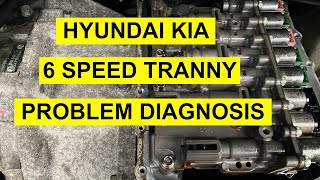
Est. part cost: $75-$150 - Low or Dirty Transmission Fluid 🟡 Medium Probability → Shop Transmission Assembly While not unique to this vehicle, the A6MF1 transmission does not have a traditional dipstick, making fluid level checks less straightforward for owners and increasing the chance of running on low fluid. Contaminated fluid can clog solenoid passages, causing them 🎬 See why you should check this before replacing any solenoids to stick and eventually fail electrically.
How to confirm: Check the transmission fluid level and condition via the service plug on the side of the transmission case. This must be done with the vehicle level and the fluid at a specific operating temperature. Fluid should be red and not smell burnt.
Typical fix: Perform a transmission fluid drain-and-fill using fluid that meets Kia's SP-IV specification. Replace the transmission filter at the same time.
Est. part cost: $50-$120 for fluid and filter - Damaged Wiring or Connectors ⚪ Low Probability The internal transmission wiring harness is subjected to constant heat and immersion in transmission fluid, which can make the wires brittle and fail over time. External wiring can also be damaged from road debris or chafing. A service action (SA499) was issued for newer Sportage models for a similar chafing issue.
How to confirm: Visually inspect the wiring harness leading to the transmission for any signs of chafing, melting, or corrosion, especially the main connector on the transmission case. A multimeter can be used to check for continuity between the TCM and the solenoid connector.
Typical fix: Repair the damaged section of the external wire or clean/replace the corroded connector. If the internal harness is faulty, it should be replaced, often done at the same time as solenoid replacement.
Est. part cost: $10-$100
Rare But Worth Checking
- Faulty Transmission Control Module (TCM) or Powertrain Control Module (PCM): → Shop Transmission Assembly This is rare, but possible. A failure in the module's driver circuit for the solenoid can mimic a bad solenoid. In some Hyundai/Kia models, leaking capacitors on the ECU/TCM circuit board have been found to be the root cause of P0748, requiring board-level repair or module replacement. This should only be considered after all other possibilities (solenoid, fluid, wiring) have been ruled out.
Diagnosis Steps
- Check and verify the transmission fluid level and condition. The fluid must be at the correct level at a specific temperature, and should be Kia SP-IV or equivalent.
- Scan the TCM for any other pending or active trouble codes. Note any other solenoid-related codes.
- Perform a visual inspection of the transmission's external wiring harness and connectors for any obvious damage, corrosion, or loose connections.
- If possible, use a high-end scan tool to command the Pressure Control Solenoid 'A' on and off to check its response and listen for a click.
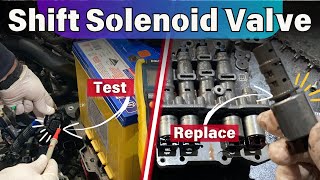
- If the fluid and wiring are good, the next step is to gain access to the solenoid. This involves safely lifting the vehicle, draining the transmission fluid, and removing the transmission oil pan. 🎬 Watch: Step-by-step guide to removing and replacing the shift solenoid
- With the pan removed, inspect the internal wiring to the solenoid. Test the resistance of the solenoid with a multimeter. Compare the reading to the manufacturer's specification (typically 5.0-5.6 ohms for this transmission). An infinite reading (open) or zero reading (short) confirms a failed solenoid.
- If the solenoid and wiring test good, the problem may lie with the Transmission Control Module (TCM), though this is the least likely cause.
Parts You'll Likely Need
- Automatic Transmission Control Solenoid
(OEM #46313-3B030)— This is the component that fails electrically, triggering the P0748 code. Kia's TSB points directly to this part as the primary fix. Note: Part number 46313-3B075 is also a common solenoid in this transmission family but may be for a different function.
Trusted brands: Kia (OEM), Hyundai (OEM), Rostra
OEM price range: $75-$120
Aftermarket price range: $50-$90 - Automatic Transmission Fluid
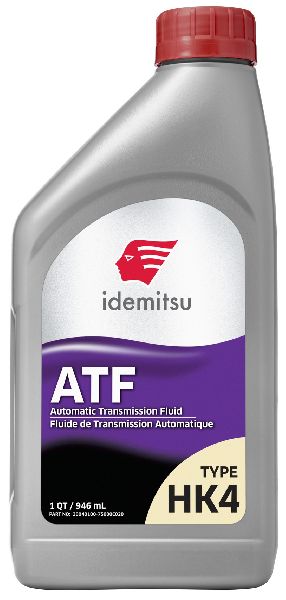
(OEM #SP-IV)— The fluid must be drained to access the solenoid and should be replaced with new fluid that meets Kia's SP-IV specification. Using the wrong fluid can cause shifting problems.
Trusted brands: Kia/Hyundai OEM SP-IV, Valvoline MaxLife ATF, Castrol Transmax Full Synthetic Multi-Vehicle
OEM price range: $15-$25 per quart
Aftermarket price range: $8-$15 per quart - Automatic Transmission Filter and Pan Gasket
(OEM #Filter: 46321-3B600, Gasket: 45285-3B610 (verify by VIN))— Since the transmission pan must be removed, it is best practice to replace the filter and gasket at the same time.
Trusted brands: Kia (OEM), WIX, ATP
OEM price range: $40-$70
Aftermarket price range: $20-$40
Related Codes That Often Appear With This One
- P0743 — Torque Converter Clutch Solenoid Electrical. This is another solenoid-related code often included in the same TSB (TSBTRA051R1) and can fail for similar reasons.
- P0753, P0758, P0763, P0768, P0773 — These are electrical fault codes for Shift Solenoids 'A' through 'E'. They are part of the same family of codes as P0748 and are addressed in the same TSB, indicating a potential failure of multiple solenoids in the valve body.
- P0700 — Transmission Control System Malfunction. This is a general code indicating that the TCM has stored a fault. It will almost always be present alongside a more specific code like P0748.
Technical Service Bulletins (TSBs) & Recalls
- TSBTRA051R1: Addresses DTCs P0741, P0743, P0748, and others, recommending the replacement of shift solenoids on 6-speed automatic transaxles instead of the entire unit.
Platform-Specific Known Issues
- Kia issued Technical Service Bulletin (TSB) #TSBTRA051R1 for the 6-speed automatic transmission (A6MF1/A6GF1 family) used in this vehicle. It specifically lists P0748 and instructs technicians to replace the faulty solenoid, not the entire transmission.
Mechanic-Grade Diagnostic Values
- Resistance of Variable Force Solenoids (VFS) — expected: 5.0 - 5.6 Ω. Failure: A reading of 0 Ω (short) or infinite/OL (open) indicates a failed solenoid.
- Resistance of On/Off Solenoids — expected: 10 - 11 Ω. Failure: A reading significantly outside this range indicates a failed on/off solenoid (e.g., SSA, SSB).
- Transmission Fluid Temperature Sensor Voltage — expected: ~3.2 V at 104°F (40°C) and ~0.29 V at 302°F (150°C). Failure: Incorrect voltage readings for the corresponding temperature can cause erratic shifting and may trigger other codes, indirectly related to P0748 if the TCM commands incorrect pressures based on faulty temperature data.
Scan Tool Commands That Help
- Kia GDS (or equivalent professional scanner): Solenoid Activation Test — To manually command a specific solenoid on and off to listen for an audible 'click'. This helps confirm if the solenoid is mechanically stuck or completely electrically dead before removing the transmission pan.
- Kia GDS (or equivalent professional scanner): View Live Data (Solenoid Current) — To monitor the electrical current (in milliamps) being sent to the Pressure Control Solenoid 'A' in real-time. This can help determine if the TCM is commanding the solenoid correctly and if the solenoid is drawing the expected amount of current.
- Kia GDS (or equivalent professional scanner): Reset Auto T/A Learned Value / Reset Adaptations — This function MUST be performed after replacing the valve body or individual solenoids. It clears the old, learned shift pressure data, forcing the TCM to re-learn the characteristics of the new parts for smooth operation.
Wiring & Ground Locations
- Transmission Case Ground — A grounding strap or wire is typically bolted directly from the transmission case to the vehicle's chassis or engine block.. A poor or corroded ground connection for the transmission can cause a voltage drop and introduce electrical noise into sensor and solenoid circuits, potentially triggering false electrical fault codes like P0748.
- Main Chassis Ground — Usually located near the battery, connecting the negative terminal to the vehicle's frame. Other key grounding points are on the engine block and cylinder head.. All electrical components, including the TCM and the solenoids it controls, rely on a solid ground path to the battery. A compromised main ground can cause widespread, intermittent electrical issues.
- TCM/PCM Ground — The control module itself will have one or more ground wires in its connector harness, often terminating at a grounding bolt on the chassis, sometimes near the driver/passenger kick panel.. A specific ground issue at the control module can directly impact its ability to accurately control and monitor the transmission solenoids, leading to codes like P0748 even if the solenoid itself is good.
Real Owner Repair Stories
- YouTube Channel 'Car Hospital' (Kia Picanto (demonstrating a common issue across models with this transmission family)) — Harsh shifting, jerking when selecting reverse, and fault code P0748.
❌ Tried (didn't work) The video focuses directly on the successful repair.
✅ What actually fixed it The problem was traced to a burned-out circuit within the Engine Control Unit (ECU) that controls the transmission solenoids. The ECU was repaired at the board level, which resolved the P0748 code and restored normal transmission function. - YouTube Channel 'MotorCarNut' (2015 Kia Optima with A6MF1 6-speed transmission (same family as Sportage)) — General shifting problems, with the video focusing on solenoid testing and cleaning as a common repair strategy.
❌ Tried (didn't work) The video implies that just changing the fluid often isn't enough if solenoids are dirty or failing.
✅ What actually fixed it The video demonstrates the process of removing the valve body to access, clean, and test the solenoids. It is shown how to apply 12V to a solenoid to listen for a 'click' and how to check resistance. The final fix is to clean or replace the faulty solenoids and reassemble. The video also notes that metal filings can build up on the solenoid contacts and short them out.
OEM Part Supersession History
46313-3B020→46313-3B030— Part revision or update by the manufacturer.
Heads up: 46313-3B030 is the direct replacement for the original part. Using the older part number is not recommended.Old-style internal wiring harness→Updated internal wiring harness— The original harness design was prone to failure. The updated harness has an integrated temperature sensor.
Heads up: When replacing solenoids or the internal harness, it is highly recommended to use the updated harness design, as the original is a known failure point. The old style had a separate, disconnectable temperature sensor.
Helpful Videos


We Have This Part in Stock

The information in this article is provided for general reference and educational purposes only. Vehicle specifications, procedures, and part compatibility can vary by production date, trim level, and region. Always consult your vehicle's factory service manual and verify part numbers before purchasing or performing repairs. Safety-critical components such as airbags, seat belts, and braking systems should be installed by a qualified professional.
- Kia SPORTAGE:
- 🧭 Diagnostic Flowchart
- 🎬 Helpful Videos
- 🛍️ Shop This Part
- What's Unique About the 2011-2014 Kia SPORTAGE
- Symptoms You May Notice
- Most Likely Causes
- Rare But Worth Checking
- Diagnosis Steps
- Parts You'll Likely Need
- Related Codes That Often Appear With This One
- Technical Service Bulletins (TSBs) & Recalls
- Platform-Specific Known Issues
- Mechanic-Grade Diagnostic Values
- Scan Tool Commands That Help
- Wiring & Ground Locations
- Real Owner Repair Stories
- OEM Part Supersession History
- 🎟️ Get 5% Off