

P0751 on 2001-2008 Chevrolet Silverado 2500: Shift Solenoid 'A' Causes and Fixes
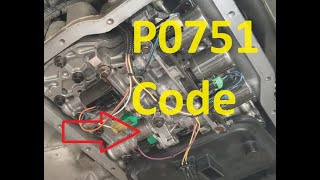
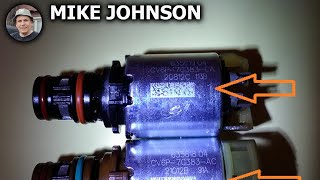
This code almost always points to a problem with the 1-2 Shift Solenoid ('A') inside the transmission. The most common fix is to replace the shift solenoid, along with the transmission fluid and filter, which is a moderately difficult DIY job. It is highly recommended to replace both the 'A' and 'B' shift solenoids at the same time.
- P0751 means the 1-2 Shift Solenoid ('A') is not working correctly, usually because it's stuck.
- The most likely cause is a failed solenoid itself, followed by old, dirty transmission fluid.
- The fix involves dropping the transmission pan to replace the solenoid, filter, and fluid.
- It is strongly recommended to replace both the 'A' and 'B' shift solenoids at the same time to avoid doing the job twice.
- Do not immediately assume the TCM is bad; it is rarely the cause of this specific code.
What's Unique About the 2001-2008 Chevrolet SILVERADO 2500
The 2001-2008 Silverado 2500 spans two truck generations (GMT800 and GMT900) and primarily used two different heavy-duty transmissions: the 4-speed 4L80-E (common in gas models) and the 5 or 6-speed Allison 1000 (common in diesel models). While P0751 points to the 1-2 shift solenoid in the 4L80-E, its equivalent in the Allison has a different name but a similar function. For the Allison, GM TSB PIP5060 suggests the code can be caused by a binding solenoid armature. Regardless of the transmission, the root cause is often the same: a faulty solenoid, dirty fluid, or debris in the valve body. The provided NHTSA TSB (PIP4379N) confirms this code is part of a pattern of known transmission issues across many GM trucks from this era.
Diagnostic Flowchart
Tap your situation to follow the diagnostic path that matches what you're seeing on this vehicle.
Generation note: This range covers the first generation 'GMT800' (2001-2006 and 2007 'Classic') and the second generation 'GMT900' (2007-2008). GMT800 models typically have the 4L80-E transmission. GMT900 models may have the 4L80-E or the newer 6-speed 6L90. Diesel models in both generations usually have the Allison 1000 transmission. The diagnostic process is similar, but the specific part numbers for the solenoids will differ.
Symptoms You May Notice
- Check Engine Light is on
- Transmission will not shift properly, or shifts are harsh and delayed.
- Vehicle may be stuck in one gear (limp mode).
- Delayed engagement when shifting into Drive or Reverse.
- Transmission slipping between gears.
- Increased fuel consumption.
- A whining noise from the transmission may be heard in some cases.
- Transmission overheating warning light may come on.
- Replacing the Transmission Control Module (TCM) when the fault is a simple solenoid or wiring issue inside the transmission.
- Replacing only the 'A' solenoid, only to have the original 'B' solenoid fail shortly after, requiring the job to be done a second time.
Most Likely Causes
- Failed Shift Solenoid 'A' 🔴 High Probability → Shop Transmission Valve Body Solenoids are electro-mechanical parts that wear out over time from heat and high cycle counts. Debris in the fluid can also cause the internal plunger to stick or the inlet screen to clog.
How to confirm: After dropping the transmission pan, the solenoid can be tested with a multimeter. For a 4L80-E, the resistance should be between 20-30 ohms, with healthy solenoids typically reading 21-22 ohms. An open circuit (infinite resistance) or short circuit (near-zero resistance) confirms failure. A more definitive test is to apply 12V to see if it 'clicks' audibly.
Typical fix: Replace the faulty shift solenoid. It is highly recommended to replace both the 'A' (1-2) and 'B' (2-3) solenoids at the same time, as they are located together and have the same service life.
Est. part cost: $20-$50 - Low or Dirty Transmission Fluid 🟡 Medium Probability → Shop Transmission Assembly Neglecting fluid changes leads to fluid breakdown and the accumulation of clutch material and metal shavings, which can clog solenoid screens and valve body passages, causing the solenoid to stick.
How to confirm: Check the transmission fluid dipstick. The fluid should be at the correct level, pinkish-red in color, and not smell burnt. Dark, brown, or gritty fluid is a sign of a problem and internal wear.
Typical fix: Perform a transmission fluid and filter change. If the fluid is very dirty, this may be a temporary fix as the new fluid can dislodge more debris, or it may indicate a more severe internal failure is imminent.
Est. part cost: $50-$150 for fluid and a filter kit - Clogged Transmission Filter 🟡 Medium Probability → Shop Transmission Assembly
How to confirm: This is typically discovered during a fluid change or solenoid replacement. A clogged filter restricts fluid flow, starving the solenoids and clutches of the hydraulic pressure they need to operate.
Typical fix: Replace the transmission filter and pan gasket. This is always done when the transmission pan is removed for any service.
Est. part cost: $20-$40 for the filter and gasket kit - Wiring or Connector Issue ⚪ Low Probability
How to confirm: Inspect the external transmission wiring harness for damage. More commonly, the internal harness inside the transmission pan can become brittle and fragile from constant heat and fluid exposure. Check for continuity from the main transmission case connector to the solenoid connector to isolate the fault before dropping the pan.
Typical fix: Repair or replace the damaged section of the wiring harness. The internal harness is often replaced as a complete unit during solenoid service.
Est. part cost: $40-$100 for an internal harness
Rare But Worth Checking
- Faulty Transmission Control Module (TCM): → Shop Transmission Assembly This is rare. The TCM is often blamed, but the issue is almost always mechanical or electrical within the transmission itself. A faulty TCM would typically cause multiple, more erratic issues and codes.
- Sticking Valve in Valve Body: → Shop Transmission Valve Body Debris can cause a valve associated with the shift solenoid circuit to stick in its bore. This requires removing and cleaning the valve body, or replacing it. In some cases, a full flush can clear passages, but it can also make things worse.
Diagnosis Steps
- Check the transmission fluid level and condition. If low, top it off and check for leaks. If dark or burnt, a fluid and filter change is a good first step, but be aware it may not solve a mechanical issue.
- Use a quality OBD-II scanner to check for other transmission-related codes (like P0700, P0753, P0756, P1811) to get a fuller picture of the problem.
- For 4L80-E: Test the solenoid resistance externally. Using a multimeter on the pins of the main transmission case connector, check the resistance between the 12V feed pin (Pin E) and the Shift Solenoid 'A' pin (Pin A). A reading between 20-30 ohms is expected. This can confirm a solenoid electrical failure without dropping the pan.
- If the fluid is okay and external tests are inconclusive, the next step is to drop the transmission pan to access the internal components.
- Inspect the fluid in the pan and the magnet for excessive metal debris. A fine gray paste is normal wear, but large chunks or copious amounts of metal indicate a serious mechanical failure requiring a rebuild.
- Locate Shift Solenoid 'A' (1-2 Shift Solenoid) on the valve body. Disconnect it and test its resistance directly with a multimeter. It should be 20-30 ohms (typically 21-22 ohms). Also, apply 12V and listen for a solid 'click'.
- Carefully inspect the internal wiring harness for signs of damage, brittleness, or broken plastic connectors. Flex the harness to see if the plastic cracks.
- For Allison 1000: Per TSB PIP5060, use a scan tool to monitor the TFP switches while gently depressing them with an eraser. If the switch status doesn't change from high to low, suspect an internal harness issue. If they test okay, the solenoid itself is the likely culprit.
- If the solenoid and wiring test good, the issue may be a stuck valve in the valve body or a more complex internal problem requiring professional diagnosis.
Parts You'll Likely Need
- 1-2 Shift Solenoid (Solenoid 'A')
(OEM #ACDelco 24230288 or GM 10478125 (For 4L80-E, A and B solenoids are often identical))— This is the component identified by the code and is the most frequent point of failure.
Trusted brands: ACDelco, Standard Motor Products (SMP), Bosch
OEM price range: $40-$70
Aftermarket price range: $20-$50 - Transmission Filter Kit (Filter and Pan Gasket) — You must remove the transmission pan to access the solenoid, so replacing the filter and gasket is a required part of the job.
Related Codes That Often Appear With This One
- P0700 — P0700 is a generic code that simply means the Transmission Control Module (TCM) has detected a fault and has requested the main engine computer to turn on the Check Engine Light. It will almost always be present with any specific transmission code like P0751.
- P0753 — This code means 'Shift Solenoid 'A' Electrical'. If you see P0751 (Performance) and P0753 (Electrical) together, it strongly points to a failed solenoid coil or an open/short circuit in the wiring to the solenoid.
- P0756 — This is the code for 'Shift Solenoid 'B' Performance/Stuck Off'. Since solenoids A and B work together and have the same wear life, it's common for them to fail around the same time.
- P1811 — This GM-specific code means 'Maximum Adapt or Long Shift'. It sets when the TCM detects a shift is taking too long. A sticking 1-2 shift solenoid (P0751) is a very common root cause for a P1811 code on the 1-2 shift.
Technical Service Bulletins (TSBs) & Recalls
- PIP4379N: A general GM TSB covering a wide range of transmission codes including P0751, indicating known issues.
- PIP5060: While for slightly newer 2012-2013 models, this TSB is relevant for Allison transmissions, noting that P0751 can be set by a binding shift solenoid armature and provides specific diagnostic steps.
Platform-Specific Known Issues
- For Trucks with 4L80-E / 4L85-E (Gasoline Engines): This is the most common scenario. The 'A' solenoid is the 1-2 shift solenoid. It is identical to the 'B' (2-3) solenoid and they are mounted next to each other on the front of the valve body. It is standard practice to replace both at the same time. The OEM part number is typically ACDelco 24230288. Resistance should be 20-30 ohms. Failure is almost always the solenoid itself or the internal harness becoming brittle.
- For Trucks with Allison 1000 (Duramax Diesel Engines): The P0751 code is less common on the Allison but still points to a performance issue with a shift solenoid. GM TSB PIP5060 suggests the solenoid armature may be physically binding. Diagnosis should involve using a scan tool to verify the operation of the Transmission Fluid Pressure (TFP) switches before condemning the solenoid. The internal wiring harness can also be a culprit. Part numbers are different from the 4L80-E, so ensure you are ordering for the Allison transmission specifically.
Mechanic-Grade Diagnostic Values
- 4L80-E Shift Solenoid 'A' or 'B' Resistance — expected: 20-30 Ohms (typically 21-22 Ohms when healthy). Failure: Infinite resistance (open circuit) or near-zero resistance (short circuit).
- 4L80-E Electronic Pressure Control (EPC) Solenoid Resistance — expected: 4.0-5.5 Ohms. Failure: Reading outside of the specified range.
- Allison 1000 (2001-2005) Shift Solenoid (C, D, E) Resistance — expected: 22-24.5 Ohms. Failure: Reading outside of the specified range.
- Allison 1000 (2001-2005) Trim Solenoid (A, B) Resistance — expected: 5.5-6.5 Ohms. Failure: Reading outside of the specified range.
- 4L80-E Line Pressure at Idle (in Drive) — expected: 40-70 PSI. Failure: Significantly higher or lower pressure can indicate a faulty EPC solenoid or pump issue.
Hidden / Shadow Codes Worth Checking
- P1811: Maximum Adapt or Long Shift. This code sets when the TCM detects a shift is taking longer than a calibrated time (e.g., 0.65 seconds). It often doesn't illuminate the Check Engine Light on its own but indicates the symptom (a slow shift) that P0751 (the cause) is creating. (see via A quality OBD-II scanner capable of reading manufacturer-specific transmission codes. The code may clear after an ignition cycle, making it appear intermittent.)
Scan Tool Commands That Help
- Tech 2 (or equivalent high-level scanner): Solenoid Activation Test / Bidirectional Control — This allows a technician to command a specific solenoid ON or OFF while monitoring system pressure or listening for an audible click. For a definitive test on 6L80/90 transmissions, it's used with the Kent-Moore DT-47825 test plate, where the tech commands the solenoid and watches for a pressure reading on a gauge to confirm mechanical function.
Wiring & Ground Locations
- 4L80-E Case Connector — The main round electrical connector on the passenger side of the transmission case.. Allows for external testing. Pin E is the +12V feed. Pin A is the control for Shift Solenoid 'A'. Testing resistance between Pin E and Pin A can confirm solenoid electrical integrity without dropping the pan.
- PCM Ground (G103/G104 approx.) — On the rear of the cylinder heads, typically one on the passenger side and one on the driver's side. The driver's side rear head ground is particularly critical for the PCM.. A poor PCM ground is a notorious cause of bizarre electronic issues on GMT800 trucks, including erratic transmission behavior and false codes. The PCM may misinterpret sensor data or be unable to properly control the solenoids if its ground reference is unstable.
- Frame Ground — Main ground from the negative battery terminal to the vehicle frame, often located on the frame rail near the radiator support on the driver's side.. This is the primary ground for the entire chassis. Corrosion here can create system-wide electrical issues, affecting all modules including the TCM.
Real Owner Repair Stories
- ChevyTalk Forum (2000 Chevrolet 3500HD with 4L80-E) — Banging shift from 1st to 2nd, which goes away after restarting the truck. Codes P0751 and P1811 found.
❌ Tried (didn't work) Continued driving while hoping it would fix itself.
✅ What actually fixed it The expert diagnosis was a faulty 1-2 shift solenoid causing the P0751, which in turn caused the long shift time that set the P1811. The recommended fix was to replace both the 1-2 ('A') and 2-3 ('B') shift solenoids at the same time. - The Truck Stop Forum (1992 K2500 with 6.5 TD and 4L80-E) — Limp mode, delayed engagement. Shop diagnosed bad shift solenoids A and B, and a bad ECM.
❌ Tried (didn't work) Trusting the shop's immediate diagnosis to replace the ECM without further checks.
✅ What actually fixed it Forum members advised against immediately replacing the ECM. The correct diagnostic path recommended was to first test the solenoids externally by checking resistance at the transmission case connector (Pin E to Pin A for solenoid A) and to inspect the main engine/PCM ground on the rear of the passenger side cylinder head, as these are common, cheaper failure points.
"I Checked Everything" — The Actual Cause
- A common scenario is when the shift solenoid passes all electrical tests (resistance check, 12V click test) but the P0751 code persists. In the 4L80-E, this can be caused by a cracked intermediate clutch piston. The solenoid functions correctly, but the hydraulic pressure it directs is lost through the crack, causing the shift to be slow or incomplete, which the TCM detects as a 'performance' issue and blames the solenoid.
OEM Part Supersession History
First design (Blue/Red), Second design (Gray/Green)→Third design: GM 24201004 (Solenoid 'A' - Purple) & GM 24201005 (Solenoid 'B' - Tan)— Updated to increase solenoid reliability.
Heads up: The updated third design solenoids are fully backward compatible and can be used on any model year 4L80-E transmission.
Model Year Variations Within This Range
- 2001-2005 vs 2006-2008 (Allison 1000): The Allison transmission saw a major update in 2006. Pre-2006 models were 5-speeds. Starting in 2006, they became 6-speeds. This change also involved moving the neutral safety switch to an internal mode switch and changing the solenoid terminology from 'Trim Solenoids' to 'Pressure Control Solenoids'.
- 2001-2005 vs 2006-2008 (4L80-E): The recommended transmission fluid changed. Models up to 2005 specified Dexron-III. In 2006, GM introduced Dexron-VI as the new standard, which is backward compatible. Using the correct, modern fluid is crucial for solenoid health.
Helpful Videos

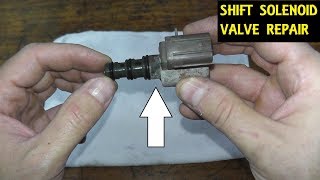
We Have This Part in Stock
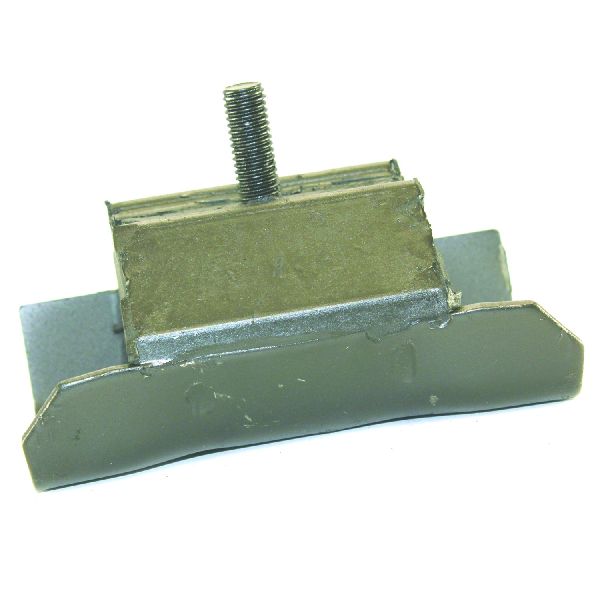

The information in this article is provided for general reference and educational purposes only. Vehicle specifications, procedures, and part compatibility can vary by production date, trim level, and region. Always consult your vehicle's factory service manual and verify part numbers before purchasing or performing repairs. Safety-critical components such as airbags, seat belts, and braking systems should be installed by a qualified professional.
- Chevrolet SILVERADO 2500:
- 🧭 Diagnostic Flowchart
- 🎬 Helpful Videos
- 🛍️ Shop This Part
- What's Unique About the 2001-2008 Chevrolet SILVERADO 2500
- Symptoms You May Notice
- Most Likely Causes
- Rare But Worth Checking
- Diagnosis Steps
- Parts You'll Likely Need
- Related Codes That Often Appear With This One
- Technical Service Bulletins (TSBs) & Recalls
- Platform-Specific Known Issues
- Mechanic-Grade Diagnostic Values
- Hidden / Shadow Codes Worth Checking
- Scan Tool Commands That Help
- Wiring & Ground Locations
- Real Owner Repair Stories
- "I Checked Everything" — The Actual Cause
- OEM Part Supersession History
- Model Year Variations Within This Range
- 🎟️ Get 5% Off