

P0756 on 2017-2023 Ford F-150: Shift Solenoid 'B' Causes and Fixes
On a 2017-2023 F-150 with the 10R80 transmission, code P0756 almost always indicates a problem with the transmission's main control valve body or a related internal component like the CDF clutch drum. This is a well-documented issue covered by multiple Ford Technical Service Bulletins (TSBs). The fix is often a complete valve body replacement or overhaul, which is a significant and costly repair, rather than a simple solenoid swap.
- P0756 on a 2017-2023 F-150 is a serious code that points to a significant, known issue with the 10R80 transmission.
- The most likely cause is a faulty main control (valve body) or a related internal component, not just a bad solenoid.
- Do not simply replace the shift solenoid; this is unlikely to be a permanent fix. The repair should follow the guidance in Ford's TSBs.
- The correct repair is expensive, often involving replacing the entire valve body assembly and costing between $1,300 and $2,700 at a shop.
- Always use the specified Motorcraft MERCON ULV transmission fluid when performing this service.
What's Unique About the 2017-2023 Ford F-150
The 2017-2023 Ford F-150, particularly models equipped with the 10R80 10-speed automatic transmission, has a widely recognized issue that triggers P0756 and a host of other transmission codes. The problem is often not the individual shift solenoid itself, but rather a failure within the main control valve body assembly or a related internal component like the CDF clutch drum. Ford has issued numerous Technical Service Bulletins (TSBs) acknowledging that issues like a warped valve body, sticking internal valves, or internal hydraulic leaks are the true root cause. A particularly common failure is the axial movement of the CDF clutch cylinder sleeve, which causes pressure loss and triggers solenoid performance codes. This is why simply replacing the solenoid often fails to fix the problem.
Diagnostic Flowchart
Tap your situation to follow the diagnostic path that matches what you're seeing on this vehicle.
Generation note: This issue affects both the 13th generation (2017-2020) and 14th generation (2021-2023) Ford F-150s equipped with the 10R80 10-speed automatic transmission. The root cause, related to the transmission's main control (valve body) and internal components like the CDF clutch drum, is common to both generations and is addressed in TSBs covering these model years.
Symptoms You May Notice
- Harsh or delayed shifting, sometimes described as a 'clunk' or 'jolt'.
- Vehicle gets stuck in one gear or enters 'limp mode'.
- Transmission slipping (engine RPMs rise without acceleration).
- Illuminated Malfunction Indicator Lamp (Check Engine Light).
- A dragging or release sensation when slowing to a stop.
- Inability to engage reverse or any forward gear in severe cases.
- Replacing only the 'B' shift solenoid. Because the issue on the 10R80 transmission is often the valve body or CDF drum, a new solenoid will not resolve the underlying hydraulic pressure loss and the code will likely return.
Most Likely Causes
- Faulty Transmission Main Control (Valve Body) 🔴 High Probability → Shop Transmission Assembly Multiple Ford TSBs (e.g., TSB 23-2123) point to issues within the valve body assembly as the primary cause for solenoid performance codes on the 10R80 transmission. Problems include internal valve body warpage, sticking valves, and cross-leaks that cause hydraulic pressure loss, preventing the solenoids from operating correctly. Some technicians report these valve bodies are on backorder due to high demand.
How to confirm: A technician will follow the diagnostic procedures outlined in Ford's TSBs, which may involve hydraulic pressure testing at specific ports. Diagnosis often involves ruling out other causes and observing multiple solenoid codes simultaneously.
Typical fix: Replacement of the entire main control valve body assembly or an overhaul of the existing one per 🎬 See this walkthrough on replacing the 10R80 valve body. TSB instructions. This is followed by clearing the transmission adaptive tables and performing a specific, multi-step adaptive learning drive cycle.
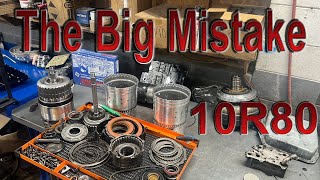
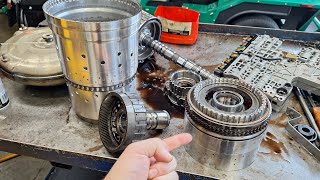
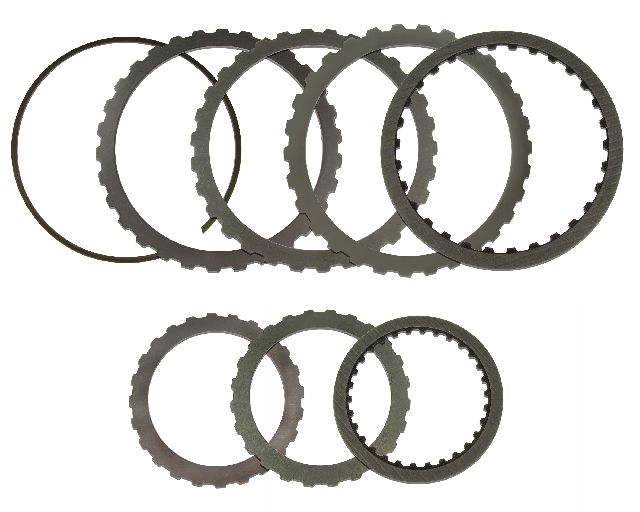
Est. part cost: $600-$1200 - Internal CDF Clutch Drum Failure 🔴 High Probability → Shop Transmission Clutch Pressure Plate TSB 24-2254 and others specifically identify a design flaw where a bushing/sleeve in the CDF (Clutch C, D, F) drum can move out of position ('walks'), causing a significant internal hydraulic leak. This pressure loss starves the solenoids and clutches of the pressure needed to function, directly triggering codes like P0756. Ford has since released a redesigned CDF drum with a lip on the bushing to prevent it from moving.
How to confirm: This is a complex diagnosis requiring transmission disassembly. Technicians may follow TSB 24-2254, which involves air pressure testing of the clutch circuits to confirm the leak's location after the valve body is removed.
Typical fix: Requires complete transmission removal and disassembly to replace the CDF clutch drum with the updated part. This is a major, 🎬 Watch: See a full teardown of the CDF drum failure. labor-intensive repair.
Est. part cost: $300-$600 for the drum, plus significant labor. - Low or Contaminated Transmission Fluid 🟡 Medium Probability → Shop Transmission Assembly While not a design flaw, the 10R80 is very sensitive to fluid level and condition. Low fluid can cause pressure issues, while contaminated fluid can cause valves to stick.
How to confirm: Check the transmission fluid level and condition. The procedure for the 10R80 is complex, involving a specific temperature range and removal of a fill plug, as there is no traditional dipstick. The fluid should be clean, red, and not smell burnt.
Typical fix: Perform a complete transmission fluid and filter change using only the specified Motorcraft MERCON ULV fluid. A simple drain and fill may not be sufficient if the fluid is heavily contaminated.
Est. part cost: $150-$300 - Failed Shift Solenoid 'B' ⚪ Low Probability → Shop Transmission Valve Body While the code directly points to the solenoid, it's often a symptom of a larger valve body or CDF drum problem rather than an isolated solenoid failure. The PCM sets the code because the expected gear change didn't happen, which is usually due to a lack of hydraulic pressure caused by the other common failures.
How to confirm: A technician can test the solenoid's electrical resistance with a multimeter and check for proper activation using a high-end scan tool. However, even if the solenoid tests bad, it may have failed due to the underlying valve body issue.
Typical fix: Replace the individual shift solenoid. This is often attempted but is not a permanent fix if the valve body or CDF drum is the true cause.
Est. part cost: $50-$150
Rare But Worth Checking
- Damaged Valve Body to Oil Pump Seal: → Shop Transmission Valve Body A Reddit thread by a transmission technician notes that if P0756 appears with P0766 (Solenoid 'D' Stuck Off) and the vehicle won't move, the cause is often a crushed, dislodged, or missing seal between the valve body and the oil pump. This typically happens after a recent repair where the valve body was reinstalled incorrectly.
- Wiring or Connector Issues: Corrosion or damage to the main transmission wiring harness or its connector can cause erratic signals or loss of power to the solenoids. This should be inspected before condemning expensive internal components.
- Powertrain Control Module (PCM) Failure: This is extremely rare. The PCM should only be considered as a potential cause after all other mechanical and electrical possibilities have been exhaustively ruled out.
Diagnosis Steps
- Scan the PCM for all stored trouble codes. Note if P0756 appears with a long list of other transmission codes, which is typical for this issue.
- Check for any applicable Technical Service Bulletins (TSBs) for the vehicle's VIN. TSBs like 23-2123, 24-2176, and 24-2254 provide specific diagnostic paths.
- Check the transmission fluid level and condition. This must be done at a specific operating temperature. Low or burnt fluid indicates a problem.
- Inspect the main transmission electrical connector and wiring harness for any visible damage, corrosion, or loose connections.
- Follow the diagnostic procedures outlined in the relevant TSB. This may involve specific hydraulic air pressure tests of the clutch circuits to pinpoint internal leaks, which is a key step in diagnosing the CDF drum failure.
- If diagnosis points to the valve body or CDF drum, proceed with the recommended repair (overhaul or replacement).
- After the repair, it is critical to clear the transmission adaptive tables using a scan tool (like FORScan or the dealer's tool) and perform the complete, multi-step adaptive learning drive cycle as specified by Ford. Failure to do this will result in continued poor shift quality.
Parts You'll Likely Need
- Transmission Main Control Valve Body Assembly
(OEM #HL3Z-7A100-B)— This is the most common root cause of P0756 on the 10R80 transmission, as documented in multiple Ford TSBs. This part number supersedes HL3Z-7A100-A.
Trusted brands: Motorcraft
OEM price range: $600-$950 + core charge - CDF Clutch Cylinder / Drum
(OEM #HL3Z-7G199-A)— The second most common cause, due to a known issue with the internal sleeve walking out and causing hydraulic leaks. TSB 24-2254 and others call for its replacement.
Trusted brands: Motorcraft
OEM price range: $300-$500 - Transmission Fluid Filter and Pan Gasket — Required whenever the transmission pan is removed to service the valve body or solenoids.
Trusted brands: Motorcraft, ATP
OEM price range: $50-$80
Aftermarket price range: $30-$60 - Motorcraft MERCON ULV Automatic Transmission Fluid
(OEM #XT-12-QULV)— This is the specific fluid required for the 10R80 transmission. A fluid change is necessary when replacing the valve body or performing any internal service. Using the wrong fluid can cause damage.
Trusted brands: Motorcraft
OEM price range: $10-$15 per quart
Related Codes That Often Appear With This One
- P0751, P0761, P0766, etc. — Any combination of other shift solenoid performance codes (P0751 'A', P0761 'C', P0766 'D') strongly suggests a systemic hydraulic failure, such as the valve body or CDF drum, not multiple individual solenoid failures.
- P0729-P0736 (Gear Ratio Errors) — These codes indicate incorrect gear ratios are being detected. They often accompany solenoid codes because the underlying hydraulic issue prevents the transmission from physically achieving or holding the commanded gear.
- P2700-P2708 (Clutch Application Time Errors) — These codes relate to the timing of clutch engagements. Like gear ratio errors, they are a direct symptom of the hydraulic leaks caused by a faulty valve body or CDF drum.
Technical Service Bulletins (TSBs) & Recalls
- TSB 24-2254: Addresses harsh/delayed shifts and a list of DTCs including P0756. Points to axial movement of the CDF clutch cylinder sleeve causing hydraulic leaks and provides a procedure to verify the leak and replace the cylinder.
- TSB 23-2123: Supersedes older TSBs. Recommends overhauling the main control valve body and performing an adaptive learning drive cycle to correct harsh shifting and associated DTCs like P0756.
- TSB 24-2176: Lists P0756 among many other codes related to harsh/delayed shifts in various Ford vehicles with the 10R80, pointing to a systemic issue.
Platform-Specific Known Issues
- A known issue with the 10R80 transmission involves axial movement of the CDF clutch cylinder sleeve, which causes internal hydraulic leaks. This can trigger a variety of solenoid performance codes, including P0756. TSB 24-2254 specifically addresses this concern, outlining a pressure test procedure to confirm the leak and instructing technicians to replace the drum if it fails.
- The adaptive learning strategy of the 10R80 transmission can sometimes mask underlying mechanical issues until they become severe. Resetting the adaptive learning tables without fixing the root mechanical cause (like a faulty valve body) will only provide a temporary improvement in shift quality.
Mechanic-Grade Diagnostic Values
- Shift Solenoid Resistance — expected: While not definitively published for the 10R80, a general specification for many transmission solenoids is 10-30 Ω. Readings far outside this range may indicate a faulty solenoid coil.. Failure: A reading of 0 ohms indicates a short, and an infinite reading (OL) indicates an open circuit.
- TCC and LPC Solenoid Current — expected: These are variable force solenoids. The TCC solenoid is normally-low, operating between 50 mA (low pressure) and 850 mA (high pressure). The LPC solenoid is normally-high, operating between 50 mA (high pressure) and 850 mA (low pressure).. Failure: Inability of the solenoid to respond to commanded current changes on a high-end scan tool.
Scan Tool Commands That Help
- FORScan / Ford IDS: TCM Reset All Adaptations / Clear Transmission Adaptive Tables — This service procedure must be performed after any major transmission repair, such as replacing the valve body or CDF drum. It clears the learned shift pressure values, forcing the TCM to relearn the clutch engagement points. Failure to do this will result in poor shift quality.
- FORScan / Ford IDS: PCM – Transmission Strategy Download — This is required when a new main control (valve body) or a complete transmission assembly is installed. The new component has a unique 13-digit solenoid body strategy number that must be programmed into the PCM. This command downloads the correct strategy file from Ford's servers and writes it to the module.
- FORScan: Halt Transmission Adaptive Learning — Some owners use this function to prevent the transmission from learning behaviors that result in soft or sloppy shifts over time. It locks in the current shift strategy. While some report improved shift feel, its long-term effect on transmission life is unconfirmed.
Wiring & Ground Locations
- C177 — The main 26-pin electrical connector on the transmission case.. This is the primary connection point for all solenoids and sensors inside the transmission. Pin 25 (Gray/Orange wire) is the control for Shift Solenoid B. A poor connection or corrosion at this connector can interrupt the signal from the TCM.
- G102 — A primary body ground point located on the right front side of the engine compartment, near the battery.. Ford F-150s are known to develop electrical issues, including transmission problems, due to corrosion at main body and frame ground points. Ensuring G102 and other body-to-frame grounds are clean and secure is a critical step before diagnosing expensive components.
Real Owner Repair Stories
- Ford F150 Forum (2018 Ford F-150) — Not specified, but required a new valve body.
❌ Tried (didn't work) Using FORScan to program the new solenoid strategy failed with a 'Solenoid Not Found' error from Ford's servers. Using the official Ford diagnostic software (FJDS) with a J2534 pass-thru device also resulted in the same error.
✅ What actually fixed it The issue was that Ford's servers did not have a downloadable strategy file for the specific new valve body that was installed. The fix required the dealer tool (FJDS) to manually write the new parameters into the PCM and then initiate the relearn procedure.
OEM Part Supersession History
HL3Z-7H351-A, JL3Z-7H351-A→JL3Z-7H351-B— This is the updated CDF Clutch Drum (Hub Assembly). The original design allowed a bushing/sleeve to 'walk' out of position, causing a major internal hydraulic leak. The updated part has a lip machined onto the drum to physically prevent the sleeve from moving.HL3Z-7A100-A→HL3Z-7A100-B— This is the part number for the complete main control valve body assembly. Revisions are common to address issues like warpage and sticking valves.
Heads up: When replacing, the new valve body's 13-digit solenoid strategy MUST be programmed into the PCM.
Model Year Variations Within This Range
- 2017 - 2022: TSB 24-2254, which addresses the CDF clutch drum sleeve movement, specifically applies to F-150s built on or before August 15, 2022. This implies that vehicles built after this date may have received the updated CDF drum (part JL3Z-7H351-B) from the factory.
- 2017 - 2023: Despite internal component updates like the CDF drum, the main transmission wiring harness and connector pinouts remained the same between at least the 2018 and 2023 model years.
Helpful Videos
We Have This Part in Stock


The information in this article is provided for general reference and educational purposes only. Vehicle specifications, procedures, and part compatibility can vary by production date, trim level, and region. Always consult your vehicle's factory service manual and verify part numbers before purchasing or performing repairs. Safety-critical components such as airbags, seat belts, and braking systems should be installed by a qualified professional.
- Ford F-150:
- 🧭 Diagnostic Flowchart
- 🎬 Helpful Videos
- 🛍️ Shop This Part
- What's Unique About the 2017-2023 Ford F-150
- Symptoms You May Notice
- Most Likely Causes
- Rare But Worth Checking
- Diagnosis Steps
- Parts You'll Likely Need
- Related Codes That Often Appear With This One
- Technical Service Bulletins (TSBs) & Recalls
- Platform-Specific Known Issues
- Mechanic-Grade Diagnostic Values
- Scan Tool Commands That Help
- Wiring & Ground Locations
- Real Owner Repair Stories
- OEM Part Supersession History
- Model Year Variations Within This Range
- 🎟️ Get 5% Off