

P0776 on 2009-2010 Chevrolet Silverado 2500: Causes and Fixes for Pressure Control Solenoid 'B' Faults
On a 2009-2010 Silverado 2500, code P0776 almost always points to a failure within the Transmission Electro-Hydraulic Control Module (TEHCM). This is a known issue for this truck's 6L80/6L90 transmission. The fix is to replace the entire TEHCM unit inside the transmission pan, which requires programming to the vehicle. Ignoring the code can lead to severe internal damage.
- P0776 on a 2009-2010 Silverado 2500 is a serious transmission code indicating a problem with Pressure Control Solenoid 'B'.
- The most likely culprit is a failed Transmission Electro-Hydraulic Control Module (TEHCM), a known issue for these trucks.
- This is not a DIY-friendly repair. The fix involves replacing a component inside the transmission that requires special programming tools.
- Do not ignore this code. Continued driving can lead to severe, and much more expensive, internal transmission damage.
What's Unique About the 2009-2010 Chevrolet SILVERADO 2500
The 2009-2010 Silverado 2500 uses a 6-speed automatic transmission (6L80 or 6L90) where the transmission control module (TCM) and all the solenoids are integrated into a single, non-serviceable unit 🎬 Watch: Common 6L80 problems that lead to transmission destruction. called the Transmission Electro-Hydraulic Control Module (TEHCM). These TEHCM units are a well-documented failure point due to internal circuit faults or debris contamination. As noted in GM Technical Service Bulletin #PIP4831E, codes like P0776 often stem from internal TEHCM issues or debris in the valve body, rather than a simple external wiring problem.
Diagnostic Flowchart
Tap your situation to follow the diagnostic path that matches what you're seeing on this vehicle.
Symptoms You May Notice
- Harsh, jerky, or delayed shifts, especially between low gears.
- Transmission slipping between gears, with engine RPMs flaring up.
- Vehicle enters "limp mode," often stuck in a single gear (usually 3rd).
- Inability to shift into higher gears.
- Illuminated Check Engine Light.
- Transmission overheating.
- Engine may stall when coming to a stop.
- Replacing the entire transmission when only the TEHCM is faulty.
- Replacing an individual solenoid, which is not possible on this vehicle as they are integrated into the non-serviceable TEHCM.
- Blaming the Powertrain Control Module (PCM/ECM) when the fault lies within the transmission's own control module (TCM).
Most Likely Causes
- Faulty Transmission Electro-Hydraulic Control Module (TEHCM) 🔴 High Probability → Shop Transmission Assembly The integrated TCM/solenoid design in 6L80/6L90 transmissions is a common failure point due to internal circuit board faults or solenoid failure within the sealed unit. TSB #PIP4831E points to checking the TCM date code, indicating known issues with certain production runs.
How to confirm: A professional scan tool shows the solenoid is not responding to commands or has a constant 0V reading when a shift is commanded. Often, multiple solenoid-related codes appear together, pointing to a TEHCM internal failure. A bench test measuring solenoid resistance outside the 3.0-8.0 Ohm range confirms failure.
Typical fix: Replace the entire TEHCM assembly inside the transmission. The new unit must be programmed to the vehicle's VIN.
Est. part cost: $300-$600 for a remanufactured unit, $700+ for new OEM. - Contaminated Transmission Fluid or Debris in Valve Body 🟡 Medium Probability → Shop Transmission Assembly As transmissions wear, clutch material and metal shavings can contaminate the fluid. This debris can cause valves in the valve body to stick or clog the small orifices within the TEHCM solenoids. TSB #PIP4831E specifically advises looking for debris in the valve body for this code.
How to confirm: Drop the transmission pan and inspect the fluid and pan magnet for excessive metal debris. Dark, burnt-smelling fluid is a key indicator. Inspecting the valve body may reveal stuck valves or scored bores.
Typical fix: If caught early, a fluid and filter change may help. If debris has caused the TEHCM to fail, it must be replaced along with flushing the transmission and cooler lines. Some shops may install a valve body upgrade kit to address known pressure loss issues.
Est. part cost: $100-$200 for fluid and filter service. - Low Transmission Fluid Level ⚪ Low Probability → Shop Transmission Assembly
How to confirm: Check the transmission fluid level and condition per the owner's manual procedure. Low fluid can cause pressure issues that mimic a solenoid fault.
Typical fix: Top off with the correct fluid (DEXRON-VI) and inspect for leaks, such as from the pan gasket or cooler lines.
Est. part cost: $20-$40
Rare But Worth Checking
- Cracked 1-2-3-4 / 3-5-R Clutch Housing:
Diagnosis Steps
- Check the transmission fluid level and condition. Ensure it is full and not burnt or contaminated. Use only DEXRON-VI fluid.
- Use a professional scan tool to check for other transmission-related codes. Note any other solenoid or pressure switch codes.
- With the scan tool, monitor the commanded state vs. actual state of Pressure Control Solenoid 'B' during a test drive. A failure to respond or a constant voltage reading when it should be changing points to an internal TEHCM issue.
- Drop the transmission pan and inspect for excessive metal debris on the magnet. A small amount of fine grey material is normal, but large flakes or chunks indicate a serious mechanical failure requiring a rebuild.
- Inspect the valve body for sticking valves, scored bores, or debris. TSB #PIP4831E specifically recommends this for code P0776.
- If there is no major debris and scan tool data points to the solenoid, the next logical step is to replace the TEHCM assembly.
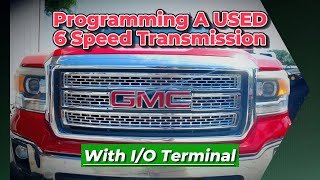
- After installation, the new TEHCM must be programmed to the vehicle's VIN using a J2534 pass-through device 🎬 Watch: How to program a replacement module for your Silverado. and GM's Service Programming System (SPS) software.
Parts You'll Likely Need
- Transmission Electro-Hydraulic Control Module (TEHCM)
(OEM #24256861 (may be superseded by 19435614))— This is the most common failure point for this code on this vehicle. It contains the TCM and all solenoids in one unit.
Trusted brands: ACDelco (OEM), Sonnax (Remanufactured)
OEM price range: $700-$800
Aftermarket price range: $320-$500 - Automatic Transmission Fluid (DEXRON-VI) — Fluid must be replaced when dropping the pan to replace the TEHCM. Approximately 6-8 quarts are needed for a pan drop service.
Trusted brands: ACDelco, Valvoline, Castrol
OEM price range: $8-$12 per quart
Aftermarket price range: $6-$10 per quart - Transmission Pan Gasket and Filter Kit
(OEM #24224781 (Pan Gasket for 6L80))— A new gasket and filter are required to prevent leaks and ensure clean fluid circulation after reinstalling the transmission pan.
Trusted brands: ACDelco, Fel-Pro, Wix
OEM price range: $40-$60
Aftermarket price range: $20-$40
Related Codes That Often Appear With This One
- P0751 — This is a fault for Shift Solenoid 'A'. Like P0776, it is controlled by the TEHCM. TSB #PIP4831E lists them together as having a common cause, often pointing to a failing TEHCM or valve body debris.
- P2714 — This is a fault for Pressure Control Solenoid 'D'. TSB #PIP4831E also groups this code with P0776, indicating a likely TEHCM failure.
- P0796 — This code is for Pressure Control Solenoid 'C'. Seeing multiple PC solenoid codes (P0776, P0796, etc.) together strongly suggests a systemic issue like a faulty TEHCM or major hydraulic problem, not multiple individual solenoid failures.
- P0700 — This is a generic Transmission Control System Malfunction code that simply tells the ECM to turn on the Check Engine Light. It will always be present when a specific transmission code like P0776 is stored by the TCM.
Technical Service Bulletins (TSBs) & Recalls
- PIP4831E: Advises looking for debris in the valve body and checking the TCM date code for codes including P0776, P0751, and P2714. This points to a known manufacturing issue with the TEHCM.
- PIP4379N: Lists P0776 as one of many codes that can occur with shifting issues, and points technicians to the diagnostic procedure for code P0701.
- 09-07-30-004J: While not directly for P0776, this TSB discusses a cracked 1-2-3-4 / 3-5-R clutch housing, which is a potential root cause for the code on 6L80/6L90 transmissions.
Platform-Specific Known Issues
- The integrated TEHCM in the 6L80/6L90 transmission is a known high-failure item. Internal circuit board failures or solenoid faults within the sealed unit are common and will set codes like P0776.
- GM issued TSB #PIP4831E which directly links P0776 to debris in the valve body and advises checking the TCM date code, confirming that this is a recognized issue by the manufacturer.
- Torque converter failure is another common issue on this platform, which can send a large amount of debris throughout the transmission, contaminating the fluid and causing secondary failures of the TEHCM and valve body.
Mechanic-Grade Diagnostic Values
- Pressure Control (PWM) Solenoid Resistance — expected: 3.0 - 8.0 Ohms. Failure: A reading outside this range (open or shorted) indicates a failed solenoid coil within the TEHCM.
- Shift Solenoid (On/Off) Resistance — expected: 20 - 40 Ohms. Failure: While not the direct cause of P0776, an incorrect reading on other solenoids points to a general TEHCM failure.
- Solenoid Feed Voltage from TCM — expected: 8.3 - 9.3 Volts. Failure: Voltage outside this range could indicate a problem with the TEHCM's internal power regulation.
- Pressure Control (PWM) Solenoid Current Draw — expected: 1.5 - 4.0 Amps at 12V. Failure: Incorrect amperage suggests a failed solenoid. This test should be performed quickly to avoid overheating the coil.
Scan Tool Commands That Help
- GDS2 / Techline Connect: Replace and Reprogram — This function is required after installing a new TEHCM. It uses a J2534 device to flash the vehicle's specific VIN and calibration files onto the blank module.
- GDS2 / Professional Scan Tool: Solenoid Automated Cleaning Process — If a solenoid performance DTC is present and debris is suspected, this function cycles all solenoids to attempt to flush out contaminants before replacing the TEHCM.
- GDS2 / Professional Scan Tool: Control Solenoid Valve and Transmission Control Module Assembly Solenoid Performance Test — This is a guided diagnostic test to verify if a specific solenoid, like PC Solenoid 2 for P0776, is stuck on or off by commanding it and observing system response.
Wiring & Ground Locations
- TEHCM Main Connector (X1) — The main 49-pin connector on the outside of the transmission case that provides all power, ground, and data signals to the internal TEHCM.. Although internal failure is most common, damage to pins for power, ground, or the GMLAN data bus at this connector can cause communication loss or erratic behavior, potentially triggering solenoid codes. Key pins include GMLAN Bus+ (Pin 7) and GMLAN Bus- (Pin 6).
- G103 / G104 — Main engine/body ground points. G103 is typically on the lower front right side of the engine block. G104 is on the back of the driver's side (left) cylinder head.. A poor engine or body ground can cause a voltage drop to the entire transmission control system, leading to unpredictable electronic faults and codes, including P0776.
OEM Part Supersession History
24256861→19435614— GM has released multiple hardware and software revisions of the 6L80 TEHCM to address reliability issues. The newer part number represents an updated version.
Heads up: The original part #24256861 is largely unavailable due to supply shortages and being superseded. The new part #19435614 is the correct replacement for the 2009-2010 model years and requires programming.
Helpful Videos
We Have This Part in Stock

The information in this article is provided for general reference and educational purposes only. Vehicle specifications, procedures, and part compatibility can vary by production date, trim level, and region. Always consult your vehicle's factory service manual and verify part numbers before purchasing or performing repairs. Safety-critical components such as airbags, seat belts, and braking systems should be installed by a qualified professional.
- Chevrolet SILVERADO 2500:
- 🧭 Diagnostic Flowchart
- 🎬 Helpful Videos
- 🛍️ Shop This Part
- What's Unique About the 2009-2010 Chevrolet SILVERADO 2500
- Symptoms You May Notice
- Most Likely Causes
- Rare But Worth Checking
- Diagnosis Steps
- Parts You'll Likely Need
- Related Codes That Often Appear With This One
- Technical Service Bulletins (TSBs) & Recalls
- Platform-Specific Known Issues
- Mechanic-Grade Diagnostic Values
- Scan Tool Commands That Help
- Wiring & Ground Locations
- OEM Part Supersession History
- 🎟️ Get 5% Off