

P0796 on 2010-2017 Chevrolet Silverado 1500: Pressure Control Solenoid 'C' Fixes
P0796 on a 2010-2017 Silverado usually points to a problem inside the 6L80 transmission, often a failed pressure control solenoid, debris in the valve body, or a failing torque converter. The fix typically involves dropping the transmission pan to replace the solenoid pack (TEHCM) or address internal damage from a failed torque converter, which is a very common root cause.
- P0796 on a 2010-2017 Silverado is a serious transmission code indicating a problem with the Pressure Control Solenoid 'C'.
- The most common causes are internal: a failed solenoid/TEHCM, debris from a failing torque converter clogging the valve body, or contaminated fluid.
- Do not continue to drive the vehicle. Sudden limp mode or loss of gears is a common and dangerous symptom.
- A simple fluid and filter change is unlikely to fix the issue. The root cause, often debris or a failed part, must be addressed.
- Repair is complex and expensive, typically requiring replacement of the TEHCM inside the transmission and sometimes a new torque converter or a full transmission rebuild.
What's Unique About the 2010-2017 Chevrolet SILVERADO 1500

This code is a well-documented issue on GM trucks equipped with the 6L80 and 8L90 automatic transmissions. The problem is so recognized that GM issued multiple Technical Service Bulletins (TSBs). Bulletin #PIP4831E specifically advises technicians to look for debris in the valve body for this code. Another TSB, #PI0773, directly links P0796 to a distressed 4-5-6 clutch and potential damage to the transmission oil pump. Owner complaints and mechanic reports frequently point to torque converter failure as a root cause, which sheds debris throughout the transmission, clogging the filter and causing solenoids to stick or fail. A YouTube video by a DIYer rebuilding his transmission for a P0796 code on a related platform confirms the torque converter was the ultimate cause of failure.
Diagnostic Flowchart

Tap your situation to follow the diagnostic path that matches what you're seeing on this vehicle.
Generation note: This range covers the end of the second generation (GMT900, 2010-2013) and the beginning of the third generation (K2XX, 2014-2017). Both generations commonly used the 6L80 6-speed automatic transmission, where this P0796 code is a known issue. Later K2XX models also introduced the 8-speed (8L90), which can also experience similar failures, often pointing to the valve body itself.
Symptoms You May Notice
- Harsh, erratic, or delayed gear shifts.
- Transmission slipping or getting stuck in one gear, especially failing to shift into 4th, 5th, or 6th.
- Vehicle enters "limp mode," limiting speed and available gears.
- Check Engine Light is on.
- Flashing gear indicator on the dashboard.
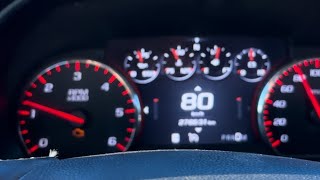
- Complete loss of movement in Drive or Reverse, as reported by an owner. [OWNER COMPLAINT] NHTSA ODI #11445672 🎬 Watch: Diagnosing a 6L80E with no forward gears and P0796.
- A loud whining sound from the transmission area followed by failure. [OWNER COMPLAINT] NHTSA ODI #11396252
- Simply replacing the transmission fluid and filter without addressing the root cause. If debris from a failing torque converter is present, a simple fluid change will not solve the problem and the code will return.
- Replacing only the TEHCM/solenoid assembly when the pan is full of metal. The new solenoids will quickly become clogged and fail if the source of the debris (the torque converter) is not also replaced.
Most Likely Causes

- Failing Torque Converter 🔴 High Probability → Shop Automatic Transmission Torque Converter The torque converters in these transmissions are a notorious failure point. They can shed clutch material and metal debris (a 'glitter bomb'), which then circulates through the transmission, causing the P0796 code by clogging the valve body and solenoids. A DIYer documented this exact failure mode on a 2017 Suburban, showing how the debris from the converter made the solenoids impossible for the TCM to control. 🎬 See how debris from the torque converter causes this code.
How to confirm: Excessive metal shavings or a 'metallic paste' on the transmission pan magnet are a dead giveaway. A scan tool monitoring torque converter clutch slip speed can also show performance issues, with slip exceeding 130 RPM under load being a red flag.
Typical fix: If the torque converter is failing, the transmission must be removed to replace it. This is often done as part of a larger transmission rebuild, as the debris has likely caused widespread damage to the pump, clutches, and valve body.
Est. part cost: $300-$800 for a new torque converter. A full rebuild kit can cost $400+. - Debris in Valve Body / Failed Pressure Control Solenoid (TEHCM) 🔴 High Probability → Shop Transmission Clutch Pressure Control Solenoid TSB #PIP4831E directly links P0796 to debris in the valve body. The solenoids are integrated into the Transmission Electro-Hydraulic Control Module (TEHCM), which is inside the transmission. Debris from a failing torque converter is the usual suspect, but internal wear can also cause clogs.
How to confirm: Drop the transmission pan. If the pan is full of debris, the cause is likely the torque converter. If the pan is relatively clean, the TEHCM/valve body assembly itself may have failed internally. A mechanic can use a high-end scan tool to command the solenoid and monitor pressure response.
Typical fix: If no major debris is found, the entire TEHCM unit is replaced. The new module must be programmed to the vehicle's VIN. If debris is present, the TEHCM is replaced along with the torque converter and a full transmission flush/rebuild.
Est. part cost: $450-$650 for a new TEHCM (ACDelco 24275873 is a common part number). Programming can cost an additional $100-$300. - Low or Contaminated Transmission Fluid 🟡 Medium Probability → Shop Transmission Assembly Low fluid level starves the pump, reducing hydraulic pressure system-wide. A leak in the radiator's internal transmission cooler can cause glycol (coolant) contamination, which destroys seals and clutches, as noted in an owner complaint. [OWNER COMPLAINT] NHTSA ODI #11505490
How to confirm: Check the transmission fluid level and condition. Fluid should be reddish and clear. Black, burnt-smelling, or milky (pinkish) fluid indicates a serious problem.
Typical fix: If the fluid is just low, top it off with DEXRON-VI and check for leaks (cooler lines are a common source). If contaminated, the transmission and cooler lines must be flushed, and the source of contamination (e.g., a bad radiator) must be replaced. Often, the damage is already done.
Est. part cost: $50-$150 for fluid and a filter. - Faulty Transmission Control Module (TCM) ⚪ Low Probability → Shop Transmission Assembly The TCM is integrated into the TEHCM unit inside the transmission. While electronic failure is less common than mechanical sticking due to debris, TSB #PIP4831E does advise checking the date code on the module, suggesting some batches may be problematic. Electrical failure can also manifest as a P0796 code.
How to confirm: This is typically diagnosed by eliminating all other possibilities (solenoid, wiring, fluid). A scan tool may show communication errors or a failure to command the solenoid.
Typical fix: Replace the entire TEHCM assembly. The new module will need to be programmed to the vehicle's VIN.
Est. part cost: $450-$650, plus programming fees.
Rare But Worth Checking
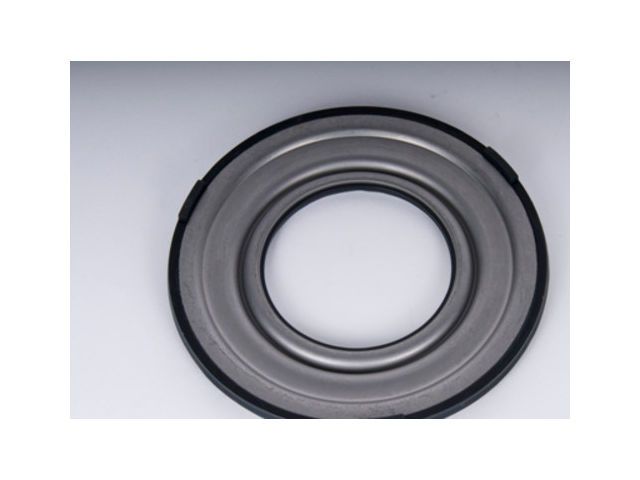
- Cracked Stator Support Shaft (Pump Cover):
Diagnosis Steps
- Check the transmission fluid level and condition. Note any burnt smell, dark color, or milky appearance.
- Scan the vehicle for all DTCs. Note P0700 and any other transmission-related codes like P2723.
- Using a bidirectional scan tool, command the Pressure Control Solenoid 'C' on and off while monitoring the transmission pressure data to see if it responds.
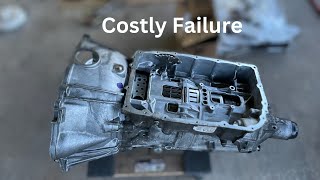
- Drop the transmission oil pan and inspect the fluid and pan magnet for metal shavings or clutch material. A small amount of fine metallic dust is normal, but larger flakes, chunks, or a thick metallic paste indicate catastrophic internal damage, likely from the torque converter. 🎬 Watch: A teardown showing common 6L80E torque converter failure.
- If the pan is clean, the TEHCM/valve body is the primary suspect.
- If significant debris is found, the source (the torque converter) must be replaced, and a full transmission rebuild is highly recommended.
- Inspect the internal wiring harness leading to the TEHCM for any visible damage, though this is less common.
- If replacing the TEHCM, ensure the new part is programmed to the vehicle's VIN before operation.
Parts You'll Likely Need

- Transmission Electro-Hydraulic Control Module (TEHCM)
(OEM #24275873)— This unit contains the pressure control solenoids and the TCM. Since individual solenoids are not serviceable, the entire module is replaced when one fails or gets stuck. This part requires VIN programming.
Trusted brands: ACDelco (GM OE)
OEM price range: $500-$700. Note: This part number supersedes 24041874 and 24257213.
Aftermarket price range: $250-$450 for a remanufactured, often pre-programmed unit. - Torque Converter — Often the root cause of the problem, a failing torque converter sheds the debris that clogs the valve body and solenoids, necessitating a transmission rebuild.
Trusted brands: ACDelco, Transtar, Sonnax (performance upgrades)
OEM price range: $400-$800
Aftermarket price range: $250-$500 - Transmission Filter and Pan Gasket Kit — This is required anytime the transmission pan is removed for service. It is included with some TEHCM kits.
Trusted brands: ACDelco
OEM price range: $40-$60
Aftermarket price range: $20-$40 - DEXRON-VI Automatic Transmission Fluid — The correct fluid is required when refilling the transmission after service. A full TEHCM replacement requires approximately 6-8 quarts.
Related Codes That Often Appear With This One
- P0700 — This code means 'Transmission Control System Malfunction.' It's a general code that the TCM sends to the main engine computer (ECM) to turn on the Check Engine Light. It almost always appears alongside more specific transmission codes like P0796. [OWNER COMPLAINT] NHTSA ODI #11505490, #11445672, #11502976
- P2723 — This code is for 'Pressure Control Solenoid 'E' Performance or Stuck Off'. On a 6L80, this is Solenoid #5. It is common to see multiple solenoid codes logged together when the root cause is widespread debris or a failing TEHCM.
Technical Service Bulletins (TSBs) & Recalls
- PIP4831E: Advises looking for debris in the valve body for a range of solenoid codes including P0796.
- PIP5425A: Acknowledges an ongoing engineering investigation into codes P0747 and P0796 as of late 2016. [MANUFACTURER TSB] Bulletin #PIP5425A
- PI0773: Provides diagnostic tips for P0796, linking it to slip or no 4th, 5th, or 6th gear, a distressed 4-5-6 clutch, and potential transmission pump damage.
Platform-Specific Known Issues
- TSB #PIP4831E: This bulletin specifically instructs technicians to check for debris in the valve body when codes like P0796 are present and to review the date code on the TCM.
- TSB #PIP5425A: This bulletin acknowledges that GM engineering was actively investigating a solution for P0796, confirming it as a known manufacturer issue.
- Torque Converter Failure: A common pattern on these trucks is for the torque converter clutch to fail, sending debris through the entire transmission, leading to solenoid and pump damage.
- Coolant Contamination: An owner complaint (ODI #11505490) reported P0796 after the transmission fluid was contaminated with glycol from a leak in the radiator's internal cooler, leading to transmission failure. [ OWNER COMPLAINT] NHTSA ODI #11505490
Mechanic-Grade Diagnostic Values
- Pressure Control Solenoid (PWM type) Resistance — expected: 3-8 Ohms. Failure: A reading outside this range indicates a failed solenoid coil. This test is performed on the TEHCM with it removed from the vehicle.
- Shift Solenoid (On/Off type) Resistance — expected: 20-40 Ohms. Failure: This is for comparison. If you measure a PCS and get a reading in this higher range, you may be testing the wrong solenoid.
- Solenoid Operating Voltage (TCM-supplied) — expected: 8.3 - 9.3 Volts. Failure: Incorrect voltage from the TCM could indicate an internal TEHCM fault, though this is difficult to measure directly at the solenoid.
- Transmission Line Pressure at Idle (in gear) — expected: 45-80 psi. Failure: Significantly lower pressure indicates a problem with the pump, a major leak, or a stuck main pressure regulator. This test requires a pressure gauge connected to the transmission test port.
Scan Tool Commands That Help
- GDS2 / High-End Bidirectional Scanner: Solenoid Automated Cleaning Process — If a solenoid performance DTC is present but there is no major debris in the pan, this function can be used to cycle all solenoids in an attempt to flush minor debris or free a sticky valve before replacing the entire TEHCM.
- GDS2 / High-End Bidirectional Scanner: Transmission Adapts Reset / Fast Learn — This is a mandatory step after replacing the TEHCM or rebuilding the transmission. It clears the learned shift parameters and forces the TCM to relearn clutch fill times and pressures for smooth shifting.
- GDS2 / High-End Bidirectional Scanner: Command Solenoid ON/OFF — Used during bench testing with a special test plate and shop air. The technician commands a solenoid on and off and watches a pressure gauge to see if the valve is physically moving and sealing correctly.
Wiring & Ground Locations
- Transmission Connector (X2) — The main 16-pin round connector on the passenger side of the transmission case.. This is the sole communication and power link to the internal TEHCM. Corrosion or damage to Pin 5 (Ground), Pin 4 (Battery +), Pin 12 (Run/Crank Power), or the CAN bus pins (10, 11, 13, 14) can cause various transmission codes and malfunctions.
- G113 — On the frame behind the front driver's side headlight area, near the washer fluid filler neck.. This is a major chassis ground point for the front lighting and other under-hood components. While not directly for the TCM, a poor ground here can introduce electrical noise and voltage issues that affect various modules.
- Engine Block to Firewall/Chassis Grounds — Typically a braided strap from the rear of the passenger-side cylinder head to the firewall, and a main battery negative cable to the engine block.. These are the primary grounds for the entire powertrain. Corrosion or breakage of these straps is common and can cause a wide range of bizarre electrical issues, including erratic module behavior that could potentially trigger false codes.
Real Owner Repair Stories
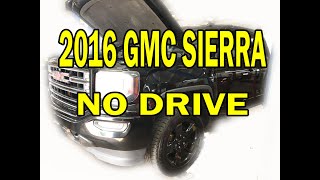
- YouTube channel 'Pierre Repair GT' (2017 Chevrolet Suburban (same 6L80 platform)) — P0796 code, transmission failure.
❌ Tried (didn't work) Initial diagnosis pointed to the solenoid/TEHCM.
✅ What actually fixed it A complete transmission rebuild was required. The root cause was a failed torque converter that sent metal debris throughout the entire transmission, destroying the fluid pump. The video explicitly states the solenoids themselves were not bad, but were unable to function due to the massive contamination. - YouTube channel 'Transmissions By Ryan' (2016 GMC Sierra (same 6L80 platform)) — P0796 code, slipping, stuttering, then total loss of forward and reverse gears.
❌ Tried (didn't work) Not applicable, diagnosed directly as catastrophic failure.
✅ What actually fixed it The torque converter failed and sent debris into the pump, causing a complete loss of line pressure which in turn burned up the forward clutches. The fix was a complete transmission rebuild including a new torque converter and pump. - Reddit user 'GregsView' on r/Silverado (2014 Chevrolet Silverado) — Original transmission was always 'clumsy'. At 146k miles, it began making 'very bad vibrations' when in gear.
❌ Tried (didn't work) Regular fluid services at 55k and 110k miles did not prevent the eventual failure.
✅ What actually fixed it The transmission was replaced by the dealer. The symptoms strongly suggest a torque converter failure leading to internal damage.
OEM Part Supersession History
24257213, 24041874→24275873— Standard part evolution, likely for improved reliability or manufacturing changes.
Heads up: The replacement TEHCM (24275873) must be programmed with the vehicle's specific VIN and calibration data using GM's Service Programming System (SPS) before it will function correctly.
Model Year Variations Within This Range
- 2014-2015: These early K2XX models are noted for having a transmission cooler thermostat bypass valve set to a very high temperature (around 190°F+). This design can lead to elevated transmission fluid temperatures, accelerating fluid breakdown and torque converter wear, which is a primary cause of debris leading to P0796. An updated GM part is available to fix this.
- 2010-2017: To confirm you have the 6-speed 6L80 transmission, you can put the gear selector in Manual ('M') mode. The dash display will show available gears up to '6'. If it shows up to '8', you have the less common (for this year range) 8L90 transmission.
Helpful Videos
We Have This Part in Stock


The information in this article is provided for general reference and educational purposes only. Vehicle specifications, procedures, and part compatibility can vary by production date, trim level, and region. Always consult your vehicle's factory service manual and verify part numbers before purchasing or performing repairs. Safety-critical components such as airbags, seat belts, and braking systems should be installed by a qualified professional.
- Chevrolet SILVERADO 1500:
- 🧭 Diagnostic Flowchart
- 🎬 Helpful Videos
- 🛍️ Shop This Part
- What's Unique About the 2010-2017 Chevrolet SILVERADO 1500
- Symptoms You May Notice
- Most Likely Causes
- Rare But Worth Checking
- Diagnosis Steps
- Parts You'll Likely Need
- Related Codes That Often Appear With This One
- Technical Service Bulletins (TSBs) & Recalls
- Platform-Specific Known Issues
- Mechanic-Grade Diagnostic Values
- Scan Tool Commands That Help
- Wiring & Ground Locations
- Real Owner Repair Stories
- OEM Part Supersession History
- Model Year Variations Within This Range
- 🎟️ Get 5% Off