

P0841 on 2018-2022 Honda Odyssey: Transmission Pressure Sensor Fault Explained
This code indicates a problem with the transmission fluid pressure sensor 'A' circuit. The most common causes are low or dirty transmission fluid, a faulty pressure sensor, or a clogged transmission valve body. Driving is not recommended as it can lead to severe transmission damage.
- P0841 on a 2018-2022 Odyssey is a critical code that should be addressed immediately.
- Do not drive the vehicle with this code, as it can lead to severe and expensive transmission damage.
- First, identify whether your Odyssey has the 9-speed or 10-speed transmission, as parts and fluids are different.
- Always start diagnosis by checking the transmission fluid level and condition, as this is the simplest and a very common cause.
- While the code points to a sensor, the root cause on a Honda can often be a more complex issue like a clogged valve body.
What's Unique About the 2018-2022 Honda Odyssey
The 2018-2022 Honda Odyssey uses two different automatic transmissions: a ZF-sourced 9-speed (9HP) in 2018-2019 lower trims (LX, EX, EX-L) and a Honda-designed 10-speed automatic in 2018-2019 upper trims (Touring, Elite) and all 2020+ models. This distinction is critical, as the fluid types, sensor locations, and potential failure points differ. On Hondas, this code is often triggered by internal issues like blockages in the valve body passages, not just a simple sensor failure. Owners have reported this code leading to the vehicle getting stuck in Park, indicating an immediate and serious drivability issue.
Symptoms You May Notice
- Check Engine Light is on
- Harsh, erratic, or delayed shifting
- Transmission slipping or getting stuck in one gear (limp mode)
- Vehicle unable to shift out of Park
- Delayed engagement when shifting from Park to Drive or Reverse
- Decreased fuel efficiency
- Replacing the pressure sensor when the actual problem is a clogged valve body or low fluid.
- Assuming a major internal transmission failure without first checking fluid level/condition and sensor electronics.
- Replacing the valve body when the root cause is a simple wiring issue or a faulty sensor.
Most Likely Causes
- Low or Dirty Transmission Fluid 🔴 High Probability → Shop Transmission Assembly Neglected maintenance is a common cause. Dirty or burnt fluid can clog passages in the valve body and interfere with sensor readings. Using the incorrect fluid type for the specific transmission (9-speed vs. 10-speed) can also cause pressure-related issues.
How to confirm: Check the transmission fluid level and condition. The fluid should be at the correct level, translucent (typically red), and not smell burnt. This procedure varies between the 9-speed and 10-speed models.
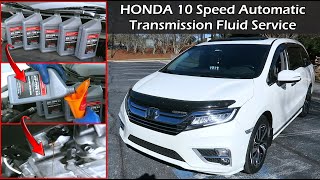
Typical fix: Perform a transmission fluid drain and fill or a complete fluid flush using the correct Honda-specific ATF. The 9-speed uses ATF Type 2.0 or 3.0, while the 10-speed requires Honda ATF Type 3.1. 🎬 Watch: Honda 10-speed transmission fluid service walkthrough
Est. part cost: $80-$200 for fluid - Failed Transmission Fluid Pressure Sensor/Switch 'A' 🟡 Medium Probability → Shop Transmission Assembly Like any electronic sensor, the pressure switch can fail over time due to heat and vibration, providing incorrect voltage readings to the TCM.
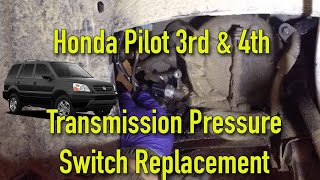
How to confirm: A technician can monitor the sensor's voltage with a scan tool to see if it responds correctly to changes in gear and engine RPM. The expected voltage range is typically 0.5V to 4.5V. 🎬 Watch: How to test and replace Honda pressure switches The sensor's resistance can also be tested with a multimeter.
Typical fix: Replace the faulty transmission fluid pressure sensor. This often requires removing the transmission pan or other components to access it on the valve body.
Est. part cost: $40-$120 - Clogged or Faulty Transmission Valve Body 🟡 Medium Probability → Shop Transmission Valve Body Debris from normal wear can accumulate in the valve body, causing solenoids or valves to stick. This is a noted issue on some Honda models, leading to incorrect hydraulic pressure even with a good sensor.
How to confirm: Diagnosis typically involves a line pressure test with a mechanical gauge to compare against the sensor's electronic readings. If pressures are good but the sensor reads incorrectly, the sensor is the issue. If mechanical pressure is also out of spec, the valve body or pump is suspect.
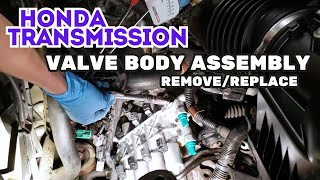
Typical fix: Clean or replace the transmission valve body assembly. This is a complex job best left to a transmission specialist. 🎬 See this step-by-step transmission valve body replacement
Est. part cost: $500-$1500
Rare But Worth Checking
- Wiring or Connector Issue: The wiring harness to the pressure sensor can become damaged, corroded, or loose, causing an intermittent or lost signal. This should be inspected before replacing more expensive components.
- Faulty Transmission Control Module (TCM): → Shop Transmission Assembly While rare, the TCM itself can fail or have software glitches. A software update from a dealer may resolve some issues. This is usually the last item to consider after all other possibilities have been exhausted.
Diagnosis Steps
- Check and verify the transmission fluid level and condition. Ensure the correct fluid type is being used. Top off or replace as necessary.
- Use an advanced OBD-II scanner to read the code and monitor live data from the transmission fluid pressure sensor 'A'. Compare the voltage readings to manufacturer specifications.
- Inspect the wiring harness and connector for the pressure sensor for any signs of damage, corrosion, or loose connections. The sensor is located on the valve body inside the transmission.
- If wiring is intact, test the sensor's operation by comparing its voltage readings to a mechanical pressure gauge connected to the transmission.
- If the sensor tests faulty, replace it.
- If the sensor and wiring are good, but mechanical pressure is out of spec, the problem likely lies within the valve body or other internal transmission components, requiring professional diagnosis.
Parts You'll Likely Need
- Transmission Fluid Pressure Switch 'A'
(OEM #28600-R97-013 (supersedes 28600-R97-003) or 28610-R36-004 are common for Honda 9-speeds, but verify by VIN.)— This sensor is the primary component identified by the code and is a common failure point.
Trusted brands: Honda Genuine
OEM price range: $60-$150
Aftermarket price range: $30-$90 - Honda ATF Type 3.1 (10-Speed) or Type 2.0/3.0 (9-Speed)
(OEM #08200-HCF2 (Type 2.0), 08200-9017A (Type 3.1))— Low or dirty fluid is a primary cause, and fresh, correct-spec fluid is required for any repair involving opening the transmission.
Trusted brands: Honda Genuine
OEM price range: $15-$25 per quart - Transmission Valve Body — If the sensor and fluid are fine, a clogged or failing valve body is the next most likely cause on this platform.
Trusted brands: Honda Genuine
OEM price range: $800-$1500
Related Codes That Often Appear With This One
- P0700 — P0700 is a generic code indicating the Transmission Control Module (TCM) has stored a fault. It often appears alongside more specific transmission codes like P0841 to signal a general transmission issue.
- P0868 — P0868 indicates specifically low transmission fluid pressure. If seen with P0841, it can help differentiate the problem. If a mechanical gauge shows low pressure, it confirms P0868 (leak/pump issue). If mechanical pressure is normal, it points back to P0841 (bad sensor/wiring).
- P0844 — This code, indicating a Dog Clutch malfunction, has been documented to appear alongside P0841 during internal transmission failures (NHTSA ODI #11720874).
Platform-Specific Known Issues
- A critical distinction for this generation is the transmission type. 2018-2019 LX, EX, and EX-L trims use a ZF 9-speed transmission, which has its own unique set of behaviors and potential issues. The 2018-2019 Touring/Elite and all 2020+ models use a Honda-built 10-speed transmission. Diagnosis and parts will differ significantly between the two.
- There is a recall for some 2018-2019 Odyssey models where loose battery connections could cause the Transmission Control Unit (TCU) to reboot and unexpectedly shift to Park, potentially damaging the parking rod. While not directly causing P0841, this highlights the sensitivity of the transmission electronics on this platform.
- In related Honda platforms like the Pilot, owners have noted that P0841 can be difficult to service because internal solenoids, sensors, and switches are often non-serviceable parts (NHTSA ODI #11568181).
Mechanic-Grade Diagnostic Values
- Transmission Fluid Pressure Sensor 'A' Signal Voltage — expected: 0.5V to 4.5V, varying with gear and engine load.. Failure: A reading stuck near 0V (see code P0842), near 5V (see code P0843), or a voltage that does not change logically with shifting indicates a problem. A reading below 0.3V may also confirm a fault.
OEM Part Supersession History
28600-R97-003→28600-R97-013, which was then superseded by 28600-R36-004— Standard part updates for improved reliability or manufacturing changes.
Heads up: Always verify the correct part number by VIN. While these parts are often interchangeable on many Honda models, using the latest superseded part number is the best practice to ensure compatibility and longevity.
Model Year Variations Within This Range
- 2018-2019: A mix of ZF 9-speed (LX, EX, EX-L) and Honda 10-speed (Touring, Elite) transmissions were used. This is the most critical variation affecting all diagnostics and parts.
- 2020-2022: All trims standardized to the Honda-built 10-speed automatic transmission.
- 2021-2022: Received a mid-cycle refresh with updated styling, standard LED headlights, and enhancements to the Honda Sensing suite, including Low-Speed Follow and Pedestrian Emergency Braking. These changes do not directly affect the P0841 code but are important for general model year identification.
Diagnostic Flowchart
Other Known Issues on This Vehicle
Issues unrelated to this code that are worth knowing about as an owner of this generation:
- Infotainment System Malfunctions 🟠 Medium — Very common on 2018-2019 models. Issues include screen freezing, popping/crackling audio, and system crashes. (Ref: Honda issued TSB 21-013 and a warranty extension for MOST bus network connectors causing audio issues. A recall was also issued for the rearview camera display not appearing.)
- Power Sliding Door Problems 🟠 Medium — Common across the generation. Doors may not latch, may beep without closing, or the cable may fail. (Ref: Recall issued for 2018-2019 models for power sliding door rear latch assemblies that may not latch properly.)
- Unexpected Airbag Deployment 🔴 High — Affects 2018-2022 models. Hitting a pothole or bump can cause side curtain airbags to deploy unexpectedly. (Ref: Recall #26V227000 was issued to reprogram or replace the SRS control module.)
- Auto Idle-Stop Inoperative 🟡 Low — Reported by numerous owners. The system may stop engaging, often without a clear cause. (Ref: Honda investigated this issue as noted in dealer message APaS07272018903, but no widespread recall was issued.)
- Transmission Judder/Vibration (Primarily 9-Speed) 🟠 Medium → Shop Transmission Assembly — Some owners of the 9-speed transmission models report a vibration or judder under light acceleration. (Ref: While TSBs like 17-040 were issued for other Honda models with similar issues, a specific one for the Odyssey is not widely documented but the symptoms are shared among ZF 9-speed users.)
Used vs. New Parts: Buying Guide for This Vehicle
When a used part is the smart pick: For a high-cost component like the transmission valve body, a used part from a verified low-mileage, accident-free donor vehicle can be a cost-effective alternative to a new OEM unit. This is a higher-risk repair best suited for experienced DIYers or shops comfortable with used components.
Donor-vehicle mileage cap: roughly under 60000 miles for the part to have meaningful remaining life.
What to inspect on the donor part:
- Verify the donor vehicle's VIN to ensure it had the same transmission (9-speed vs. 10-speed).
- Ask for the donor vehicle's mileage and accident history.
- Inspect the part for any physical damage, cracks, or signs of extreme heat (discoloration).
- If possible, check the donor vehicle's maintenance records for regular transmission fluid changes.
OEM-only on this vehicle (don't cheap out):
- Transmission Fluid: Never use aftermarket or 'universal' fluid. Only use the specific Honda ATF Type 3.1 (10-speed) or Type 2.0/3.0 (9-speed) to prevent shifting problems and premature wear.
- Transmission Control Module (TCM): Due to programming requirements that link it to the vehicle's VIN, a new OEM or professionally reprogrammed unit is necessary.
Aftermarket brands forum-validated for this vehicle:
- For sensors, brands like NTK or Denso are generally well-regarded if an OEM part is unavailable, but OEM is strongly preferred for transmission electronics.
Brands owners have reported issues with on this vehicle:
- Avoid unbranded, 'white-box' electronic sensors from online marketplaces, as their quality control and longevity can be highly inconsistent, often leading to a repeat failure.
Real Owner Stories
Aggregated from forums and TSBs cited above. Mileages and costs reflect what owners reported in those sources.
2018 Honda Odyssey
Symptoms: Harsh shifting and the vehicle getting stuck in gear.
What fixed it: A 'triple drain and fill' of the transmission fluid.
Source hint: Odyclub.com
2018 Honda Accord (10-speed)
Symptoms: Transmission codes and symptoms similar to the Odyssey 10-speed models, including pressure sensor issues.
What fixed it: Diagnostic path involving monitoring sensor voltage (0.5V to 4.5V) and replacing the fluid pressure sensor.
Source hint: DriveAccord.net
2019 Honda Odyssey
Symptoms: Vehicle required a tow to the dealer where an internal failure in the transmission was cited.
What fixed it: Diagnosis confirmed related DTCs P0841 (Transmission fluid pressure sensor/switch A circuit range/performance), P0844 (Dog Clutch malfunction), and P0170A.
Source hint: NHTSA ODI #11720874
Related OBD-II Codes
Frequently Asked Questions
Does the transmission type in my 2018-2019 Odyssey affect how I fix code P0841?
What is the correct transmission fluid for my 2021 Honda Odyssey to prevent pressure codes?
I have a 2018 Odyssey LX; which transmission fluid should I use for a 'triple drain and fill'?
Could a battery issue be related to my transmission problems on a 2019 Odyssey?
Is there a recall for the transmission judder I'm feeling alongside the P0841 code?
Can I replace the transmission fluid pressure sensor 'A' myself?
Helpful Videos
We Have This Part in Stock


The information in this article is provided for general reference and educational purposes only. Vehicle specifications, procedures, and part compatibility can vary by production date, trim level, and region. Always consult your vehicle's factory service manual and verify part numbers before purchasing or performing repairs. Safety-critical components such as airbags, seat belts, and braking systems should be installed by a qualified professional.
- Honda Odyssey:
- 🧭 Diagnostic Flowchart
- 🎬 Helpful Videos
- 🛍️ Shop This Part
- What's Unique About the 2018-2022 Honda Odyssey
- Symptoms You May Notice
- Most Likely Causes
- Rare But Worth Checking
- Diagnosis Steps
- Parts You'll Likely Need
- Related Codes That Often Appear With This One
- Platform-Specific Known Issues
- Mechanic-Grade Diagnostic Values
- OEM Part Supersession History
- Model Year Variations Within This Range
- Other Known Issues on This Vehicle
- Used vs. New Parts: Buying Guide for This Vehicle
- Real Owner Stories
- 2018 Honda Odyssey
- 2018 Honda Accord (10-speed)
- 2019 Honda Odyssey
- Related OBD-II Codes
- Frequently Asked Questions
- 🎟️ Get 5% Off