

P0847 on 2002-2007 Saturn VUE 2.2L: Transmission Pressure Switch Fault or Major CVT Failure?
This code on a 2.2L VUE is a major red flag. It points to an issue with a transmission pressure sensor, but it's often a symptom of the notoriously unreliable VTi continuously variable transmission (CVT) beginning to fail. While it could be a simple sensor, prepare for the possibility of a catastrophic transmission failure costing more than the vehicle's value. This issue is so common that GM settled a class-action lawsuit over it.
- P0847 on a 2002-2007 Saturn VUE 2.2L is a serious warning sign that should be addressed immediately.
- The root cause is very likely a failure of the notoriously unreliable VTi continuously variable transmission (CVT).
- Do not assume it is just a bad sensor. A simple sensor replacement is unlikely to be a permanent fix.
- Seek a diagnosis from a trusted transmission specialist, but be aware that many shops will not work on this specific transmission.
- The cost of repair will likely be very high, potentially exceeding the vehicle's current market value.
What's Unique About the 2002-2007 Saturn VUE
The 2002-2005 Saturn VUE with the 2.2L engine was equipped with a specific continuously variable transmission (CVT) known as the VTi (model VT25-E). This transmission, a result of a GM-Fiat venture, is infamous for its extremely high failure rate due to a weak internal steel belt. Unlike on other vehicles where a P0847 code might just be a bad sensor, on this platform, it is frequently an early indicator of a complete transmission meltdown. GM issued a warranty extension to 5 years/75,000 miles, but many failures occurred around 100,000 miles, leaving owners with massive repair bills. Many owners have reported multiple transmission replacements, with repair costs often exceeding the car's value.
Symptoms You May Notice
- Check Engine Light is on
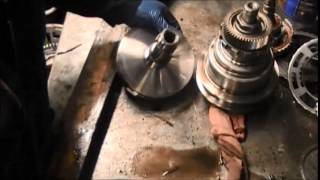
- Harsh or erratic shifting sensations, or a shuddering/vibration during acceleration. 🎬 See: Real-world example of Saturn VUE transmission noise and vibration.
- Transmission gets stuck in one gear (limp mode).
- Vehicle struggles to accelerate or has a loss of power.
- Transmission slipping or refusing to engage a gear.
- Sudden loss of all forward motion, sometimes with no warning.
- Replacing only the pressure sensor without checking for internal transmission damage. On this VUE, the sensor fault is often a symptom, not the root cause. Replacing it may temporarily clear the code, but the underlying transmission failure will persist and likely leave the driver stranded.
Most Likely Causes
- Internal VTi Transmission Failure 🔴 High Probability → Shop Transmission Assembly The VT25-E transmission has a well-documented history of premature failure due to design flaws, most commonly the internal steel drive belt stretching or breaking. This code is a common symptom of that failure.
How to confirm: After ruling out fluid and external electrical issues, a transmission specialist must inspect the internal components. Often, metal debris in the transmission fluid pan is a definitive sign of belt or pulley failure.
Typical fix: Complete transmission replacement or rebuild. Unfortunately, finding a replacement or a shop willing to do the work is very difficult and expensive. Some specialists on forums discuss swapping in a more reliable 4-speed conventional automatic (4T45-E), but this is a complex and costly conversion.
Est. part cost: $2500-$5000+ - Low or Contaminated Transmission Fluid 🟡 Medium Probability → Shop Transmission Assembly
How to confirm: Check the transmission fluid level and condition via the dipstick (if equipped) or check plug. The fluid should be at the correct level and not appear dark, burnt, or contain metallic particles. The correct fluid for the VTi is a specific CVT fluid, not standard ATF.
Typical fix: Perform a transmission fluid drain and fill with the manufacturer-specified fluid, GM DEX-CVT. If the fluid is heavily contaminated with metal, the transmission is likely already damaged beyond saving.
Est. part cost: $75-$200 - Faulty Transmission Fluid Pressure Switch 'B' ⚪ Low Probability → Shop Transmission Assembly On this specific transmission, the switch is rarely the root cause; it is usually reporting a real pressure problem.
How to confirm: A technician can test the sensor's resistance and voltage with a multimeter to see if it's within spec. This requires accessing the sensor, which is located inside the transmission, likely on the valve body.
Typical fix: Replace the faulty pressure switch. The switch is internal and may be part of a larger solenoid or valve body assembly, making replacement labor-intensive. Sourcing the individual part is very difficult.
Est. part cost: $50-$200 - Damaged Wiring or Connectors ⚪ Low Probability
How to confirm: Visually inspect the wiring harness leading to the transmission for any signs of fraying, corrosion, or loose connections, particularly at the main connector to the transmission.
Typical fix: Repair or replace the damaged section of the wiring harness.
Est. part cost: $20-$300
Rare But Worth Checking
- Faulty Transmission Control Module (TCM): → Shop Transmission Assembly While possible, a faulty TCM is much less likely than a mechanical transmission failure on this specific vehicle. The TCM should only be considered after all other causes, especially internal transmission health, have been thoroughly investigated.
Diagnosis Steps
- Check Transmission Fluid: Verify the fluid level is correct and inspect its condition. The fluid must be GM DEX-CVT fluid. A burnt smell or visible metallic particles are a death sentence for this transmission.
- Scan for Other Codes: Use an OBD-II scanner to check for any other transmission-related codes that could provide more context.
- Inspect Wiring: Visually inspect the transmission wiring harness and connectors for any visible damage, corrosion, or loose pins.
- Test the Sensor Circuit: If accessible, a technician can back-probe the sensor connector to test for proper voltage and ground, confirming if the 'Circuit Low' condition is due to a wiring issue or a faulty sensor. This is an advanced step as the sensor is internal.
- Professional Evaluation: If the fluid and wiring are good, the vehicle must be taken to a transmission specialist familiar with the VTi. Given the VTi's reputation, this step is crucial to diagnose the extent of internal damage before attempting any expensive repairs.
Parts You'll Likely Need
- Complete VTi (VT25-E) Transmission Assembly — Due to the extremely high failure rate of this specific CVT, the most common 'fix' is a complete replacement with a remanufactured or used unit. 🎬 Watch: Step-by-step guide to removing and replacing the Saturn transmission.
Trusted brands: GM (Remanufactured), Jasper (Remanufactured)
OEM price range: $3500+
Aftermarket price range: $2800+ - VTi-Specific CVT Fluid
(OEM #GM DEX-CVT Fluid (GM Part #19260800 or equivalent))— This transmission requires a specific fluid (GM DEX-CVT) and cannot use standard ATF. Using the wrong fluid will cause rapid failure.
Trusted brands: ACDelco, Valvoline CVT, Castrol Transmax CVT
OEM price range: $20-$30 per quart
Aftermarket price range: $15-$25 per quart - Transmission Fluid Pressure Switch — If the issue is confirmed to be an isolated electrical fault, the sensor itself would need replacement. However, sourcing this part individually for the VT25-E is difficult as it is internal and may be integral to the valve body. It is not a common standalone repair.
Trusted brands: ACDelco (if available)
OEM price range: $70-$200
Aftermarket price range: $40-$120
Technical Service Bulletins (TSBs) & Recalls
- NHTSA Recall 14V490000: While not for the P0847 code, this is a critical safety recall for 2002-2004 VUEs concerning the ignition cylinder, which allows the key to be removed without the vehicle being in Park.
Platform-Specific Known Issues
- The VTi (VT25-E) transmission used from 2002-2005 in 2.2L models is widely considered one of the worst transmissions of its era, with rampant failures reported by owners.
- Many repair shops and even some dealerships may refuse to work on these transmissions due to their complexity, lack of available parts, and high likelihood of repeat failure.
- GM settled a class-action lawsuit brought by owners of VUEs and Ions equipped with the VTi transmission due to the widespread, premature failures.
Mechanic-Grade Diagnostic Values
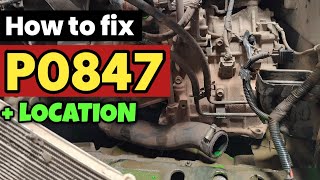
- TCM/PCM System Voltage Monitoring — expected: > 11.0 Volts. Failure: A 'Circuit Low' code like P0847 is set when the control module sees a voltage from the sensor that is below the minimum threshold, 🎬 Watch: Understanding the P0847 pressure sensor circuit low code. typically less than 0.5V, indicating a short to ground. Relatedly, the TCM for the VT25-E will begin inhibiting functions and may set other codes like P0562 if system voltage drops below 11.0V.
Scan Tool Commands That Help
- GM Tech 2: Live Data Streaming (Transmission Data) — To monitor the voltage output from the Transmission Fluid Pressure Sensor 'B' in real-time. A technician would observe this data while performing wiggle tests on the harness to check for intermittent shorts or opens. A reading that is stuck near 0V would confirm the 'Circuit Low' condition.
- GM Tech 2: Active Tests / Special Functions — The Tech 2 allows for bi-directional control, which could be used to command solenoids and observe pressure changes, indirectly testing the pressure switch's response. However, for a 'Circuit Low' fault, live data is the primary diagnostic path.
Wiring & Ground Locations
- Transmission Main Connector — On the transmission case, where the main engine wiring harness connects to the transmission.. This is the primary connection point for all electronic signals, including the pressure switch circuit. Corrosion or pushed-out pins in this connector are a common cause of electrical faults. A 2004 VUE 2.2L A/T wiring diagram is available for pinout tracing.
- G105 / G107 — G105 is located at the left rear of the engine; G107 is at the rear of the engine (based on 2006 diagrams).. The TCM and its sensors require a solid ground connection to the chassis/engine block. A corroded or loose ground at these common points can cause floating voltages and erratic sensor readings, potentially triggering a 'Circuit Low' code. These are critical and easy-to-check points before condemning expensive parts.
Real Owner Repair Stories
- Multiple Saturn Forum Threads (e.g., SaturnFans.com) (2002-2005 Saturn VUE 2.2L with VTi transmission) — P0847 code, shuddering, loss of power, transmission stuck in limp mode.
❌ Tried (didn't work) Replacing the transmission fluid., Hoping the code goes away on its own., Searching for an individual pressure switch to replace (parts are largely unavailable).
✅ What actually fixed it The overwhelming consensus in owner forums is that there is no simple fix. The resolution is almost always one of two outcomes: 1) Complete replacement of the VTi transmission with a remanufactured unit at a cost often exceeding the vehicle's value, or 2) The vehicle is scrapped due to the prohibitive repair cost.
OEM Part Supersession History
GM DEX-CVT (e.g., 15234609)→GM DEX-CVT (GM Part #19260800), which was later updated to GM Part #19436412— The earliest CVT fluid required a separate friction modifier additive. This was later integrated into the fluid itself. The current part number (#19260800 or its successor #19436412) is the correct, all-in-one fluid for service.
Heads up: Using standard ATF or a non-CVT specific fluid will rapidly destroy the VTi transmission. It is critical to use a fluid that meets the GM DEX-CVT specification.
Model Year Variations Within This Range
- 2002-2005: These models use the VTi (VT25-E) Continuously Variable Transmission. For these years, P0847 is a very strong indicator of impending catastrophic transmission failure related to the internal drive belt. Diagnosis should heavily favor internal mechanical failure over a simple sensor fault.
- 2006-2007: These models use a conventional 4-speed automatic transmission, the GM 4T45-E. While P0847 still indicates a pressure switch circuit low fault, the diagnostic path is traditional. It points to a faulty pressure switch/solenoid manifold inside the side pan, a wiring issue, or a TCM fault. The transmission itself is not known for the same inherent design flaw as the VTi.
Diagnostic Flowchart
Other Known Issues on This Vehicle
Issues unrelated to this code that are worth knowing about as an owner of this generation:
- Ignition Key Can Be Removed While Not in 'Off' Position 🔴 High — Widespread enough to trigger a major recall (NHTSA Campaign ID: 14V490000) for 2002-2004 models. (Ref: Recall 14V490000. This defect can allow the vehicle to roll away if the key is removed while the transmission is not in Park, leading to crashes and injuries.)
- 2.2L Ecotec Timing Chain Failure 🔴 High — Commonly occurs over 100,000 miles. Preceded by a distinct rattling or 'diesel-like' sound at idle. (Ref: No official recall, but a widely documented problem. Failure of the plastic chain guides or tensioner allows the chain to jump time, causing catastrophic engine damage (bent valves).)
- Cracked Plastic Coolant Expansion Tank 🟠 Medium — Very common failure due to the plastic becoming brittle from engine heat cycles over time. (Ref: No recall, but a frequent repair. Leads to coolant leaks, which if ignored, can cause engine overheating.)
- Failing Electronic Throttle Body 🔴 High — Common issue causing the vehicle to enter 'Reduced Engine Power' mode, severely limiting acceleration. (Ref: GM acknowledged this with Special Coverage Program No. 15267 for some models, though it has likely expired. It is often associated with DTCs like P2135.)
Used vs. New Parts: Buying Guide for This Vehicle
When a used part is the smart pick: For a 2006-2007 model with the 4T45-E, a used transmission from a reputable salvage yard is a reasonable repair strategy. For a 2002-2005 model, installing a used VTi (VT25-E) transmission is extremely risky and not recommended unless the donor vehicle has exceptionally low mileage and proof of service history.
Donor-vehicle mileage cap: roughly under 70000 miles for the part to have meaningful remaining life.
What to inspect on the donor part:
- For a VTi (VT25-E): Verify donor mileage is under 70,000 miles. Check fluid on the dipstick; if it's dark, burnt, or has any metallic sheen, reject it immediately. Ask for service history if available.
- For a 4T45-E: Check fluid condition. Red or pink fluid is a good sign; brown or black fluid indicates neglect. Check for leaks around the pan and axle seals.
- Listen for any whining or grinding noises if the donor car can be started.
OEM-only on this vehicle (don't cheap out):
- Transmission Fluid: For the VTi, only use GM DEX-CVT fluid or a high-quality aftermarket equivalent explicitly stating compatibility. For the 4T45-E, use fluid meeting DEXRON-VI specs.
Aftermarket brands forum-validated for this vehicle:
- Jasper (Remanufactured Transmissions)
- Valvoline, Castrol (for compatible CVT fluids)
Brands owners have reported issues with on this vehicle:
- Unknown or 'white box' remanufactured VTi transmissions from online marketplaces without a significant warranty.
Real Owner Stories
Aggregated from forums and TSBs cited above. Mileages and costs reflect what owners reported in those sources.
2004 Saturn VUE L4-2.2L — 140000 miles
Symptoms: A sudden, complete transmission failure with no warning.
What fixed it: The owner was quoted for a complete transmission replacement and the mechanic advised against attempting a rebuild.
Cost: $5000-$5500
Source hint: Car Talk Community - '2004 saturn vue transmission'
2003 Saturn VUE L4-2.2L — ~75000 miles
Symptoms: Catastrophic failure of the VTi transmission, a common occurrence at relatively low mileage for this model.
What fixed it: Complete transmission replacement is the typical fix, as even replacement units are noted to be unreliable.
Source hint: CarComplaints.com
2004 Saturn VUE L4-2.2L
Symptoms: Repeated VTi transmission failures, requiring multiple replacements.
What fixed it: The owner reported being on their 4th transmission, highlighting the poor reliability of even replacement units.
Source hint: Edmunds.com Car Forums
Related OBD-II Codes
Frequently Asked Questions
I have a 2006 Saturn VUE with the 2.2L engine. Is my transmission the unreliable VTi model that this article discusses?
Why are multiple repair shops refusing to work on my 2004 VUE's transmission?
Is it possible to replace the failed VTi transmission with a different, more reliable one?
Can I use standard automatic transmission fluid (ATF) in my VTi transmission?
I heard there was a lawsuit about these transmissions. What was that about?
Is there a recall for the P0847 code on my 2003 VUE?
Helpful Videos

![What is P0847 Engine Code [Quick Guide]](https://img.youtube.com/vi/0dkIoCO-8EA/mqdefault.jpg)
We Have This Part in Stock


The information in this article is provided for general reference and educational purposes only. Vehicle specifications, procedures, and part compatibility can vary by production date, trim level, and region. Always consult your vehicle's factory service manual and verify part numbers before purchasing or performing repairs. Safety-critical components such as airbags, seat belts, and braking systems should be installed by a qualified professional.
- Saturn VUE:
- 🧭 Diagnostic Flowchart
- 🎬 Helpful Videos
- 🛍️ Shop This Part
- What's Unique About the 2002-2007 Saturn VUE
- Symptoms You May Notice
- Most Likely Causes
- Rare But Worth Checking
- Diagnosis Steps
- Parts You'll Likely Need
- Technical Service Bulletins (TSBs) & Recalls
- Platform-Specific Known Issues
- Mechanic-Grade Diagnostic Values
- Scan Tool Commands That Help
- Wiring & Ground Locations
- Real Owner Repair Stories
- OEM Part Supersession History
- Model Year Variations Within This Range
- Other Known Issues on This Vehicle
- Used vs. New Parts: Buying Guide for This Vehicle
- Real Owner Stories
- 2004 Saturn VUE L4-2.2L — 140000 miles
- 2003 Saturn VUE L4-2.2L — ~75000 miles
- 2004 Saturn VUE L4-2.2L
- Related OBD-II Codes
- Frequently Asked Questions
- 🎟️ Get 5% Off