

P0848 on 2013-2017 Honda Accord: 3rd Clutch Pressure Switch Failure Causes and Fixes
On a 2013-2017 Honda Accord, especially the V6 model with the 6-speed automatic transmission, P0848 almost always means the 3rd clutch transmission fluid pressure switch has failed. This is a very common failure point. Replacing this switch (OEM Part #28600-R94-004) and its crush washer is the most common fix. Expect to pay $90-$150 for an OEM part, with a DIY difficulty of 2/5.
- P0848 on a 2013-2017 Accord almost always points to a bad 3rd clutch pressure switch, especially on V6 models.
- The correct OEM part number for the V6 6-speed automatic is 28600-R94-004. Using genuine Honda parts is highly recommended.
- Always replace the small aluminum crush washer (Part # 90471-PW7-A00) with the switch to prevent leaks.
- For 4-cylinder CVT models, this code is rare and the diagnosis is less clear. Professional diagnosis is strongly advised for CVT-equipped cars.
- The repair on a V6 is DIY-friendly, requiring basic tools and removal of the battery and airbox for access.
What's Unique About the 2013-2017 Honda Accord
The 2013-2017 (9th Generation) Accord used two different automatic transmissions. V6 models have a traditional 6-speed automatic, where failure of the 3rd clutch pressure switch is a widely documented and common problem across many Honda and Acura models using this transmission. In contrast, 4-cylinder models use a Continuously Variable Transmission (CVT), where this specific code is far less common and not as well-documented. While the code's definition is the same, the diagnosis and part are much more clearly identified for the V6 models.
Symptoms You May Notice
- Check Engine Light is on
- Flashing 'D' (Drive) indicator light on the instrument cluster
- Harsh, erratic, or delayed gear shifts, especially involving 3rd gear
- A noticeable jerk or shunt when the transmission shifts, particularly around 30-40 mph
- Transmission may feel like it's slipping or hunting for gears
- Vehicle may enter 'limp mode,' getting stuck in one gear
- In some cases, other system warnings like 'FCW System Failed' may appear simultaneously
- Replacing the entire transmission or valve body without first testing or replacing the inexpensive external pressure switch.
- Using generic, non-Honda-spec transmission fluid, which can cause a variety of shifting problems.
- Replacing the wrong pressure switch. 🎬 See: How to diagnose a P0848 code on an Accord On V6 models, there are multiple similar-looking switches on the transmission case. The 3rd clutch switch is typically the lower of two switches located next to each other.
Most Likely Causes
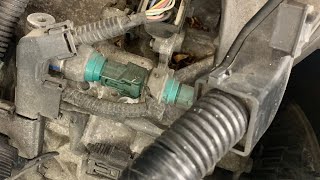
- Failed 3rd Clutch Transmission Fluid Pressure Switch 🔴 High Probability → Shop Transmission Assembly This specific pressure switch is a known high-failure item on Honda's 6-speed automatic transmission used in V6 models. Owners report replacing them multiple times. Honda has updated the part to improve reliability; the original failing part often has a green 🎬 Watch: Step-by-step 6-speed transmission pressure switch replacement connector, while the updated replacement part has a black connector.
How to confirm: After confirming fluid level is correct, testing the switch's circuit is the next step. Using a multimeter at the switch connector with the key on (engine off) should show approximately 5 volts from the PCM. If voltage is present, the switch is highly suspect. Given the extremely high failure rate, many owners and mechanics opt to replace the switch as the primary diagnostic step, especially if the original green-connector switch is still installed.
Typical fix: Replace the 3rd clutch transmission fluid pressure switch and its corresponding aluminum crush washer. Clear the code with a scan tool. The 'permanent' code may remain until the car completes a full drive cycle and verifies the fix.
Est. part cost: $90-$150 - Low or Dirty Transmission Fluid ⚪ Low Probability → Shop Transmission Assembly While not a specific proneness, all automatic transmissions rely on clean fluid at the proper level to generate hydraulic pressure. Degraded fluid can contribute to overall transmission issues, though it's unlikely to be the sole cause of a P0848 circuit code.
How to confirm: Check the transmission fluid level and condition using the dipstick. The fluid should be at the correct level and reddish-pink, not brown, black, or smelling burnt. Ensure the check is performed per the owner's manual procedure (e.g., engine warm and off).
Typical fix: Perform a transmission fluid drain-and-fill using only Honda-specific ATF DW-1 fluid. If the fluid is very dirty, multiple drain-and-fills may be needed.
Est. part cost: $40-$80
Rare But Worth Checking
- Wiring Harness Damage: An open or short in the single wire between the pressure switch and the PCM can trigger this code. This is worth checking if a new switch does not resolve the issue. Inspect the connector and wiring near the switch for any signs of corrosion, chafing, or breaks, particularly where the harness may rub against other components.
- Faulty Powertrain Control Module (PCM): → Shop Engine Control Module (ECM) This is the least likely cause. The PCM should only be considered after the switch and wiring have been thoroughly checked and confirmed to be good. A diagnostic step would be to check for the 5V reference signal at the PCM connector pin itself.
Diagnosis Steps
- Check the transmission fluid level and condition. Ensure it is full and clean. Use only Honda ATF DW-1 fluid if a top-off is needed.
- Scan the vehicle for any other trouble codes to see if other issues are present.
- For V6 Models: The most likely culprit is the 3rd clutch pressure switch. Locate the switch on the front of the transmission. Access usually requires removing the battery, battery tray, and air intake box.
- Inspect the electrical connector and the single wire going to the pressure switch for any damage, corrosion, or loose connections.
- Disconnect the connector and, with the ignition ON (engine OFF), use a multimeter to test for a ~5V reference signal at the wire. If 5V is present, the wiring and PCM are likely good, pointing to a failed switch.
- Replace the 3rd clutch pressure switch (using a 22mm deep socket) and the aluminum crush washer. Torque the new switch to the proper specification (approx. 14 ft-lbs).
- Reconnect the electrical connector and reassemble the airbox, battery tray, and battery.
- Clear the trouble code with a scanner. Note that a 'permanent' DTC may be stored and will only clear after the vehicle's internal monitors run and confirm the repair over a drive cycle.
Parts You'll Likely Need
- 3rd Clutch Transmission Fluid Pressure Switch (For V6 Models)
(OEM #28600-R94-004)— This is the most common failure point for code P0848 on the V6 Accord's 6-speed automatic transmission. It is a known high-failure part across multiple Honda/Acura platforms. This part number supersedes older versions 28600-R90-003 and 28600-R90-013.
Trusted brands: Honda (Genuine OEM)
OEM price range: $90-$150
Aftermarket price range: $30-$60 - Transmission Pressure Switch Crush Washer
(OEM #90471-PW7-A00)— This is a one-time-use aluminum washer that must be replaced with the pressure switch to prevent leaks. It is often sold separately.
Trusted brands: Honda (Genuine OEM)
OEM price range: $2-$5
Aftermarket price range: $1-$3
Platform-Specific Known Issues
- On V6 models, the original green-colored 3rd clutch pressure switch is known to fail frequently. The replacement OEM part is typically black and is considered an updated, more reliable design.
- There are two identical-looking pressure switches located near each other on the transmission case. For P0848, you must replace the 3rd clutch switch, which is the lower of the two. 🎬 Watch: How to locate the 2nd and 3rd clutch switches
Mechanic-Grade Diagnostic Values
- Voltage at 3rd clutch pressure switch connector (unplugged) — expected: ~5.0 Volts. Failure: If ~5V is present, the PCM and wiring are good, indicating a bad switch. If 0V, there is an open/short in the wiring or a bad PCM.
- Voltage at PCM connector terminal C5 to body ground — expected: ~5.0 Volts. Failure: This test is performed if the switch connector shows 0V. If ~5V is present here, it confirms an open in the wire between the PCM and the switch. If 0V is present here, the PCM itself is suspect.
Scan Tool Commands That Help
- Honda Diagnostic System (HDS): Data List Display — A technician can use the HDS to monitor the real-time status (ON/OFF) of the 'ATF Pressure Switch B (3rd)' while driving. When the transmission is in 3rd gear, the switch status should read 'ON'. If it remains 'OFF' while in 3rd gear, it confirms a fault in the switch or its circuit.
- Honda Diagnostic System (HDS): Clear DTCs — After replacing the faulty component, the HDS is used to clear the trouble code from the PCM's memory. Note that a 'permanent' code may remain until the vehicle completes a full drive cycle and the internal monitors confirm the repair is successful.
Wiring & Ground Locations
- PCM Connector C, Pin 5 (C5) — On the Powertrain Control Module (PCM), which is typically located in the engine bay. This specific pin provides the reference voltage to the 3rd clutch pressure switch.. This is the origin point of the circuit's voltage. Testing for ~5V at this pin is the final step to rule out a wiring issue and condemn the PCM, which is very rare.
- G101 — On many Honda V6 platforms, G101 is a critical engine harness ground located on the intake manifold plenum or thermostat housing on the driver's side of the engine bay.. While the pressure switch circuit is a simple signal wire with a PCM-provided ground, a poor main engine ground at G101 can cause a host of bizarre electronic issues and erratic sensor readings. Ensuring this ground is clean and tight is a good practice when diagnosing any electrical fault.
Real Owner Repair Stories
- AcuraZine Forum Member (2016 Acura RDX (shares V6/6AT powertrain)) — Check Engine Light with code P0848, harsh shifting.
❌ Tried (didn't work) Initially, the owner planned to just change the transmission fluid.
✅ What actually fixed it The user replaced the 3rd gear pressure switch ('Switch B') based on forum advice and attached diagnostic manual pages. The problem was resolved after the switch replacement. - YouTube Creator 'Will's Take' (Honda Pilot (shares V6/6AT powertrain)) — Check Engine Light with code P0848, harsh kick from 2nd to 3rd gear. This was the second time the failure occurred; the first was fixed under warranty two years prior.
✅ What actually fixed it The owner replaced the 3rd clutch pressure switch (part #28600-R94-004). The old, dealer-replaced part was green, and the new OEM part was black. The fix was successful and the permanent DTC cleared after a drive cycle. - NHTSA ODI #11620350 (Honda Odyssey) — An owner reported that their vehicle was scanned and diagnosed with code P0848 after experiencing issues when pressing the accelerator pedal.
- NHTSA ODI #11437861 (Honda Odyssey) — A report describes the vehicle shuddering or jittering during acceleration, with a diagnostic tool showing P0848 for a faulty transmission fluid pressure switch alongside a cylinder misfire code.
When the Usual Fixes Don't Work
- In one documented case on a related Acura RDX, a user had the P0848 code return even after the 3rd pressure switch was replaced. The dealership stated the cause was that the software was not re-initialized properly after the new switch was installed. After they re-initialized the computer, the problem was reportedly solved. This is an uncommon outcome, as a simple switch replacement typically does not require a software re-initialization.
OEM Part Supersession History
28600-R90-003→28600-R90-013, then 28600-R94-004— Part revision and update to improve reliability. The earliest parts (often with a green connector) are known to have a high failure rate.
Heads up: The newest part number, 28600-R94-004 (often with a black connector), is the correct and most reliable replacement for all previous versions.
Diagnostic Flowchart
Other Known Issues on This Vehicle
Issues unrelated to this code that are worth knowing about as an owner of this generation:
- Defective Starter Motor (V6 and 4-Cylinder) 🟠 Medium — Very common, especially on 2013-2015 models. Owners report grinding noises on startup or intermittent no-start conditions. (Ref: TSB 16-002 for V6 models addresses a grinding starter and may involve replacing the starter and rotating the torque converter ring gear.)
- VTC Actuator Rattle on Cold Start (4-Cylinder) 🟠 Medium — Common on the 2.4L K24 engine. A brief, loud rattle or grind for a couple of seconds immediately after a cold start. (Ref: TSB 09-010 (and later revisions) applies to earlier Accords but describes the exact same issue. The fix is to replace the VTC actuator.)
- CVT Judder / Hesitation (4-Cylinder) 🟠 Medium — Widespread on early 9th gen models (2013-2015). Can feel like a shudder or vibration on light acceleration. (Ref: Honda issued TSBs (e.g., 15-077) and a warranty extension for the start clutch on affected models. The fix often involves a software update, fluid change, or start clutch replacement.)
- Excessive Oil Consumption (V6 and 4-Cylinder) 🟡 Low — A recurring issue on many Honda engines of this era. More noticeable on high-mileage vehicles.
- Automatic Transmission Torque Converter Judder (V6) 🟠 Medium → Shop Transmission Assembly — A judder or vibration may be felt between 20-60 mph under light load. Caused by deteriorated ATF. (Ref: TSB 17-017 and 17-018 address this. The fix involves a PCM software update and a transmission fluid flush (or multiple flushes).)
Used vs. New Parts: Buying Guide for This Vehicle
When a used part is the smart pick: For this specific repair, buying a used part is NEVER recommended. The 3rd clutch pressure switch is a known high-failure electronic component. The risk of getting a part that has already failed or is near the end of its service life is extremely high.
What to inspect on the donor part:
- Not applicable, do not buy used.
OEM-only on this vehicle (don't cheap out):
- 3rd Clutch Transmission Fluid Pressure Switch
Aftermarket brands forum-validated for this vehicle:
- While OEM is strongly recommended, some professional technicians and users report success with Standard Motor Products (SMP) as a higher-quality aftermarket alternative. However, for a critical transmission component with a high failure rate, the small cost savings may not be worth the risk compared to a genuine Honda part.
Brands owners have reported issues with on this vehicle:
- Generic, unbranded, or 'white-box' parts sold on marketplaces like Amazon or eBay should be avoided. These parts often have questionable quality control and a high likelihood of premature failure, leading you to do the repair all over again.
Real Owner Stories
Aggregated from forums and TSBs cited above. Mileages and costs reflect what owners reported in those sources.
2020 Honda Pilot EX-L V6
Symptoms: P0848 code triggered; identified as a common failure of the 3rd clutch pressure switch.
What fixed it: Replacement of the 3rd clutch pressure switch, specifically noting the change from the old green part to the new black part.
Source hint: Reddit r/hondapilot: 'P0848 - 2020 EXL'
2016 Honda Odyssey V6
Symptoms: Hard shifting and a flashing 'D' (Drive) indicator light.
What fixed it: Replacement of the pressure switch (though the owner noted a recurrence even after a previous replacement).
Source hint: Reddit r/HondaOdyssey: 'P0848 honda odyssey 2016'
2013 Honda Accord EX-L V6
Symptoms: Intermittent starter grinding problems (separate from P0848 but common to the platform).
What fixed it: TSB 16-002 procedure involving the starter motor and torque converter ring gear.
Source hint: Honda-Tech: 'Intermittent Weird Starter Problems On My '13 Accord EX-L'
Related OBD-II Codes
Frequently Asked Questions
My 2013 Accord V6 is making a grinding noise when I start it; is this related to the P0848 code?
I see two switches on my transmission; which one do I replace for P0848?
How can I tell if I have the updated replacement part for the 3rd clutch pressure switch?
Why is my Accord showing an 'FCW System Failed' warning along with the flashing 'D' light?
Do I need to remove the battery to fix the P0848 code on my Accord V6?
What type of transmission fluid should I use if I'm performing a drain-and-fill to address shifting issues?
Helpful Videos
We Have This Part in Stock

The information in this article is provided for general reference and educational purposes only. Vehicle specifications, procedures, and part compatibility can vary by production date, trim level, and region. Always consult your vehicle's factory service manual and verify part numbers before purchasing or performing repairs. Safety-critical components such as airbags, seat belts, and braking systems should be installed by a qualified professional.
- Honda Accord:
- 🧭 Diagnostic Flowchart
- 🎬 Helpful Videos
- 🛍️ Shop This Part
- What's Unique About the 2013-2017 Honda Accord
- Symptoms You May Notice
- Most Likely Causes
- Rare But Worth Checking
- Diagnosis Steps
- Parts You'll Likely Need
- Platform-Specific Known Issues
- Mechanic-Grade Diagnostic Values
- Scan Tool Commands That Help
- Wiring & Ground Locations
- Real Owner Repair Stories
- When the Usual Fixes Don't Work
- OEM Part Supersession History
- Other Known Issues on This Vehicle
- Used vs. New Parts: Buying Guide for This Vehicle
- Real Owner Stories
- 2020 Honda Pilot EX-L V6
- 2016 Honda Odyssey V6
- 2013 Honda Accord EX-L V6
- Related OBD-II Codes
- Frequently Asked Questions
- 🎟️ Get 5% Off