

P0848 on 2003-2008 Honda Pilot: 3rd Clutch Pressure Switch Causes and Fixes
On a 2003-2008 Honda Pilot, code P0848 is almost always caused by a failed 3rd clutch transmission fluid pressure switch. This is a very common failure on this platform. Replacing the switch is a straightforward DIY job that costs about $60-$120 for a genuine Honda part and a new crush washer.
- P0848 on a 2003-2008 Pilot almost certainly means the 3rd clutch pressure switch has failed.
- The most common symptom is a flashing 'D' light on the dash, with or without noticeable shifting problems.
- This is a great DIY repair for beginners. Use a genuine Honda switch (28610-RKE-004) and a new crush washer (90471-PW7-A00) for a reliable fix.
What's Unique About the 2003-2008 Honda Pilot
The 5-speed automatic transmission (model family BYKA/BVGA) in the first-generation Honda Pilot is well-known for issues with its pressure switches. These switches are a frequent failure point, so much so that Honda has updated the part over the years, even changing the color of the switch's plastic connector from green to black for the new part. This code is a very common reason for the 'D' light to start flashing on the instrument cluster for Pilot, Odyssey, and Acura MDX owners of this era.
Symptoms You May Notice
- Flashing 'D' (Drive) indicator light on the dashboard.
- Check Engine Light is on.
- Harsh or delayed gear shifts, particularly involving 3rd gear.
- Transmission may enter 'limp mode,' often getting stuck in 2nd or 3rd gear.
- Inability to shift into the highest gear (5th), leading to high RPM at highway speeds.
- In some cases, no noticeable shifting problems occur other than the warning lights.
- Replacing the entire transmission. This is an expensive and unnecessary repair for a simple sensor failure.
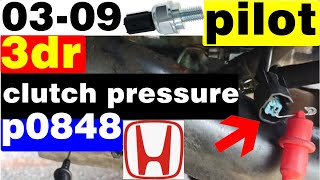
- Replacing the wrong pressure switch. This transmission has multiple pressure switches (e.g., for 2nd and 4th gear); ensure you are replacing the correct one for the 3rd clutch circuit. The 3rd clutch switch is on the front of the transmission. 🎬 See this step-by-step P0848 blinking D light fix
Most Likely Causes
- Failed 3rd Clutch Transmission Fluid Pressure Switch 🔴 High Probability → Shop Transmission Assembly This is a widely documented failure point on this specific transmission. The original switches are known to fail over time due to internal diaphragm fatigue or contamination, leading Honda to release updated part numbers.
How to confirm: After confirming the code with a scanner, the most practical step is to replace the switch. Testing can be done by checking for 5 volts at the connector with the key on and checking the switch for continuity, but given the high failure rate and low part cost, replacement is the most common and effective diagnostic step. 🎬 Watch: How to test the 3rd clutch pressure switch first
Typical fix: Replace the 3rd clutch transmission fluid pressure switch and the associated crush washer. The torque spec for the switch is approximately 14 lbf-ft (20 N.m). Do not overtighten or use the plastic connector to tighten.
Est. part cost: $60-$120 - Damaged Wiring or Poor Connection ⚪ Low Probability The wiring is a single wire and generally reliable, but road debris or improper servicing can cause damage. The connector itself can become brittle with age.
How to confirm: Visually inspect the single blue wire with a white tracer and its connector leading to the 3rd clutch pressure switch. Check for breaks, corrosion, or loose pins. Use a multimeter to check for continuity between the PCM connector and the switch connector.
Typical fix: Repair the broken wire or clean/replace the connector.
Est. part cost: $5-$25 - Low or Degraded Transmission Fluid ⚪ Low Probability → Shop Transmission Assembly
How to confirm: Check the transmission fluid level using the dipstick (engine off, on level ground). Note the fluid's color and smell; it should be reddish and not have a burnt odor. This code is for an electrical fault, so fluid is rarely the direct cause, but low/bad fluid can cause numerous transmission issues and may contribute to debris fouling the switch.
Typical fix: Perform a transmission fluid drain-and-fill using only genuine Honda ATF DW-1 fluid. Multiple drain-and-fills (often called a '3x3 drain and fill') may be needed to replace most of the old fluid.
Est. part cost: $40-$120
Rare But Worth Checking
- Faulty Powertrain Control Module (PCM): → Shop Engine Control Module (ECM) This is extremely rare. The PCM should only be considered after the switch and wiring have been definitively ruled out as the cause.
Diagnosis Steps
- Read the trouble codes with an OBD-II scanner that can read transmission codes to confirm P0848 is present.
- Check the transmission fluid level and condition. Ensure it is at the proper level and doesn't look or smell burnt. Use only Honda ATF DW-1 fluid if a top-off is needed.
- Locate the 3rd clutch pressure switch. It is on the front of the transmission housing, accessible by removing the driver's side front wheel and a plastic splash guard. It has a single-wire connector, typically blue with a white stripe.
- Inspect the single-wire connector and the wire leading to the switch. Look for any signs of damage, corrosion, or loose connection.
- The most common and time-effective fix is to replace the switch. Use a 22mm (or 7/8") deep socket to remove the old switch. A small amount of transmission fluid will leak out, so have a rag ready.
- Install the new switch with a new crush washer. Do not reuse the old washer. Torque the new switch to 14 lbf-ft (20 N.m). 🎬 Watch: Walkthrough of the pressure switch replacement process
- Reconnect the electrical connector, ensuring it clicks into place. Reinstall the splash guard and wheel.
- Clear the trouble codes with the scanner and perform a test drive to ensure the code and flashing 'D' light do not return. A drive cycle may be needed for the permanent code to clear.
Parts You'll Likely Need
- 3rd Clutch Transmission Fluid Pressure Switch
(OEM #28610-RKE-004)— This is the component that fails and directly causes the P0848 code. The part number 28610-RKE-004 is the updated version that supersedes older numbers like 28600-P7Z-003 and 28610-RAY-003. Forum users strongly advise using only Genuine Honda parts for this sensor.
Trusted brands: Genuine Honda
OEM price range: $60-$120
Aftermarket price range: $20-$50 - Pressure Switch Seal Ring / Crush Washer (10mm)
(OEM #90471-PW7-A00)— This single-use crush washer is required to create a proper seal for the new pressure switch and is almost always sold separately from the switch itself.
Trusted brands: Genuine Honda
OEM price range: $3-$7
Aftermarket price range: $1-$3
Related Codes That Often Appear With This One
- P0700 — P0700 is a generic code indicating that the Transmission Control Module (TCM) has stored a fault. It almost always appears alongside a more specific transmission code like P0848 to signal the general area of the problem.
- P0847 — P0847 is the corresponding code for the 3rd clutch pressure switch circuit being 'Low' (stuck ON). It's common to see issues with this switch trigger either code, pointing to the same faulty component.
Technical Service Bulletins (TSBs) & Recalls
- While no TSB is specific to P0848 on the Pilot, Honda did issue recalls for early 2003-2004 models related to inadequate lubrication of second gear, which involved rerouting an oil cooler return line. This highlights the known sensitivity of these transmissions.
Platform-Specific Known Issues
- The pressure switches on this generation of Honda 5-speed automatic transmissions are a known weak point and a very common repair item.
- Owners on forums like Piloteers.org and Acurazine.com frequently document this exact failure and repair, confirming it as one of the most common electronic faults for this transmission.
Mechanic-Grade Diagnostic Values
- 3rd Clutch Pressure Switch Connector Voltage — expected: Approximately 5V with the ignition ON (II) and the connector disconnected.. Failure: If there is no voltage, the problem is in the wiring or PCM, not the switch itself.
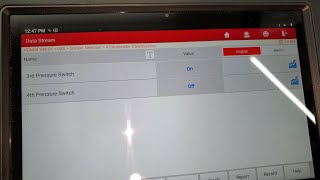
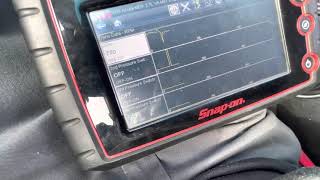
- 3rd Clutch Pressure Switch State (via Scan Tool) — expected: The switch status should change from 'OFF' to 'ON' in the scan tool's data list when the transmission is commanded or shifted into 3rd gear.. Failure: If the status does not change, it confirms a faulty switch or a blocked hydraulic port.
Scan Tool Commands That Help
- Honda Diagnostic System (HDS): DATA LIST for Transmission — Use during a test drive to monitor the live status (ON/OFF) of the '3rd PRESSURE SWITCH'. This is the definitive way to see if the switch is responding to hydraulic pressure as the vehicle shifts into 3rd gear.
- Honda Diagnostic System (HDS): Clear DTCs — Required after replacing the switch. Note that a 'permanent' DTC may remain until the PCM completes a full drive cycle and verifies the repair.
Wiring & Ground Locations
- PCM Connector A, Pin A18 — The Powertrain Control Module (PCM) is located on the right side of the engine compartment. Connector A is one of the main plugs into the PCM.. The single wire from the 3rd clutch pressure switch (Blue with a white stripe) terminates at pin A18 of PCM connector A. This is the exact pin to test for continuity back to the switch connector if a wiring fault is suspected.
- G101 — On the J35A V6 engine, G101 is a primary ground point located on the thermostat housing, which is on the left (driver's) side of the engine.. G101 serves as a main ground for the PCM. While not directly for the sensor (which grounds through its body to the transmission case), a poor G101 connection can cause erratic PCM behavior and phantom codes.
- Transmission Case Ground — The body of the pressure switch itself grounds to the transmission case. A ground strap connects the transmission housing to the vehicle's chassis, typically under the battery tray.. The switch completes its circuit by grounding through the transmission. A corroded or broken transmission ground strap can cause an open circuit condition, mimicking a failed switch and triggering P0848.
Real Owner Repair Stories
- Honda Civic Forum user 'Greenhawk22' (Honda Civic (similar logic applies)) — P0848 code and flashing 'D' light, but no noticeable shifting problems.
❌ Tried (didn't work) Changed transmission fluid with genuine Honda ATF., Replaced the 3rd clutch pressure switch., Reset the code by disconnecting the battery.
✅ What actually fixed it The user's code persisted after replacing the switch, indicating the next step would be to test the wiring harness for a break between the switch connector and the PCM, or to suspect a rare PCM fault. The thread did not have a final resolution but highlights that the switch is not the fix 100% of the time. - NHTSA ODI #11620350 (Honda Odyssey - Cross-Manufacturer Reference) — An owner reported that after pressing the accelerator pedal, the vehicle was scanned and diagnosed with code P0848.
- NHTSA ODI #11437861 (Honda Odyssey - Cross-Manufacturer Reference) — A driver experienced a vehicle that shudders or jitters while trying to accelerate, with diagnostic tools showing P0848 for a faulty transmission fluid pressure switch alongside engine misfire codes.
OEM Part Supersession History
28600-P7Z-003, 28600-P7Z-013, 28610-RAY-003, 28610-RAY-013→28610-RKE-004— Improved design to address high failure rates of the original switches.
Heads up: The new part (28610-RKE-004) is a direct replacement for all the older numbers and is fully compatible. A visual difference is the color of the plastic connector, which changed from green on many old parts to black on the new part.
Model Year Variations Within This Range
- 2003-2005 vs 2006-2008: The Honda Pilot received a facelift for the 2006 model year, which included minor engine updates (J35A6/J35Z1 vs J35A4) and interior changes. However, the 5-speed automatic transmission and the location/function of the 3rd clutch pressure switch remained fundamentally the same. The P0848 fault and its diagnosis are identical across the entire 2003-2008 generation.
Diagnostic Flowchart
Other Known Issues on This Vehicle
Issues unrelated to this code that are worth knowing about as an owner of this generation:
- Radiator Internal Leak ('Strawberry Milkshake') 🔴 High — Common on higher-mileage vehicles (over 100k miles) with original radiators. Especially noted on 2005+ models. (Ref: No official recall, but a widely known issue. Failure of the internal transmission cooler inside the radiator mixes coolant and ATF, destroying the transmission.)
- Automatic Transmission Failure 🔴 High → Shop Transmission Assembly — A known weakness, particularly on 2003-2004 models before a mid-cycle refresh. A recall was issued for early models to improve lubrication. (Ref: NHTSA Action Number PE02082 / Honda Recall 04-037 for 2003-2004 models.)
- Failing Lower Control Arm Compliance Bushings 🟠 Medium — Very common; bushings often crack and fail, causing clunking noises, poor alignment, and uneven tire wear.
- Worn/Collapsed Engine Mounts 🟠 Medium — The hydraulic engine mounts are prone to leaking and collapsing over time, leading to excessive engine vibration at idle and when in gear.
- Timing Belt Replacement Interval 🔴 High — Not a failure, but a critical maintenance item. The J35A is an interference engine, and a snapped timing belt will cause catastrophic engine damage. Replacement is due every 105,000 miles or 7 years.
- Rear Subframe Mount Rust 🔴 High — A design flaw can trap water where the rear subframe mounts to the body, causing severe rust that can lead to the subframe separating. Affects vehicles in rust-belt states most severely.
Used vs. New Parts: Buying Guide for This Vehicle
When a used part is the smart pick: For this specific repair, using a used part is strongly discouraged and makes no financial sense. The part is a known high-failure item, and a used switch has an unknown history and a high probability of premature failure.
What to inspect on the donor part:
- Not applicable. Do not use a salvaged pressure switch for this repair.
OEM-only on this vehicle (don't cheap out):
- 3rd Clutch Transmission Fluid Pressure Switch
Aftermarket brands forum-validated for this vehicle:
- While some aftermarket brands exist, forum consensus and mechanic experience overwhelmingly recommend using only Genuine Honda parts (part number 28610-RKE-004) for any transmission sensor on this vehicle to ensure compatibility and longevity.
Brands owners have reported issues with on this vehicle:
- Any unbranded or generic aftermarket pressure switches from online marketplaces are frequently reported to fail quickly or be dead-on-arrival. The small cost savings are not worth the risk of having to repeat the repair.
Real Owner Stories
Aggregated from forums and TSBs cited above. Mileages and costs reflect what owners reported in those sources.
2003 Acura MDX J35A
Symptoms: Owner experienced the P0848 code accompanied by high RPMs at highway speeds, indicating the 3rd gear pressure switch was stuck off.
What fixed it: Replacing the 3rd gear pressure switch.
Source hint: Acurazine - P0848 Transmission fluid pressure sensor/switch B circuit high
2006 Honda Pilot J35A
Symptoms: Owner diagnosed a P0848 code and sought confirmation on the specific part number and DIY repair steps for the 3rd Clutch Pressure Switch.
What fixed it: Replacement of the 3rd Clutch Pressure Switch and associated crush washer.
Source hint: Piloteers.org - P0848 3rd Clutch Pressure Switch
2020 Honda Pilot EXL
Symptoms: Flashing 'D' light and P0848 code; discussion noted that these switches fail so frequently that Honda updated the part from a green connector to a black connector.
What fixed it: Replacement of the 3rd clutch switch.
Source hint: Reddit r/hondapilot - P0848 - 2020 EXL
Related OBD-II Codes
Frequently Asked Questions
Does the recall for 2003-2004 Honda Pilots (Recall 04-037) fix the P0848 code?
I see Honda updated the part for this; should I look for a specific color connector?
Can I use any transmission fluid to top off my Pilot if the P0848 light comes on?
Is the 3rd clutch pressure switch easy to access on the 2003-2008 Pilot?
What is the correct torque specification for the new switch so I don't damage the transmission housing?
Helpful Videos
We Have This Part in Stock

The information in this article is provided for general reference and educational purposes only. Vehicle specifications, procedures, and part compatibility can vary by production date, trim level, and region. Always consult your vehicle's factory service manual and verify part numbers before purchasing or performing repairs. Safety-critical components such as airbags, seat belts, and braking systems should be installed by a qualified professional.
- Honda Pilot:
- 🧭 Diagnostic Flowchart
- 🎬 Helpful Videos
- 🛍️ Shop This Part
- What's Unique About the 2003-2008 Honda Pilot
- Symptoms You May Notice
- Most Likely Causes
- Rare But Worth Checking
- Diagnosis Steps
- Parts You'll Likely Need
- Related Codes That Often Appear With This One
- Technical Service Bulletins (TSBs) & Recalls
- Platform-Specific Known Issues
- Mechanic-Grade Diagnostic Values
- Scan Tool Commands That Help
- Wiring & Ground Locations
- Real Owner Repair Stories
- OEM Part Supersession History
- Model Year Variations Within This Range
- Other Known Issues on This Vehicle
- Used vs. New Parts: Buying Guide for This Vehicle
- Real Owner Stories
- 2003 Acura MDX J35A
- 2006 Honda Pilot J35A
- 2020 Honda Pilot EXL
- Related OBD-II Codes
- Frequently Asked Questions
- 🎟️ Get 5% Off