

P0894 on 2002-2003 Chevrolet Silverado 1500 HD: Transmission Slipping Causes and Fixes
On a 2002-2003 Silverado 1500 HD, P0894 almost always indicates a slipping Torque Converter Clutch (TCC). The most common causes are a worn TCC regulator valve bore in the valve body, a failed TCC solenoid, or a worn-out torque converter. This is a serious code that requires immediate attention to prevent catastrophic transmission failure.
- P0894 on your Silverado HD indicates a serious internal transmission issue, most often a slipping torque converter clutch.
- Do not continue to drive the vehicle, as you risk severe, expensive damage to the transmission from overheating.
- The most common cause is a worn TCC regulator valve bore in the valve body, a known issue with the 4L80-E transmission.
- Diagnosis requires a professional scan tool to confirm TCC slip before parts are replaced.
- If the torque converter has failed, the transmission cooler must be flushed or replaced to prevent debris from damaging the new parts.
What's Unique About the 2002-2003 Chevrolet SILVERADO 1500 HD
The 2002-2003 Silverado 1500 HD is equipped with the robust 4L80-E automatic transmission. While durable, this transmission has a well-documented design weakness that directly leads to code P0894. The steel TCC regulator valve inside the aluminum valve body constantly oscillates, eventually wearing out its bore. This wear causes a hydraulic pressure leak, preventing the torque converter clutch from applying with enough force to lock up completely. This valve body issue is a very common cause for this specific code on this truck, sometimes leading to misdiagnosis where the torque converter itself is blamed and replaced unnecessarily.
Diagnostic Flowchart
Tap your situation to follow the diagnostic path that matches what you're seeing on this vehicle.
Symptoms You May Notice
- Check Engine Light is on
- Harsh or banging shifts, especially from 1st to 2nd gear, after the code has set
- Engine RPMs flare or surge while driving at a steady highway speed, especially on a slight incline
- A sensation of shuddering, like driving over rumble strips, when the TCC tries to engage
- Transmission overheating, especially on the highway
- Delayed or no engagement into Drive or Reverse (in severe cases or when fluid is low)
- A burning smell from the transmission fluid
- Noticeable decrease in fuel economy
- Replacing the torque converter when the root cause is a worn TCC regulator valve bore in the valve body. The new converter will still slip due to the hydraulic leak, and the code will return.
- Replacing only the TCC solenoid when the valve body bore is worn, which does not fix the underlying pressure loss.
Most Likely Causes
- Worn TCC Regulator Valve Bore in Valve Body 🔴 High Probability → Shop Transmission Valve Body This is a well-documented wear point in the 4L80-E transmission. The constant oscillation of the steel valve wears the aluminum bore, causing a hydraulic pressure leak that prevents the TCC from applying correctly.
How to confirm: A technician can perform a pressure test on the TCC circuit. The definitive method is to remove the valve body and use a vacuum tester on the TCC regulator valve bore to measure the leak. A scan tool showing TCC duty cycle at max (90%+) while slip RPM remains high (>100 RPM) strongly indicates a hydraulic leak.
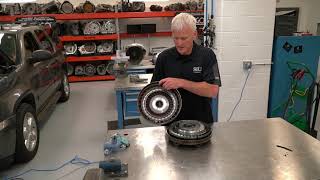
Typical fix: The valve body must be removed. A technician will ream the worn bore and install an oversized TCC regulator valve kit, such as the Sonnax 34994-01K. 🎬 Watch: A deep dive into diagnosing P0894 on the 4L80E. Alternatively, a remanufactured valve body with this update already performed can be installed.
Est. part cost: $60-$150 for a valve kit, $300-$500 for a remanufactured valve body. - Failed Torque Converter 🟡 Medium Probability → Shop Automatic Transmission Torque Converter The internal friction lining of the torque converter clutch can wear out or break apart, especially at higher mileage or under heavy use.
How to confirm: After confirming other causes are not present, this is the likely culprit. Finding significant amounts of black clutch material or metallic 'glitter' in the transmission pan is a strong indicator of converter failure. A diagnostic video of a 2006 Silverado with P0894 showed a cut-open converter with the friction material completely broken off in chunks.
Typical fix: The transmission must be removed from the vehicle to replace the torque converter. It is absolutely critical to also flush or replace the transmission cooler and lines to remove all debris from the failed converter, as this debris can destroy the new parts.
Est. part cost: $250-$600 - Failed TCC PWM Solenoid 🟡 Medium Probability → Shop Transmission Valve Body
How to confirm: With the transmission pan removed, the solenoid's resistance can be tested with a multimeter (should be 10-15 Ohms). A professional scan tool can also command the solenoid on and off to check for an audible click and measure the current draw, which should be around 1 amp. Visually inspect the solenoid for cracks in the plastic housing.
Typical fix: Drop the transmission pan, unplug and unclip the old solenoid, and install a new one. The filter and fluid should be replaced at the same time. Ensure the retaining clip is seated correctly 🎬 See how to drop the pan and swap the solenoids. to prevent hydraulic leaks.
Est. part cost: $30-$80 - Low or Degraded Transmission Fluid ⚪ Low Probability → Shop Transmission Assembly
How to confirm: Check the transmission fluid level and condition with the engine running and the transmission at operating temperature. The fluid should be at the full mark, red in color, and not smell burnt.
Typical fix: Top off the fluid to the correct level or perform a complete fluid and filter change using the correct fluid type (ACDelco DEXRON-VI is recommended as a replacement for the original DEXRON-III).
Est. part cost: $75-$150
Rare But Worth Checking
- Damaged Valve Body Separator Plate: → Shop Transmission Valve Body
Diagnosis Steps
- Check the transmission fluid level and condition. If low, top it off and check for leaks. If burnt or full of debris, a more serious problem is likely.
- Use a professional scan tool to monitor live data. Observe the 'TCC Slip Speed' while driving at a steady highway speed (55-65 mph). If the TCM is commanding the TCC on (duty cycle > 90%) but the slip speed is consistently high (>100 RPM), a mechanical/hydraulic fault is confirmed.
- If possible, use the scan tool to command the TCC solenoid on and off while monitoring current draw. A change of about 1 amp is expected. This confirms the solenoid, wiring, and TCM driver are electrically functional.
- Drop the transmission pan and inspect for debris. A fine gray paste is normal wear, but large metal flakes or chunks of black friction material indicate torque converter or clutch pack failure.
- While the pan is off, inspect and test the TCC solenoid's resistance (10-15 Ohms) and check its plastic body for cracks.
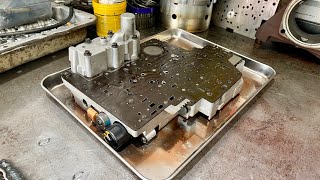
- If the fluid and solenoid are good, the next step is to remove and inspect the valve body for a worn TCC regulator valve bore. This often requires a specialist with vacuum testing equipment. 🎬 Watch: A step-by-step guide to disassembling the 4L80E valve body.
- If the valve body is confirmed to be in good condition, the torque converter itself is the most likely remaining cause of the slippage.
Parts You'll Likely Need
- Torque Converter Clutch (TCC) Regulator Valve Repair Kit — This is the most common point of failure on the 4L80-E transmission that causes code P0894. The kit includes an oversized valve and/or sleeve to fix the worn valve body bore.
Trusted brands: Sonnax (P/N: 34994-01K), TransGo
Aftermarket price range: $60-$150 - Torque Converter Clutch (TCC) PWM Solenoid
(OEM #24227792 (replaces 24212690))— This solenoid controls the application of the TCC. It can fail electrically or mechanically, causing slippage. It is often replaced as a precaution whenever the pan is off.
Trusted brands: ACDelco, Rostra, Bosch
OEM price range: $40-$70
Aftermarket price range: $25-$50 - Torque Converter — If the internal clutch lining has failed, the entire torque converter must be replaced. This requires removing the transmission.
Trusted brands: ACDelco, Precision of New Hampton, Yank, Circle D
OEM price range: $400-$700
Aftermarket price range: $250-$500 - Transmission Filter and Gasket Kit
(OEM #24208576)— This should be replaced any time the transmission pan is removed
Related Codes That Often Appear With This One
- P0741 — Stands for 'Torque Converter Clutch Circuit Performance or Stuck Off'. This code is highly specific to the TCC system and strongly reinforces that the problem lies with the TCC solenoid, valve body, or the converter itself. It is often seen alongside P0894.
- P1870 — This is an older GM-specific code for 'Transmission Component Slipping' that functions identically to P0894. Many TSBs and repair kits (like Sonnax) address both codes as the same issue, which is typically caused by valve body wear.
Technical Service Bulletins (TSBs) & Recalls
- PIP4379M: A general TSB that lists P0894 among many other codes. It advises technicians to follow standard diagnostics and address P0701 first if present, indicating a broad potential for system-wide issues.
- 01-07-30-038: This bulletin addresses TCC shudder complaints on various GM trucks, including those with the 4L80-E. It points towards potential issues with the pressure regulator valve, TCC solenoid, and the torque converter itself as causes for shudder and slip, which are the direct precursors to a P0894 code.
Platform-Specific Known Issues
- The Vicious Cycle of Harsh Shifts: When the TCM detects TCC slip and sets P0894, it often enters a protective mode by commanding maximum line pressure to prevent further clutch slippage. This results in the commonly reported symptom of very harsh or banging shifts. A user on PerformanceTrucks.net noted this exact behavior, where clearing the code would restore normal shifting until the slip was detected again on the highway. This high pressure can cause additional stress on hard parts within the transmission.
- The Misleading Converter Replacement: A technician on LS1Tech documented a case where, based on common knowledge, he replaced the torque converter and TCC solenoid to fix a P0894. However, the problem got worse. After extensive troubleshooting, he found that the root cause was a combination of an incorrectly installed solenoid O-ring and debris in the original valve body. This serves as a cautionary tale against replacing the converter without definitively ruling out a hydraulic leak in the valve body first.
- Visual Proof of Converter Failure: A YouTube video by 'siu automotive' provides an excellent visual diagnosis for P0894 on a 2006 Silverado 2500. After confirming TCC slip with a scan tool, the technician removes the transmission and cuts open the torque converter. Inside, about two-thirds of the clutch friction lining has broken off into pieces, creating a massive hydraulic leak that prevents the clutch from applying with any force. This is the definitive cause of the slip.
Mechanic-Grade Diagnostic Values
- TCC PWM Solenoid Resistance — expected: 10 - 15 Ohms for the later model PWM solenoid used in 2002-2003 vehicles.. Failure: A reading significantly outside this range, especially a very low reading (e.g., under 2 ohms) or an open circuit, indicates a failed solenoid.
- TCC PWM Solenoid Current Draw — expected: Approximately 1 Amp change when commanded ON versus OFF using a scan tool.. Failure: No change in current indicates an open circuit in the wiring or a dead solenoid. Incorrect current suggests a wiring short or internal solenoid fault.
- TCC Apply Pressure (Valve Body Test Bench) — expected: A properly functioning, repaired valve body should produce around 125 PSI of TCC apply pressure.. Failure: A worn valve body may only produce 86 PSI or less, representing a significant loss of apply force.
- TCC Slip Speed (Live Scan Tool Data) — expected: Under 50 RPM when TCC is commanded locked at steady cruise.. Failure: Sustained slip of over 100-200 RPM while the TCC duty cycle is commanded high (e.g., >75%) confirms a slip condition.
Scan Tool Commands That Help
- Tech2 / GDS2 / Professional Snap-on, etc.: TCC PWM Solenoid Control — This is a key bidirectional test to verify the entire electrical control circuit for the TCC. By commanding the solenoid on and off, a technician can check the TCM driver, wiring integrity, and solenoid function (by listening for a click or measuring current draw) without removing the transmission pan.
Wiring & Ground Locations
- Main PCM Ground — A ground wire connected to a bolt on the top rear of the engine block, typically on the passenger side cylinder head.. This is the most critical ground for the computer. A poor connection here can cause countless erratic electrical issues, including incorrect sensor readings or faulty command signals to transmission solenoids, potentially leading to performance issues that could be misdiagnosed as an internal transmission fault.
- Transmission Main Connector (Case Connector) — The large round electrical connector on the passenger side of the transmission case.. This is the primary connection point for all internal electronics. The TCC solenoid can be tested for resistance here without dropping the pan. Pin 'E' is the 12-volt power feed, and Pin 'S' is the control side for the TCC PWM solenoid on later 4L80-E models.
- Engine Harness Chafe Points — Check for the engine wiring harness rubbing against the corner of the ECM/TCM bracket, the driver-side upper control arm, or the shock tower bolt.. While documented for slightly different model years, this is a known GM truck issue. A short-to-ground in the harness at these chafe points could affect the power or control circuit for the TCC solenoid, causing erratic operation or failure.
Real Owner Repair Stories
- LS1Tech.com forum user (2006 Chevrolet Silverado 2500HD with 6.0L and 4L80-E) — Pending code P0894, fine around town but harsh 1-2 shift and firm shifts after highway driving. TCC slip of 180-380 RPM observed on scanner.
❌ Tried (didn't work) Replaced the torque converter (with a Precision of New Hampton unit)., Replaced the TCC regulator solenoid., Flushed cooler lines with brake clean and shop air.
✅ What actually fixed it After the new parts didn't fix it, the pan was dropped again. The user discovered the TCC PWM solenoid retaining clip was not seated correctly, allowing the solenoid to back out and its O-ring to leak. This caused a loss of apply pressure. Additionally, the EPC and TC filter screens inside the valve body were found to be ripped. Correctly installing the solenoid and replacing the valve body resolved the issue.
"I Checked Everything" — The Actual Cause
- The classic scenario for P0894 is when the TCC solenoid tests perfectly for resistance and the fluid is clean, yet the slip persists. This almost always points to a hydraulic leak that electrical tests cannot see. The root cause is typically the worn TCC regulator valve bore in the valve body, which bleeds off the apply pressure needed to lock the converter. A valve body rebuilder noted that a worn bore might only allow 86 PSI of apply pressure, while a repaired one achieves 125 PSI, a difference that directly causes the slip.
OEM Part Supersession History
24212690→24227792— Standard part evolution and replacement.
Heads up: For the 2002-2003 model year, 24227792 is the correct service part. While the older number is listed as replaced, there are no known incompatibility issues when using the newer part.
Helpful Videos
We Have This Part in Stock

The information in this article is provided for general reference and educational purposes only. Vehicle specifications, procedures, and part compatibility can vary by production date, trim level, and region. Always consult your vehicle's factory service manual and verify part numbers before purchasing or performing repairs. Safety-critical components such as airbags, seat belts, and braking systems should be installed by a qualified professional.
- Chevrolet SILVERADO 1500 HD:
- 🧭 Diagnostic Flowchart
- 🎬 Helpful Videos
- 🛍️ Shop This Part
- What's Unique About the 2002-2003 Chevrolet SILVERADO 1500 HD
- Symptoms You May Notice
- Most Likely Causes
- Rare But Worth Checking
- Diagnosis Steps
- Parts You'll Likely Need
- Related Codes That Often Appear With This One
- Technical Service Bulletins (TSBs) & Recalls
- Platform-Specific Known Issues
- Mechanic-Grade Diagnostic Values
- Scan Tool Commands That Help
- Wiring & Ground Locations
- Real Owner Repair Stories
- "I Checked Everything" — The Actual Cause
- OEM Part Supersession History
- 🎟️ Get 5% Off