

P0894 on 2008-2010 Chevrolet Silverado 2500: Transmission Component Slipping Causes and Fixes
On a 2008-2010 Silverado 2500, P0894 means the transmission is slipping, most often due to a failing torque converter clutch (TCC) or a worn valve body. This is a serious code that requires immediate attention to avoid a full transmission replacement. Repair costs can range from several hundred dollars for a solenoid to over $3,000 for a rebuild.
- P0894 indicates a serious internal transmission slip; stop driving the vehicle immediately to prevent catastrophic damage.
- The most likely causes are a worn-out torque converter clutch or a worn TCC regulator valve bore in the valve body.
- Diagnosis requires a professional scan tool to monitor TCC slip speed in real-time.
- Repair is not a simple DIY job and will likely involve either removing the valve body or the entire transmission.
- Always use ACDelco DEXRON-VI transmission fluid for any service on the 6L90 transmission.
What's Unique About the 2008-2010 Chevrolet SILVERADO 2500
The 2008-2010 Silverado 2500 is equipped with the heavy-duty GM 6L90 automatic transmission, designed for high-torque applications. While generally robust, a common source for P0894 on this platform is wear in the valve body, specifically the bore for the TCC regulator valve. This wear causes a loss of hydraulic pressure, preventing the torque converter clutch from applying correctly. This issue is so prevalent that aftermarket companies like Sonnax and TransGo produce specific kits to ream the valve body and install oversized valves to permanently correct the hydraulic leak. Another known issue is the torque converter itself, where the clutch lining can delaminate under the heavy loads these trucks often endure.
Diagnostic Flowchart
Tap your situation to follow the diagnostic path that matches what you're seeing on this vehicle.
Symptoms You May Notice
- Check Engine Light is on
- Harsh, erratic, or delayed shifts
- Engine RPMs flare up when cruising or during light acceleration
- Sensation of the transmission slipping or failing to engage properly
- Vehicle enters 'limp mode' (stuck in one gear)
- Reduced fuel economy
- A burnt smell from the transmission fluid
- Shuddering feeling at highway speeds, especially under light load
- Delayed engagement when shifting from Park to Drive or Reverse
- Replacing the entire transmission when only the torque converter or valve body was faulty. A proper diagnosis to pinpoint the slipping component is critical to avoid unnecessary expense.
- Replacing the TCC solenoid individually when the root cause is a worn valve body bore starving it of pressure.
Most Likely Causes
- Failing Torque Converter / Torque Converter Clutch (TCC) 🔴 High Probability → Shop Automatic Transmission Torque Converter The friction material inside the torque converter clutch can wear out or delaminate over time, especially under heavy use common for a 2500-series truck. This prevents the clutch from locking up and can contaminate the entire transmission with debris.
How to confirm: Monitor 'TCC Slip Speed' on a professional scan tool. If the slip is consistently over 100 RPM when the TCC is commanded ON (duty cycle > 70%), the converter is failing. Dropping the transmission pan and finding significant metallic or friction material debris is another strong indicator.
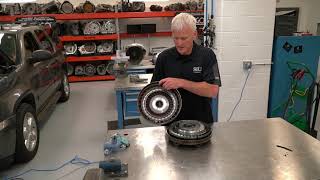
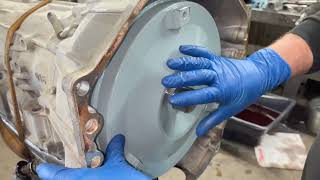
Typical fix: Replace the torque converter. This requires removing the transmission. 🎬 Watch: How to properly seat and install a new torque converter The transmission cooler and lines must be thoroughly flushed to remove any debris from the old converter. Many owners opt for an upgraded aftermarket converter with a billet cover for improved durability.
Est. part cost: $250-$600 for a remanufactured unit, $800+ for a high-performance aftermarket unit. - Worn Transmission Valve Body (TCC Regulator Valve Bore) 🔴 High Probability → Shop Transmission Valve Body The TCC regulator valve constantly oscillates within its bore in the aluminum valve body, leading to wear. This wear creates a hydraulic leak, reducing the pressure needed to apply the TCC, causing slip. This is a well-documented failure mode on the 6L series transmissions.
How to confirm: This is diagnosed after confirming TCC slip exists with a scan tool. The valve body must be removed and the bore can be checked for wear with a vacuum test rig, a common procedure in transmission shops.
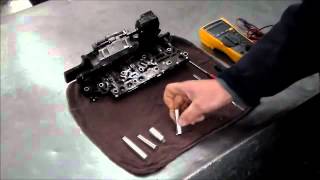
Typical fix: The worn bore is reamed out and an oversized valve and sleeve kit (e.g., from Sonnax or Transgo) is installed. Alternatively, the entire valve body can be replaced with a remanufactured unit that has these updates already incorporated. 🎬 Watch: How to remove the 6L90 TCM and valve body
Est. part cost: $60-$150 for a repair kit (e.g., Transgo 6L8-CS-TCC), $400-$800 for a remanufactured valve body. - Failed TCC Control Solenoid (part of TEHCM) 🟡 Medium Probability In the 6L90, the solenoids are part of the Transmission Electro-Hydraulic Control Module (TEHCM), which is mounted inside the transmission on the valve body. These solenoids can fail electrically or the internal valve can stick from debris.
How to confirm: A scan tool can command the solenoid on and off to check for a response. The solenoid's resistance can be tested, but since it's integrated into the TEHCM, diagnosis often involves checking the entire module. A current ramp test can also be performed to verify electrical integrity.
Typical fix: Replace the entire TEHCM assembly (which includes all solenoids). This part is located inside the transmission and requires removing the fluid pan and valve body for access. The new TEHCM must be programmed to the vehicle's VIN.
Est. part cost: $400-$700 for a remanufactured TEHCM. - Low or Contaminated Transmission Fluid ⚪ Low Probability → Shop Transmission Assembly While not a primary cause of failure itself, low fluid from a leak can cause a loss of hydraulic pressure, leading to slipping and overheating. TSB PIP4379N specifically notes that a low fluid level, especially after a fluid service or in cold weather, can cause a loss of pump prime and set a P0894 code.
How to confirm: Check the transmission fluid level and condition per the owner's manual procedure (hot check between 85°F and 120°F). Fluid should be red and clear, not dark brown, black, or smelling burnt.
Typical fix: Identify and repair any leaks, then perform a transmission fluid and filter change using the correct fluid (ACDelco DEXRON-VI). If the pump lost prime, the procedure in TSB PIP4379N may need to be followed.
Est. part cost: $75-$150
Rare But Worth Checking
- Faulty Transmission Control Module (TCM): → Shop Transmission Assembly A TCM failure is rare and should only be considered after all mechanical and hydraulic causes have been definitively ruled out. TSB PIP4379K explicitly states that replacing the TCM is unlikely to correct this DTC.
- Cracked Internal Suction Filter: TSB PIP4379N suggests that if the code resets during a cold start even with the correct fluid level, the internal transmission filter may be cracked, allowing the pump to suck in air and lose prime.
Diagnosis Steps
- Check the transmission fluid level and condition using the hot check procedure. Low, dark, or burnt-smelling fluid indicates a problem.
- Use a professional scan tool to read all fault codes and review the freeze-frame data for P0894.
- Perform a road test while monitoring live transmission data. Pay close attention to 'Engine RPM', 'Transmission Output Speed', 'TCC Slip Speed', and 'TCC Solenoid Duty Cycle'.
- Confirm that TCC slip exceeds 100-200 RPM when the TCC is commanded to lock up (typically at steady cruising speeds above 45 mph).
- If slip is confirmed, drop the transmission oil pan and inspect for excessive metal shavings or clutch material. A silver 'paste' on the magnet is normal wear, but large flakes or chunks indicate hard part failure (likely the torque converter).
- If the pan is relatively clean, the issue is likely hydraulic. The next logical step is to inspect the valve body for wear in the TCC regulator valve bore. This may require specialized vacuum testing tools.
- If the valve body and bores appear intact, suspect the TCC solenoid/TEHCM assembly.
- If all other components check out, the torque converter itself is the most likely culprit.
Parts You'll Likely Need
- Torque Converter
(OEM #24236469 (Verify by VIN))— This is the most common mechanical failure point for P0894, where the internal clutch wears out and can no longer lock up, contaminating the system.
Trusted brands: ACDelco, LuK, Transtar, Circle D Specialties (Performance)
OEM price range: $400-$700
Aftermarket price range: $250-$500, $900+ for performance. - Transmission Valve Body — Wear in the TCC regulator valve bore is a very common cause of the hydraulic pressure loss that leads to TCC slip. Often replaced as a remanufactured assembly.
Trusted brands: ACDelco (Remanufactured), Sonnax (Repair Kits)
Aftermarket price range: $400-$800 for a remanufactured unit.
Related Codes That Often Appear With This One
- P0741 — Stands for 'Torque Converter Clutch Circuit Performance or Stuck Off'. This code is highly specific to the TCC system and strongly reinforces that the problem lies with the TCC, its solenoid, or its hydraulic control circuit.
- P0700 — This is a generic code indicating the Transmission Control Module (TCM) has detected a fault. It's simply the TCM's request to turn on the Check Engine Light and will always be present with a specific transmission code like P0894.
Technical Service Bulletins (TSBs) & Recalls
- PIP4379N: Addresses delayed engagement and multiple DTCs, including P0894, which can result from a loss of transmission pump prime. This can be caused by a low fluid level, a recent fluid service, or a cracked internal filter. It advises checking the fluid level meticulously and inspecting the filter if the issue persists on cold starts.
Platform-Specific Known Issues
- Torque Converter Failure and Debris Contamination: → Shop Automatic Transmission Torque Converter A common failure pattern on Silverado HD forums involves the original torque converter clutch failing, sending friction material and metal throughout the transmission. Owners report that simply replacing the converter is not enough; the valve body, solenoids, and cooler must be meticulously cleaned or replaced to prevent a repeat failure. A Reddit thread on Silverado transmission issues highlights that both the 6L80 and 6L90 are prone to this torque converter failure mode.
Mechanic-Grade Diagnostic Values
- TCC Slip Speed (Scan Tool) — expected: 20-50 RPM when TCC is commanded ON and fully applied.. Failure: Sustained slip speed over 100-200 RPM when TCC lockup is commanded.
- TEHCM Shift Solenoid Resistance (On/Off type) — expected: 20-40 Ohms. Failure: Reading outside of this range indicates a failed solenoid coil.
- TEHCM Pressure Control Solenoid Resistance (PWM type) — expected: 3-8 Ohms. Failure: Reading outside of this range indicates a failed solenoid coil. The TCC solenoid is a PWM type.
- Transmission Line Pressure at Idle (in gear) — expected: Approximately 45-80 PSI. Failure: Significantly low pressure can indicate a worn pump, internal leaks, or a stuck pressure regulator valve.
- Transmission Line Pressure at Wide Open Throttle (Stall Test) — expected: Up to 300 PSI. Failure: Failure to build high pressure under load points to severe pump wear or major hydraulic leaks.
Scan Tool Commands That Help
- GDS2 / Tech2: Transmission Output Controls - Line PC Solenoid — Used during a line pressure test to command specific line pressures and compare the scan tool's commanded value against the actual reading from a mechanical gauge. This verifies the TEHCM's ability to control pressure.
- GDS2 / Tech2: Solenoid Cleaning Procedure — If intermittent solenoid performance is suspected due to debris, this function automatically cycles all solenoids to try and flush contaminants. It can be attempted before replacing the TEHCM.
- GDS2 / Tech2 with Amp Clamp: TCC Solenoid Command ON/OFF — To perform a current ramp test. By commanding the TCC solenoid on and monitoring the amperage draw (should be around 1 amp), a technician can verify the electrical integrity of the solenoid, its wiring, and the TEHCM driver without removing the transmission pan.
Wiring & Ground Locations
- TEHCM Main Connector — On the side of the transmission case. This is the main external connection to the internal TEHCM.. This is the primary point to check for corrosion, bent pins, or a loose connection that could disrupt communication and power to the entire transmission control system. Damaged pins on this connector are a known issue.
- Chassis/Engine Ground Straps — Key grounds include a strap from the negative battery cable to the passenger side cylinder head, a body-to-engine strap on the driver's side, and a ground on the frame under the driver's side.. A poor ground connection can cause erratic behavior from electronic modules, including the TEHCM. Voltage drops from bad grounds can lead to incorrect sensor readings and faulty solenoid operation, potentially mimicking internal transmission faults.
- G103 / G104 — Typically located on the engine block or cylinder heads, serving as primary grounds for the engine and transmission control systems.. The TEHCM relies on a solid ground reference. If a primary ground like G103 is corroded or loose, the TEHCM may not function correctly, leading to various fault codes, including P0894.
Real Owner Repair Stories
- Demonstration by professional technician (2004 GMC Sierra (with 4L60E, but identical diagnostic principle for P0894)) — Check Engine Light with code P0894, sensation of slipping at highway speeds.
❌ Tried (didn't work) Initial fluid check was clean, ruling out widespread mechanical carnage.
✅ What actually fixed it Live data showed the TCC solenoid being commanded to 99% duty cycle, yet TCC slip remained high (over 130 RPM). The diagnosis concluded the torque converter clutch itself was worn out and unable to hold, requiring torque converter replacement and a valve body update to prevent recurrence.
OEM Part Supersession History
Various (e.g., 24256939, 24257213)→Various (e.g., 24275874 for 2010+)— Updates to address internal pressure switch failures, solenoid reliability, and logic changes.
Heads up: TEHCMs are NOT interchangeable between model years or even some software calibrations (Tag IDs). Installing an incorrect TEHCM can result in a no-start condition, immediate limp mode, or shifting problems. The module must be programmed to the vehicle's VIN after installation using a J2534 device.
Model Year Variations Within This Range
- 2010 vs. earlier models: The physical dimensions of the transmission tail shaft housing and output shaft changed around the 2010/2011 model year. A 6L90 from a 2011 truck is about 1 inch longer in the tail housing section and has a different mounting flange, making it not a direct swap for a 2008-2010 model without further modifications.
- Mid-2009 and later: GM introduced an updated pump cover with revised seal grooves to address 2-3 shift complaints and potential cross-leaks.
- 2008 and later: The 3-5-Reverse clutch piston design was updated to reduce oil capacity by 20%, allowing for faster clutch application to fix delayed engagements. This change also required a new TCM calibration and the parts do not back-service to earlier models.
Helpful Videos
We Have This Part in Stock

The information in this article is provided for general reference and educational purposes only. Vehicle specifications, procedures, and part compatibility can vary by production date, trim level, and region. Always consult your vehicle's factory service manual and verify part numbers before purchasing or performing repairs. Safety-critical components such as airbags, seat belts, and braking systems should be installed by a qualified professional.
- Chevrolet SILVERADO 2500:
- 🧭 Diagnostic Flowchart
- 🎬 Helpful Videos
- 🛍️ Shop This Part
- What's Unique About the 2008-2010 Chevrolet SILVERADO 2500
- Symptoms You May Notice
- Most Likely Causes
- Rare But Worth Checking
- Diagnosis Steps
- Parts You'll Likely Need
- Related Codes That Often Appear With This One
- Technical Service Bulletins (TSBs) & Recalls
- Platform-Specific Known Issues
- Mechanic-Grade Diagnostic Values
- Scan Tool Commands That Help
- Wiring & Ground Locations
- Real Owner Repair Stories
- OEM Part Supersession History
- Model Year Variations Within This Range
- 🎟️ Get 5% Off