

P1101 on 2007-2010 Saturn Sky 2.0L Turbo: Intake Airflow Performance Causes and Fixes
On a Saturn Sky with the 2.0L Turbo, P1101 most often means there is an air leak in the intake tract after the turbo, like a loose or cracked charge pipe. The factory charge pipes are a known weak point. Before replacing any sensors, inspect all intake pipes and clamps between the turbo and the throttle body for cracks and perform a smoke test.
- P1101 on a turbo Saturn Sky is an airflow *system* problem, not just a sensor problem.
- Thoroughly inspect all intake and charge pipes for leaks before buying any parts. A smoke test is the best diagnostic tool for this.
- Start with the cheapest and easiest fixes: check the air filter's fitment and clean the MAF sensor with dedicated cleaner.
- Do not use an oiled air filter unless you are diligent about proper oiling procedure, as over-oiling is a known cause of MAF sensor contamination and failure.
What's Unique About the 2007-2010 Saturn Sky
The Saturn Sky's LNF is a turbocharged, direct-injection engine. Unlike non-turbo engines where vacuum leaks are the main concern, the LNF's pressurized intake system is prone to 'boost leaks' from the charge pipes that run from the turbo to the intercooler and then to the engine. The factory charge pipes have a significant design flaw; they are severely crimped or bent in sections to provide clearance, creating turbulence and weak spots that are prone to cracking. These leaks are a primary cause of P1101 on this platform because pressurized air that has already been measured by the MAF sensor escapes before reaching the cylinders, creating a data mismatch for the ECM.
Symptoms You May Notice
- Check Engine Light is on
- Reduced engine power or sluggish acceleration, sometimes referred to as 'limp mode'
- Rough or unstable idle
- Hesitation during acceleration
- Poor fuel economy
- Audible hissing or whistling sound from the engine bay, especially under boost
- Replacing the MAF sensor without first checking for air leaks. The code indicates an airflow *system* problem, and leaks are more common than sensor failure on this turbocharged engine.
- Replacing the throttle body. While a dirty throttle body can cause issues on some GM vehicles with P1101, on the LNF engine, boost leaks are a far more probable cause.
Most Likely Causes
- Air leak in charge pipe system 🔴 High Probability The LNF engine's factory charge pipes are notoriously weak, often made of plastic with aggressive bends that can crack under pressure and heat cycles. The rubber or silicone couplers connecting the pipes can also split or loosen.
How to confirm: Visually inspect all intake piping from the turbo to the throttle body for cracks, especially on the underside and near bends. Check for loose clamps or disconnected hoses. A smoke test is the most effective method to pinpoint hard-to-see leaks. 🎬 See how to build a cheap DIY boost leak tester.
Typical fix: Tighten loose clamps or replace the cracked/damaged section of charge piping or couplers. Many owners upgrade to more durable, mandrel-bent aluminum aftermarket pipes.
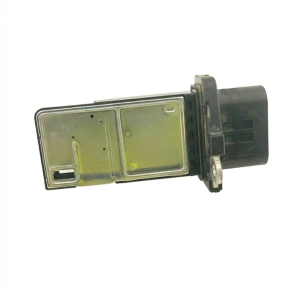
Est. part cost: $20-$250 - Contaminated or dirty Mass Airflow (MAF) sensor 🟡 Medium Probability → Shop Fuel Injection Air Flow Meter Use of aftermarket oiled air filters is common and excess oil can contaminate the MAF sensor's delicate wire, skewing its readings. Even without an oiled filter, dirt and debris can accumulate over time, especially if the air filter is not seated correctly.
How to confirm: Remove the MAF sensor from the intake tube. Visually inspect the small wires inside for oil residue, dirt, or debris. A scan tool can show MAF readings that are illogical for the current engine state.
Typical fix: Clean the sensor wires carefully using only dedicated MAF sensor cleaner spray. Do not touch the wires. 🎬 Watch: How to safely clean your MAF sensor wires. If cleaning doesn't work, the sensor must be replaced.
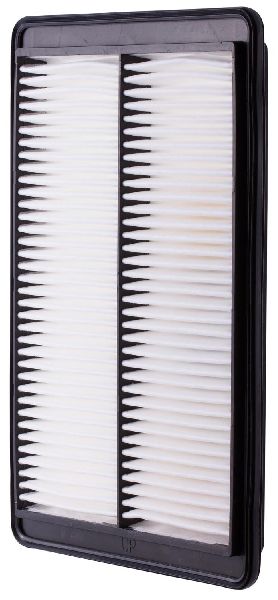
Est. part cost: $10-$15 for cleaner, $70-$150 for a new sensor - Improperly installed or clogged engine air filter 🟡 Medium Probability → Shop Air Cleaner Assembly An ill-fitting aftermarket air filter can allow unmetered, turbulent air to bypass the MAF sensor, causing incorrect readings. A severely clogged filter can also restrict airflow enough to trigger the code.
How to confirm: Open the air filter box and inspect the air filter. Ensure it is seated correctly and that the housing is sealed properly. A deformed filter is a clear sign of improper installation.
Typical fix: Replace the clogged or deformed air filter with a quality OEM or equivalent part and ensure it is installed correctly, creating a proper seal.
Est. part cost: $20-$50 - Cracked or leaking intercooler ⚪ Low Probability → Shop Intercooler The intercooler's end tanks are often plastic and can develop cracks over time due to heat and pressure cycles. It can also be damaged by road debris. A leak here is a post-MAF, pre-engine boost leak.
How to confirm: A smoke test is the most reliable method. Sometimes a hissing noise is audible under boost. You can also spray soapy water on the intercooler and look for bubbles while the engine is running and being revved.
Typical fix: Replace the intercooler. Upgraded, all-aluminum intercoolers are available as a more durable replacement.
Est. part cost: $150-$400 - Clogged Positive Crankcase Ventilation (PCV) orifice ⚪ Low Probability GM TSB 20-NA-047 (which supersedes PIP5417C) details how a clogged PCV orifice in the camshaft cover can cause excessive crankcase pressure. This pressure disrupts the engine's 'breathing' and airflow calculations, triggering P1101.
How to confirm: Requires testing crankcase pressure with a manometer. Per the TSB, a reading above 0 inches of water at hot idle indicates a blockage. Normal is between -1 and -5 inches of water.
Typical fix: The PCV orifice is integrated into the camshaft/valve cover. The cover must be removed to clean or replace the orifice. In some cases, the entire camshaft cover assembly needs to be replaced.
Est. part cost: $150-$300 for a new valve cover
Rare But Worth Checking
- Faulty MAF sensor wiring or connector: → Shop Fuel Injection Air Flow Meter Corrosion or damage to the MAF sensor's electrical connector or wiring can cause intermittent or incorrect signals, mimicking a sensor failure. Check for loose pins or chafed wires.
- Leaking intake manifold gasket: → Shop Engine Intake Manifold While less common than charge pipe leaks on a turbo engine, a leak at the intake manifold gasket can still introduce unmetered air and cause issues.
Diagnosis Steps
- Read all stored fault codes with an OBD-II scanner. Note any accompanying codes like P0101, P0171, or P0300.
- Visually inspect the entire air intake system. Start at the air filter box, ensuring the filter is clean and correctly seated. Follow the piping to the turbo, then from the turbo to the intercooler, and finally from the intercooler to the throttle body. Look for any loose clamps, disconnected hoses, or visible cracks in the plastic pipes, especially at the factory-crimped sections.
- Carefully remove and inspect the MAF sensor. If it appears dirty or oily, clean it with dedicated MAF sensor cleaner and let it dry completely before reinstalling. Do not touch the sensor elements.
- If no visible leaks are found, perform a smoke test on the intake system. This is the definitive way to find small leaks in the charge pipes, intercooler, couplers, or gaskets that are not visible to the naked eye.
- With a scan tool, monitor live data. Observe the MAF sensor reading (g/s) and fuel trims. A quick diagnostic test is to disconnect the MAF sensor; if the fuel trims immediately start correcting back towards 0%, it strongly suggests the MAF sensor is providing inaccurate data (either due to contamination or failure).
- If all intake leak and MAF sensor checks pass, consider the PCV system. Following GM TSB 20-NA-047, test crankcase pressure using a manometer. A reading above 0 inches of water at hot idle points to a clogged PCV orifice in the valve cover.
- As a final, less common check, inspect the wiring and connector for the MAF sensor for any damage, corrosion, or loose pins.
Parts You'll Likely Need
- Intake Charge Pipe / Coupler
(OEM #15939729 (Upper Pipe))— This is the most common failure point leading to a P1101 code on the LNF engine due to leaks from cracks or loose connections. The factory parts are known to be weak.
Trusted brands: ACDelco, Dorman, DDMWorks (Aftermarket upgrade)
OEM price range: $100-$200
Aftermarket price range: $50-$250 - Mass Airflow (MAF) Sensor
(OEM #12579352 (ACDelco #213-4222))— If cleaning the sensor doesn't resolve the issue, or if it has failed electronically, it will need to be replaced.
Trusted brands: ACDelco, Bosch, Delphi
OEM price range: $120-$180
Aftermarket price range: $70-$120 - Engine Air Filter
(OEM #15913346 (ACDelco #A3086C))— A poorly fitting or clogged filter is a simple but common cause for this code.
Trusted brands: ACDelco, Wix, Fram
OEM price range: $30-$50
Aftermarket price range: $20-$40
Related Codes That Often Appear With This One
- P0101 — This code ('Mass Air Flow (MAF) Circuit Range/Performance') is very similar and often appears with P1101, as both relate to the MAF sensor's readings being out of the expected range.
- P0171 or P0172 — These codes for 'System Too Lean' (P0171) or 'System Too Rich' (P0172) can appear because the incorrect airflow reading from P1101 causes the ECM to deliver the wrong amount of fuel.
- P0300 — A random misfire code can be triggered alongside P1101 because the incorrect air-fuel mixture caused by the airflow discrepancy can lead to incomplete combustion in the cylinders.
Technical Service Bulletins (TSBs) & Recalls
- 20-NA-047 (supersedes PIP5417C): While not listing the Sky 2.0L specifically, this GM TSB for other turbo engines directly links P1101 to a clogged PCV orifice causing high crankcase pressure. It provides the diagnostic criteria of checking for crankcase pressure above 0 inches of water at idle.
- PIP5417C: The predecessor to 20-NA-047, this TSB also linked P1101 to high crankcase pressure from a clogged PCV orifice, requiring camshaft cover replacement.
Platform-Specific Known Issues
- The factory upper charge pipe is notoriously prone to cracking near the throttle body. Many owners proactively replace it with a metal aftermarket version from brands like DDMWorks or RPM Motorsports to prevent future failures.
- A video on the 'customreplications' YouTube channel for a Pontiac Solstice GXP (platform mate) documented a P0101/P1101 issue. After trying cleaning and a cheap replacement, only a new genuine GM MAF sensor was believed to solve the problem, highlighting the sensitivity of the system to sensor quality.
Mechanic-Grade Diagnostic Values
- Mass Airflow (MAF) Sensor Reading at Idle — expected: 2 to 7 g/s (grams per second) on a fully warmed-up engine. A 2.0L engine like the LNF should be at the lower end of this range, approximately 2-4 g/s.. Failure: A reading significantly lower than 2 g/s may indicate a vacuum/boost leak after the MAF sensor. A reading of 0 g/s or an erratic reading suggests a faulty sensor or wiring issue.
- Mass Airflow (MAF) Sensor Reading at 2500 RPM (No Load) — expected: 15 to 25 g/s.. Failure: A reading that does not increase smoothly and linearly with RPM, or is significantly outside the expected range, points to a sensor or airflow obstruction problem.
- Mass Airflow (MAF) Sensor Voltage (Key-On, Engine-Off) — expected: Should be very close to 0 Volts, as there is no airflow.. Failure: Any significant voltage reading (e.g., above 0.1V) with the engine off indicates a sensor fault.
- Long-Term Fuel Trim (LTFT) — expected: Within +/- 5% at idle.. Failure: A high positive LTFT (e.g., > +10%) indicates the ECM is adding fuel to compensate for unmetered air (a leak). This is a classic indicator that P1101 is being caused by a boost/vacuum leak.
Scan Tool Commands That Help
- Tech2 / GDS2: Intake Air Flow System Performance Diagnostic — This is the GM-specific guided diagnostic procedure for P1101. It will walk the technician through a series of checks, monitoring specific PIDs (Parameter IDs) and comparing MAF, MAP, and calculated airflow models to isolate the fault. It is the factory-prescribed first step after reading the code.
- Tech2 / GDS2: Fuel Trim Reset — After a repair is made (e.g., fixing a charge pipe leak or replacing the MAF sensor), the fuel trim values should be reset. This forces the ECM to relearn the air-fuel mixture strategy immediately with the new, correct airflow data, rather than slowly adapting over time. This provides instant confirmation of a successful repair.
Wiring & Ground Locations
- G101 — Located at the front of the engine, on the lower block. It may be jumpered to G106.. This is a primary ground for the Engine Control Module (ECM) and the Mass Air Flow / Intake Air Temperature Sensor. A loose or corroded connection here can cause erratic sensor readings and trigger a P1101 code.
- G103 — Located at the left rear of the engine compartment on the cowl, above the brake booster.. This ground serves the Body Control Module (BCM) and the Instrument Panel Cluster (IPC). While not directly tied to the MAF sensor, a poor ground here can cause communication issues on the data bus, potentially corrupting data or causing other electrical gremlins that could be confused with a P1101 fault.
- MAF Sensor Connector — On the intake tube, immediately after the air filter box.. The connector has 5 pins. Pin 5 (Brown/Blue wire on some diagrams) is the MAF signal wire to the ECU. The harness in this area is subject to engine vibration and heat, and the connector's locking tab can become brittle. Check for chafed wires, loose pins, or corrosion inside the connector.
Real Owner Repair Stories
- YouTube video comment section (Chevrolet Cruze (uses a similar engine management philosophy for P1101)) — P1101 code that would not go away.
❌ Tried (didn't work) Replaced Mass Airflow Sensor, Replaced PCV valves
✅ What actually fixed it The owner found a crack in the small plastic PCV hose that connects to the intake. Even though the main charge pipes were intact, this small, unmetered air leak was enough to trigger the P1101 code.
"I Checked Everything" — The Actual Cause
- A common scenario is a smoke test that passes at atmospheric pressure but fails to identify a leak that only opens up under boost. The factory plastic charge pipes can have hairline cracks that seal themselves under vacuum (at idle) but are forced open when the turbo builds pressure. A technician may need to pressurize the system to 15-20 PSI with a dedicated boost leak tester (not just a low-pressure smoke machine) to find these leaks.
OEM Part Supersession History
15865791→12579352 (ACDelco #213-4222)— Part number consolidation and potential minor internal revisions by the manufacturer.
Heads up: ACDelco 213-4222 is the correct and current service replacement for the entire 2007-2010 Saturn Sky LNF range. Using off-brand or incorrect MAF sensors is a common cause of persistent P1101 issues, as the calibration is critical on these engines.
Model Year Variations Within This Range
- 2007-2010: The optional GM Stage 1 upgrade kit, available from dealers, included new TMAP sensors and an ECM re-flash. If a vehicle has this kit installed, the ECM's expected airflow tables are different. Using standard parts or diagnostic values on a car with the GM Stage 1 tune can lead to misdiagnosis. A technician should verify if the vehicle has the upgraded MAP sensors (part # 55206797) and the corresponding tune.
Diagnostic Flowchart
Real Owner Stories
Aggregated from forums and TSBs cited above. Mileages and costs reflect what owners reported in those sources.
2007-2010 Pontiac Solstice GXP 2.0L LNF Turbo
Symptoms: Experienced P0101 and P1101 codes simultaneously.
What fixed it: Tried cleaning the MAF and installing a cheap replacement, but ultimately only a new genuine GM MAF sensor solved the problem.
Source hint: YouTube channel 'customreplications'
Saturn Sky / Pontiac Solstice 2.0L LNF
Symptoms: Chasing a persistent P1101 code, initially suspected a dirty MAF sensor.
What fixed it: Discovered a hairline crack in the upper charge pipe upon close inspection and via a smoke test. Replaced the charge pipe.
Source hint: skyroadster.com / solsticeforum.com
2008-2010 Chevrolet Cobalt SS 2.0L LNF Turbo
Symptoms: Triggered a P1101 code on the LNF engine.
What fixed it: Diagnosed and repaired intake leaks and MAF sensor contamination, confirming it as a shared LNF engine platform issue.
Source hint: cobaltss.net thread titled 'P1101' from 2009
2017 Chevrolet Malibu
Symptoms: Check engine light illuminated with code P1101.
What fixed it: The dealership replaced the MAF sensor and a seal between the engine and intercooler to resolve the charge system leak.
Source hint: Reddit r/MechanicAdvice
Related OBD-II Codes
Frequently Asked Questions
Does GM TSB 20-NA-047 apply to my Saturn Sky's P1101 code?
Why do people recommend replacing the factory charge pipes on the LNF 2.0L?
I cleaned my MAF sensor but the P1101 code came back. What should I check next?
Can an aftermarket air filter cause a P1101 on my Sky Redline?
How can I tell if my PCV system is causing the P1101 code?
Is a hissing noise under boost related to the P1101 code?
Helpful Videos
Used OEM Parts in Stock
New Aftermarket Parts Available


The information in this article is provided for general reference and educational purposes only. Vehicle specifications, procedures, and part compatibility can vary by production date, trim level, and region. Always consult your vehicle's factory service manual and verify part numbers before purchasing or performing repairs. Safety-critical components such as airbags, seat belts, and braking systems should be installed by a qualified professional.
- Saturn Sky:
- 🧭 Diagnostic Flowchart
- 🎬 Helpful Videos
- 🛍️ Shop This Part
- What's Unique About the 2007-2010 Saturn Sky
- Symptoms You May Notice
- Most Likely Causes
- Rare But Worth Checking
- Diagnosis Steps
- Parts You'll Likely Need
- Related Codes That Often Appear With This One
- Technical Service Bulletins (TSBs) & Recalls
- Platform-Specific Known Issues
- Mechanic-Grade Diagnostic Values
- Scan Tool Commands That Help
- Wiring & Ground Locations
- Real Owner Repair Stories
- "I Checked Everything" — The Actual Cause
- OEM Part Supersession History
- Model Year Variations Within This Range
- Real Owner Stories
- 2007-2010 Pontiac Solstice GXP 2.0L LNF Turbo
- Saturn Sky / Pontiac Solstice 2.0L LNF
- 2008-2010 Chevrolet Cobalt SS 2.0L LNF Turbo
- 2017 Chevrolet Malibu
- Related OBD-II Codes
- Frequently Asked Questions
- 🎟️ Get 5% Off