

P1107 on 2004-2011 Chevrolet Colorado: Causes and Fixes for MAP Sensor Circuit
On a 2004-2011 Chevrolet Colorado, code P1107 almost always points to broken wires inside the insulation near the MAP sensor connector, a known issue cited in GM Technical Service Bulletin #PIP4409F. The fix is typically an inexpensive wiring pigtail repair, costing under $30 for the part. Before replacing the sensor, a 'wiggle test' on the harness can often confirm the wiring is the true culprit.
- P1107 on a 2004-2011 Colorado is almost always a wiring problem, not a sensor problem.
- Always perform a 'wiggle test' on the MAP sensor harness before buying any parts.
- The most likely repair is replacing the MAP sensor connector pigtail, which is an inexpensive part.
- This issue is well-documented by GM in Technical Service Bulletin #PIP4409F.
What's Unique About the 2004-2011 Chevrolet COLORADO
This generation of Chevrolet Colorado, along with its siblings the GMC Canyon and Hummer H3, is particularly susceptible to this code due to a known wiring issue. General Motors issued Technical Service Bulletin #PIP4409F, which specifically calls out that the wires for the MAP sensor can break internally, right near the sensor's connector. The external insulation may look perfectly fine, but the copper wire inside fractures from engine vibration and heat, leading to the intermittent low voltage signal that triggers P1107. The TSB states the break is typically within inches of the MAP sensor connector.
🎬 Watch: How a wiring issue causes rough idle in the Colorado.Diagnostic Flowchart
Tap your situation to follow the diagnostic path that matches what you're seeing on this vehicle.
Symptoms You May Notice
- Engine running rough or idling erratically
- Hesitation or stumbling during acceleration
- Engine stalling, especially at idle
- Decreased fuel economy
- Check Engine Light is on
- Black smoke from the tailpipe
- Replacing the MAP sensor without first testing the wiring harness. The TSB and owner experiences strongly indicate the wiring is the most common failure point on this specific vehicle.
Most Likely Causes
- Broken Wires at MAP Sensor Connector 🔴 High Probability → Shop Manifold Absolute Pressure Sensor As documented in TSB #PIP4409F, the wiring harness is prone to fatigue and breakage inside the insulation near the sensor connector due to engine vibration and heat cycles. The break is often within 1-2 inches of the connector.
How to confirm: With the engine running, gently wiggle the wiring harness near the MAP sensor connector. If the engine stumbles, stalls, or the idle changes, it's a strong indication of a broken wire. This is the most crucial diagnostic step for this specific vehicle. You can also backprobe the signal wire (Light Green) with a multimeter while wiggling the harness to see if the voltage drops out.
Typical fix: Replace the MAP sensor connector pigtail. This involves cutting off the old connector and splicing the new one in its place using butt connectors or solder and heat shrink tubing.
Est. part cost: $15-$30 - Faulty MAP Sensor 🟡 Medium Probability → Shop Manifold Absolute Pressure Sensor
How to confirm: If the wiring is confirmed to be good, test the sensor. Use a scan tool to monitor MAP voltage. With the key on and engine off, it should be near 4.0-4.5 volts. At idle, it should drop to 1.0-1.5 volts. If readings are stuck or erratic, the sensor is likely bad. This is often misdiagnosed as the primary issue when the wiring is the real culprit.
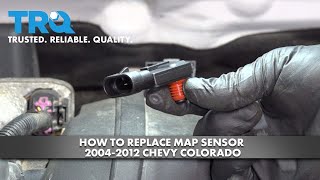
Typical fix: Replace the MAP sensor. It is typically held onto the intake manifold by a single plastic retaining clip.
Est. part cost: $40-$80 - Vacuum Leak ⚪ Low Probability
How to confirm: A significant vacuum leak from a cracked hose or bad intake gasket could cause inaccurate MAP sensor readings. Visually inspect all vacuum lines connected to the intake manifold. A smoke machine can be used to pinpoint hard-to-see leaks.
Typical fix: Replace the leaking vacuum hose or gasket.
Est. part cost: $5-$50
Rare But Worth Checking
- Faulty Powertrain Control Module (PCM): → Shop Engine Control Module (ECM) This is extremely rare. The PCM should only be considered after all other possibilities, including wiring, sensor, and vacuum issues, have been exhaustively ruled out.
- Corroded Ground Packs: On some GM trucks of this era, the main engine bay ground packs (locations like SP105/SP106) can become corroded, leading to various intermittent electrical issues, including sensor voltage problems. This is less common than the pigtail failure but worth checking if the pigtail repair doesn't solve the issue.
Diagnosis Steps
- Check for other stored DTCs. If P0107, P0106, or P0300 are present, it strongly points towards the MAP circuit issue described in TSB PIP4409F.
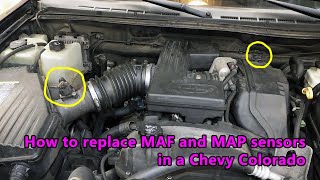
- Visually inspect the MAP sensor and its wiring harness, located on the intake manifold.
- Perform a 'wiggle test': With the engine idling, carefully wiggle the wires going into the MAP sensor connector. If this causes a change in idle speed or makes the engine stumble, the wiring is faulty.
- If the wiggle test is inconclusive, use a multimeter to backprobe the connector. Check for a stable 5-volt reference (Gray wire) and a good ground (Orange/Black wire, <5 Ohms resistance to ground).
- With the engine running, monitor the signal wire (Light Green wire) voltage. It should be stable and change smoothly with throttle input. If it drops out or is erratic, suspect the wiring or sensor.
- If wiring is confirmed good, test the sensor's response. With a scan tool, verify the voltage is high (around 4.0-4.5V) with the key on/engine off and low (1.0-1.5V) at idle.
- If all electronics test good, check for a significant engine vacuum leak using a smoke machine or by inspecting vacuum hoses.
Parts You'll Likely Need
- MAP Sensor Connector Pigtail
(OEM #ACDelco PT2183 (Alternate: 88988963), Dorman 645-203)— This is the most common fix due to the high probability of wires breaking inside the insulation near the original connector, as noted in TSB PIP4409F.
Trusted brands: ACDelco, Dorman, Standard Motor Products
OEM price range: $25-$40
Aftermarket price range: $15-$30 - Manifold Absolute Pressure (MAP) Sensor
(OEM #ACDelco 213-4658 (GM 12594942))— If the wiring is intact but the sensor's readings are incorrect or stuck, the sensor itself has failed.
Trusted brands: ACDelco, Delphi, Bosch
OEM price range: $60-$90
Aftermarket price range: $40-$80
Related Codes That Often Appear With This One
- P0107 — This is the generic SAE code for 'MAP/Barometric Pressure Circuit Low Input'. P1107 is the manufacturer-specific code for an intermittent version of this fault.
- P0106 — This code for 'MAP/Barometric Pressure Circuit Range/Performance' can be triggered by the erratic signals from the failing wiring or sensor. TSB PIP4409F lists this as a common companion code.
- P0300 — This code for 'Random/Multiple Cylinder Misfire' is a direct symptom of the rough running condition caused by the faulty MAP signal leading to incorrect air/fuel mixture. TSB PIP4409F also lists this code.
- P0171 — This code for 'System Too Lean (Bank 1)' can result from the PCM receiving incorrect low-pressure data from the MAP sensor and improperly adjusting fuel trim. This is another code mentioned in TSB PIP4409F.
Technical Service Bulletins (TSBs) & Recalls
- PIP4409F: Addresses a Service Engine Soon light with rough running and multiple DTCs, including P1107, P0106, P0107, P0171, and P0300. It directs technicians to inspect all Manifold Absolute Pressure sensor circuits for being broken inside of the insulation, typically within inches of the MAP sensor connector.
Platform-Specific Known Issues
- TSB #PIP4409F explicitly identifies an issue where the MAP sensor circuit wires break inside the insulation near the connector, causing intermittent codes like P1107, often accompanied by a rough running condition.
- Owner forums like 355nation.net and ColoradoFans.com are filled with threads where replacing the MAP pigtail connector fixed code P1107 after a new sensor failed to solve the problem.
Mechanic-Grade Diagnostic Values
- MAP Sensor 5V Reference Voltage — expected: Stable 5.0 Volts DC. Failure: Voltage is significantly lower than 5.0V or is intermittent.
- MAP Sensor Ground Circuit Resistance — expected: Less than 5 Ohms to a known good chassis ground.. Failure: Resistance is higher than 5 Ohms, indicating a poor ground connection.
- MAP Sensor Signal Voltage (KOEO) — expected: 4.0 - 4.5 Volts DC (reflecting atmospheric pressure).. Failure: Voltage is significantly lower or does not match barometric pressure.
- MAP Sensor Signal Voltage (Idle) — expected: 1.0 - 1.5 Volts DC (reflecting high engine vacuum).. Failure: Voltage is stuck high, stuck low, or drops out intermittently when wiggling the harness.
- Fuel Pressure (Engine Idling) — expected: 56-60 PSI.. Failure: Pressure significantly below this range can cause lean conditions (like P0171) that may appear alongside MAP codes.
Wiring & Ground Locations
- MAP Sensor Connector — On the intake manifold, connected to the MAP sensor.. This is the primary failure point. Wires break inside the insulation near the connector. Pinout: Gray (5V Reference), Light Green (Signal), Orange/Black (Ground).
- SP105 / SP106 — Splice Pack grounds located in the engine bay. SP105 is on the driver's side near the battery/fuse box; SP106 is on the passenger side behind the airbox.. These ground packs are a known weak point for corrosion on this platform. A bad ground at SP105 or SP106 can cause numerous, intermittent electrical faults, potentially mimicking a sensor or wiring issue.
- G101 — Lower left side of the engine block.. This is a primary ground point for the Engine Control Module (ECM). A poor connection here can affect the reference voltage and ground supplied to all engine sensors, including the MAP sensor.
Real Owner Repair Stories
- 355nation.net forum user / Go-Parts.com summary (2010 Chevrolet Colorado, 2.9L I4) — Check Engine Light, rough idle, occasional stalling, codes P1107 and P0106.
❌ Tried (didn't work) Replacing the MAP sensor.
✅ What actually fixed it A 'wiggle test' on the wiring harness near the MAP sensor caused the engine to stumble, confirming a wiring fault. Replacing the MAP sensor connector pigtail permanently resolved all codes and drivability issues.
OEM Part Supersession History
GM 12594942 (MAP Sensor)→GM 12711681— Standard part evolution, design updates, and part number consolidation by the manufacturer.
Heads up: The supersession chain includes 12644228, 12694725, and 12701247. Using the latest number (12711681) is recommended.ACDelco PT2183 (Pigtail Connector)→N/A— This is a widely used multi-purpose connector.
Heads up: This part number is also cross-referenced with GM part 88988963. Ensure the connector has 3 wires (Gray, Light Green, Orange/Black) for the MAP sensor application.
Helpful Videos


The information in this article is provided for general reference and educational purposes only. Vehicle specifications, procedures, and part compatibility can vary by production date, trim level, and region. Always consult your vehicle's factory service manual and verify part numbers before purchasing or performing repairs. Safety-critical components such as airbags, seat belts, and braking systems should be installed by a qualified professional.
- Chevrolet COLORADO:
- 🧭 Diagnostic Flowchart
- 🎬 Helpful Videos
- What's Unique About the 2004-2011 Chevrolet COLORADO
- Symptoms You May Notice
- Most Likely Causes
- Rare But Worth Checking
- Diagnosis Steps
- Parts You'll Likely Need
- Related Codes That Often Appear With This One
- Technical Service Bulletins (TSBs) & Recalls
- Platform-Specific Known Issues
- Mechanic-Grade Diagnostic Values
- Wiring & Ground Locations
- Real Owner Repair Stories
- OEM Part Supersession History
- 🎟️ Get 5% Off