

P1128 on 1998-2000 Lexus LS400: Throttle Control Motor Lock Causes and Fixes
On a 1998-2000 Lexus LS400, code P1128 almost always points to a problem within the electronic throttle body. The most common fix is replacing the Throttle Position Sensor (TPS), which is a known failure point. This is a DIY-friendly job with the part costing between $40 and $180. In rarer cases, the throttle control motor itself or a dirty throttle body could be the cause.
- P1128 on a 1998-2000 LS400 means the electronic throttle control motor is locked or malfunctioning.
- The car will go into a 'limp mode' with very little power, which is a designed safety feature.
- The most likely cause, by a wide margin, is a failed Throttle Position Sensor (TPS), not the motor itself.
- Start your diagnosis by cleaning the throttle body and then replacing the TPS (part #89452-50020).
- Always disconnect the battery after the repair to reset the ECU.
What's Unique About the 1998-2000 Lexus LS400
The 1998-2000 LS400 models feature the updated 1UZ-FE engine with VVT-i and an Electronic Throttle Control System (ETCS-i). This system, while advanced for its time, has a common failure point in the Throttle Position Sensor (TPS). The TPS provides critical feedback to the ECU about the throttle plate's angle. When this sensor fails or provides an erratic signal, the ECU loses its ability to verify the throttle motor's position, triggering the P1128 code and limp mode. Owner experiences on forums like ClubLexus overwhelmingly point to the TPS as the primary culprit, far more often than the throttle motor itself. The physical throttle cable acts as a backup, but only cracks the throttle open at about 3/4 pedal travel, making the car barely drivable.
Symptoms You May Notice
- Check Engine Light is on.
- VSC (Vehicle Stability Control) and/or TRAC OFF lights are illuminated.
- Vehicle enters 'limp mode' with severely reduced engine power.
- Little to no response from the accelerator pedal until it is depressed significantly.
- In some cases, the engine may stall or have a rough, unstable idle.
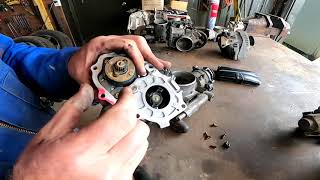
- A whirring, buzzing, or clicking noise from the throttle control motor on the throttle body 🎬 Watch: See how the 1UZ-FE throttle body works and disassembles., especially with the key on but engine off.
- Replacing the entire throttle body assembly when only the much cheaper Throttle Position Sensor (TPS) was faulty.
- Replacing the Accelerator Pedal Position Sensor (APPS), which is a separate component located on the pedal assembly and typically sets different trouble codes. 🎬 Watch: Learn how to distinguish between APPS and motor issues.
Most Likely Causes
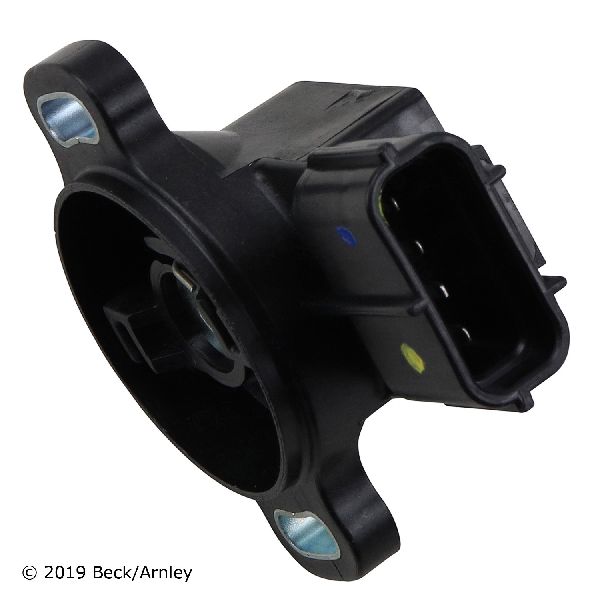
- Failed Throttle Position Sensor (TPS) 🔴 High Probability → Shop Fuel Injection Throttle Body The TPS is a known high-failure item on this specific electronic throttle control system. It's a sensor that wears out over time and is the most frequent cause of P1128, often failing intermittently at first.
How to confirm: While you can test the sensor's resistance and voltage sweep with a multimeter, its high failure rate and relatively low cost make replacement a common and effective first diagnostic step. Many forum users report immediately fixing the P1128 code by replacing the TPS.
Typical fix: Replace the Throttle Position Sensor. This sensor is mounted to the side of the throttle body. After replacement, it's recommended to disconnect the battery for a few minutes to reset the ECU.
Est. part cost: $40-$180 - Dirty or Binding Throttle Body 🟡 Medium Probability → Shop Fuel Injection Throttle Body Carbon buildup around the throttle plate and bore can cause the plate to stick, preventing the motor from moving it freely. This can happen over many miles of operation.
How to confirm: Remove the intake air duct and visually inspect the throttle body for carbon deposits. Manually move the throttle plate (with the engine off) to feel for any sticking or binding. A user on the Lexus Owners Club forum found a piece of a cleaning rag caught in the throttle plate, which caused a P1128 code.
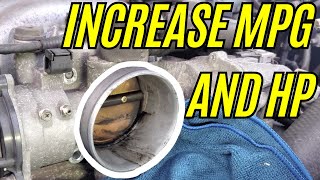
Typical fix: Clean the throttle body bore and plate thoroughly with a dedicated throttle body cleaner 🎬 Watch: A helpful guide on how to clean your throttle body. and a soft cloth or brush. It is best to remove the throttle body for a complete cleaning.
Est. part cost: $5-$15 - Failed Throttle Control Motor ⚪ Low Probability
How to confirm: The factory service manual provides a procedure for checking the motor's magnetic clutch internal resistance with an ohmmeter (specified as 4.2 – 5.2 Ω at 68°F). A persistent buzzing or whirring noise from the motor can also indicate failure.
Typical fix: The throttle control motor is typically replaced as part of the complete throttle body assembly, as it is not always sold separately. Some owners have sourced used throttle bodies to resolve the issue.
Est. part cost: $300-$1000+
Rare But Worth Checking
- Wiring Harness Issue: Damage to the wires or a poor connection at the throttle body connector can interrupt signals between the ECU and the throttle components, causing this code. The plastic connectors can become brittle with age.
- Faulty Engine Control Unit (ECU): In very rare instances, the driver circuit within the ECU that controls the throttle motor can fail. This is usually the last thing to suspect after all other components and wiring have been verified. One forum user sent their ECU to a specialty repair service (SIA Electronics) who repaired the throttle motor control IC.
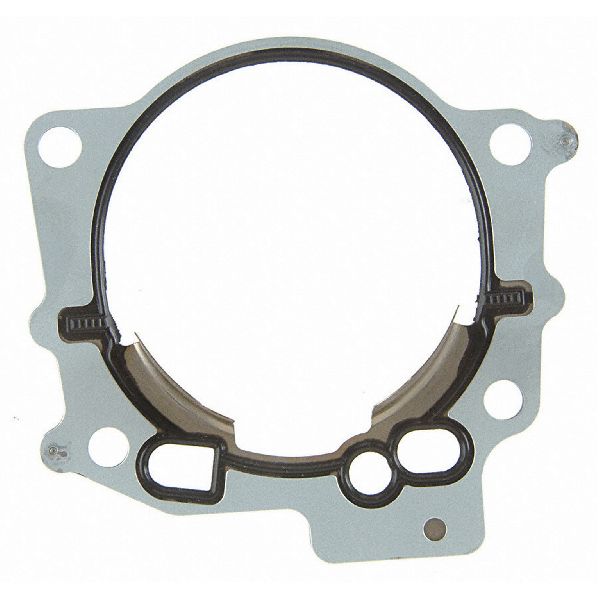
- Improper Throttle Body Seal / Vacuum Leak: → Shop Fuel Injection Throttle Body If the throttle body has been recently removed and reinstalled, an improper seal can create a vacuum leak around the gasket. One owner of a similar Lexus model fixed a P1128 by discovering the throttle body was not sealing correctly and was sucking in unmetered air.
Diagnosis Steps
- Read the freeze frame data with an OBD-II scanner to understand the engine conditions when the code was set.
- Check for any other stored trouble codes, such as P1125 or P1129.
- With the ignition off, remove the intake boot and inspect the throttle body for heavy carbon buildup or any foreign objects that could jam the throttle plate.
- Clean the throttle body thoroughly if it is dirty. Ensure the throttle plate moves smoothly by hand.
- Listen for a whirring or buzzing sound from the throttle motor with the key in the 'ON' position (engine off). This can indicate a failing motor.
- Given the extremely high probability, the most practical next step is to replace the Throttle Position Sensor (TPS). Ensure the new sensor is a quality part (Denso is the OEM supplier).
- After replacing the TPS, disconnect the negative battery terminal for at least 10 minutes to clear the ECU's memory and force it to relearn throttle parameters.
- If the code returns, inspect the wiring harness and connector going to the throttle body for any signs of damage, corrosion, or loose pins.
- If all other components are confirmed good, test the throttle control motor's magnetic clutch resistance according to the factory service manual specifications (4.2 – 5.2 Ω).
- As a final step, consider having the ECU tested by a specialized service, as the internal driver can fail in rare cases.
Parts You'll Likely Need
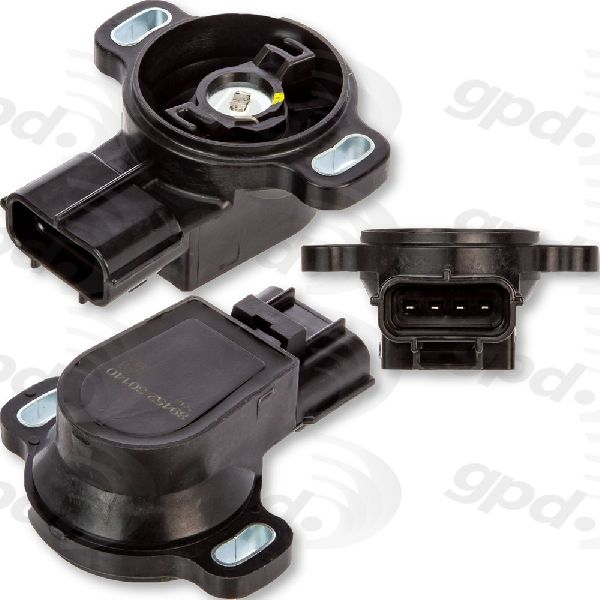
- Throttle Position Sensor (TPS)
(OEM #89452-50020)— This is the most common failure point for the ETCS-i system on this vehicle, directly causing the P1128 code and limp mode.
Trusted brands: Denso (OEM), Standard Motor Products (TH287), Wells (TPS4179)
OEM price range: $150-$200
Aftermarket price range: $40-$90 - Throttle Body Assembly
(OEM #22030-50110)— Required if the integrated throttle control motor has failed. This is much less common than a TPS failure. Often sourced from used vehicles due to high cost.
Trusted brands: Aisin (OEM), Used/Salvage
OEM price range: $800+
Aftermarket price range: $300-$600
Related Codes That Often Appear With This One
- P1129 — This code indicates a fault in the Throttle Control Motor Relay circuit, which works in conjunction with the throttle motor.
- P1125 — Indicates a fault in the throttle control motor circuit itself, pointing more directly at the motor or its wiring.
- P0420 / P0430 — These catalyst efficiency codes can sometimes appear alongside throttle issues, as improper throttle control can affect the air/fuel mixture and exhaust readings.
Platform-Specific Known Issues
- source — A user on ClubLexus with a '99 LS400 experienced the classic P1128 symptoms: Check Engine and VSC lights, followed by no throttle response. They noted that the car would only move by pressing the accelerator about 3/4 of the way down, allowing them to limp out of traffic. This highlights the designed-in mechanical backup of the ETCS-i system.
- source — A user with a high-mileage (275,000 miles) 1998 GS400, which shares the same engine and throttle system, received a P1128 code even after having recently replaced the TPS. This illustrates that while the TPS is the most common cause, the diagnostic path must sometimes continue to the motor or wiring.
- source — A user on the Lexus Owners Club forum reported getting a P1128 code immediately after cleaning their throttle body. The cause was a very small thread from the cleaning cloth that had become trapped between the throttle plate and the housing, preventing it from closing properly. Removing the thread and resetting the ECU fixed the problem completely.
Mechanic-Grade Diagnostic Values
- Throttle Control Motor Magnetic Clutch Resistance — expected: 4.2 – 5.2 Ω at 20°C (68°F). Failure: Resistance outside of this range.
- Throttle Position Sensor (TPS) Signal Voltage (VTA1) — expected: Approx. 0.6V - 0.9V at closed throttle, sweeping smoothly up to 3.2V - 4.9V at wide-open throttle.. Failure: Voltage that is stuck, jumps erratically, or has dead spots as the throttle is slowly opened.
Scan Tool Commands That Help
- Toyota Techstream: Active Test for ETCS (Electronic Throttle Control System) — After checking for codes and basic physical issues, a technician can use the 'Active Test' function to command the throttle motor to open and close. This directly tests the motor, clutch, and wiring integrity by bypassing the accelerator pedal input. Failure to respond to the command points definitively to a fault in the throttle body assembly or its circuit.
Wiring & Ground Locations
- G100 — Front of the left (driver's side) front fender in the engine bay.. This is a major chassis ground point. A corroded or loose connection here can cause a variety of electrical issues, including erratic sensor readings for the engine management system.
- G101 — Front of the right (passenger's side) front fender in the engine bay, near the air filter box.. This is another critical engine bay ground point. Verifying it is clean and tight is a key step in diagnosing any electronic fault, as poor grounding can mimic component failure.
- Throttle Body Connector — Plugged into the throttle body assembly.. This connector contains the pins for the throttle motor (M+, M-), magnetic clutch (CL+, CL-), and throttle position sensor (VTA1, VC, E2). All resistance and voltage tests are performed at this connector first before tracing wires back to the ECU.
Real Owner Repair Stories
- Reddit user in r/IS300 (Lexus IS300 (similar ETCS system)) — P1128 code, car would not idle after clearing the code.
❌ Tried (didn't work) Clearing the code, considering O2 sensor replacement.
✅ What actually fixed it The issue was the throttle body itself was not making a complete seal, causing a vacuum leak around the gasket. The user identified a hissing sound. Fixing the seal resolved the code and idle issue. - ClubLexus user 'JBrady' (1999 Lexus LS400) — Check engine light, VSC OFF warning, then sudden total loss of throttle response. Car would only move by pressing the pedal 3/4 of the way down.
❌ Tried (didn't work) Initially, a restart temporarily restored throttle function but the warnings remained.
✅ What actually fixed it The user's post confirms the symptoms and the mechanical limp-home functionality, and the thread overwhelmingly points to replacing the Throttle Position Sensor (TPS) as the standard, successful fix for this exact scenario.
OEM Part Supersession History
89452-50010→89452-50020— Standard part revision and improvement by the manufacturer.
Heads up: The newer part number (89452-50020) is the correct replacement for the 1998-2000 model years. While older numbers may fit, using the latest revision is recommended.
Diagnostic Flowchart
Other Known Issues on This Vehicle
Issues unrelated to this code that are worth knowing about as an owner of this generation:
- Starter Motor Failure 🔴 High — Common between 100,000 and 200,000 miles. The repair is extremely labor-intensive as the starter is located under the intake manifold.
- Power Steering Pump Leak 🔴 High — Very common issue. The pump is located directly above the alternator, and leaks can destroy the alternator, causing a no-charge situation.
- Lower Ball Joint Failure 🔴 High — A critical safety issue. Worn lower ball joints can fail catastrophically, causing the wheel to detach from the suspension. Failure can occur with little warning. OEM parts are strongly recommended for replacement.
- Instrument Cluster LCD Bleeding / Dead Pixels 🟡 Low — Extremely common for the odometer, gear indicator, and climate control LCD screens to fail, becoming unreadable due to 'bleeding' or dead pixels.
- Brittle Vacuum Line Nipples 🟠 Medium — The plastic nipples on the vacuum recovery box along the intake are known to become brittle and snap off, leading to vacuum leaks and rough running if not addressed.
Used vs. New Parts: Buying Guide for This Vehicle
When a used part is the smart pick: A used throttle body assembly is a sensible and cost-effective choice if the throttle control motor is confirmed to be faulty. A new OEM assembly is prohibitively expensive, making a tested, low-mileage part from a salvage yard a smart alternative.
Donor-vehicle mileage cap: roughly under 150000 miles for the part to have meaningful remaining life.
What to inspect on the donor part:
- Check for minimal carbon buildup inside the throttle bore.
- Ensure the throttle plate moves smoothly by hand with no binding or sticking.
- Inspect the electrical connector for any broken plastic, corrosion, or bent pins.
- If possible, get the VIN of the donor car to verify it's from the correct 1998-2000 year range.
OEM-only on this vehicle (don't cheap out):
- Throttle Position Sensor (TPS) - This is a wear item. Aftermarket versions have a high rate of premature failure. It is strongly recommended to use a new sensor from the original equipment manufacturer, Denso.
Aftermarket brands forum-validated for this vehicle:
- Denso (for the TPS, as they are the OEM)
Brands owners have reported issues with on this vehicle:
- Generic, unbranded 'white-box' throttle position sensors from online marketplaces are frequently reported to fail quickly or be dead-on-arrival.
Real Owner Stories
Aggregated from forums and TSBs cited above. Mileages and costs reflect what owners reported in those sources.
Lexus GS300
Symptoms: Received a P1128 code immediately after cleaning the throttle body.
What fixed it: The cause was a very small thread from the cleaning cloth trapped between the throttle plate and the housing. Removing the thread and resetting the ECU fixed the problem completely.
Source hint: ClubLexus Forum - Foreign Object Obstruction (GS300)
1998 Lexus GS400 4.0L V8 — 275000 miles
Symptoms: Received a P1128 code even after having recently replaced the TPS.
What fixed it: The source story illustrates a diagnostic path that must continue beyond the TPS to the motor or wiring, but does not state the final specific repair.
Source hint: Lextreme Forum User Experience (1998 GS400)
1999 Lexus LS400 4.0L V8
Symptoms: Experienced classic P1128 symptoms: Check Engine and VSC lights, followed by no throttle response. The car would only move by pressing the accelerator about 3/4 of the way down.
What fixed it: The source summary highlights the symptoms and limp-mode functionality but does not state the specific repair that was performed.
Source hint: ClubLexus Forum User Experience (1999 LS400)
1999 Lexus GS400 4.0L V8
Symptoms: A persistent P1128 code that was not resolved by replacing other components.
What fixed it: The issue was ultimately resolved by having the ECU repaired by a third-party service.
Source hint: ClubLexus.com: Thread: 'GS400 P1128 code | I'm gonna lose my mind'
Related OBD-II Codes
Frequently Asked Questions
My 1999 LS400 suddenly lost power and the VSC and Check Engine lights are on. Is it safe to limp it home?
I hear a buzzing or whirring noise from the throttle body area when the key is on but the engine is off. Is this related to P1128?
How likely is it that the Throttle Position Sensor (TPS) is the cause of P1128 on my LS400?
Do I have to replace the entire expensive throttle body assembly to fix this code?
I just replaced the TPS on my LS400. Is there any special procedure I need to follow?
I just cleaned my throttle body and now my car is in limp mode with a P1128 code. What did I do wrong?
I have a 1998 Lexus GS400 with a P1128 code. Is the diagnostic information for the LS400 applicable?
Helpful Videos
We Have This Part in Stock


The information in this article is provided for general reference and educational purposes only. Vehicle specifications, procedures, and part compatibility can vary by production date, trim level, and region. Always consult your vehicle's factory service manual and verify part numbers before purchasing or performing repairs. Safety-critical components such as airbags, seat belts, and braking systems should be installed by a qualified professional.
- Lexus LS400:
- 🧭 Diagnostic Flowchart
- 🎬 Helpful Videos
- 🛍️ Shop This Part
- What's Unique About the 1998-2000 Lexus LS400
- Symptoms You May Notice
- Most Likely Causes
- Rare But Worth Checking
- Diagnosis Steps
- Parts You'll Likely Need
- Related Codes That Often Appear With This One
- Platform-Specific Known Issues
- Mechanic-Grade Diagnostic Values
- Scan Tool Commands That Help
- Wiring & Ground Locations
- Real Owner Repair Stories
- OEM Part Supersession History
- Other Known Issues on This Vehicle
- Used vs. New Parts: Buying Guide for This Vehicle
- Real Owner Stories
- Lexus GS300
- 1998 Lexus GS400 4.0L V8 — 275000 miles
- 1999 Lexus LS400 4.0L V8
- 1999 Lexus GS400 4.0L V8
- Related OBD-II Codes
- Frequently Asked Questions
- 🎟️ Get 5% Off