

P1239 on 2012-2013 Fiat 500: Engine Oil Temperature Too Low Causes and Fixes
On a 2012-2013 Fiat 500, this code almost always points to a software issue in the Powertrain Control Module (PCM). The official fix is a software update from a Fiat dealer as specified in multiple Technical Service Bulletins, not a part replacement. This is the first and most crucial diagnostic step.
- P1239 on a 2012-2013 Fiat 500 almost always means the engine computer's software needs to be updated per TSB #18-053-16.
- Do not replace any parts until a Fiat dealer or qualified shop has verified the PCM software is the latest version.
- If the software is up-to-date and the code persists, the next most likely cause is a stuck-open thermostat.
- A faulty oil temperature sensor is a rare but possible cause.
What's Unique About the 2012-2013 Fiat 500
What's unique to the Fiat 500 is that the root cause for P1239 is rarely a mechanical failure. Fiat Chrysler Automobiles (FCA) issued several Technical Service Bulletins (TSBs) acknowledging that the original PCM software calibration was too sensitive, causing the code to set erroneously under normal conditions. Unlike many vehicles where a 'too cold' code immediately points to a bad thermostat, the primary, manufacturer-documented fix for this Fiat is a simple software re-flash.
Diagnostic Flowchart
Tap your situation to follow the diagnostic path that matches what you're seeing on this vehicle.
Symptoms You May Notice
- Check Engine Light (Malfunction Indicator Lamp) is on
- Slightly reduced fuel economy
- Engine may take longer than usual to warm up (if the cause is a faulty thermostat)
- In some cases, no noticeable symptoms other than the Check Engine Light
- Replacing the oil temperature sensor or thermostat before checking if the required PCM software update has been performed. The TSBs clearly indicate the software is the most likely culprit.
- Replacing the entire PCM. A dealer might suggest this if they can't communicate with the module, but the cause could be a simple loose ground wire. A re-flash is a software update, not a hardware replacement.
Most Likely Causes
- Powertrain Control Module (PCM) Software Needs Update 🔴 High Probability → Shop Engine Control Module (ECM) The original factory software had overly sensitive parameters for monitoring oil temperature warm-up time, as documented by Fiat in multiple TSBs. This is the most widely reported and confirmed cause by owners and the manufacturer.
How to confirm: A Fiat dealer or a shop with a wiTECH scan tool can check the current software calibration number against the latest version specified in TSB #18-053-16 or its predecessors. This is not something that can be checked with a standard OBD-II scanner.
Typical fix: Reprogramming (re-flashing) the PCM with the updated software. The TSB specifies a labor time of 0.3 hours for this procedure. Some owners report dealers charging between $150-$250 for this service if the vehicle is out of warranty.
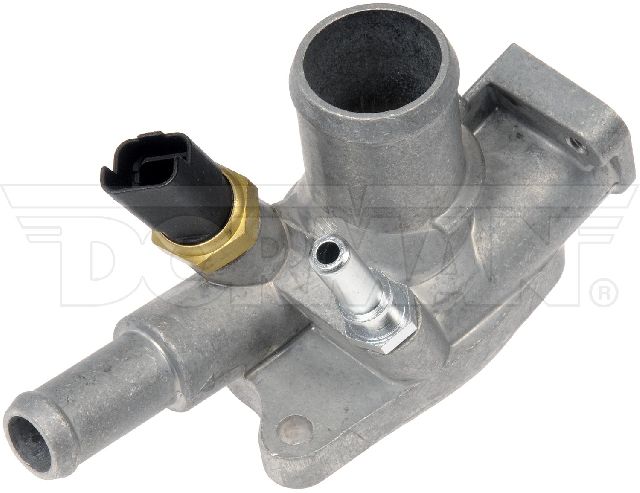
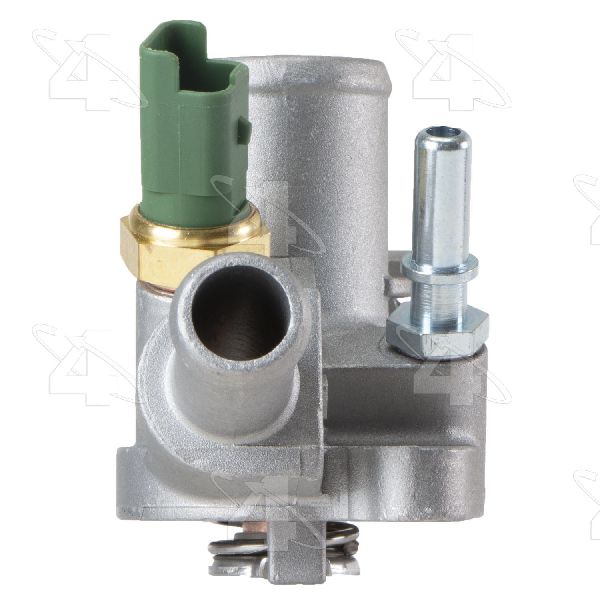
Est. part cost: $0 - Engine Coolant Thermostat Stuck Open 🟡 Medium Probability → Shop Integrated Thermostat Housing Assembly This is a common failure on many vehicles. If the thermostat is stuck open, engine coolant circulates constantly, preventing the engine (and thus the oil) from reaching its proper operating temperature. This should only be considered after the PCM software has been confirmed to be up-to-date.
How to confirm: Use a scan tool to monitor the engine coolant temperature during warm-up from a cold start. The temperature should rise steadily to about 195-205°F and stabilize. If it rises very slowly or never gets above 170-180°F, the thermostat is likely stuck open.
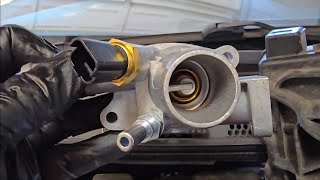
Typical fix: Replace the engine coolant thermostat assembly. On the 1.4L engine, this requires removing the battery and battery tray for access, which is a well-documented DIY job. 🎬 Watch: Step-by-step guide to removing and installing the thermostat.
Est. part cost: $50-$120 - Faulty Engine Oil Temperature (EOT) Sensor ⚪ Low Probability While not a common failure for this specific code, the sensor can degrade over time and send inaccurate (too low) readings to the PCM. It is described as the 'Air Temperature in the Multiair Actuator' or 'Oil Temperature' sensor.
How to confirm: With a scan tool, compare the EOT reading to the Engine Coolant Temperature (ECT) and Intake Air Temperature (IAT) readings on a cold engine (after sitting overnight). They should all be within a few degrees of each other. If the EOT reads significantly lower, the sensor is suspect. The sensor's resistance can also be tested; for many Fiat sensors, a reading of ~2500 Ohms is expected at room temperature (~20°C/68°F).
Typical fix: Replace the engine oil temperature sensor. It is located on the variable valve actuation (MultiAir) assembly. 🎬 Watch: Locate the oil temperature sensor on the engine.
Est. part cost: $25-$60
Rare But Worth Checking
- Poor Electrical Connection / Ground Issue:
Diagnosis Steps
- Verify the problem: Confirm P1239 is the active or stored code using an OBD-II scanner.
- Check for TSBs: The first and most important step is to determine if the vehicle's PCM has been updated according to Fiat TSB #18-053-16. This must be done by a dealer or a shop with a wiTECH scan tool. Do not skip this step.
- Perform PCM Update: If the software is outdated, have it re-flashed. This is the most probable fix. Clear the codes and perform a drive cycle to see if the code returns. The labor allowance for this flash is 0.3 hours.
- Diagnose Thermostat (if code returns): If the PCM software is current, monitor the Engine Coolant Temperature (ECT) with a scan tool from a cold start. If the temperature plateaus below ~185°F or rises extremely slowly, the thermostat is likely stuck open and needs replacement.
- Diagnose Oil Temperature Sensor (if thermostat is OK): If the ECT warms up correctly, compare its reading to the Engine Oil Temperature (EOT) reading on a cold engine. They should be within a few degrees of ambient temperature. If the EOT reading is significantly different, inspect the sensor's wiring for damage. If the wiring is good, the sensor itself (Mopar Part #68088241AA) is the likely cause.
- Check Electrical Grounds: As a final check, ensure the battery terminals and main chassis/engine grounds are clean and tight, as loose connections can cause various erroneous codes. Pay special attention to the main ground strap which connects the battery negative terminal to the chassis and the gearbox, as it is a known failure point. 🎬 See how to replace a corroded main ground strap.
Parts You'll Likely Need
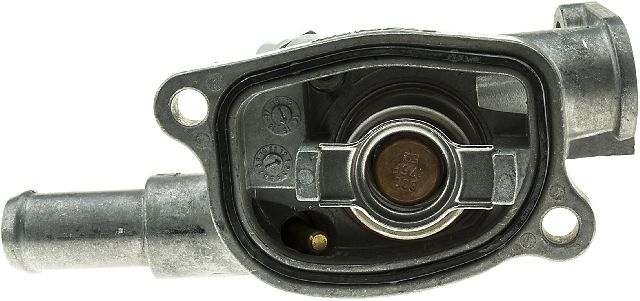
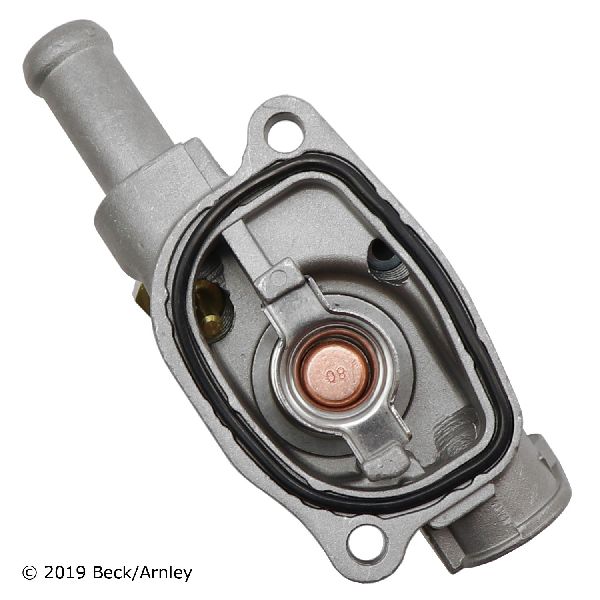
- Engine Coolant Thermostat Assembly
(OEM #68211424AA)— If the PCM software update does not resolve the issue, a thermostat stuck in the open position is the next most likely mechanical cause for the engine and oil failing to reach operating temperature.
Trusted brands: Mopar, Motorad, Mahle
OEM price range: $80-$130
Aftermarket price range: $50-$90 - Engine Oil Temperature Sensor
(OEM #68088241AA)— A less common but possible cause is a faulty sensor providing incorrect low-temperature readings to the PCM. This part is also described as an 'Air Temperature in the Multiair Actuator'.
Trusted brands: Mopar, Standard Motor Products
OEM price range: $40-$70
Aftermarket price range: $25-$50
Related Codes That Often Appear With This One
- P2610 — This code, 'PCM Internal Engine Off Timer Performance', is listed in the same TSBs and is often resolved by the same PCM software update.
- P0298 — This code, 'Engine Oil Temperature Too High', is the counterpart to P1239 and is also addressed by the same PCM software update, indicating a general issue with the oil temperature monitoring logic.
- P0128 — This code, 'Coolant Thermostat Rationality', indicates the engine isn't warming up as expected. If P1239 is present and the PCM software is up-to-date, a faulty thermostat could cause both codes.
Technical Service Bulletins (TSBs) & Recalls
- 18-053-16: Flash: 1.4L Diagnostic And System Improvements (Supersedes previous versions)
- 18-027-15 REV C: Flash: 1.4L Diagnostic And System Improvements
- 18-007-14 REV. B: Flash:1.4L Diagnostic And System Improvements
Platform-Specific Known Issues
- The primary vehicle-specific issue is the factory PCM software being too sensitive, which is addressed by Fiat Technical Service Bulletin #18-053-16 (and earlier versions like 18-007-14 REV. B). This bulletin specifically calls out P1239 as a code that can be resolved with a software update.
- Owners report that when seeking the TSB flash, it is crucial to clearly state the symptom (Check Engine Light with code P1239) to ensure the dealer performs the correct update under the TSB guidelines.
Mechanic-Grade Diagnostic Values
- Engine Oil Temperature Sensor Resistance — expected: ~2500 Ohms at 20°C (68°F). Failure: Significantly higher or lower resistance, or an open/short circuit.
- Sensor Voltage Comparison (Cold Engine) — expected: Engine Oil Temp (EOT), Engine Coolant Temp (ECT), and Intake Air Temp (IAT) sensor readings should be within a few degrees of each other after the car has been off overnight.. Failure: If the EOT reading is significantly lower than the ECT and IAT, the sensor or its circuit is suspect.
Scan Tool Commands That Help
- wiTECH: Flash ECU / Reprogram ECM — This is the primary repair step for code P1239 on this vehicle, as per multiple TSBs. It updates the PCM software with revised logic for monitoring oil temperature.
- wiTECH: View ECU Information / Calibration ID — To be used before flashing to confirm if the PCM already has the latest software version installed, preventing unnecessary reprogramming.
Wiring & Ground Locations
- Main Engine/Chassis Ground Strap — Connects the negative battery terminal to the chassis frame directly below the battery tray, and then continues to a mounting point on the gearbox.. This strap is a very common point of corrosion and failure on Fiat 500s. A poor ground can cause erratic sensor readings and various electrical faults, potentially triggering false codes like P1239.
- Engine Oil Temperature (EOT) Sensor — Located on the MultiAir actuator assembly, at the rear of the cylinder head.. This is the sensor that provides the direct reading for the code. Knowing its location is critical for testing the sensor and its connector.
- Powertrain Control Module (PCM) — Located in the left rear of the engine compartment.. This is the module that receives the sensor signal, interprets the data, and sets the trouble code. All diagnostic wiring tests for the sensor circuit will terminate at the PCM connectors.
OEM Part Supersession History
68119586AA→68088241AA— Part was updated or replaced by a new revision.
Heads up: The new part number (68088241AA) is the correct replacement for the original.
Model Year Variations Within This Range
- 2013: For the 2013 model year, Fiat introduced a new 1.4L MultiAir Turbo model. While the P1239 TSB specifically applies to the non-turbo (Sales Code EAB), it's important to correctly identify the engine, as parts like the thermostat may differ between turbo and non-turbo models.
Helpful Videos





We Have This Part in Stock


The information in this article is provided for general reference and educational purposes only. Vehicle specifications, procedures, and part compatibility can vary by production date, trim level, and region. Always consult your vehicle's factory service manual and verify part numbers before purchasing or performing repairs. Safety-critical components such as airbags, seat belts, and braking systems should be installed by a qualified professional.
- Fiat 500:
- 🧭 Diagnostic Flowchart
- 🎬 Helpful Videos
- 🛍️ Shop This Part
- What's Unique About the 2012-2013 Fiat 500
- Symptoms You May Notice
- Most Likely Causes
- Rare But Worth Checking
- Diagnosis Steps
- Parts You'll Likely Need
- Related Codes That Often Appear With This One
- Technical Service Bulletins (TSBs) & Recalls
- Platform-Specific Known Issues
- Mechanic-Grade Diagnostic Values
- Scan Tool Commands That Help
- Wiring & Ground Locations
- OEM Part Supersession History
- Model Year Variations Within This Range
- 🎟️ Get 5% Off