

P1289 on 2014-2018 Ram 1500 EcoDiesel: NOx Sensor Fault Causes and Fixes
On a 2014-2018 Ram 1500 EcoDiesel, P1289 is almost always caused by either outdated engine software or a failed downstream NOx sensor. Before replacing parts, have a dealer check for software updates and see if the repair is covered for free under the AEM extended warranty (10yr/120k miles). This code specifically points to the downstream sensor, also known as Bank 1, Sensor 2.
- P1289 on a Ram EcoDiesel means 'NOx Sensor 1/2 Zero Offset Too Low', NOT a cylinder head temperature issue.
- **Step 1 is always to call a dealer.** Check for software updates and see if the repair is covered for free under the AEM extended warranty (10 years/120,000 miles).
- If software is current and not covered by warranty, the most likely failed part is the downstream NOx sensor (Mopar #68250214AB).
- Ignoring this code can eventually lead to a 'Service DEF' warning and a no-start condition.
What's Unique About the 2014-2018 Ram 1500
It is critical to know that for the Ram EcoDiesel and its platform-mate, the Jeep Grand Cherokee EcoDiesel, P1289 points to the NOx sensor. On many other vehicles, such as Fords, this same code number refers to a Cylinder Head Temperature sensor, which is an entirely different system. The 3.0L EcoDiesel's complex emissions system has been the subject of numerous software updates from FCA (Chrysler/Ram) to correct faulty logic. Because of this, a software update is a very common fix and should always be the first step in diagnosis. Many of these updates were part of the Approved Emissions Modification (AEM) recall for 2014-2016 models.
Symptoms You May Notice
- Check Engine Light (CEL) is on
- "Service DEF System See Dealer" message may appear on the instrument cluster
- Potential for the vehicle to enter a reduced power (limp) mode
- Possible vehicle no-start countdown initiated by the DEF system
- Vehicle will fail an emissions inspection
- Engine may shutter or hesitate momentarily
- Increased fuel consumption or sluggish performance as the ECU defaults to conservative fuel maps
- Replacing the NOx sensor without first checking for software updates. A dealer reflash might be the only fix needed or may be required for the new sensor to function correctly.
- Confusing the Ram EcoDiesel definition ('NOx Sensor Zero Offset Too Low') with the definition for other manufacturers like Ford, where P1289 often relates to a Cylinder Head Temperature (CHT) sensor.
- Assuming the repair is not covered by warranty. Owners should always have a dealer check their VIN for coverage under the AEM extended warranty (10 years/120,000 miles) before paying for repairs.
Most Likely Causes
- Outdated Powertrain Control Module (PCM) Software 🔴 High Probability → Shop Engine Control Module (ECM) FCA (Ram's parent company) has released multiple software updates to address overly sensitive emissions monitoring logic for the EcoDiesel engine. TSBs 18-023-15 REV. C and 18-012-16 specifically list P1289 as a code addressed by a PCM reflash.
How to confirm: A Ram dealer or a properly equipped independent shop must check the current software calibration ID against the latest available version using a factory scan tool (wiTECH). This is often done as part of the V08/X68 AEM recall for 2014-2016 models.
Typical fix: Reprogramming (flashing) the PCM with the latest software version. This is often covered for free under the AEM extended warranty or an open recall.
Est. part cost: $0 - Failed Downstream NOx Sensor (Bank 1, Sensor 2) 🔴 High Probability → Shop Oxygen Sensor NOx sensors are complex components that operate in a harsh exhaust environment and have a finite lifespan. They can fail internally, causing incorrect readings that trigger the 'zero offset' fault during PCM self-checks.
How to confirm: After confirming the PCM software is up-to-date, a technician can monitor the NOx sensor's live data with a scan tool. During deceleration (fuel cut), the sensor's reading should be near zero. If the readings are stuck, erratic, or do not respond logically compared to the upstream sensor, it has failed.
Typical fix: Replace the downstream NOx sensor and its associated module. The sensor and module are sold as a single unit. After replacement, the codes must be cleared.
Est. part cost: $400-$600
Rare But Worth Checking
- Wiring Harness or Connector Issue: While less common than a failed sensor, damage to the wiring or corrosion in the connector for the NOx sensor can cause the same fault code. A visual inspection of the harness from the sensor to the main loom is a worthwhile step before replacing the sensor.
- Corroded Circuit Board (Under Battery): In one documented case on an EcoDieselRam.com forum, a user with a P1289 code and no-start condition traced the root cause to a corroded circuit board located under the battery. Cleaning the board resolved the issue, avoiding a costly replacement.
- Failed Powertrain Control Module (PCM): → Shop Engine Control Module (ECM) In very rare cases, the fault can be internal to the PCM itself. This should only be considered after all other possibilities, including software, the sensor, and wiring, have been definitively ruled out.
Diagnosis Steps
- Check for Warranty Coverage: Contact a Ram dealership with your Vehicle Identification Number (VIN). Ask them to check for any open recalls (like the V08/X68 AEM recall) and if your vehicle is covered under the EcoDiesel extended emissions warranty (10 years/120,000 miles). This step could make the entire repair free.
- Verify PCM Software Version: Have the dealer or a qualified shop connect a factory scan tool (wiTECH) to determine if the PCM software is up-to-date. If it is not, have the PCM reflashed to the latest version per TSB 18-023-15 REV. C or other applicable bulletins. Clear the codes and perform a drive cycle to see if the code returns.
- Inspect Wiring and Connectors: If the code returns, perform a thorough visual inspection of the downstream NOx sensor wiring harness and its connector. Look for any signs of melting, chafing, corrosion, or loose pins. Also, inspect the area under the battery for corroded circuit boards as a rare but possible cause.
- Analyze Sensor Data: Using an advanced scan tool, monitor the live data stream for the downstream NOx sensor (Bank 1 Sensor 2). Observe its readings during a drive cycle, specifically during deceleration fuel cut-off. If the readings are stuck, erratic, or illogical (e.g., not dropping to near-zero), the sensor has likely failed.
- Replace the NOx Sensor: If the software is current and the wiring is intact, replace the downstream NOx sensor assembly.
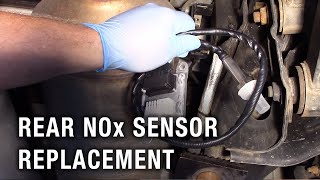
- Clear Codes and Verify Repair: After replacement, clear all diagnostic trouble codes and perform another drive cycle to 🎬 See this walkthrough for replacing the rear NOx sensor ensure the P1289 code does not return.
Parts You'll Likely Need
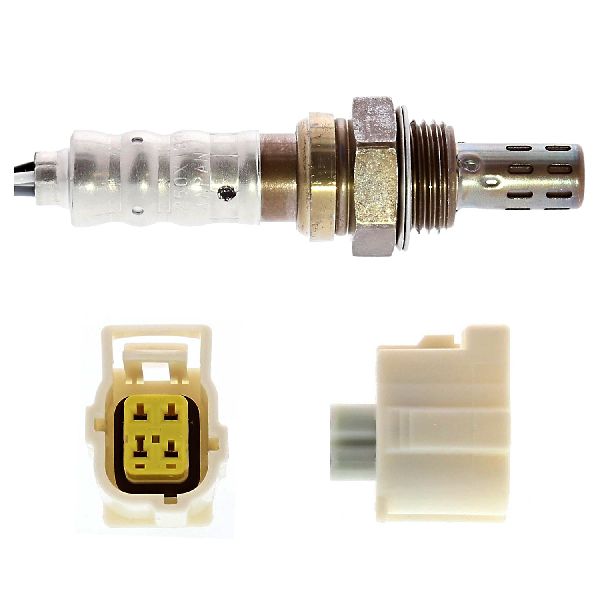
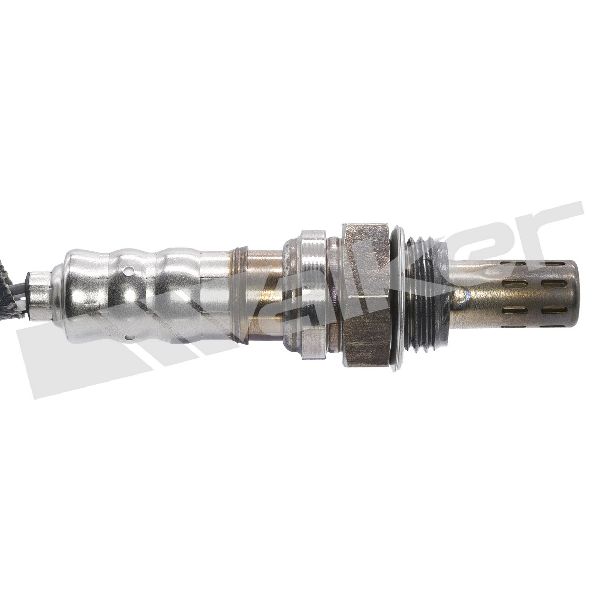
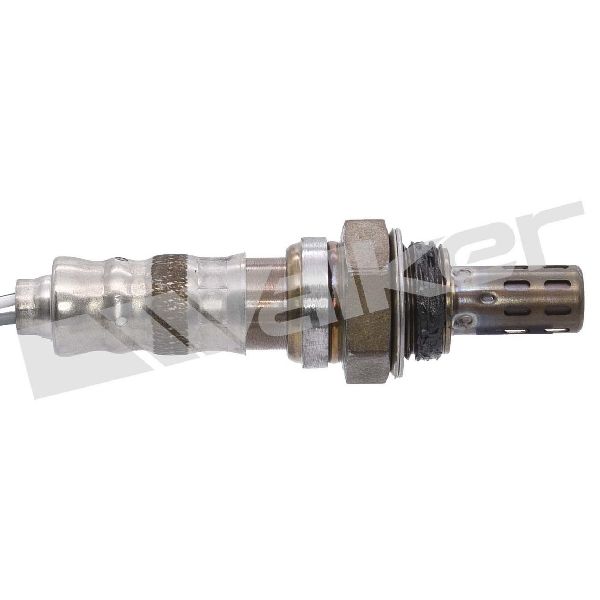
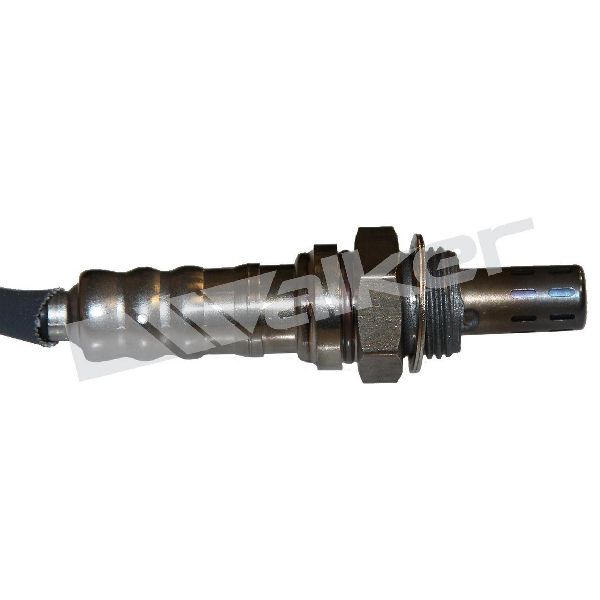
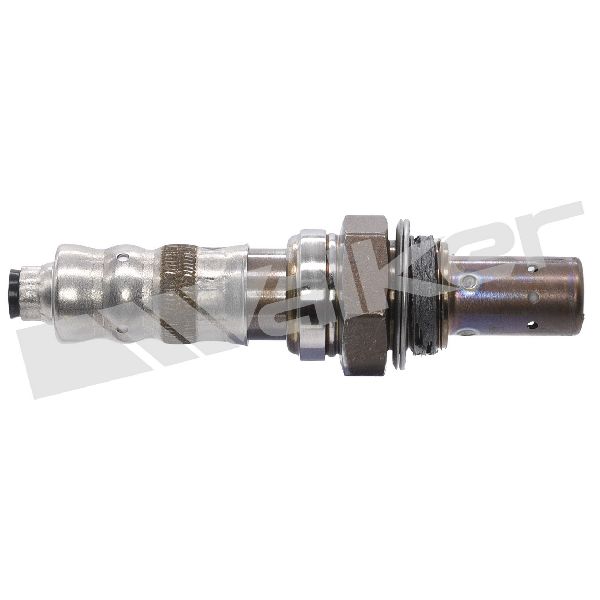
- Downstream NOx Sensor (Bank 1, Sensor 2)
(OEM #68250214AB)— This is the sensor that fails its internal self-check, triggering the code. It is the most common component to fail after software has been ruled out. This part number supersedes previous versions 68250214AA, 68171188AA, and 68171188AB.
Trusted brands: Mopar
OEM price range: $450-$600
Aftermarket price range: $350-$500
Related Codes That Often Appear With This One
- P1288 — This code is for 'NOx Sensor 1/2 Zero Offset Too High'. P1288 and P1289 are opposing faults for the same sensor, both indicating a calibration or sensor failure.
- P20EE — This code for 'SCR NOx Catalyst Efficiency Below Threshold' can be triggered by a faulty NOx sensor providing incorrect data about the catalyst's performance. TSBs often group these codes together.
- P2BA9 — This code for 'NOx Exceedence' is also related to the emissions system and is listed in the same Technical Service Bulletin as P1289, indicating they are often addressed by the same software updates.
- U0422 — This code for 'Implausible Data Received From Body Control Module' is mentioned in some TSBs alongside P1289, suggesting a broader software or network issue can sometimes accompany the specific sensor fault.
Technical Service Bulletins (TSBs) & Recalls
- 18-023-15 REV. C: 'Flash: 3.0 L MIL Illumination Diagnostic and System Improvements' - This TSB specifically lists P1289 as a code addressed by a PCM software update for Ram 1500.
- 18-012-16: This TSB for the Jeep Grand Cherokee also lists P1289-00 - NOX Sensor 1/2 Zero Offset Too Low as being resolved by a software update, confirming the cross-platform nature of the issue.
Platform-Specific Known Issues
- The 3.0L EcoDiesel engine was subject to an emissions recall (V08 / X68) that included software updates and a significant extended warranty on emissions components, including the NOx sensors. Many vehicles with this code may be eligible for a free repair at a dealership.
- Owners should explicitly ask the dealer to check their VIN against the AEM extended warranty, as some service advisors may not be fully aware of the coverage details for specific components.
Mechanic-Grade Diagnostic Values
- Downstream NOx Sensor (B1S2) Live Data Reading (PPM) — expected: Should drop to near 0 PPM during high-speed deceleration (fuel cut-off).. Failure: Reading is erratic, stuck at a specific value, or does not drop to zero during deceleration. A technician noted a bad sensor was 'all over the place' while a new one correctly dropped to near-zero or slightly negative values before stabilizing.
- NOx Sensor Module CAN Bus Resistance — expected: Approximately 60 Ohms between the CAN High and CAN Low pins at the module connector with the ignition off.. Failure: A reading significantly different from 60 Ohms (e.g., 120 Ohms or an open circuit) indicates a break in the CAN wiring or a problem with a terminating resistor in the network.
Scan Tool Commands That Help
- wiTECH or equivalent advanced scan tool: SCR System Verification Test — This is a guided routine to force the system to run its internal monitors and can help validate if the SCR system, including the NOx sensors, is functioning correctly after a repair or during diagnosis.
- wiTECH or equivalent advanced scan tool: DEF Dosing Injection Quantity Test — Used when diagnosing a suite of SCR-related codes (like P20EE) to rule out issues with the DEF injector before condemning more expensive parts like the SCR catalyst or NOx sensors.
- wiTECH: Clear All DTCs / Clear DEF Warning — After a repair, a factory-level scan tool is often required to fully clear the fault and extinguish the 'Service DEF System' warning; simply disconnecting the battery is often ineffective.
Wiring & Ground Locations
- Downstream NOx Sensor Module — Mounted on top of a frame crossmember, located roughly halfway back along the vehicle's underside, near the center support bearing for the driveshaft. It is typically held in place by two 10mm nuts.. This is the control module for the sensor that sets code P1289. The connector at this module is the primary point for checking power, ground, and CAN bus integrity for the sensor circuit.
- NOx Sensor Module Connector — Plugs directly into the NOx sensor module on the frame crossmember.. This connector provides power, ground, and the CAN bus connection to the sensor module. It is a 4-pin connector. Technicians cannot test raw sensor voltage here, but can verify the integrity of the CAN bus (resistance) and power/ground supplies to the module.
Real Owner Repair Stories
- TOPDON USA Case Study (2014 Ram 1500 EcoDiesel) — 'Engine will not restart. Service DEF. See Dealer.' message, along with emissions fault codes.
❌ Tried (didn't work) A dealership diagnosed the issue as a failed SCR Catalyst, a very expensive repair.
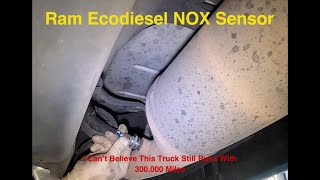
✅ What actually fixed it A second opinion from an independent shop using advanced diagnostics (TOPDON/wiTECH) determined the SCR catalyst was fine. During a guided drive cycle, the truck flagged code P1289. The root cause was a failed downstream NOx sensor providing erroneous readings. Replacing only the NOx sensor resolved all issues. - YouTube channel '203 Auto' (2016 Ram 1500 EcoDiesel with 300,000 miles) — Scan tool showed the downstream NOx sensor readings were erratic and not dropping to zero during deceleration.
❌ Tried (didn't work) The technician noted the customer was aware the DPF might be an issue at this mileage, but the sensor data pointed elsewhere first.
✅ What actually fixed it The technician replaced the downstream NOx sensor and its attached module. A post-repair drive cycle showed the new sensor's live data correctly dropping to near-zero/negative values on deceleration, confirming the fix.
OEM Part Supersession History
68171188AA, 68171188AB, 68250214AA→68250214AB— Standard part revision and improvement by the manufacturer.
Model Year Variations Within This Range
- 2014-2016: These model years were part of the major EcoDiesel emissions settlement, which resulted in the Approved Emissions Modification (AEM) software update and an extended warranty on emissions components. While the P1289 fault can occur on all 2014-2018 models, owners of 2014-2016 trucks have a higher likelihood of having the repair covered under this specific extended warranty.
Diagnostic Flowchart
Other Known Issues on This Vehicle
Issues unrelated to this code that are worth knowing about as an owner of this generation:
- EGR Cooler Failure 🔴 High — Very common across 2014-2019 models. Can lead to coolant loss, engine overheating, and in rare cases, intake manifold fires. (Ref: Safety Recall VB1 / NHTSA 19V-757. A class-action lawsuit settlement also extended warranties for the replacement part.)
- Oil Cooler Failure 🔴 High — Common, particularly in 2014-2016 models. The cooler can fail internally, mixing oil and coolant, which can lead to catastrophic engine damage if not caught early.
- Timing Chain Stretch / Cam Gear Slip 🔴 High — Less common than cooler failures, but can occur at higher mileage (70k-150k miles). Can cause rattling noises, misfires, and potentially catastrophic engine failure if the chain slips or breaks.
- Main Bearing Failure / Spun Rod Bearings 🔴 High — A widely discussed failure mode, often attributed to oil starvation or contamination from other failures (like the oil cooler). Leads to complete engine failure requiring a rebuild or replacement.
- High-Pressure Fuel Pump (HPFP) Failure 🔴 High — The Bosch CP4.2 fuel pump used in these engines is known to fail, sending metal debris through the entire fuel system and requiring a very expensive repair. (Ref: A recall was issued in June 2022 for this issue affecting 2014-2019 models.)
Used vs. New Parts: Buying Guide for This Vehicle
When a used part is the smart pick: For this specific repair, a used part is strongly discouraged. NOx sensors are sensitive electronic components with a finite service life in a high-heat, high-vibration environment. The risk of a used sensor failing shortly after installation is high.
Donor-vehicle mileage cap: roughly under 20000 miles for the part to have meaningful remaining life.
What to inspect on the donor part:
- If considering used against advice, source from a very low-mileage wreck.
- Inspect the wiring harness for any signs of melting, brittleness, or physical damage.
- Ensure the connector pins are clean, straight, and free of corrosion.
OEM-only on this vehicle (don't cheap out):
- Downstream NOx Sensor (Bank 1, Sensor 2). The complexity of the emissions system and the requirement for correct calibration data make using an OEM Mopar part the most reliable option.
Brands owners have reported issues with on this vehicle:
- Unbranded or 'white-box' sensors from online marketplaces are a significant gamble due to inconsistent quality control and potential for incorrect calibration.
Real Owner Stories
Aggregated from forums and TSBs cited above. Mileages and costs reflect what owners reported in those sources.
2015 Ram 1500 EcoDiesel
Symptoms: Check engine light with code P1289 and an intermittent no-start condition.
What fixed it: A dealer cleaned a corroded circuit board located under the battery.
Source hint: EcoDieselRam.com - Thread 'New ecodiesel owner with P1289 error code'
Frequently Asked Questions
Will the extended emissions warranty cover the P1289 code on my 2015 Ram EcoDiesel?
What does TSB 18-023-15 REV. C do for the P1289 code?
My truck is showing a "Service DEF System See Dealer" message with the P1289 code. Are they related?
Is it more likely that my P1289 code is from a bad NOx sensor or just outdated software?
My mechanic says P1289 is a Cylinder Head Temperature sensor code. Is that correct for my Ram EcoDiesel?
My 2015 Jeep Grand Cherokee EcoDiesel has code P1289. Is the diagnosis the same as for the Ram 1500?
Helpful Videos
We Have This Part in Stock

The information in this article is provided for general reference and educational purposes only. Vehicle specifications, procedures, and part compatibility can vary by production date, trim level, and region. Always consult your vehicle's factory service manual and verify part numbers before purchasing or performing repairs. Safety-critical components such as airbags, seat belts, and braking systems should be installed by a qualified professional.
- Ram 1500:
- 🧭 Diagnostic Flowchart
- 🎬 Helpful Videos
- 🛍️ Shop This Part
- What's Unique About the 2014-2018 Ram 1500
- Symptoms You May Notice
- Most Likely Causes
- Rare But Worth Checking
- Diagnosis Steps
- Parts You'll Likely Need
- Related Codes That Often Appear With This One
- Technical Service Bulletins (TSBs) & Recalls
- Platform-Specific Known Issues
- Mechanic-Grade Diagnostic Values
- Scan Tool Commands That Help
- Wiring & Ground Locations
- Real Owner Repair Stories
- OEM Part Supersession History
- Model Year Variations Within This Range
- Other Known Issues on This Vehicle
- Used vs. New Parts: Buying Guide for This Vehicle
- Real Owner Stories
- 2015 Ram 1500 EcoDiesel
- Frequently Asked Questions
- 🎟️ Get 5% Off