

P1299 on 2015-2019 Lincoln MKC: Cylinder Overheating and Coolant Intrusion Guide
P1299 on a 2015-2019 Lincoln MKC with the 2.0L EcoBoost engine is a critical warning that the cylinder head is overheating. The most serious and common cause is coolant leaking into the cylinders due to a known engine design flaw, a repair that often requires replacing the engine's long block.
- P1299 is a critical alert on a 2015-2019 Lincoln MKC, indicating the engine's protective fail-safe mode has been activated due to extreme cylinder head temperatures.
- For models with the 2.0L EcoBoost engine, the most likely cause is a serious, known issue of coolant leaking into the cylinders, which requires engine replacement as per TSB 22-2229.
- Do not continue to drive the vehicle. Immediate professional diagnosis is required to prevent catastrophic engine failure.
- Diagnosis must begin with a cooling system pressure test and borescope inspection to rule out the coolant intrusion flaw before considering less severe causes like a faulty temperature sensor.
What's Unique About the 2015-2019 Lincoln MKC
For the Lincoln MKC with the 2.0L EcoBoost engine, P1299 is not just a generic overheating code; it is strongly associated with a specific, documented engine flaw. The engine's 'open-deck' block design has a vulnerability where coolant can leak past the head gasket and seep into the cylinders, most commonly cylinders two and three. This internal leak is the direct cause of the overheating that triggers the P1299 code. Multiple Technical Service Bulletins (TSBs) describe this condition, known as coolant intrusion. 🎬 See why these EcoBoost engines suffer from chronic coolant consumption. Therefore, unlike in other vehicles where this code might point to a bad sensor or thermostat, on this specific platform, it is a primary indicator of a potentially severe internal engine problem requiring immediate attention.
Diagnostic Flowchart
Tap your situation to follow the diagnostic path that matches what you're seeing on this vehicle.
Symptoms You May Notice
- Sudden and significant loss of engine power (limp mode)
- Engine running rough, shaking, or vibrating
- Check engine light is on or flashing
- Engine temperature gauge reading very high
- White smoke coming from the exhaust, especially on startup
- Noticeable loss of engine coolant without visible external leaks
- Engine fan running at maximum speed
- Sweet smell from the exhaust (burning coolant)
- Engine misfires, particularly after a cold soak (sitting overnight)
- Replacing only the CHT sensor without first performing a cooling system pressure test and borescope inspection to rule out coolant intrusion.
- Replacing spark plugs and ignition coils to address the misfire symptoms (P030x codes) without addressing the underlying overheating condition that is causing them.
- Assuming a bad head gasket is the root cause and replacing only the gasket, when the issue is the engine block design itself, which will cause the new gasket to fail again.
Most Likely Causes
- Coolant Intrusion into Cylinders (2.0L EcoBoost) 🔴 High Probability A known design issue in the 2.0L EcoBoost engine block allows coolant to leak between cylinders (most often 2 and 3) into the combustion chambers. This is due to the 'open-deck' design creating a weak sealing surface for the head gasket. This is documented in Ford/Lincoln TSBs 22-2229 and 19-2346.
How to confirm: A technician will perform a cooling system pressure test, looking for a significant pressure drop over several hours. A borescope is then used to visually inspect the inside of the cylinders for any signs of coolant, which can make the piston tops appear 'steam-cleaned'.
Typical fix: Replacement of the engine long block assembly with a revised part is the manufacturer-recommended repair.
Est. part cost: $3000-$5000+ - Faulty Cylinder Head Temperature (CHT) Sensor 🟡 Medium Probability → Shop Engine Cylinder Head
How to confirm: If a cooling system pressure test and borescope inspection show no signs of coolant intrusion, the CHT sensor's resistance should be tested to see if it is within the manufacturer's specifications. Live data on a scan tool may show erratic or pegged temperature readings even on a cold engine. The sensor provides a direct reading of the engine's metal temperature, unlike a traditional coolant temperature (ECT) sensor.
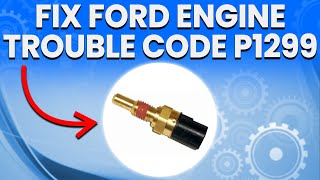
Typical fix: Replace the Cylinder Head Temperature (CHT) sensor and its connector if corroded. On the 2.0L engine, the sensor is generally accessible.
Est. part cost: $30-$75 - Standard Cooling System Failure ⚪ Low Probability
How to confirm: Visually inspect for low coolant levels, external leaks from hoses, the radiator, or the water pump. Test the thermostat to ensure it opens and closes at the correct temperature. Check for a clogged radiator or malfunctioning cooling fans.
Typical fix: Top off coolant and repair leaks, or replace the faulty component (thermostat, water pump, radiator, cooling fan).
Est. part cost: $20-$600
Rare But Worth Checking
- Damaged CHT Sensor Wiring: The wiring harness leading to the CHT sensor can become damaged, shorted, or corroded, sending a false overheating signal to the PCM. This should be checked if a new sensor doesn't resolve the issue and there's no actual overheating. Ford SSM 48991 notes this as a possible cause.
Diagnosis Steps
- Verify the P1299 code and check for any other related codes (misfires, etc.).
- STOP THE ENGINE. Do not continue to run it. Check if the engine is physically hot using an infrared thermometer on the cylinder head.
- Check the coolant level in the reservoir. Note if it is low or appears contaminated (milky, oily).
- If coolant is low, perform a cooling system pressure test. Pressurize the system to the manufacturer's specification (e.g., 15-20 psi) and monitor for at least a few hours to see if it holds pressure. A significant drop indicates a leak.
- If a leak is confirmed, use a borescope to inspect the inside of each cylinder through the spark plug holes. Look for moisture, a 'steam-cleaned' appearance on the piston top, or visible coolant pooling. This is the definitive test for coolant intrusion.
- If no coolant intrusion is found and the system holds pressure, suspect a faulty CHT sensor or wiring.
- Using a scan tool, monitor the CHT sensor reading on a cold engine to see if it's plausible. Test the CHT sensor's resistance and compare it to specifications. Check the wiring and connector for damage or corrosion.
- If no sensor or wiring faults are found, perform a full diagnosis of the base cooling system, including the thermostat, water pump, and radiator.
Parts You'll Likely Need
- Engine Long Block Assembly — This is the official manufacturer-recommended fix for the common coolant intrusion issue on the 2.0L EcoBoost engine, as it replaces the faulty block with a revised design.
Trusted brands: Motorcraft
OEM price range: $4000-$5500
Aftermarket price range: $3000-$4500 - Cylinder Head Temperature (CHT) Sensor
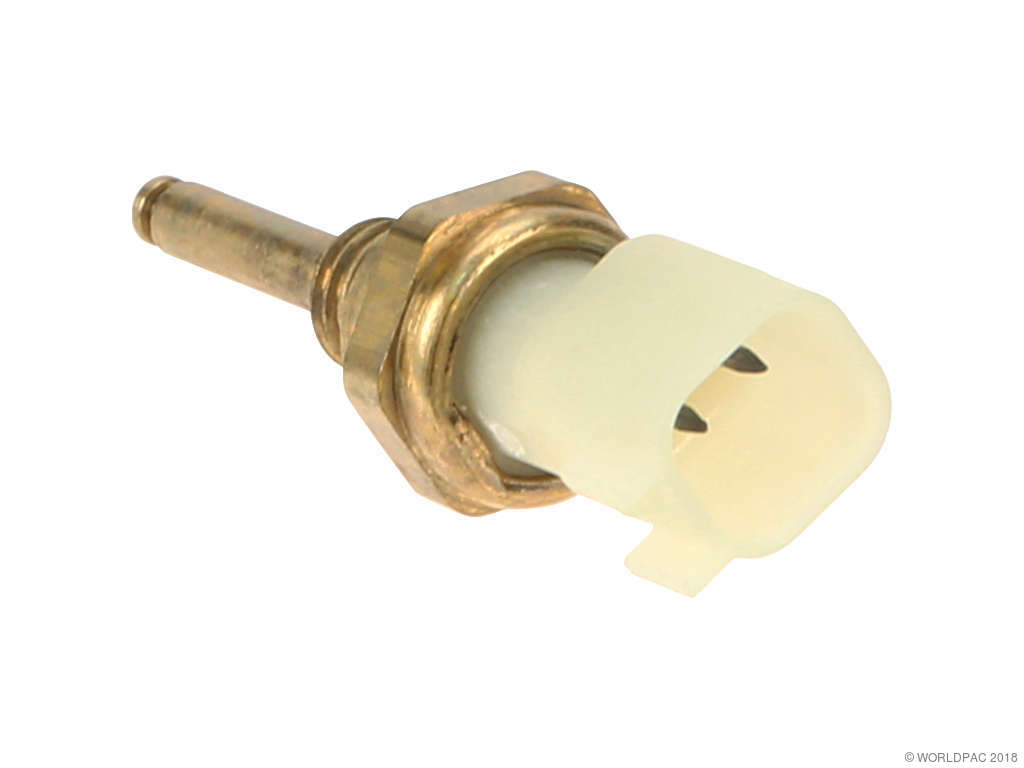
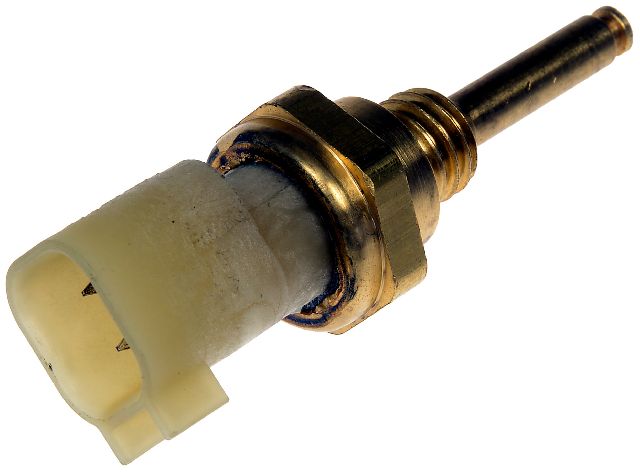
(OEM #9L8Z-6G004-F)— If the overheating is not real and is caused by a sensor failure, replacing the CHT sensor is the correct fix. This is a thermistor that reads the metal temperature of the head directly.
Trusted brands: Motorcraft, Bosch, NTK
OEM price range: $45-$75
Aftermarket price range: $30-$50
Related Codes That Often Appear With This One
- P0300, P0301, P0302, P0303, P0304 — These are random or specific cylinder misfire codes. Coolant in the cylinder prevents proper combustion, causing misfires. Cylinders 2 and 3 are most common with the intrusion issue.
- P0316 — Misfire Detected on Startup. This is common when coolant has leaked into a cylinder while the engine was off.
- P0217 — Engine Overtemperature Condition. This code often accompanies P1299 as a general confirmation of the overheating event.
- P1285 — Cylinder Head Over-Temperature Sensed. This is a closely related code that also points to the CHT sensor detecting excessive heat.
Technical Service Bulletins (TSBs) & Recalls
- TSB 22-2229: Supersedes previous versions to update parts lists for a known issue where 2.0L EcoBoost engines may exhibit coolant intrusion into the cylinder, causing rough running, white smoke, and DTCs including P1299. The fix is to replace the long block engine assembly. It applies to 2017-2019 MKC models built on or before April 18, 2019.
- TSB 19-2346: An earlier version of the bulletin describing the same coolant intrusion issue on 2017-2019 MKC models with the 2.0L EcoBoost engine.
Platform-Specific Known Issues
- Technical Service Bulletin (TSB) 22-2229 (and its predecessors like 19-2346) specifically addresses coolant intrusion into the cylinders on 2017-2019 Lincoln MKC models with the 2.0L EcoBoost engine (built on or before April 18, 2019), listing P1299 as a potential DTC. The prescribed fix is a long block engine replacement.
- A class-action lawsuit was filed against Ford Motor Company concerning this EcoBoost engine defect, alleging the company was aware of the design flaw that allowed coolant to leak into the cylinders.
- NHTSA complaints filed by owners of 2017 MKCs describe coolant intrusion leading to misfires and engine failure, with repair estimates over $9,000.
Mechanic-Grade Diagnostic Values
- Cylinder Head Temperature (CHT) Sensor Resistance — expected: Resistance is inversely proportional to temperature. Example values: ~37.3 kOhms @ 68°F (20°C), ~7.48 kOhms @ 140°F (60°C).. Failure: A reading that is significantly different from the service chart value at a known temperature, or an open/infinite resistance reading.
- Cylinder Head Temperature (CHT) Sensor Signal Voltage — expected: Normal operating temperature (~198°F / 92°C) should show approximately 2.0-2.1 volts.. Failure: Voltage drops significantly as temperature rises (e.g., ~1.68V at 212°F / 100°C). A reading over 4.6V with the key on, engine off, indicates a fault.
- CHT Sensor Harness Voltage (KOEO, sensor unplugged) — expected: Approximately 5 volts (VREF) at the harness connector.. Failure: No voltage or significantly lower than 5V points to a wiring or PCM issue.
Scan Tool Commands That Help
- Ford IDS (Integrated Diagnostic System): PCM Reprogram — As part of Customer Satisfaction Program 19B37, dealers were instructed to reprogram the PCM to better anticipate an overheating condition related to coolant intrusion.
- Ford IDS (Integrated Diagnostic System): Live Data Monitoring (CHT PID) — To monitor the raw voltage and temperature reading from the CHT sensor in real-time to check for erratic behavior or values that don't correlate with the engine's actual temperature.
- High-end Bi-Directional Scanners (e.g., FOXWELL NT710, Autel): Active Tests (e.g., EVAP Test, Injector Buzz Test, Cooling Fan Control) — While not directly for P1299, these commands help rule out other system failures. For example, commanding the cooling fans on verifies their functionality, helping to isolate the cause of a true overheating condition.
Wiring & Ground Locations
- CHT Sensor Connector — Installed directly into the cylinder head, often near the exhaust manifold or spark plugs. It is a two-wire connector.. This connector is a common point of failure. Corrosion or damage here can cause a false high-temperature signal, triggering P1299 even if the engine is not overheating.
- CHT Sensor Wiring — The harness runs from the CHT sensor back to the Powertrain Control Module (PCM). One wire is the signal wire, the other is a PCM ground reference.. A short to ground or an open circuit in this harness can cause the PCM to read an incorrect temperature and set P1299. Ford Service Message SSM 48991 specifically notes that a faulty harness (part number 12A699) can be the cause.
Real Owner Repair Stories
- Ford F150 Forum user (2016 Ford F-150 2.7L EcoBoost, 120K miles) — Rough idle, smell of unburnt fuel, then sudden limp mode, high engine temp gauge, and fan on high speed.
❌ Tried (didn't work) Scan tool initially suggested a bad thermostat.
✅ What actually fixed it The owner replaced the Cylinder Head Temperature (CHT) sensor (Part No. 9L8Z-6G004-F). The repair took less than 10 minutes and resolved all symptoms after clearing the code. - YouTube video by Arturo Canez (2013 Ford Fusion 1.6L EcoBoost) — P1299 code, engine entered limp mode.
❌ Tried (didn't work) Initial diagnosis pointed towards a major overheat.
✅ What actually fixed it The CHT sensor itself was found to be leaking coolant through its body and into the electrical connector, causing a short circuit. Replacing the faulty CHT sensor and cleaning the connector resolved the code.
OEM Part Supersession History
9L8Z-6G004-A, 9L8Z-6G004-D→9L8Z-6G004-F— Standard part revision and consolidation for the Cylinder Head Temperature (CHT) sensor.N/A - Original Design Engine Block→Revised Long Block Assembly (VIN-specific part number)— The original 2.0L EcoBoost engine block design had a flaw in the cooling passages between cylinders that led to coolant intrusion. The revised long block corrects this design flaw.
Heads up: Simply replacing the head gasket on the original block is not a permanent fix and will likely fail again.
Model Year Variations Within This Range
- 2015-2016: The 2015-2016 MKC used a first-generation 2.0L EcoBoost engine. While still an EcoBoost, the specific coolant intrusion TSB 22-2229 begins with the 2017 model year, which used a second-generation twin-scroll turbo version of the engine.
- 2017-2019 (built on or before April 18, 2019): These models are equipped with the second-generation 2.0L EcoBoost engine that is explicitly named in TSB 22-2229 for the coolant intrusion defect. This makes P1299 on these specific years highly indicative of the TSB issue.
- 2017+: For 2017, the SYNC 3 infotainment system added Apple CarPlay and Android Auto capabilities, and a power liftgate became standard.
Helpful Videos


We Have This Part in Stock


The information in this article is provided for general reference and educational purposes only. Vehicle specifications, procedures, and part compatibility can vary by production date, trim level, and region. Always consult your vehicle's factory service manual and verify part numbers before purchasing or performing repairs. Safety-critical components such as airbags, seat belts, and braking systems should be installed by a qualified professional.
- Lincoln MKC:
- 🧭 Diagnostic Flowchart
- 🎬 Helpful Videos
- 🛍️ Shop This Part
- What's Unique About the 2015-2019 Lincoln MKC
- Symptoms You May Notice
- Most Likely Causes
- Rare But Worth Checking
- Diagnosis Steps
- Parts You'll Likely Need
- Related Codes That Often Appear With This One
- Technical Service Bulletins (TSBs) & Recalls
- Platform-Specific Known Issues
- Mechanic-Grade Diagnostic Values
- Scan Tool Commands That Help
- Wiring & Ground Locations
- Real Owner Repair Stories
- OEM Part Supersession History
- Model Year Variations Within This Range
- 🎟️ Get 5% Off