

P1326 on 2016-2020 Kia Optima Hybrid: Knock System Warning and Engine Failure Risk
P1326 is a critical code on your Kia Optima Hybrid that triggers 'Limp Mode' due to a potential for catastrophic engine failure. It is triggered by the Knock Sensor Detection System (KSDS). Do not drive the vehicle; contact a Kia dealer immediately, as the engine may be covered by a lifetime warranty for this specific issue.
- P1326 is a critical code specific to Kia/Hyundai that indicates the KSDS has detected vibrations consistent with impending engine failure.
- Do not drive the vehicle. It is in a protective limp mode for a reason. Have it towed to a Kia dealership.
- Do not automatically replace the knock sensor. The sensor is most likely doing its job correctly.
- Your vehicle's engine may be covered by a lifetime warranty for this specific issue. The dealer must perform a specific test to confirm eligibility.
- Keep all maintenance records, as they may be required for the warranty claim.
What's Unique About the 2016-2020 Kia OPTIMA HYBRID
This code is a direct result of widespread, documented issues with connecting rod bearing failures in certain Kia/Hyundai Gasoline Direct Injection (GDI) engines, specifically the 'Theta II' family. Following class-action lawsuits, Kia rolled out the KSDS software update (e.g., campaigns PI1802, PI1803) and a subsequent lifetime engine warranty for this specific failure. Therefore, P1326 is not just a standard diagnostic code; it is a specific flag tied to a known major mechanical defect 🎬 Watch: A detailed explanation of the Theta II bearing failure. and a corresponding manufacturer campaign. The presence of this code means the vehicle has likely had the KSDS update installed, which is often a prerequisite for warranty coverage.
Diagnostic Flowchart
Tap your situation to follow the diagnostic path that matches what you're seeing on this vehicle.
Symptoms You May Notice
- Check Engine Light is on or flashing.
- Vehicle enters 'Limp Mode,' with drastically reduced power and acceleration.
- Engine RPM is limited to approximately 1800-2000 RPM.
- Warning message on the instrument panel, such as 'For Your Safety – Please Pull Over'.
- Abnormal engine noise, such as knocking, rattling, or ticking.
- Rough idle or stalling.
- Abnormal smoke from the vehicle as mentioned in an owner complaint.
- In some cases, the air conditioning may stop working while in limp mode.
- Replacing the knock sensor without a proper diagnosis. Many owners or independent shops may assume the sensor is bad, but it is often just accurately reporting a serious internal engine problem. Replacing the sensor will not fix the underlying issue and the code will likely return.
- Clearing the code. An active P1326 code is required for the dealer to initiate the warranty claim process. Clearing it can lead to delays or complications.
Most Likely Causes
- Excessive Connecting Rod Bearing Wear 🔴 High Probability This is a well-documented issue with this series of Kia/Hyundai GDI engines, which prompted a class-action lawsuit and the creation of the KSDS and lifetime warranty extension. Manufacturing debris left in the crankshaft could restrict oil flow, leading to bearing starvation and failure.
How to confirm: A Kia dealership must perform a specific 'Bearing Clearance Test' (BCT) using a special service tool (SST KQ231-2T110QQK) that applies pressure and vacuum to the cylinders to measure clearance. This test is the primary qualifier for a warranty engine replacement.
Typical fix: If the bearing wear is confirmed by failing the BCT, the fix is a complete engine long block replacement, which is often covered under Kia's lifetime warranty for this specific issue.
Est. part cost: $0 (if under warranty) - $7000+ - Faulty Knock Sensor or Wiring Harness ⚪ Low Probability → Shop Ignition Knock (Detonation) Sensor While less common than actual bearing failure, the sensor or its wiring can fail, sending an erroneous signal to the ECU. TSBs like PI1803W/X instruct dealers to perform a 'Wiring Signal Interference Check' before condemning the engine, as electrical noise from other components like fuel injectors can cause a false P1326 code.
How to confirm: After a dealer confirms the engine bearings are good by passing the BCT, they will test the knock sensor circuit for opens, shorts, or signal interference. This may involve installing an extension harness to reroute wiring away from interference sources.
Typical fix: Replacement of the knock sensor and/or repair/rerouting of the wiring harness. The knock sensor must be torqued to a specific value (e.g., 15 ft-lbs) to function correctly.
Est. part cost: $50-$150
Diagnosis Steps
- Confirm the P1326 code is present using an OBD-II scanner. Note if the check engine light is flashing.
- DO NOT clear the code. This can complicate the warranty claim process at the dealership.
- Immediately stop driving the vehicle to prevent further damage or a dangerous engine seizure.
- Contact a Kia dealership and inform them you have a P1326 code. Your vehicle's VIN will be checked for eligibility under the lifetime warranty campaign (e.g., PI2108Y/Z, PI1802, PI1803).
- Have the vehicle towed to the dealership. Towing fees are often reimbursable by Kia for this issue.
- The dealer will create a Vehicle Diagnosis Number (VDN) with the active P1326 code, which is required for the warranty process.
- The dealer will first perform a 'Bearing Clearance Test' (BCT). If the engine fails this test, the dealer will initiate a warranty claim for an engine replacement.
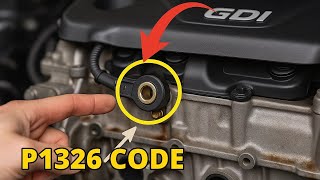
- If the engine passes the BCT, the dealer will then perform a 'Wiring Signal Interference Check' to diagnose the knock sensor and its wiring harness for faults, which may lead to a wiring repair or sensor replacement. 🎬 Watch: How to diagnose and replace a faulty knock sensor.
Parts You'll Likely Need
- Engine Long Block Assembly — This is the required fix if the KSDS has correctly identified excessive connecting rod bearing wear by failing the Bearing Clearance Test. It is often replaced under Kia's lifetime warranty for this issue.
Trusted brands: Kia (OEM)
OEM price range: $5000-$8000+
Aftermarket price range: N/A - Knock Sensor
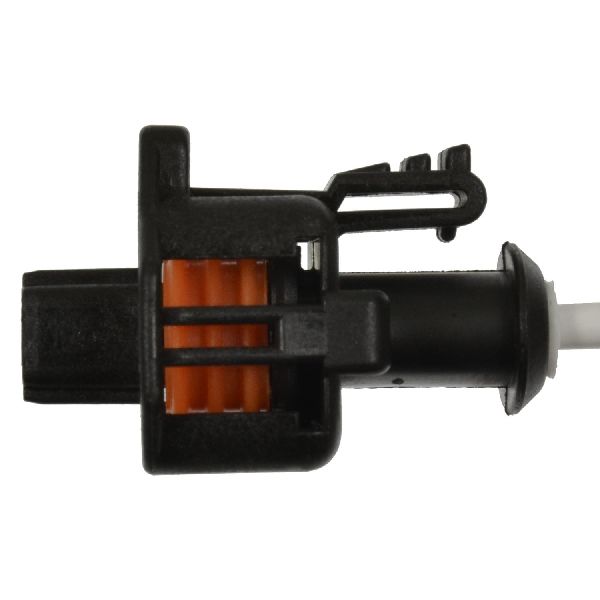
(OEM #39250-2GXXX (family))— In the less common scenario where the engine bearings are healthy (passes BCT), a faulty knock sensor itself can trigger the code. This is typically replaced only after the dealer has ruled out engine failure and wiring issues.
Trusted brands: Kia (OEM), Bosch
OEM price range: $100-$180
Aftermarket price range: $40-$90
Related Codes That Often Appear With This One
- P0014 — This code, related to camshaft position timing, can appear alongside P1326 when engine health is compromised 🎬 See a real-world example of P1326 and P0014 appearing together. by issues like metal debris from failing bearings circulating in the oil.
- P1744 — In at least one owner account, a P1744 (Torque Converter Clutch System Performance) appeared along with a recurring P1326, possibly due to the erratic engine performance in limp mode affecting the transmission.
Technical Service Bulletins (TSBs) & Recalls
- PI2108YZ_TSB_R1: 'PRODUCT IMPROVEMENT CAMPAIGN: SUBSEQUENT REPAIR ACTION: ENGINE REPLACEMENT INSTRUCTIONS FOR DTC P1326 (PI2108Y/Z)' - Confirms engine replacement is the designated repair for this code under the campaign.
- PI1803: 'KNOCK SENSOR DETECTION SYSTEM - ECU LOGIC IMPROVEMENT' - Describes the initial software update that installs the KSDS logic. Explains that if P1326 appears after the update, the vehicle enters limp mode (1800-2000 RPM limit) to prevent severe damage.
- PI1802Y/Z: 'ENGINE REPLACEMENT INSTRUCTIONS FOR DTC P1326' - Details the diagnostic flow: if P1326 is present, perform the Bearing Clearance Test first. Based on the result (pass/fail), proceed to either wiring diagnosis or engine replacement.
- PI1803W/X: 'SUBSEQUENT REPAIR ACTION: ENGINE REPLACEMENT INSTRUCTIONS FOR DTC P1326' - Instructs dealers to check for wiring signal interference before replacing the engine, and provides procedures for a wiring repair if needed.
Platform-Specific Known Issues
- This code is directly related to the settlement of a class-action lawsuit regarding premature engine failures in certain Kia/Hyundai GDI engines. As a result, Kia initiated Product Improvement Campaigns (such as PI1803, PI2108Y/Z) to install the Knock Sensor Detection System (KSDS) and provide a lifetime warranty for the engine long block if it fails due to this specific bearing issue.
- Warranty claims can sometimes be denied if the KSDS software update was never performed on the vehicle, or in some cases, if the vehicle has a salvage/rebuilt title. Owners have also reported struggles with dealers when the engine passes the bearing clearance test but the P1326 code keeps returning.
Mechanic-Grade Diagnostic Values
- Knock Sensor Bolt Torque — expected: 15 ft-lbs. Failure: Incorrect torque can lead to improper vibration detection, causing false codes or missed knock events.
- Engine Rotational Torque (Pre-BCT Check) — expected: Under 94 lb. ft.. Failure: A value over 94 lb. ft. indicates a seized or binding engine, which would lead to an engine replacement without performing the BCT.
Scan Tool Commands That Help
- Kia GDS/KDS: Bearing Clearance Test (BCT) — This is the primary dealer-level command used with Special Service Tool KQ231-2T110QQK to definitively test for excessive rod bearing wear. A 'fail' result authorizes an engine replacement under warranty.
- Kia GDS/KDS: Wiring Signal Interference Check — Used after an engine passes the BCT but the P1326 code is still present. This ~3 minute test, found under 'S/W Management' -> 'Engine Control', checks for electrical noise that could cause a false code before condemning the knock sensor or its harness.
- Kia GDS/KDS: Reset Adaptive Values — After replacing the knock sensor, a technician must perform this function to clear the ECU's learned values, which is a critical final step of the repair.
Wiring & Ground Locations
- ECU Connector Pins — At the main Engine Control Unit (ECU) connector.. TSB PI1802W/X specifies the pins for the knock sensor circuit for testing: Pin 44 (Knock Sensor Shielded Ground) and Pin 45 (Knock Sensor Ground). These are critical for diagnosing the circuit for opens or shorts.
- Knock Sensor Location — Under the intake manifold, typically near the #3 fuel injector.. Its proximity to other electrical components like fuel injectors is the reason for potential signal interference. TSBs instruct technicians to install an extension harness or re-route the existing harness away from the injector harness to prevent false signals.
Real Owner Repair Stories
- Reddit user post in r/kia (2016 Kia Optima, 76k miles) — Vehicle went into limp mode and threw a flashing check engine light with code P1326. No audible engine knock was present.
❌ Tried (didn't work) The dealership initially suspected engine failure due to the P1326 code.
✅ What actually fixed it The engine passed the dealer's Bearing Clearance Test (BCT). Further diagnosis found the knock sensor itself was 'operating out of specification'. Replacing the knock sensor resolved the issue, and the repair was covered under an extended warranty. - Reddit user post in r/kia (2016 Optima, 165k miles) — Heard a knock, then got the flashing check engine light and limp mode (1750 RPM limit). Code P1326 was confirmed.
❌ Tried (didn't work) The dealership performed the Bearing Clearance Test, which the engine passed., The dealer then performed a software update which cleared the code.
✅ What actually fixed it This is an unresolved story highlighting a common owner frustration. The owner was sent home with the car after it passed the BCT, despite the severe symptoms and the known risk, leaving them concerned about an imminent failure far from help. The final fix was not posted, but the story illustrates the gap in the diagnostic process where a passing BCT can lead to no immediate repair.
OEM Part Supersession History
39250-2G200→39250-2G700— Part revision or manufacturer change.
Heads up: While they may be physically similar, using the older part number is not recommended as the revision may address specific performance or durability issues.39250-2G000→39250-2G100— Part revision or manufacturer change.
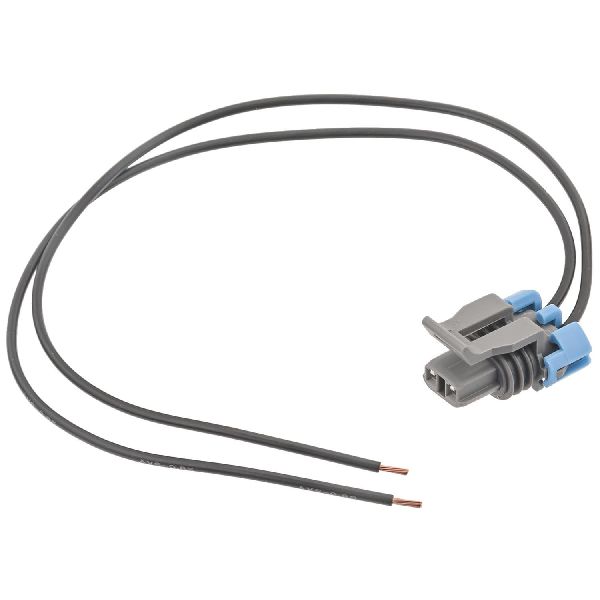
Heads up: These part numbers are often listed for the 2.4L engine but may be cross-compatible. Always verify the correct part number for your specific VIN.91400 2T000QQK (Wiring Harness Kit)→91400 2T100QQK (Wiring Harness Kit)— Updated part for the wiring harness repair/extension.
Heads up: This is the specific extension harness kit mentioned in TSBs for the wiring interference fix.
Helpful Videos

We Have This Part in Stock


The information in this article is provided for general reference and educational purposes only. Vehicle specifications, procedures, and part compatibility can vary by production date, trim level, and region. Always consult your vehicle's factory service manual and verify part numbers before purchasing or performing repairs. Safety-critical components such as airbags, seat belts, and braking systems should be installed by a qualified professional.
- Kia OPTIMA HYBRID:
- 🧭 Diagnostic Flowchart
- 🎬 Helpful Videos
- 🛍️ Shop This Part
- What's Unique About the 2016-2020 Kia OPTIMA HYBRID
- Symptoms You May Notice
- Most Likely Causes
- Diagnosis Steps
- Parts You'll Likely Need
- Related Codes That Often Appear With This One
- Technical Service Bulletins (TSBs) & Recalls
- Platform-Specific Known Issues
- Mechanic-Grade Diagnostic Values
- Scan Tool Commands That Help
- Wiring & Ground Locations
- Real Owner Repair Stories
- OEM Part Supersession History
- 🎟️ Get 5% Off