

P1404 on 2008-2012 Jeep Liberty 3.7L: EGR Close Position Performance Causes and Fixes
On a 2008-2012 Jeep Liberty with the 3.7L V6, code P1404 is almost always caused by carbon buildup preventing the EGR valve from closing completely. The most reliable fix is to replace the EGR valve and gasket. Expect to pay $90-$180 for the part, and the DIY difficulty is 3/5 due to tight access at the rear of the engine's passenger side.
- P1404 on your Jeep Liberty means the EGR valve is stuck slightly open, usually due to carbon buildup.
- Symptoms often include a rough idle or stalling, in addition to the Check Engine Light.
- The most effective and long-lasting repair is to replace the EGR valve and its gasket.
- The job is manageable for a DIYer with basic tools, but accessing the valve at the back of the engine can be challenging and the mounting bolts are prone to stripping.
- Always use a new gasket and consider cleaning the EGR passages in the manifold during the replacement.
What's Unique About the 2008-2012 Jeep Liberty
The 3.7L V6 engine, part of Chrysler's PowerTech family, is known for developing carbon deposits in the emissions system over time. For the Jeep Liberty KK generation (2008-2012), this code is a very common issue. The problem isn't a sophisticated electronic failure, but rather a simple mechanical one: carbon chunks physically holding the EGR valve's pintle open, creating a small, unmetered vacuum leak at idle. This can lead to a lean condition, which may also trigger a P0300 random misfire code.
Symptoms You May Notice
- Check Engine Light is on
- Rough or erratic idle
- Engine stalling, especially at idle or when coming to a stop
- Pinging or knocking sounds during acceleration
- Reduced fuel economy
- Hard starting or extended cranking.
- Replacing oxygen sensors. While a stuck EGR valve can affect the air-fuel ratio, P1404 specifically points to the EGR valve's closed position, not the exhaust gas content.
- Assuming a general vacuum leak. A stuck-open EGR valve acts as a vacuum leak, but the source is the EGR system itself, not a cracked hose elsewhere.
Most Likely Causes
- Carbon Buildup on EGR Valve 🔴 High Probability → Shop Exhaust Gas Recirculation (EGR) Valve The 3.7L engine design can lead to the accumulation of carbon deposits from exhaust gases over many heat cycles, which flake off and jam the valve.
How to confirm: Remove the EGR valve and visually inspect the pintle (the moving plunger) and its seat for black, chunky carbon deposits that would prevent it from closing fully. A valve stuck even slightly open can cause this code.
Typical fix: Replace the EGR valve and gasket. While cleaning is sometimes attempted, carbon can be baked on and difficult to fully remove, and the internal sensor can still be faulty. Replacement is the more permanent and recommended solution.
Est. part cost: $90 - $180 - Failed EGR Valve Position Sensor 🟡 Medium Probability → Shop Exhaust Gas Recirculation (EGR) Valve The position sensor is integrated into the EGR valve assembly. Heat and vibration can cause the sensor's internal electronics to fail, sending an incorrect position reading to the PCM even if the valve is mechanically sound.
How to confirm: With a scan tool that has bidirectional controls, command the EGR valve to open and close while monitoring the sensor voltage. If the voltage doesn't change or is erratic, the sensor is likely bad. However, since the sensor is part of the valve, the fix is the same.
Typical fix: Replace the entire EGR valve assembly.
Est. part cost: $90 - $180
Rare But Worth Checking
- Clogged EGR Passages: Sometimes, the valve itself is functional, but the passages in the intake manifold where the exhaust gas flows are blocked with carbon. If a new EGR valve doesn't fix the code, these passages should be cleaned with a wire brush or carburetor cleaner.
- Wiring or Connector Issue: Damage to the wiring harness or corrosion in the connector for the EGR valve can cause a loss of signal, leading to the code. The red locking tab on the connector can be brittle; care should be taken during removal. This is less common than the valve itself failing but should be checked before replacing a second valve.
Diagnosis Steps
- Use an OBD-II scanner to confirm that P1404 is the active code. Note any other codes present, especially P0300 or P0406.
- Inspect the EGR valve's electrical connector and wiring harness for any visible damage, corrosion, or loose connections. The connector has a red locking tab that must be slid out before depressing the release.
- Locate the EGR valve. On the 3.7L V6, it is found on the passenger side, at the rear of the engine, below the cylinder head.
- Remove the EGR valve. This involves removing the EGR tube (typically two 8mm bolts) and two Torx bolts (T45) holding the valve to the engine. Access is tight, and spraying the bolts with penetrating oil beforehand is recommended. Stripping the Torx bolts is a common problem.
- Visually inspect the valve's pintle and the port for heavy carbon buildup. If chunks of carbon are present, this is the most likely cause.
- Clean the EGR valve and passages thoroughly with carburetor cleaner and a brush. If the valve is heavily contaminated or appears worn, replacement is the better option.
- Install the new or cleaned EGR valve with a new gasket to prevent exhaust leaks. The bolts for the EGR tube are often designed to hold the gasket in place during installation.
- Clear the trouble codes with the OBD-II scanner and perform a test drive, including several idle periods and accelerations, to ensure the code does not return. Some Chrysler vehicles may require a PCM software update or a specific EGR reset procedure with a dealer-level scan tool if the code returns with a new part.
Parts You'll Likely Need
- EGR Valve
(OEM #53034192AB)— This is the primary failure point. Carbon buildup causes the internal pintle to stick, or the integrated position sensor fails.
Trusted brands: Mopar, Standard Motor Products (SMP), Delphi, Duralast
OEM price range: $150-$220
Aftermarket price range: $90-$160 - EGR Valve Gasket
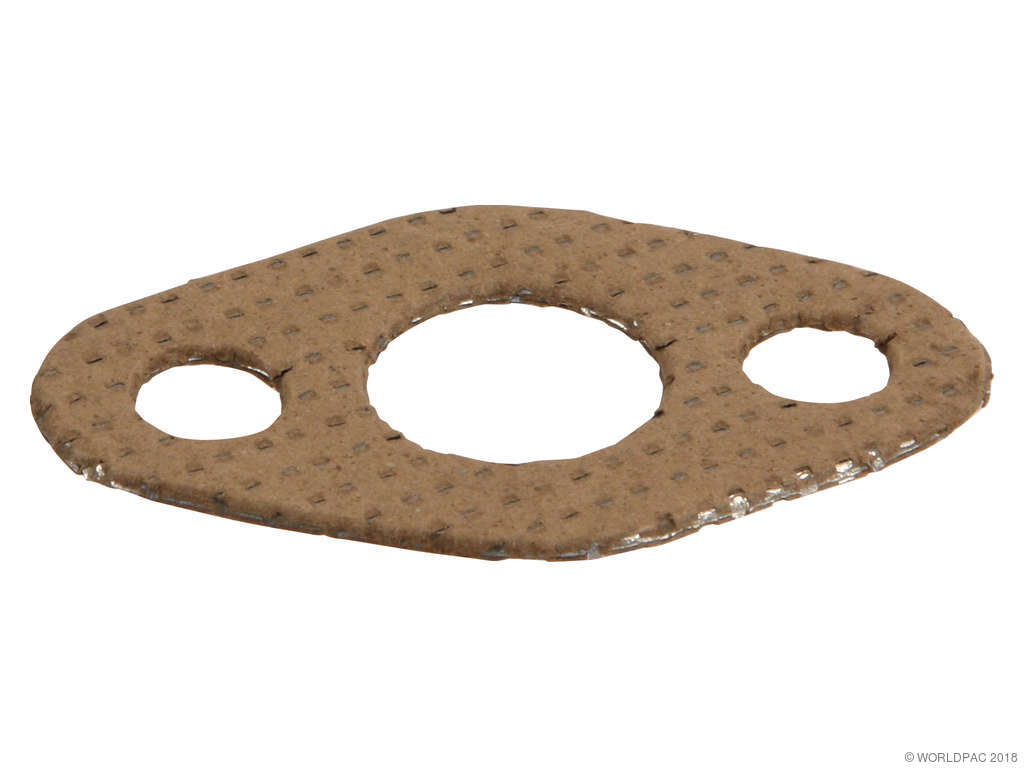
(OEM #4891068AB)— A new gasket is required to ensure a proper seal when replacing the EGR valve, preventing exhaust leaks. Most new valves include one.
Trusted brands: Fel-Pro, Victor Reinz, Mopar
OEM price range: $5-$15
Aftermarket price range: $3-$10
Related Codes That Often Appear With This One
- P0300 — A Random Misfire code can be triggered because the stuck-open EGR valve creates a vacuum leak, leaning out the air-fuel mixture at idle and causing instability.
- P0406 — This code for 'EGR Sensor A Circuit High' can sometimes accompany P1404, indicating an electrical fault within the EGR valve's position sensor.
- P0404 — This code for 'EGR Control Circuit Range/Performance' is a more general EGR fault that can appear alongside P1404, pointing to the valve not moving as commanded.
Platform-Specific Known Issues
- Difficult Access to EGR Valve: → Shop Exhaust Gas Recirculation (EGR) Valve The EGR valve is located at the rear of the engine on the passenger side, tucked in a tight space. This can make removal and installation challenging. Using a combination of extensions and swivels for the ratchet is often necessary. Some owners find it easier to access the bolts from underneath the vehicle.
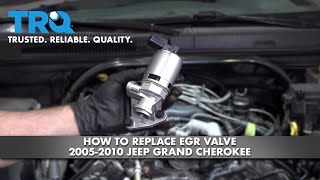
- Stripped Torx Bolts: The two T45 Torx bolts holding the EGR valve to the engine are prone to stripping due to rust and the awkward angle required for removal. Using a high-quality T45 bit and ensuring it is fully seated before applying torque is crucial. If a bolt strips, extraction tools will be required. 🎬 See this step-by-step EGR valve replacement walkthrough
Technical Service Bulletins (TSBs) & Recalls
While specific to other models in the manufacturer's lineup, manufacturer service bulletins such as TSB Bulletin #18-048-22 and TSB Bulletin #1805519 highlight P1404 as "EGR Close Position Performance," often found alongside EVAP system leaks or fuel pump control module issues during diagnostic sweeps.
Mechanic-Grade Diagnostic Values
- EGR Position Sensor Signal Voltage — expected: A smooth voltage change as the valve is commanded open and closed with a scan tool. 🎬 Watch: How to test and inspect the EGR valve The maximum threshold is 4.89 volts.. Failure: Voltage is erratic, does not change, or exceeds 4.89V, indicating a faulty sensor or circuit issue.
- EGR Solenoid Control Circuit Voltage (during scan tool test) — expected: Below 0.5 volts when the valve is commanded OPEN.. Failure: Voltage does not drop below 0.5V, indicating excessive resistance in the control circuit.
- Resistance of (K900) Sensor Ground Circuit — expected: Below 30.0 ohms between the EGR connector and the PCM connector.. Failure: Resistance above 30.0 ohms indicates an open or high resistance in the sensor ground circuit.
- Resistance of (K834) EGR Position Sensor Signal Circuit — expected: Below 5.0 ohms between the EGR connector and the PCM connector.. Failure: Resistance above 5.0 ohms indicates an open or high resistance in the signal circuit.
Scan Tool Commands That Help
- wiTECH or equivalent professional scan tool: EGR System Test — This is a bidirectional test used to command the EGR valve to open and close while the engine is running. It is the primary method for verifying if the valve is mechanically stuck or if the control circuit is functioning. A lack of engine stumble or change in MAP sensor readings during this test points to a blockage or a failed valve.
- wiTECH or equivalent professional scan tool: EGR Valve Learn Value Reset / Sequence EGR reset — This function should be performed after replacing the EGR valve. It forces the PCM to relearn the new valve's closed-position voltage. Failure to perform this reset is a common reason for the P1404 code returning immediately after a repair. If a scan tool is unavailable, disconnecting the battery for 30 minutes may also force a relearn.
Wiring & Ground Locations
- EGR Valve Connector (6-Pin) — On the EGR valve itself, located on the rear passenger side of the 3.7L engine.. This is the central connection point for all power, ground, and signal wires for the EGR valve. Testing voltages and signals here is critical for diagnosis. The pinout is: Pin 1: (K834) EGR Signal, Pin 2: (F856) 5 Volt Supply, Pin 3: (K900) Sensor Ground, Pin 4: (Z939) Ground, Pin 5: N/A, Pin 6: (K35) EGR Solenoid Control.
- PCM Connector C2, Pin 8 — At the Powertrain Control Module (PCM), which is typically located in the engine bay.. This is the specific pin for the (K35) EGR Control circuit. Checking for continuity and voltage here can diagnose a wiring issue between the PCM and the EGR valve.
- G101 — Lower right front of the engine.. This is a primary engine ground. A poor connection here can cause various engine performance and sensor-related issues.
- G102 — Right rear of the engine compartment.. This is a major engine compartment ground point. A faulty ground here can lead to erratic behavior of electronically controlled components like the EGR valve.
Real Owner Repair Stories
- Schrodingers Box YouTube Channel (2006 Jeep Commander (shares powertrain concepts with Liberty)) — P1404 EGR performance code and a P0300 random misfire code.
❌ Tried (didn't work) The owner replaced the EGR valve with a new aftermarket part from an auto parts store, but the code returned two days later.
✅ What actually fixed it The new aftermarket EGR valve was defective out of the box and was leaking slightly even when commanded closed. This was confirmed by blowing through the valve with it disconnected and commanded to 0%. Replacing the faulty new valve with another brand new, functional EGR valve resolved both the P1404 and P0300 codes.
Diagnostic Flowchart
Other Known Issues on This Vehicle
Issues unrelated to this code that are worth knowing about as an owner of this generation:
- Power Window Regulator Failure 🔴 High — Extremely common. The plastic clips holding the window glass to the regulator cable are notoriously brittle and fail, causing the window to drop into the door.
- Sky Slider Roof Failure 🔴 High — Very common on models equipped with this optional roof. Cables break, the roof lifts at speed, and it develops severe leaks. Replacement parts were discontinued, making repairs extremely difficult.
- Dropped Valve Seats 🔴 High — A known issue with the 3.7L PowerTech engine, often exacerbated by overheating. The intake valve seats can loosen and drop into the cylinder, causing misfires and potentially catastrophic engine damage.
- Faulty TIPM (Totally Integrated Power Module) 🟠 Medium — The TIPM (fuse box) can fail, causing a wide range of bizarre electrical issues like the engine not starting, horn blowing randomly, wipers activating on their own, and stalling.
- 42RLE Transmission Solenoid Pack Failure 🟠 Medium — The 4-speed automatic transmission used in this vehicle is known for solenoid pack failures, which can cause harsh shifting, getting stuck in one gear (limp mode), and setting transmission-related fault codes like P0730.
Used vs. New Parts: Buying Guide for This Vehicle
When a used part is the smart pick: A used OEM Mopar EGR valve from a low-mileage donor vehicle can be a cost-effective alternative to a new aftermarket part. Given the high failure rate of some new aftermarket valves, a tested, used OEM part is often a more reliable choice.
Donor-vehicle mileage cap: roughly under 75000 miles for the part to have meaningful remaining life.
What to inspect on the donor part:
- Check for minimal carbon buildup on the pintle and seat.
- Ensure the electrical connector pins are clean, straight, and free of corrosion.
- If possible, apply 12v power to the solenoid pins (Pin 4 and Pin 6) to confirm the valve actuates with an audible click.
- Verify the part number matches the original or a known superseded number.
OEM-only on this vehicle (don't cheap out):
- While not strictly 'OEM-only', using a Mopar EGR valve is highly recommended to avoid issues with defective-out-of-the-box aftermarket parts and to ensure compatibility with the PCM's relearn procedures.
Aftermarket brands forum-validated for this vehicle:
- Standard Motor Products (SMP)
- Delphi
Brands owners have reported issues with on this vehicle:
- Be cautious with no-name or 'white-box' parts from online marketplaces, as quality control can be inconsistent, leading to issues like the valve leaking when closed, as seen in documented repair cases.
Real Owner Stories
Aggregated from forums and TSBs cited above. Mileages and costs reflect what owners reported in those sources.
2008 Liberty 3.7
Symptoms: P1404 (EGR not closing), Runs fine, though once in a while I get an extended crank to start.
What fixed it: The owner attempted to replace the EGR valve but was halted by a stripped T45 Torx screw in a tight space with limited room to maneuver.
Source hint: Jeep KJ and KK Liberty Forum - thread title: Remove stripped Torx from EGR
Related OBD-II Codes
Frequently Asked Questions
Where is the EGR valve located on my 2008-2012 Jeep Liberty 3.7L V6?
What tools do I need to remove the EGR valve on this specific engine?
Is it better to clean or replace the EGR valve on my Liberty?
I'm having trouble removing the T45 bolts; what should I do?
Should I buy an aftermarket EGR valve or stick with Mopar?
Does the 2008-2012 Liberty require any special steps after installing the new valve?
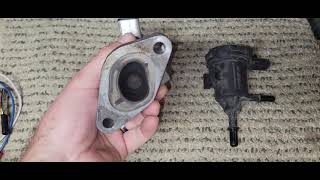
Helpful Videos
We Have This Part in Stock




The information in this article is provided for general reference and educational purposes only. Vehicle specifications, procedures, and part compatibility can vary by production date, trim level, and region. Always consult your vehicle's factory service manual and verify part numbers before purchasing or performing repairs. Safety-critical components such as airbags, seat belts, and braking systems should be installed by a qualified professional.
- Jeep Liberty:
- 🧭 Diagnostic Flowchart
- 🎬 Helpful Videos
- 🛍️ Shop This Part
- What's Unique About the 2008-2012 Jeep Liberty
- Symptoms You May Notice
- Most Likely Causes
- Rare But Worth Checking
- Diagnosis Steps
- Parts You'll Likely Need
- Related Codes That Often Appear With This One
- Platform-Specific Known Issues
- Technical Service Bulletins (TSBs) & Recalls
- Mechanic-Grade Diagnostic Values
- Scan Tool Commands That Help
- Wiring & Ground Locations
- Real Owner Repair Stories
- Other Known Issues on This Vehicle
- Used vs. New Parts: Buying Guide for This Vehicle
- Real Owner Stories
- 2008 Liberty 3.7
- Related OBD-II Codes
- Frequently Asked Questions
- 🎟️ Get 5% Off