

P1429 on 2018-2019 Volkswagen Atlas: Brake Vacuum Pump and Sensor Faults Explained
On a 2018-2019 VW Atlas, code P1429 indicates an electrical fault with the brake vacuum pump, and it almost always appears with code P0556. The most common fix is replacing the brake booster pressure sensor, a relatively inexpensive part. If that doesn't work, the electric vacuum pump itself likely needs replacement, which is a more costly repair. This is a widely reported issue among Atlas owners.
- P1429 on a VW Atlas points to an electrical issue with the brake vacuum pump, almost always appearing with code P0556 for the pressure sensor.
- The most common and cost-effective fix is replacing the brake booster pressure sensor (5Q0906207B).
- If replacing the sensor doesn't work, the electric vacuum pump (03H145100E) is the next likely failure point.
- This is a known issue acknowledged by VW through TSBs and widely discussed by owners online.
- The fault is a serious safety concern as it can lead to a hard brake pedal and significantly increased stopping distances.
What's Unique About the 2018-2019 Volkswagen ATLAS
For the first-generation VW Atlas, the combination of codes P1429 and P0556 is a well-documented issue, as evidenced by multiple Technical Service Bulletins (TSBs) issued by Volkswagen. [VIN4APIN20191122, VIN4APIN20190906, VIN4APIN20190617] Owners often experience a sudden and alarming "Brake booster faulty" warning on the dashboard, sometimes accompanied by the parking brake engaging automatically at a stop. While the codes point to a complex system, the root cause is overwhelmingly one of two components: the brake booster pressure sensor or the electric vacuum pump itself. Forum discussions are filled with owners sharing nearly identical stories of this failure.
Diagnostic Flowchart
Tap your situation to follow the diagnostic path that matches what you're seeing on this vehicle.
Symptoms You May Notice
- Check Engine Light is on
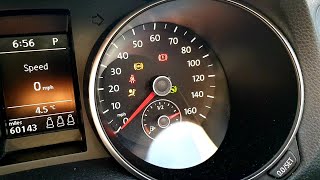
- "Brake booster faulty" message on the instrument cluster.
- Red "BRAKE" warning light illuminated.
- Hard brake pedal requiring significantly more effort to press.
- Spongy or inconsistent brake pedal feel.
- Increased stopping distances.
- Hissing sound when pressing the brake pedal.
- In some cases, the electronic parking brake may engage automatically when the fault occurs at a stop.
- Replacing the entire brake booster assembly. The booster itself is a mechanical component and rarely fails. The issue is almost always with the electronic components (sensor or pump) that support it.
- Replacing the vacuum pump when only the sensor is bad. Since the sensor is cheaper and a more frequent failure point, it is the logical first part to replace when both P1429 and P0556 are present.
Most Likely Causes
- Faulty Brake Booster Pressure Sensor 🔴 High Probability → Shop Power Brake Booster This sensor is a very common failure point on many modern VW and Audi models and can trigger a 'Brake booster faulty' warning even if the pump is functional. It is a 'smart' sensor that communicates via a specific data signal, not just simple voltage, and internal electronics can fail.
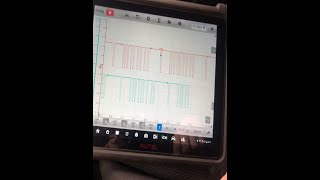
How to confirm: Scan for codes. If P0556 is present (with or without P1429), this sensor is a primary suspect. A technician can monitor the sensor's signal with an oscilloscope to confirm an improper waveform, 🎬 See a professional diagnostic summary of the P0556 code. but given its relatively low cost and high failure rate, it's often replaced as a primary diagnostic step.
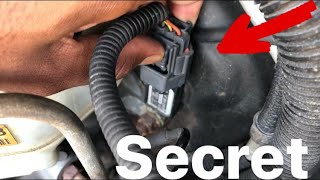
Typical fix: Replace the brake booster pressure sensor. It is typically located on a vacuum line near the master cylinder and brake fluid reservoir.
Est. part cost: $40-$90 - Failed Electric Brake Vacuum Pump 🟡 Medium Probability → Shop Vacuum Pump The P1429 code specifically points to an 'open circuit' for the vacuum pump, indicating an electrical failure within the pump motor itself is a direct cause. This can happen if the motor windings burn out or if there's an internal break in the pump's circuitry.
How to confirm: After checking fuses and wiring, a technician can attempt to command the pump on with a scan tool or directly test for power and ground at the pump's electrical connector. If power and ground are present but the pump does not run, it has failed.
Typical fix: Replace the electric brake vacuum pump. 🎬 Watch: Step-by-step guide to replacing or resealing the vacuum pump. Access requires lifting the vehicle and removing underbody shields.
Est. part cost: $200-$550 - Damaged Wiring or Loose Connector ⚪ Low Probability
How to confirm: Visually inspect the wiring harness and connectors for the brake booster pressure sensor and the vacuum pump. Check for chafing, breaks, corrosion, or loose pins. A loose or frayed connection right at the pressure sensor connector is a known simple cause, so ensure it is fully seated and the wires are intact.
Typical fix: Repair the damaged section of the wiring harness or clean and secure the electrical connector.
Est. part cost: $5-$50 - Blown Fuse or Faulty Relay ⚪ Low Probability
How to confirm: Locate the fuse for the brake vacuum pump in the vehicle's fuse box (consult the owner's manual for location) and visually inspect it. Test the corresponding relay (if applicable) by swapping it with a known good relay of the same type.
Typical fix: Replace the blown fuse or faulty relay.
Est. part cost: $1-$25
Rare But Worth Checking
- Air in Brake Hydraulic Lines:
Diagnosis Steps
- Read all fault codes from the Engine (01) and ABS Brakes (03) control modules using a VW-compatible OBD-II scanner.
- If P1429 and P0556 are both present, the primary suspects are the pressure sensor and the vacuum pump.
- Check the fuse for the brake vacuum pump. Consult the owner's manual for the specific fuse location in the engine bay or interior fuse panels.
- Visually inspect the wiring and electrical connector at the brake booster pressure sensor, located on a vacuum line near the brake fluid reservoir. Disconnect it, check for corrosion, and inspect for frayed or broken wires right at the connector. Reconnect it firmly, ensuring it clicks.
- Visually inspect the wiring leading to the electric vacuum pump. Access requires safely lifting the vehicle and removing an underbody shield.
- Based on overwhelming owner experiences and cost-effectiveness, the recommended next step is to replace the brake booster pressure sensor (Part No. 5Q0906207B). After replacement, clear the codes and test drive.
- If codes return after replacing the sensor, the vacuum pump is the next likely culprit. A professional should test for power and ground at the pump's connector to confirm it has failed before ordering a replacement. A bidirectional scan tool can also be used to command the pump on to test its function.
- If the pump has power but does not run, replace the brake vacuum pump (Part No. 03H145100E).
Parts You'll Likely Need
- Brake Booster Pressure Sensor
(OEM #5Q0906207B)— This sensor is the most frequent failure point and is the least expensive part to fix the issue, especially when P0556 is present. Many owner forums confirm this as the solution.
Trusted brands: Genuine VW/Audi, Bosch, VEMO, Febi Bilstein
OEM price range: $60-$90
Aftermarket price range: $30-$50 - Electric Brake Vacuum Pump
(OEM #03H145100E)— Code P1429 directly points to an open circuit in the pump. If the sensor and wiring are good, the pump itself has likely failed.
Trusted brands: Genuine VW, Pierburg, Hella
OEM price range: $350-$550
Aftermarket price range: $175-$300
Related Codes That Often Appear With This One
- P0556 — This code for 'Brake Booster Pressure Sensor Circuit Range/Performance' is triggered when the sensor's reading is illogical. A failed vacuum pump (P1429) directly causes this by failing to generate vacuum. Conversely, a failed sensor can send bad data that triggers P0556 on its own and may also lead the ECU to flag the pump circuit, triggering P1429. The TSBs for the Atlas list these two codes together. [VIN4APIN20191122, VIN4APIN20190906, VIN4APIN20190617]
Technical Service Bulletins (TSBs) & Recalls
- VIN4APIN20191122: Customer states MIL-on with P1429 and/or P0556.
- VIN4APIN20190906: Customer states MIL-on with P1429 and/or P0556.
- VIN4APIN20190617: Customer states MIL-on with P1429 and/or P0556.
Platform-Specific Known Issues
- Volkswagen issued multiple Technical Service Bulletins (TSBs) for the 2018-2019 Atlas mentioning customer complaints of a 'MIL-on with P1429 and/or P0556', confirming this is a recognized issue on this platform. [VIN4APIN20191122, VIN4APIN20190906, VIN4APIN20190617]
- Many owners report the 'Brake booster faulty' warning appearing intermittently for days or weeks before becoming a constant issue.
- Some drivers have experienced the vehicle braking on its own or the electronic parking brake engaging when the fault occurs, creating a significant safety hazard.
Mechanic-Grade Diagnostic Values
- Brake Booster Pressure Sensor (G608) Signal Voltage — expected: Typically 0.5V (no boost/atmospheric pressure) to 4.5V (full boost/max vacuum). A specific aftermarket part lists a range of 0.008V to 4.072V.. Failure: Voltage is stuck at 0V, 5V, or does not change when vacuum is applied to the sensor.
- Brake Vacuum Pump Operational Vacuum — expected: The pump should activate when system vacuum drops below ~14 inHg and shut off when it reaches ~19-22 inHg.. Failure: The pump fails to activate when vacuum is low, or runs continuously without building sufficient vacuum, indicating either a failed pump or a large leak.
- Brake Vacuum Pump Direct Power Test — expected: When 12V battery voltage is correctly applied to the pump's power and ground terminals, the pump motor should run and create suction at its inlet port.. Failure: The pump does not run when power is applied, indicating an internal open circuit or seized motor.
Scan Tool Commands That Help
- VCDS (VAG-COM) or ODIS: Output Diagnostic Test Mode (DTM) for Brake Booster Pump (V192) — After checking fuses and wiring, this command is used to manually activate the electric vacuum pump. It allows a technician to confirm if the pump motor runs when commanded by the control module, helping to isolate the problem between the pump itself, the wiring, or the control module without needing to manually apply power at the pump connector.
Wiring & Ground Locations
- Electric Brake Vacuum Pump (V192) — Mounted on the driver's side of the front subframe, under the vehicle. Access requires removing the lower engine shield/splash guard.. This is the component that P1429 directly refers to. Its location under the vehicle exposes its wiring and connector to potential road debris and corrosion, which can cause an open circuit.
- Brake Booster Pressure Sensor (G608) Connector — On the vacuum line between the brake booster and the engine, typically located in the plenum chamber near the firewall, close to the master cylinder.. This connector is a common point of failure. Wires can fray and break right at the back of the connector due to engine vibration and heat, causing an open or intermittent signal that triggers P0556 and can be associated with P1429.
Real Owner Repair Stories
- Ross-Tech Forums User (2018 Atlas SE 3.6 4-motion) — Randomly screaming alarm with "Brake booster faulty" message and red 'Brake' light. Brakes still worked on the freeway, but at a stop light, the electronic parking brake engaged on its own and would not release until the car was restarted.
❌ Tried (didn't work) The user was in the initial diagnosis phase, posting the scan log for help.
✅ What actually fixed it The thread confirms a key symptom (parking brake self-engaging) but does not contain the final repair. However, this symptom is widely associated with the failure of the brake booster pressure sensor or vacuum pump. - Reddit r/VWatlas user (2019 VW Atlas) — Intermittent "Brake booster faulty" warning, spongy brake pedal feel.
❌ Tried (didn't work) Not specified, user took it to a mechanic for diagnosis.
✅ What actually fixed it Replacement of the brake booster vacuum sensor. The repair cost approximately $225 at a mechanic.
"I Checked Everything" — The Actual Cause
- While P1429 is an electrical code, the related P0556 can be caused by vacuum leaks. In related VAG models like a Porsche Cayenne, a shop performed a smoke test and found no leaks, but the owner later found a cracked plastic vacuum line that was the true cause of the 'Brake Booster Faulty' warning.
When the Usual Fixes Don't Work
- While the vast majority of P1429/P0556 faults on the Atlas are fixed by replacing the brake booster pressure sensor or the vacuum pump, there are documented cases where the root cause is entirely different. In one instance, a vehicle with identical symptoms (spongy pedal, ABS light, and a booster pressure sensor code) was fixed by performing a full brake system fluid flush and bleed. Air trapped in the hydraulic lines from a previous service caused erratic brake pressure, which was misinterpreted by the sensor. This highlights the importance of not immediately replacing parts without confirming the vacuum system is actually at fault, especially if brake work was recently performed.
OEM Part Supersession History
5Q0906207, 5Q0906207A→5Q0906207B— Updated revision to improve reliability and performance.
Helpful Videos

We Have This Part in Stock

The information in this article is provided for general reference and educational purposes only. Vehicle specifications, procedures, and part compatibility can vary by production date, trim level, and region. Always consult your vehicle's factory service manual and verify part numbers before purchasing or performing repairs. Safety-critical components such as airbags, seat belts, and braking systems should be installed by a qualified professional.
- Volkswagen ATLAS:
- 🧭 Diagnostic Flowchart
- 🎬 Helpful Videos
- 🛍️ Shop This Part
- What's Unique About the 2018-2019 Volkswagen ATLAS
- Symptoms You May Notice
- Most Likely Causes
- Rare But Worth Checking
- Diagnosis Steps
- Parts You'll Likely Need
- Related Codes That Often Appear With This One
- Technical Service Bulletins (TSBs) & Recalls
- Platform-Specific Known Issues
- Mechanic-Grade Diagnostic Values
- Scan Tool Commands That Help
- Wiring & Ground Locations
- Real Owner Repair Stories
- "I Checked Everything" — The Actual Cause
- When the Usual Fixes Don't Work
- OEM Part Supersession History
- 🎟️ Get 5% Off