

P1450 on 2010-2012 Ford Escape Hybrid: Causes and Fixes for 'Unable to Bleed Up Fuel Tank Vacuum'
On a 2010-2012 Escape Hybrid, code P1450 is almost always caused by a faulty canister purge valve that is stuck open. A tell-tale symptom is the engine stalling or running rough right after you get gas. Replacing the purge valve is a simple DIY fix, with the part costing about $40-$80.
- P1450 on your Escape Hybrid means the fuel tank has excessive vacuum it can't get rid of.
- The most likely cause by far is a bad canister purge valve in the engine bay, which is an easy and inexpensive DIY fix.
- A key symptom is having trouble starting the truck or stalling right after you fill up with gas.
- Diagnose the purge valve first by checking for suction when it's unplugged before looking at any other parts.
- Do not automatically replace the gas cap; it is rarely the cause of this specific code.
What's Unique About the 2010-2012 Ford Escape Hybrid
The 2010-2012 Ford Escape Hybrid shares its 2.5L hybrid powertrain with the Ford Fusion Hybrid and Mercury Mariner Hybrid. While no TSB is a perfect match for the Escape Hybrid itself, TSB 19-2207 for the 2013-2017 Fusion Hybrid directly links P1450 to a faulty canister purge valve, requiring its replacement and a PCM software update. This issue is extremely common across the Ford lineup from this era using the 2.5L engine. The most significant and widely reported symptom on this platform is a stall or hard start immediately after refueling, which is a strong indicator that the purge valve has failed.
🎬 Watch: A 2010 Escape P1450 diagnosis and repair walkthrough.Symptoms You May Notice
- Check Engine Light is on.
- Engine stalls, idles roughly, or is difficult to start immediately after refueling.
- Reduced fuel economy.
- A faint fuel odor around the vehicle.
- A 'whoosh' sound of rushing air when opening the gas cap.
- Replacing the fuel cap. A faulty fuel cap typically causes EVAP leak codes (like P0455 or P0457), not a vacuum bleed-off code like P1450.
- Performing a smoke test. A smoke test is used to find leaks (where air gets out). P1450 is a problem with relieving vacuum (letting air in), so a smoke test will usually show no faults.
Most Likely Causes
- Canister Purge Valve Stuck Open 🔴 High Probability → Shop Vapor Canister This is a very common failure item on many Ford vehicles from this era, including the Escape and models with the same 2.5L Hybrid engine like the Fusion and Mariner. Ford has issued TSBs for other models like the Fusion Hybrid for this exact issue, confirming it's a known weakness in the part's sealing capability.
How to confirm: Locate the purge valve in the engine bay. Disconnect its electrical connector and the hose coming from the EVAP canister (not the hose going to the intake). Start the engine. Place your finger over the open port on the valve; if you feel any vacuum or suction, the valve is stuck open and has failed. Alternatively, with the engine off, remove the valve and try to blow through it. If air passes, it is faulty.
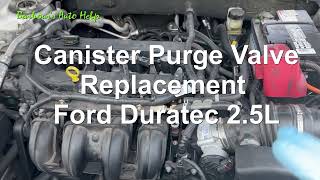
Typical fix: Replace the canister purge valve assembly. It is often sold with the attached hoses. 🎬 See this replacement walkthrough for the 2.5L engine.
Est. part cost: $40-$80 - Blocked Canister Vent Solenoid or Hoses 🟡 Medium Probability → Shop Vapor Canister The vent solenoid is located at the rear of the vehicle near the charcoal canister and is exposed to road debris. Its filter or the valve itself can become clogged with dirt, dust, or even spider webs, preventing it from opening to relieve vacuum.
How to confirm: Locate the vent solenoid near the EVAP canister under the vehicle. Inspect the solenoid, its filter, and all attached hoses for any visible blockages, dirt, or kinks. The solenoid is normally open; you should be able to blow air through it when it is not powered. A scan tool can also command it closed to check for a change in fuel tank pressure.
Typical fix: Clean the blockage from the hoses or replace the canister vent solenoid if it is stuck closed.
Est. part cost: $30-$60
Rare But Worth Checking
- Faulty Fuel Tank Pressure (FTP) Sensor: → Shop Fuel Tank The sensor that measures tank pressure could be sending incorrect data to the computer, causing it to set the P1450 code even if there is no actual vacuum problem.
- Fuel-Saturated EVAP Canister: → Shop Vapor Canister Consistently overfilling the fuel tank (topping off after the pump clicks off) can force liquid gasoline into the charcoal canister, saturating it and blocking airflow, which can prevent the system from bleeding off vacuum.
- Kinked or Collapsed EVAP Hose: A hose between the fuel tank, canister, and purge valve could be pinched, kinked, or collapsed internally, preventing the vacuum from being relieved.
Diagnosis Steps
- Read the code with an OBD-II scanner to confirm P1450 is present.
- Check for the most common symptom: Does the vehicle have trouble starting or stall right after refueling? If yes, the purge valve is highly suspect.
- Perform a functional test of the canister purge valve. Locate it in the engine bay, disconnect the electrical plug and the EVAP line coming from the fuel tank. Start the engine. If suction is present at the valve's port, it is faulty and needs replacement.
- If the purge valve test passes, move to the rear of the vehicle.
- Inspect the canister vent solenoid and its associated hoses for any blockages, dirt, debris, or damage. The vent solenoid is normally open, so it should allow air to pass through when unpowered.
- If no blockages are found, carefully inspect all EVAP system hoses between the engine, fuel tank, and canister for kinks, collapses, or pinches.
- If all components appear to be working, the issue may be a faulty Fuel Tank Pressure (FTP) sensor providing inaccurate readings to the PCM.
Parts You'll Likely Need
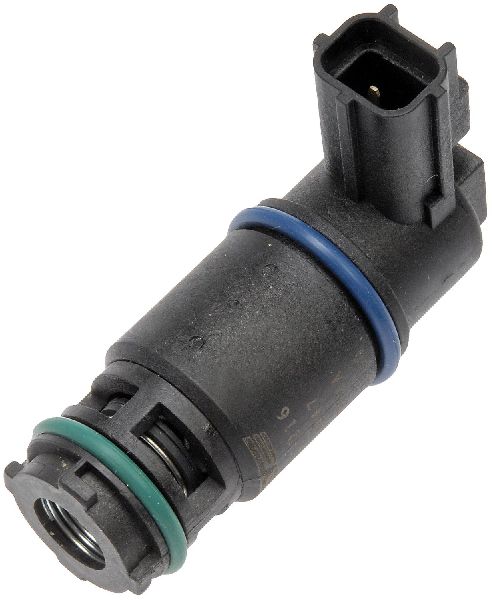
- Canister Purge Valve / Solenoid
(OEM #AU5Z-9C915-B)— This is the most common failure point for code P1450 on this vehicle. It gets stuck open, causing constant engine vacuum to pull on the fuel tank. The original part 9U5Z-9C915-H is superseded by AU5Z-9C915-B.
Trusted brands: Motorcraft, Dorman, Bosch, Standard Motor Products (SMP)
OEM price range: $60-$100
Aftermarket price range: $40-$80 - Canister Vent Solenoid — If the purge valve is not at fault, the next most likely cause is the vent solenoid being stuck closed or clogged with debris, preventing the system from venting.
Trusted brands: Motorcraft, Dorman, Standard Motor Products (SMP)
OEM price range: $40-$70
Aftermarket price range: $30-$60
Related Codes That Often Appear With This One
- P0172 (System Too Rich): A stuck-open purge valve allows excess fuel vapors into the engine, which can cause a rich condition.
- P0496 (EVAP Flow During a Non-Purge Condition): This code directly indicates that the purge valve is flowing when it shouldn't be, which is the root cause of P1450.
Technical Service Bulletins (TSBs) & Recalls
- TSB 19-2207: While for the 2013-2017 Fusion/MKZ Hybrid, it addresses P1450 by replacing the canister purge valve, indicating a known issue with this part on the 2.5L Hybrid powertrain family. It also recommends a PCM software update.
- TSB 11-1-5: For 2011 Ford vehicles, this TSB mentions symptoms of running rough or hard starting after refueling, which directly aligns with the primary symptom of a P1450 caused by a faulty purge valve.
Platform-Specific Known Issues
- source — A user on Reddit with a 2011 Mercury Mariner (a direct platform-mate) reported the P1450 code returned after having previously replaced the purge valve, indicating that either the replacement part failed or the issue lies with another component like the vent solenoid. This highlights that while the purge valve is the most common cause, it's not the only one.
- source — Multiple YouTube videos for Ford Fusions with the same engine demonstrate the P1450 code and the hard-start-after-refueling symptom. They confirm the fix is replacing the purge valve assembly, which is a simple, accessible repair in the engine bay.
Mechanic-Grade Diagnostic Values
- Canister Purge Valve Solenoid Coil Resistance — expected: 30 - 38 Ohms. Failure: An open circuit (infinite resistance) or a short (near-zero resistance) indicates a failed coil.
- Canister Vent Solenoid Coil Resistance — expected: 48 - 65 Ohms. Failure: A reading outside this range indicates a faulty solenoid coil.
- Fuel Tank Pressure (FTP) Sensor Voltage (Key On, Engine Off) — expected: 2.40V - 2.80V at atmospheric pressure. Failure: A voltage outside this range indicates a biased sensor or wiring issue. A sharp drop in voltage immediately after starting the engine (e.g., below 2.4V) points to a stuck-open purge valve pulling premature vacuum.
- EVAP System Integrity Test Vacuum Target — expected: approx. -8.0 inches H2O. Failure: If the PCM commands the purge valve closed to stabilize vacuum and the vacuum continues to increase (pressure drops further), it will set a P1450, concluding the purge valve is stuck open.
Hidden / Shadow Codes Worth Checking
- P1450-00: This is a sub-type or 'occurrence' code that confirms the 'Unable to Bleed Up Fuel Tank Vacuum' condition with no specific sub-fault identified. Its presence simply confirms the primary P1450 fault. (see via Professional-level scan tools like Ford IDS or FORScan can display these sub-type codes.)
Scan Tool Commands That Help
- FORScan / Ford IDS: EVAP Purge Valve (VMV) Bidirectional Control — This is the most definitive test for a stuck-open purge valve. With the engine running, command the valve to 0% duty cycle (closed). If you monitor the FTP sensor PID and vacuum continues to build (pressure voltage drops), the valve is mechanically leaking and must be replaced.
- FORScan / Ford IDS: EVAP Vent Valve Bidirectional Control — This tests the canister vent solenoid. The valve is normally open. Commanding it 'On' or 'Closed' should seal the system, causing pressure to change. If it fails to seal or fails to vent when commanded 'Off' or 'Open', the vent solenoid is faulty.
- Ford IDS: EVAP System Test — This is an automated test routine that commands the entire EVAP system through a test cycle. It's useful after a repair to verify the entire system is functioning correctly and sealing/venting as commanded.
Wiring & Ground Locations
- G400 — Under the left rear of the vehicle.. This is a primary ground point for components at the rear of the vehicle. A corroded or loose G400 could cause issues with the canister vent solenoid, which is located nearby.
- G104 — Near the battery in the engine compartment.. This is a major engine compartment ground. A poor connection here could affect the PCM or the power supply to the canister purge valve.
- Canister Purge Valve Connector — On the canister purge valve, located at the rear of the engine compartment.. This is where you would test for voltage and resistance of the purge valve solenoid. One pin should have battery voltage with the key on.
- Canister Vent Solenoid Connector — On the canister vent solenoid, located under the vehicle near the charcoal canister.. This is where you would test for voltage and resistance of the vent solenoid.
"I Checked Everything" — The Actual Cause
- A smoke test will almost always come back 'clean' or 'no fault found' for code P1450. This is because the most common cause is a canister purge valve stuck open. When smoke is introduced, it follows the intended path of fuel vapors: through the EVAP lines, through the 'stuck open' purge valve, and into the engine's intake manifold. The test doesn't see this as a leak to the outside atmosphere, so it passes the test. The fault is an inability to *seal* the system from engine vacuum, not a leak *out* of the system.
OEM Part Supersession History
9U5Z-9C915-H→AU5Z-9C915-B, then AU5Z-9C915-C, then AU5Z-9C915-D, and finally the latest part number AU5Z-9C915-E.— Part revisions to improve durability and prevent sticking, which is the primary failure mode.
Heads up: All parts in this supersession chain are physically and functionally interchangeable. Always install the latest available revision (AU5Z-9C915-E) for the best chance of a long-term repair.
Model Year Variations Within This Range
- 2010-2012: No significant variations in the design or common failure points of the EVAP system related to code P1450 have been identified within this specific model year range for the Hybrid trim. The cause and fix are consistent across these years.
Diagnostic Flowchart
Other Known Issues on This Vehicle
Issues unrelated to this code that are worth knowing about as an owner of this generation:
- Electronic Throttle Body (ETB) Failure 🔴 High — Very common. Can occur at any mileage, causing sudden 'limp home' mode where the vehicle loses power. (Ref: Customer Satisfaction Program 13N03 (expired), TSB 10-21-6. NHTSA Investigation PE13003.)
- Rear Shock Tower Rust 🔴 High — Extremely common in regions that use road salt. The upper rear shock mount rusts through, detaching the shock from the body. (Ref: null)
- Motor Electronics Coolant (MEC) Pump Failure 🔴 High — Common on earlier hybrids, but still a known issue. Failure leads to overheating of hybrid components and potential vehicle shutdown. (Ref: Safety Recall 14S19 / NHTSA 14V-526 (for 2005-2008 models, but the component type is similar).)
- Blend Door Actuator Failure 🟡 Low — Common failure. Results in a persistent clicking or ticking sound from behind the dashboard and improper HVAC temperature control. (Ref: null)
- Transmission (eCVT) Issues 🟠 Medium — Less common than other issues, but some owners report rough operation or eventual failure. (Ref: null)
- Hybrid Battery Cooling Fan Failure 🟠 Medium — A known issue that can set DTCs P0A81 and P0A96. If not addressed, can lead to premature degradation of the high-voltage battery. (Ref: TSB 16-0118)
Used vs. New Parts: Buying Guide for This Vehicle
When a used part is the smart pick: For this repair, a used part only makes sense for passive components like hoses or the plastic canister housing, and only after careful inspection for cracks or damage. A used canister purge valve is NOT recommended.
Donor-vehicle mileage cap: roughly under 30000 miles for the part to have meaningful remaining life.
What to inspect on the donor part:
- For hoses, ensure they are not brittle, cracked, or swollen.
- For the charcoal canister, check for physical cracks in the housing and ensure it doesn't smell strongly of raw fuel, which indicates saturation.
- Avoid any electronic components like valves or sensors from a donor vehicle, as their remaining lifespan is unknown and they are the primary failure points.
OEM-only on this vehicle (don't cheap out):
- No parts for this repair are strictly OEM-only, but using a high-quality replacement for the purge valve is critical.
Aftermarket brands forum-validated for this vehicle:
- Motorcraft (OEM)
- Standard Motor Products (SMP) - Often considered a high-quality alternative that sometimes improves on OEM weaknesses.
Brands owners have reported issues with on this vehicle:
- Use caution with lower-priced Dorman purge valves for this application; some users have reported premature failures, while others have had success. It is a higher risk than using Motorcraft or SMP.
Real Owner Stories
Aggregated from forums and TSBs cited above. Mileages and costs reflect what owners reported in those sources.
2009 Ford Escape — 96312 miles
Symptoms: Trouble starting after filling up at the gas station; stalled at a red light 10 minutes later; check engine light came on; stalls again at red lights within the first 50-70km of that tank.
What fixed it: The owner's mechanic initially replaced camshaft position sensors which did not fix it; official Ford documentation for this model suggests the fix is addressing blocked vapor lines or a stuck open Vapor Management Valve (purge valve).
Source hint: reddit r/fordescape
2011 Mercury Mariner
Symptoms: The P1450 code returned even after the purge valve had been previously replaced.
What fixed it: The report indicates the issue may lie with the vent solenoid if the purge valve replacement fails.
Source hint: Reddit r/MechanicAdvice
2008 Ford Escape Hybrid
Symptoms: Code P1450 present.
What fixed it: Ford documentation cited by the owner pointed to blocked vapor lines or a stuck open Vapor Management Valve (purge valve).
Source hint: GreenHybrid.com (Electric Vehicle Forums)
Related OBD-II Codes
Frequently Asked Questions
Does TSB 11-1-5 apply to my 2011 Ford Escape Hybrid if it's hard to start after refueling?
I have a 2012 Escape Hybrid; is the canister purge valve a known weak point for this model year?
Can a blocked vent solenoid cause P1450 on my Escape Hybrid, and where is it located?
If I replace the purge valve on my 2011 Mercury Mariner and the P1450 code returns, what should I check next?
Is there a software update related to the P1450 code for the 2.5L Hybrid powertrain?
Why do I hear a 'whoosh' sound when I open my gas cap?
Helpful Videos
Used OEM Parts in Stock

New Aftermarket Parts Available


The information in this article is provided for general reference and educational purposes only. Vehicle specifications, procedures, and part compatibility can vary by production date, trim level, and region. Always consult your vehicle's factory service manual and verify part numbers before purchasing or performing repairs. Safety-critical components such as airbags, seat belts, and braking systems should be installed by a qualified professional.
- Ford Escape Hybrid:
- 🧭 Diagnostic Flowchart
- 🎬 Helpful Videos
- 🛍️ Shop This Part
- What's Unique About the 2010-2012 Ford Escape Hybrid
- Symptoms You May Notice
- Most Likely Causes
- Rare But Worth Checking
- Diagnosis Steps
- Parts You'll Likely Need
- Related Codes That Often Appear With This One
- Technical Service Bulletins (TSBs) & Recalls
- Platform-Specific Known Issues
- Mechanic-Grade Diagnostic Values
- Hidden / Shadow Codes Worth Checking
- Scan Tool Commands That Help
- Wiring & Ground Locations
- "I Checked Everything" — The Actual Cause
- OEM Part Supersession History
- Model Year Variations Within This Range
- Other Known Issues on This Vehicle
- Used vs. New Parts: Buying Guide for This Vehicle
- Real Owner Stories
- 2009 Ford Escape — 96312 miles
- 2011 Mercury Mariner
- 2008 Ford Escape Hybrid
- Related OBD-II Codes
- Frequently Asked Questions
- 🎟️ Get 5% Off