

P1456 on 2001-2003 Acura MDX: EVAP Fuel Tank Leak Causes and Fixes
P1456 on a first-generation Acura MDX almost always indicates a loose or faulty gas cap. Before buying parts, tighten the cap until it clicks multiple times, clear the code, and drive. If the light returns, a new OEM fuel cap (part # 17670-S0X-A02) is the most likely and affordable fix. If that fails, inspect the fuel filler neck for rust where the cap seals.
- P1456 specifically points to a leak in the fuel tank side of the EVAP system.
- Always check that the gas cap is tightened to at least three clicks before performing any repairs.
- If the code returns, the most likely fix is a new OEM fuel cap (Part # 17670-S0X-A02). Aftermarket caps are known to be unreliable for this issue.
- If a new cap doesn't fix it, carefully inspect the fuel filler neck for rust or corrosion where the cap seals. This is the second most common cause.
- This code will not cause any driving problems but will result in a failed emissions inspection.
What's Unique About the 2001-2003 Acura MDX
Honda and Acura vehicles of this era use a particularly sensitive EVAP leak detection system. They helpfully created two distinct codes to narrow down the leak's location: P1456 for the fuel tank area and P1457 for the EVAP canister area. This is more specific than the general small/large leak codes (like P0456/P0455) found on many other vehicles, often pointing a technician directly to the gas cap or fuel filler neck first.
Diagnostic Flowchart
Tap your situation to follow the diagnostic path that matches what you're seeing on this vehicle.
Symptoms You May Notice
- Check Engine Light is on
- Possible faint fuel smell (rare, but more likely if the leak is larger or from a cracked hose).
- Replacing the O2 sensor
- Replacing the EVAP Purge Valve (this usually triggers a different code, like P0443, and can be tested by feeling for vacuum at its port when the engine is warm).
Most Likely Causes
- Loose Fuel Cap 🔴 High Probability → Shop Fuel Tank Cap This is the most common reason for this code across all Honda/Acura models of this period, often due to user error after refueling. The cap must be tightened until it makes at least three distinct clicks to ensure a proper seal.
How to confirm: Unscrew the fuel cap and then retighten it, ensuring you hear at least three clicks to confirm it is fully seated. Clear the code with a scanner and see if it returns after a few drive cycles. Many owners report the light returning simply because the cap was not fully tightened.
Typical fix: Properly tighten the fuel cap.
Est. part cost: $0 - Faulty Fuel Cap 🔴 High Probability → Shop Fuel Tank Cap The rubber O-ring seal on the original cap can dry out, crack, or become hard over time, preventing a proper seal even when tightened correctly. Additionally, the internal clutch mechanism that produces the 'click' can wear out, giving a false sense of tightness when the cap is still loose.
How to confirm: Visually inspect the rubber seal on the cap for any cracks, deformities, or stiffness. If the cap keeps turning after clicking or feels 'mushy,' the internal mechanism is likely worn. It is highly recommended to replace with an OEM cap, as many forum users report aftermarket caps failing to solve the problem.
Typical fix: Replace the fuel cap. It is highly recommended to use an OEM Acura part for best results.
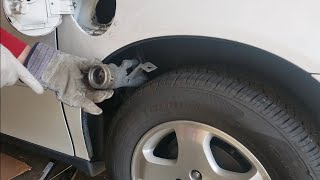
Est. part cost: $25-$55 - Rusted or Corroded Fuel Filler Neck 🟡 Medium Probability → Shop Fuel Filler Neck In areas that use road salt, the metal lip of the fuel filler neck where the cap seals can rust and corrode. Dirt and moisture get trapped behind the plastic wheel well liners and splash guards, promoting rust on the neck from the outside-in. This creates an uneven surface that the cap's O-ring cannot seal against.
How to confirm: Remove the fuel cap and thoroughly inspect the metal opening of the filler neck. Use a light and your finger to feel for any rust, bubbling paint, or pitting on the top sealing surface. A Reddit user on a platform-mate Honda Odyssey noted this is a very common cause.
Typical fix: The filler neck must be replaced for a permanent fix. Some owners have reported temporary success by sanding the rust down and applying an epoxy like JB Weld or 'Quick Steel' putty over pinholes, but this is not a long-term solution. 🎬 Watch: How to apply sealant to a rusted filler neck. Replacement is the correct repair.
Est. part cost: $95-$650 - Faulty EVAP Canister Vent Solenoid (CVS) Valve ⚪ Low Probability → Shop Vapor Canister While more commonly associated with code P1457, a vent solenoid stuck open or closed can sometimes contribute to a P1456 diagnosis, as mentioned in Honda TSB 99-075. The valve is exposed to the elements under the car and can fail over time.
How to confirm: The valve can be tested with a scan tool that can command it to open and close. A simple DIY test is to remove the valve, connect its two terminals to a 9-volt or 12-volt battery, and listen for an audible 'click' to see if the solenoid actuates.
Typical fix: Replace the EVAP canister vent solenoid.
Est. part cost: $50-$120
Rare But Worth Checking
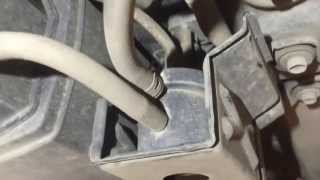
- Cracked or disconnected EVAP hose near the fuel tank: → Shop Fuel Tank A visual inspection of the hoses running from the tank to the EVAP canister is worthwhile. One owner found a P1456 was caused by a hose that had completely disconnected from the vapor canister nipple under the car.
- Faulty Fuel Tank Pressure (FTP) Sensor: → Shop Fuel Tank If the sensor provides incorrect readings, the PCM may believe there is a leak when there isn't one. According to Honda TSB 99-075, with the gas cap off, the FTP sensor voltage should read between 2.45V and 2.55V. Readings outside this range could indicate a bad sensor.
- Faulty EVAP Two-Way Valve: A very rare cause, documented in a detailed Honda-Tech forum thread, where a user's car would pass a vacuum test but not a pressure test. The two-way valve was suspected of leaking pressure back to the canister side of the system prematurely, preventing the tank from reaching its target pressure during the EVAP monitor test.
Diagnosis Steps
- Read the code with an OBD-II scanner to confirm P1456 is present.
- Check the gas cap. Remove it and retighten it, listening for at least 3 solid clicks. Clear the code and drive for a few days.
- If the code returns, perform a close visual inspection of the gas cap's rubber seal for any cracks or damage. As noted by EricTheCarGuy, even small cracks can cause a leak.
- Inspect the lip of the fuel filler neck for any signs of rust, corrosion, or damage that would prevent a good seal. Pay close attention to the very top edge where the cap's o-ring sits.
- If the cap and filler neck appear perfect, the next step is to replace the fuel cap with a new OEM part. They can fail internally without visible signs, and aftermarket caps are a common point of failure.
- If the code persists, visually inspect all accessible EVAP hoses between the fuel tank and the charcoal canister for cracks or disconnections. A video documented a P1456 on a similar Acura caused by a hose that had simply fallen off its nipple on the canister. 🎬 See how a loose hose can trigger this EVAP code.
- As an advanced step, test the EVAP Canister Vent Solenoid (CVS) by applying 9V or 12V power to its terminals and listening for a click.
- If no visual faults are found, the system should be tested with a smoke machine. This involves injecting low-pressure smoke into the EVAP system (usually via the purge line service port) to pinpoint the exact location of the leak.
Parts You'll Likely Need
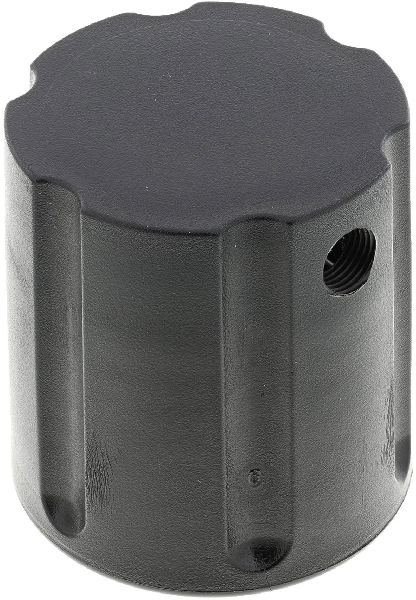
- Fuel Filler Cap
(OEM #17670-S0X-A02)— This is the most common failure point for P1456. The seal wears out or the internal clutch fails, preventing the EVAP system from holding pressure. Using an OEM cap is strongly recommended as many owners report that cheaper aftermarket caps do not solve the problem.
Trusted brands: Acura (Genuine OEM)
OEM price range: $25-$55
Aftermarket price range: $10-$20 - Fuel Filler Neck
(OEM #17660-S3V-A02)— Commonly rusts in salt-belt regions, creating a surface that the fuel cap cannot seal against. This causes a persistent P1456 code even with a new cap. The issue is well-documented on the MDX and its platform mates like the Honda Odyssey.
Trusted brands: Acura (Genuine OEM), Spectra Premium, Dorman
OEM price range: $500-$650
Aftermarket price range: $90-$200
Technical Service Bulletins (TSBs) & Recalls
- Acura TSB B99-040 / Honda TSB 99-075: Updates troubleshooting procedures for DTC P1456 and P1457. The Honda version explicitly applies to platform mates (2003-04 Pilot, 1999-04 Odyssey) and provides diagnostic steps, such as checking for FTP sensor voltage between 2.45V-2.55V with the fuel cap removed.
Platform-Specific Known Issues
- The fuel filler neck on the first-generation MDX is known to be susceptible to rust, which prevents the gas cap from sealing properly. This is often caused by moisture and debris being trapped by the plastic inner fender liner. This should be a primary point of inspection if a new gas cap does not solve the issue.
Mechanic-Grade Diagnostic Values
- Fuel Tank Pressure (FTP) Sensor Voltage — expected: 2.45V - 2.55V. Failure: A voltage reading outside this range with the fuel cap off (system at atmospheric pressure) indicates a faulty sensor, wiring issue, or a restriction in the sensor's hoses.
- EVAP Canister Vent Solenoid (CVS) Coil Resistance — expected: 20 - 50 Ohms (general specification). Failure: A reading of infinite resistance (open circuit) or near zero (short circuit) indicates a failed solenoid coil.
Hidden / Shadow Codes Worth Checking
- Mode 6 Data: Honda/Acura vehicles of this era do not use proprietary 'shadow codes' in the same way as some other manufacturers. Instead, the results of the non-continuous EVAP monitor tests that trigger P1456 are stored in OBD-II Mode 6. A technician with an advanced scan tool can view the specific test IDs and values to see exactly which parameter failed during the EVAP system self-test. (see via Advanced OBD-II scanner with Mode 6 capability, or the dealer-level Honda Diagnostic System (HDS).)
Scan Tool Commands That Help
- Honda Diagnostic System (HDS): EVAP FUNCTION TEST — This is the initial function test recommended by the manufacturer's TSB to run before beginning manual troubleshooting. It performs an automated check of the EVAP system.
- Honda Diagnostic System (HDS): INSPECTION > EVAP TEST > SINGLE SOLENOID / MULTI SOLENOIDS — This function allows a technician to individually command the EVAP Canister Vent Solenoid (CVS), EVAP Bypass Solenoid (BPS), and Purge Control Solenoid (PCS) on and off. This is used to verify if each solenoid is mechanically functioning (by listening for a 'click') without having to manually apply power.
Wiring & Ground Locations
- G602 — Above the left rear fender (2003 model year).. This is a primary chassis ground point located in the vicinity of the EVAP canister, fuel tank, and associated solenoids. A corroded or loose ground here can cause intermittent or faulty operation of EVAP system electrical components.
- G301 — At the left rear of the engine compartment.. Provides a ground path for components in the engine bay. While most P1456 issues are at the rear of the vehicle, this ground could affect the PCM or related relays.
- G401 — Behind the upper left end of the dash.. This is a key ground location for the instrument panel and components connected to the Powertrain Control Module (PCM). A fault here could disrupt sensor readings or PCM function.
- Powertrain Control Module (PCM) — Under the center of the dash.. This is the computer that receives data from the Fuel Tank Pressure sensor and controls the EVAP solenoids. Knowing its location is critical for any advanced wiring or pin-out testing.
Real Owner Repair Stories
- AcuraZine forum user (Acura RL (platform with similar EVAP system design)) — Persistent P1456 code, even after re-tightening the gas cap.
❌ Tried (didn't work) Re-tightening the cap until it clicked multiple times.
✅ What actually fixed it A new OEM gas cap. The user discovered their old cap's internal clutch mechanism was worn, producing a 'click' before the cap was fully sealed and tight. They temporarily had to manually force the cap past the initial clicks to get a seal before the new part arrived and permanently fixed the issue. - Honda-Tech forum user (Honda Accord (platform with similar EVAP system design)) — P1456 code would return as 'pending' shortly after being cleared.
❌ Tried (didn't work) Verifying the gas cap was good., Confirming the filler neck was not rusted., Performing a vacuum test on the fuel tank system, which it passed.
✅ What actually fixed it The user concluded the EVAP two-way valve was faulty. The system could hold a vacuum applied by a hand pump, but it could not build and hold the slight pressure required by the PCM's self-test, leading them to suspect the two-way valve was leaking pressure prematurely.
"I Checked Everything" — The Actual Cause
- In a well-documented case on a Honda-Tech forum, a user found their system could hold a vacuum perfectly (which would pass a basic vacuum decay test or a smoke test applying vacuum), but it could not hold pressure. The P1456 code was set because the PCM's diagnostic test involves monitoring pressure build-up from fuel vapor, which was failing. The suspected cause was a faulty EVAP two-way valve that was not seating correctly under pressure, a fault that a standard smoke test might not reveal.
OEM Part Supersession History
17670-S0X-A01→17670-S0X-A02— Standard part revision by the manufacturer. Often done to improve seal material, clutch mechanism, or overall durability to address common failure points.
Model Year Variations Within This Range
- 2002 vs 2003: The physical location descriptions for some ground points vary slightly in service manuals between model years. For example, G401 is listed as 'left end of dash' for 2002 and 'behind upper left end of dash' for 2003. While the grounds are in the same general area, this subtle difference can matter when referencing a diagram.
Helpful Videos
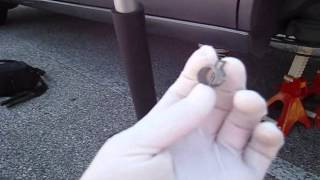
![How to Fix P1456 Engine Code in 4 Minutes [3 DIY Methods / Only $4.55]](https://img.youtube.com/vi/rcwNnXlt7Wk/mqdefault.jpg)
We Have This Part in Stock




The information in this article is provided for general reference and educational purposes only. Vehicle specifications, procedures, and part compatibility can vary by production date, trim level, and region. Always consult your vehicle's factory service manual and verify part numbers before purchasing or performing repairs. Safety-critical components such as airbags, seat belts, and braking systems should be installed by a qualified professional.
- Acura MDX:
- 🧭 Diagnostic Flowchart
- 🎬 Helpful Videos
- 🛍️ Shop This Part
- What's Unique About the 2001-2003 Acura MDX
- Symptoms You May Notice
- Most Likely Causes
- Rare But Worth Checking
- Diagnosis Steps
- Parts You'll Likely Need
- Technical Service Bulletins (TSBs) & Recalls
- Platform-Specific Known Issues
- Mechanic-Grade Diagnostic Values
- Hidden / Shadow Codes Worth Checking
- Scan Tool Commands That Help
- Wiring & Ground Locations
- Real Owner Repair Stories
- "I Checked Everything" — The Actual Cause
- OEM Part Supersession History
- Model Year Variations Within This Range
- 🎟️ Get 5% Off