

P1516 on 2006-2010 GMC Savana: Reduced Power Causes and Fixes
This code usually means the throttle body is failing or dirty, causing 'Reduced Engine Power' mode. The most common fix is cleaning or replacing the entire throttle body assembly. A thorough cleaning is a good first step, but also check for bad grounds and broken wires at the connector.
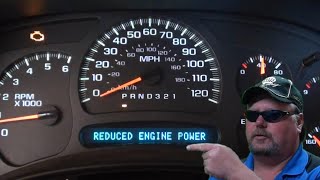
- P1516 will almost always put your Savana in 'Reduced Engine Power' mode, making it slow and unresponsive.
- Before buying any parts, your first step should be to thoroughly clean the throttle body of carbon buildup.
- If cleaning doesn't work, the next most likely solution is replacing the entire throttle body assembly.
- Always check the wiring and connector at the throttle body for damage before replacing parts.
- An idle relearn procedure, sometimes requiring a scan tool, is often necessary after cleaning or replacing the throttle body.
What's Unique About the 2006-2010 Gmc SAVANA
On these high-mileage work vans, often equipped with 4.8L, 5.3L, or 6.0L Vortec V8s, the P1516 code is frequently linked to simple wear and tear. As documented in GM's Technical Service Bulletin (TSB) #PIP4578B, carbon can build up in the throttle body over many miles, preventing the throttle plate from moving smoothly. This causes the computer to struggle with idle control, leading to surges, reduced power, and this specific code. The issue is so common that cleaning the throttle body is often the first and most effective diagnostic step.
Diagnostic Flowchart
Tap your situation to follow the diagnostic path that matches what you're seeing on this vehicle.
Symptoms You May Notice
- "Reduced Engine Power" message on the dashboard
- Check Engine Light is on
- Vehicle has very little acceleration or throttle response
- Unstable or surging idle speed, especially when coming to a stop
- Engine may stall, especially when coming to a stop
- A clicking sound from the throttle body as the plate flutters right before entering limp mode
- Replacing the accelerator pedal position (APP) sensor. While the APP sensor is part of the throttle control system, it has its own set of diagnostic codes (like P2138). P1516 specifically points to a discrepancy at the throttle body itself. However, it's worth noting that water intrusion in the driver's kick panel connector can cause APP codes and is a known issue on these platforms per TSB 07-06-04-019E.
Most Likely Causes
- Dirty or Carbon-Fouled Throttle Body 🔴 High Probability → Shop Fuel Injection Throttle Body As described in TSB PIP4578B, carbon buildup from the PCV system is a very common issue on high-mileage GM Vortec engines, preventing the throttle plate from closing properly and confusing the computer.
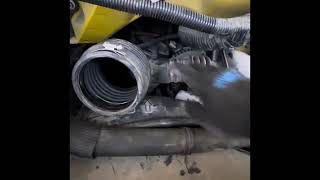
How to confirm: Remove the air intake duct from the throttle body and visually inspect the throttle plate and bore for a thick, black, sticky coating of carbon. The issue is often worse on the back side of the plate.
Typical fix: Thoroughly clean the throttle body bore and plate with a dedicated throttle body cleaner and a soft brush or rag. 🎬 Watch: Step-by-step guide to cleaning your Savana throttle body. An idle relearn procedure with a scan tool is highly recommended after cleaning to prevent idle issues.
Est. part cost: $10-$20 - Failing Throttle Body Assembly 🟡 Medium Probability → Shop Fuel Injection Throttle Body The internal motor, plastic gears, and dual potentiometer-style position sensors within the throttle body can wear out over time, leading to the erratic behavior that sets code P1516. The wear creates dead spots in the sensor's sweep.
How to confirm: If cleaning the throttle body doesn't resolve the issue, and the wiring is confirmed to be good, the internal electronics of the throttle body are the likely culprit. A scan tool can graph the commanded vs. actual throttle position (TPS1 and TPS2) to reveal glitches, dropouts, or a delayed response.
Typical fix: Replace the entire throttle body assembly. This part typically includes a new throttle position sensor (TPS) and actuator motor. An ACDelco 217-3153 is a common replacement for the 6.0L engine.
Est. part cost: $150-$300 - Wiring or Connector Issues 🟡 Medium Probability The wiring harness leading to the throttle body is exposed to engine heat and vibration, which can cause wires to break *inside* their insulation near the connector. The connector pins can also fret or corrode, causing intermittent signal loss.
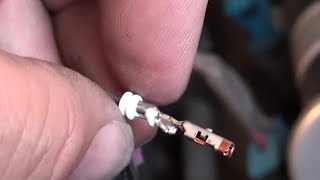
How to confirm: With the engine running, carefully wiggle the wiring harness and connector at the throttle body to see if it triggers the fault or causes a stumble. Disconnect the plug and inspect for corrosion or backed-out pins. Gently pull on the individual wires (especially the brown and yellow ones) to see if they stretch, which indicates a break inside the insulation. 🎬 See how to diagnose broken wires and P1516 faults.
Typical fix: Repair the damaged section of wire or replace the throttle body connector pigtail. An ICT Billet WPTHB30 is a common pigtail replacement.
Est. part cost: $15-$50
Rare But Worth Checking
- Poor Ground Connections: Several forum posts mention that poor or corroded engine and PCM ground straps can cause a variety of difficult-to-diagnose electronic issues, including P1516. Cleaning the main ground points on the engine block (G103, G104), firewall, and frame has resolved the issue for some owners after other fixes failed. A common trouble spot is the ground strap on the back of the driver's side cylinder head.
- Hardened Internal Grease (Cold Weather Failure): In older, high-mileage throttle bodies, the grease inside the actuator's plastic gearbox can harden. On cold days, this stiff grease can prevent the motor from moving the throttle plate freely, triggering a P1516 code that may disappear once the engine bay warms up. Some DIY-ers have successfully fixed this by disassembling the actuator cover and re-greasing the gears with modern synthetic grease.
- Failing Powertrain Control Module (PCM): While rare, it is possible for the internal driver circuit within the PCM that controls the throttle body to fail. This should only be considered after all other possibilities—especially wiring and grounds—have been exhaustively ruled out. A PCM software update may also be available to address sensitivity issues.
Diagnosis Steps
- Check for other stored DTCs. Codes like P2101, P2135, or U0107 can provide additional clues.
- Visually inspect the wiring and connector at the throttle body. With the engine idling, carefully wiggle the harness to see if the engine stumbles or the code sets.
- Gently tug on each wire at the back of the throttle body connector. If a wire feels 'stretchy' or pulls out, it is broken internally and needs repair.
- Remove the air intake hose and inspect the throttle body bore and plate for heavy carbon buildup.
- If carbon is present, clean the throttle body thoroughly using a dedicated cleaner and a soft brush. Do not use harsh tools that could scratch the bore.
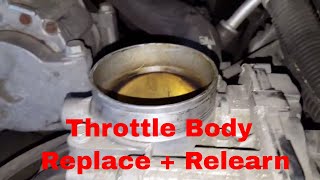
- After cleaning, perform an idle relearn procedure. This may require a capable scan tool (like a Tech 2) to reset the learned values in the PCM, as specified in TSB PIP4578B. Some sources suggest it can be done by letting the vehicle idle for several minutes, but the scan tool method is more reliable.
- If the problem persists, use a scan tool to monitor live data. Graph 'Commanded Throttle Position' against 'TPS1' and 'TPS2'. The values should track each other closely. If there are dropouts, spikes, or a significant lag, the throttle body is likely faulty.
- Inspect and clean major engine and body ground connections, particularly those on the back of the cylinder heads and the main battery-to-block/frame grounds.
- If wiring and cleaning are ruled out, replace the throttle body assembly.
Parts You'll Likely Need
- Throttle Body Assembly
(OEM #ACDelco 217-3153 (for 6.0L V8, verify by VIN))— This is the most common fix when cleaning fails, as the internal motor and sensors wear out. The assembly includes the throttle plate, motor, and position sensors as one unit.
Trusted brands: ACDelco, Bosch, Hitachi, Standard Motor Products 🎬 Watch: A helpful walkthrough for replacing the throttle body assembly.
OEM price range: $250-$350
Aftermarket price range: $150-$250 - Throttle Body Cleaner — Often, a thorough cleaning is all that is needed to fix a sticking throttle plate, as recommended by GM's own service bulletin.
Trusted brands: CRC, Berryman, Gumout
OEM price range: $10-$20
Aftermarket price range: $10-$20 - Throttle Body Connector Pigtail
(OEM #ICT Billet WPTHB30)— If wires are broken at the connector from heat and vibration, splicing in a new pigtail is the standard repair.
Trusted brands: ACDelco, Dorman, ICT Billet, Standard Motor Products
OEM price range: $30-$50
Aftermarket price range: $15-$40
Related Codes That Often Appear With This One
- P2101 — This code, 'Control Module Throttle Actuator Control Motor Circuit Range/Performance,' is often set alongside P1516 because both relate to the performance of the throttle actuator motor.
- P2135 — This code, 'Throttle/Pedal Position Sensor/Switch 'A'/'B' Voltage Correlation,' indicates a conflict between the two throttle position sensors inside the throttle body. It's often seen with P1516 when the throttle body is failing internally.
- P0068 — This code, 'MAP/MAF - Throttle Position Correlation,' can be triggered when the throttle position is not what the computer expects for a given airflow reading, a condition that can be caused by a sticking throttle plate.
Technical Service Bulletins (TSBs) & Recalls
- PIP4578B: Addresses idle surge, reduced engine power, and DTCs including P1516 on high mileage vehicles, recommending throttle body cleaning and an idle learn reset.
- 07-06-04-019E: While written for DTC P2138 (APP Sensor Correlation), this TSB is relevant as it details a known issue on these platforms with water leaking into the IP-to-body harness connector in the driver's kick panel, causing various electrical and reduced power issues.
Platform-Specific Known Issues
- GM issued Technical Service Bulletin #PIP4578B which directly addresses P1516, along with other codes, on high-mileage vehicles. It specifically points to carbon buildup in the throttle body as a primary cause of idle surge and reduced power.
Mechanic-Grade Diagnostic Values
- Throttle Position Sensor (TPS) 1 and 2 Voltage — expected: Approximately 0.5V - 0.7V at closed throttle, sweeping smoothly up to 4.5V - 5.0V at wide-open throttle. The two sensors should have inverse or tracking voltage patterns without glitches or dropouts.. Failure: Voltage below 0.35V, spikes, dropouts, or a non-linear response when opening the throttle indicates a failing sensor.
- Scan Tool Live Data: Commanded vs. Actual Throttle Position — expected: The 'Actual Throttle Position (%)' PID should closely mirror the 'Commanded Throttle Position (%)' PID as the accelerator pedal is pressed and released.. Failure: A significant lag, deviation, or complete failure of the 'Actual' position to follow the 'Commanded' position points to a problem with the throttle body actuator, wiring, or a binding throttle plate.
- System Voltage — expected: Battery voltage should be greater than 12 volts with the key on and between 12.6V and 16V when the engine is running.. Failure: Low system voltage can cause the TAC module to operate incorrectly and set faults. A TSB for a related code specifically requires voltage to be stable and within range before attempting an ECM reprogram.
- Throttle Body Connector Wire Integrity — expected: All wires at the throttle body connector should be secure in the connector body.. Failure: Gently tugging on the Yellow (Pin A) and Brown (Pin C) wires reveals if they are broken inside the insulation. If a wire stretches, it is broken internally and is a common, often-missed failure point.
Hidden / Shadow Codes Worth Checking
- P1516 (as a 'hidden' or 'pending' code): In some cases, the P1516 fault may be stored in the PCM's memory without illuminating the Check Engine Light immediately. The light and 'Reduced Engine Power' message may only appear after the fault condition has been met for a specific duration (e.g., more than 1 second). (see via A capable scan tool that can read pending or manufacturer-specific codes, such as a GM Tech 2, EFI-Live, or equivalent professional scanner.)
Scan Tool Commands That Help
- GM Tech 2 / GDS2 or equivalent: Throttle Position / Idle Learn Reset — This function must be performed after cleaning or replacing the throttle body. It resets the learned minimum throttle position values in the PCM. Failure to do so can result in an incorrect idle speed and may cause new idle-related codes (P0506/P0507) to set.
- Professional Scan Tool with Bidirectional Controls: Throttle Actuator Control (TAC) Test — This allows a technician to command the throttle plate to open and close directly from the scan tool, bypassing the accelerator pedal. It is used to verify if the actuator motor and position sensors are responding correctly, helping to isolate the fault to the throttle body itself or rule it out.
- GM Tech 2 / GDS2 or equivalent: ECM Reprogramming — A related GM TSB (#11-06-04-007B) for code P2135 on 2008-2010 models requires the ECM to be reprogrammed with the latest software calibration after repairs. This may also be beneficial when addressing P1516, as it can update the diagnostic thresholds and prevent false positives.
Wiring & Ground Locations
- Throttle Body Connector (8-Pin) — Directly on the electronic throttle body assembly.. This is the primary connection for all power, ground, and signal wires for the throttle actuator and position sensors. Corrosion or broken wires here (especially Yellow and Brown) are a direct cause of P1516. Pinout: A-Yellow (Motor Ctrl 1), B-Blk/Wht (Sensor Gnd), C-Brown (Motor Ctrl 2), D-Blk (Sensor Gnd), E-Lt Blu/Blk (5V Ref), F-Purple (TPS2 Sig), G-Dk Grn (TPS1 Sig), H-Grey (5V Ref).
- G104 (Ground) — On the back of the driver's side (left) cylinder head. A braided ground strap often connects from this point to the firewall.. This is a critical engine-to-body ground. A poor connection here is frequently cited in TSBs and forums as a cause for various electronic throttle control codes, including P1516 and P2135.
- G103 (Ground) — On the front of the passenger's side (right) cylinder head.. Another primary engine ground point referenced in diagnostic procedures for this code. A voltage drop test on G103 and G104 is recommended when diagnosing intermittent throttle codes.
- TAC Module — On these models, it is a separate silver box (not part of the PCM) typically mounted on the driver's side of the firewall, under the brake master cylinder area.. This module is the 'brain' for the throttle system. It takes input from the pedal and sends commands to the throttle body. A failure of the module itself, its connector, or its dedicated ground can cause P1516.
Real Owner Repair Stories
- Tahoe Yukon Forum user 'mdmcinti' (2005 Yukon Denali (similar GMT800 platform)) — Reduced Engine Power message, P1516 code. Problem was worse on cold starts and when hitting bumps.
❌ Tried (didn't work) Adding extra ground wires from firewall to engine and TAC module to firewall (provided a temporary fix)., Replacing the TPS sensor (done by a previous owner).
✅ What actually fixed it The final root cause was a bad butt-splice crimp on an aftermarket throttle body connector pigtail that had been previously installed. A wire was making a poor, intermittent connection, which was sensitive to temperature and vibration. Repairing the faulty crimp connection resolved the issue permanently. - GM Forum user 'mcivatte' (2006 GMC Sierra 2500HD 6.0L) — P1516, P2135, P0220. Reduced Engine Power mode would activate when coming to a stop or at idle. A clicking sound was heard from the throttle body just before the fault.
❌ Tried (didn't work) Cleaning the throttle body., Replacing the throttle position sensor (the separate part on the side of the throttle body)., Performing an idle relearn procedure.
✅ What actually fixed it Replacing the entire throttle body assembly finally resolved all codes and symptoms. - Car Forums user 'isie' (2003 Silverado 2500HD 6.0L (similar platform)) — Intermittent 'Reduced Engine Power' with code P1516, usually in the morning after 10-15 minutes of driving.
❌ Tried (didn't work) Cleaning the throttle body (done 3 times)., Diagnosed by three different dealers who could not find the cause.
✅ What actually fixed it After consulting with an independent GM tech, the owner replaced the Throttle Actuator Control (TAC) module (the separate silver box on the firewall), not the throttle body itself. This fixed the problem. The owner noted the part was 'plug and play' and did not require a Tech 2 for recalibration in his case.
When the Usual Fixes Don't Work
- While TSBs and most guides recommend using a scan tool for the idle relearn procedure after throttle body service, some experienced mechanics and DIY sources report that on these specific GM trucks, a relearn can be achieved without a scan tool. The reported non-tool method is to start the engine and let it idle for several minutes, during which the PCM will adapt to the new clean throttle plate position on its own. However, the scan tool method remains the officially recommended and most reliable procedure.
OEM Part Supersession History
12570800→19420713— Standard part update and revision by GM.
Heads up: This is a direct supersession for the original throttle body assembly.ACDelco 217-2293→ACDelco 217-3153 (for some applications)— Part number consolidation and revision.
Heads up: Part number 217-2293 is an older number for the 12570800 throttle body. 217-3153 is a common replacement for 6.0L engines in this range, but VIN verification is always recommended as there are variations.
Model Year Variations Within This Range
- 2008: GM issued a Special Coverage Adjustment (Bulletin #11273A) for some 2008 Savana models with V8 engines due to a high failure rate of the throttle position sensor, which causes codes like P2135 and can be related to P1516. This confirms a known manufacturing or design weakness for this specific model year.
- 2008-2010: A GM TSB related to throttle position sensor codes requires that the Engine Control Module (ECM) MUST be reprogrammed with the latest software calibration after certain repairs are made to the throttle body system. This does not apply to 2011+ models.
Helpful Videos

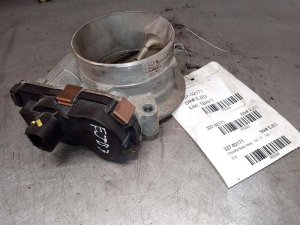
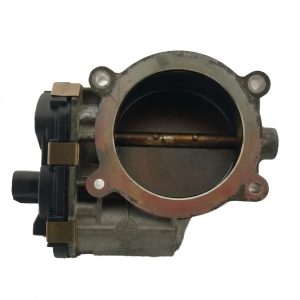
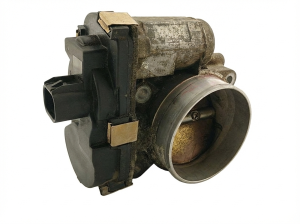
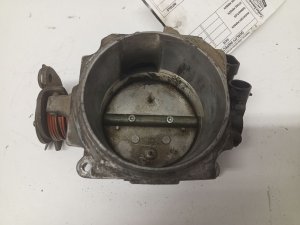
Used OEM Parts in Stock
New Aftermarket Parts Available

The information in this article is provided for general reference and educational purposes only. Vehicle specifications, procedures, and part compatibility can vary by production date, trim level, and region. Always consult your vehicle's factory service manual and verify part numbers before purchasing or performing repairs. Safety-critical components such as airbags, seat belts, and braking systems should be installed by a qualified professional.
- Gmc SAVANA:
- 🧭 Diagnostic Flowchart
- 🎬 Helpful Videos
- 🛍️ Shop This Part
- What's Unique About the 2006-2010 Gmc SAVANA
- Symptoms You May Notice
- Most Likely Causes
- Rare But Worth Checking
- Diagnosis Steps
- Parts You'll Likely Need
- Related Codes That Often Appear With This One
- Technical Service Bulletins (TSBs) & Recalls
- Platform-Specific Known Issues
- Mechanic-Grade Diagnostic Values
- Hidden / Shadow Codes Worth Checking
- Scan Tool Commands That Help
- Wiring & Ground Locations
- Real Owner Repair Stories
- When the Usual Fixes Don't Work
- OEM Part Supersession History
- Model Year Variations Within This Range
- 🎟️ Get 5% Off