

P1523 on 1999-2009 Audi A3, A4, A6, TT: Throttle Malfunction vs. Crash Signal
On these Audis, P1523 usually means the throttle body is dirty. A thorough cleaning and a 'Throttle Body Alignment' with a VAG-specific scan tool fixes it. Less commonly, it means the airbag module has logged a crash signal, preventing the engine from starting, which requires a specialized reset.
- P1523 has two meanings for your Audi: a common, fixable throttle body issue, or a less common, more serious 'crash signal' issue.
- If the car runs poorly with an erratic idle, the throttle body is almost certainly dirty. The fix is to clean it and perform a Throttle Body Alignment (TBA) with a VAG-specific scan tool.
- If the car cranks but does not start, the issue is likely a 'crash signal' from the airbag module. You must use a VAG-specific scan tool to check the airbag module for 'Crash Data Stored'.
- A simple code reader is not enough. You need a tool like VCDS or OBDeleven to properly diagnose this code by checking the airbag module and to perform the mandatory TBA after cleaning the throttle body.
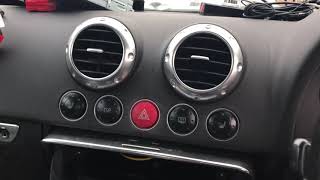
- On a first-generation Audi TT, a faulty hazard flasher switch can cause the 'crash signal' version of P1523, preventing the car from starting.
What's Unique About the 1999-2009 Audi A3, A4, A6, TT
Vehicles from the Volkswagen/Audi Group (VAG) of this era are well-known for two things related to this code. First, their engine designs, particularly the Positive Crankcase Ventilation (PCV) system, can lead to significant carbon and oil vapor buildup in the intake, making a dirty throttle body a very common maintenance item. Second, they use a specific 'crash signal' protocol between the airbag and engine modules that can be triggered, disabling the vehicle. For the Audi TT (8N), this crash signal circuit is uniquely tied to the hazard flasher switch/relay, which can sometimes be the source of the fault.
Generation note: This range covers multiple generations: A3 (8L, 8P), A4 (B5, B6, B7), A6 (C5), and TT (8N). The throttle body malfunction is a common issue across all these platforms due to similar 'drive-by-wire' throttle designs. The 'Crash Signal' fault, particularly the link to the hazard switch, is most notably documented for the TT (8N) platform.
Symptoms You May Notice
- If caused by Throttle Malfunction:
- Engine goes into Emergency/Limp Mode (reduced power)
- Rough, unstable, or surging idle
- Engine stalling at idle or when coming to a stop
- Poor or delayed throttle response
- Increased fuel consumption
- Check Engine Light (CEL) and/or Electronic Power Control (EPC) light are on
- If caused by Crash Signal:
- Engine cranks but will not start
- Check Engine Light (CEL) is on
- Airbag warning light may also be on
- Replacing the accelerator pedal position sensor (gas pedal). P1523 specifically points to a fault at the throttle body itself, not the pedal.
- Ignoring the Throttle Body Alignment (TBA). Simply cleaning or replacing the throttle body is not enough. The ECU must relearn the plate's position via the TBA procedure, or symptoms will persist.
- Spraying cleaner into the throttle body while it is still on the car. This is not a thorough cleaning method and risks washing debris into the intake manifold or damaging the sensitive electronic components.
Most Likely Causes
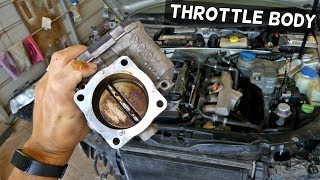
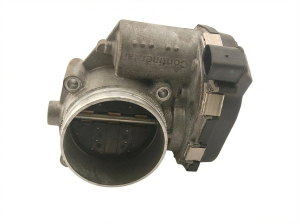
- Dirty or Jammed Throttle Body 🔴 High Probability → Shop Fuel Injection Throttle Body Carbon and oil vapor from the crankcase ventilation system build up in the throttle body over time, restricting the movement of the throttle plate. This is a very common issue on VAG engines of this era.
How to confirm: Remove the intake boot from the throttle body and visually inspect for a thick black ring of carbon deposits around the throttle plate and bore. The plate may feel sticky or bind when moved by hand (with ignition off).
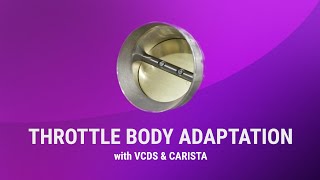
Typical fix: Remove the throttle body, clean it thoroughly with throttle body cleaner and a soft brush, replace the gasket, and perform a Throttle Body Alignment (TBA) with a VAG-compatible scan tool like VCDS or OBDeleven.
Est. part cost: $5-$20 for cleaner and a new gasket. 🎬 Watch: Audi A4 throttle body removal and replacement
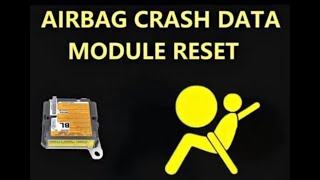
- Crash Data Stored in Airbag Module 🟡 Medium Probability This is a designed safety feature. After an impact, the airbag module can log a 'crash event' in non-volatile memory and send a signal to the ECM to disable the engine to prevent fire or further damage.
How to confirm: Use a VAG-compatible scan tool (like VCDS or OBDeleven) to scan the Airbag Control Module (Address 15). Look for codes like '00595 - Crash Data Stored' or '01366 - Opened Due to Crash Signal'. The vehicle will not start.
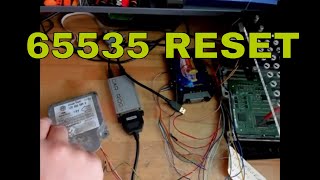
Typical fix: The airbag module must have its crash data cleared. This CANNOT be done by a simple 'Clear Faults' command. It requires either sending the module to a specialized reset service (e.g., MyAirbags, Safety Restore) or using advanced programming tools like CarProg. A dealership will typically replace the module entirely.
Est. part cost: $50-$100 for a mail-in reset service.
Rare But Worth Checking
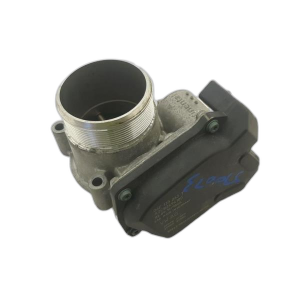
- Failed Throttle Body Assembly: → Shop Fuel Injection Throttle Body If cleaning and alignment do not resolve the throttle-related symptoms, the internal electric motor or the integrated position sensors (G187/G188) have likely failed. The entire throttle body must be replaced as a unit. This is more common on higher mileage vehicles.
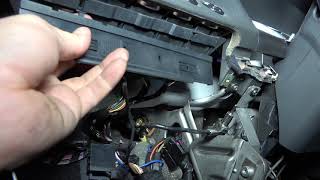
- Faulty Hazard Flasher Switch (Audi TT 8N): On the first-generation Audi TT, the hazard flasher switch (which is also the turn signal relay) is on the same electrical circuit as the crash signal wire. A faulty switch can send an erroneous signal, triggering P1523 and a no-start condition, even if no crash occurred. If you have a TT that won't start with this code, and the hazard switch has been acting strangely 🎬 Watch: Audi TT hazard switch removal and replacement (e.g., turn signals blinking fast or not at all), it's a likely culprit.
- Wiring or Connector Issue: Damage to the wiring harness or corrosion in the connectors for either the throttle body or the airbag control module can cause an intermittent or constant fault. Check the harness near the throttle body for chafing and the connectors for bent or corroded pins.
Diagnosis Steps
- Check the Symptoms: Does the car run poorly (throttle issue) or not start at all (likely crash signal)? This is the most important first step.
- Scan with a VAG-Compatible Tool: Connect a tool like VCDS or OBDeleven. A generic OBD-II reader is not sufficient.
- Check Engine Module (Address 01): Confirm P1523 / 17931 is present.
- IF THE CAR DOES NOT START: Immediately scan the Airbag Module (Address 15). If 'Crash Data Stored' is present, the module needs a specialized reset. If no crash data is found, investigate the wiring to the airbag module and, on a TT, test the hazard flasher switch.
- IF THE CAR RUNS POORLY: Focus on the throttle system. Turn the ignition off and remove the intake hose to the throttle body.
- Inspect the Throttle Body: Look for heavy carbon buildup. Gently push the plate open (with the car off) to feel for sticking or binding.
- Clean the Throttle Body: If dirty, disconnect the battery, unplug and remove the throttle body. Clean it thoroughly on a workbench using throttle body cleaner and a soft brush. Do not spray cleaner into the electronics. Reinstall with a new gasket.
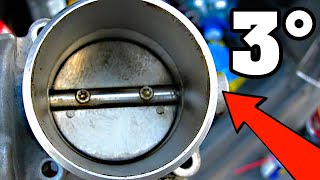
- Perform Throttle Body Alignment (TBA): This step is MANDATORY. Using your scan tool, go to Engine (01) -> Basic Settings (04) -> and enter Group 060 (for most drive-by-wire models) or Group 098 for earlier cable-throttle cars. Activate the procedure and wait for it to complete (usually says 'ADP OK').
- Clear Codes and Test Drive: Clear all fault codes from all modules, start the car, and let it idle. Perform a test drive to confirm the fix.
Parts You'll Likely Need
- Throttle Body Gasket — Must be replaced anytime the throttle body is removed to prevent vacuum leaks.
Trusted brands: Victor Reinz, Elring, OEM
OEM price range: $10-$20
Aftermarket price range: $5-$15 - Throttle Body Assembly
(OEM #06B133062M (for A4 B6 1.8T AWM), 06A133062C (for TT/A3 1.8T), 058133063Q (for A4 B5 1.8T AEB))— If cleaning and alignment fail to fix the issue, the internal electronics have likely failed, requiring complete replacement.
Trusted brands: Bosch, VDO, Hitachi
OEM price range: $400-$600
Aftermarket price range: $150-$350 - Hazard Flasher Switch / Relay (Audi TT)
(OEM #8N0941509B)— A known cause for the 'Crash Signal' version of P1523 specifically on the Audi TT (8N chassis).
Trusted brands: OEM, Meyle
OEM price range: $50-$80
Aftermarket price range: $20-$40
Related Codes That Often Appear With This One
- 17931 — This is the corresponding VAG-specific fault code number for P1523. Seeing this on a VAG-compatible scanner confirms the code.
- P0221, P0222, G187, G188 faults — These are codes related to the throttle position sensors, which are integrated into the throttle body. They often appear with P1523 when the issue is throttle-related.
- 00595, 01366 — These are VAG codes found in the airbag module indicating 'Crash Data Stored' or 'Opened Due to Crash Signal', confirming the 'Crash Signal' cause for P1523.
Technical Service Bulletins (TSBs) & Recalls
- VW TSB 2013147 / Audi TSB: Relates to excessive camshaft lobe wear from a failed cam follower on 2.0T FSI engines, a separate common issue.
- VW TSB 2012855: Stresses the importance of using VW-specification engine oil to prevent premature wear and sludge, which is a root cause of many engine problems on this platform.
Mechanic-Grade Diagnostic Values
- VCDS Measuring Block 062 - Throttle Position Sensors G187 & G188 — expected: In VCDS, go to Engine (01) -> Measuring Blocks (08) -> Group 062. Field 1 (G187) and Field 2 (G188) should show opposing percentages that add up to approximately 100%. As the throttle is pressed, one value should rise smoothly as the other falls smoothly.. Failure: Jumpy, erratic, or non-responsive values in either field. If the values do not change with pedal input or do not add up correctly, it indicates a failing sensor inside the throttle body assembly.
- Throttle Position Sensor (TPS) Voltage at Rest (Key On, Engine Off) — expected: ~0.2–1.0 V (varies by vehicle). Failure: Voltage significantly outside this range or at 0V/5V indicates a sensor or wiring fault.
- Throttle Position Sensor (TPS) Voltage at Wide Open Throttle — expected: ~4.0–4.5 V (varies by vehicle). Failure: Voltage that does not reach this range or is erratic during pedal press indicates a sensor fault.
Scan Tool Commands That Help
- VCDS (VAG-COM): Engine (01) -> Basic Settings (04) -> Group 060 — This is the mandatory Throttle Body Alignment (TBA) procedure. It must be performed any time the throttle body is cleaned, replaced, or the battery has been disconnected. It allows the ECU to relearn the full range of motion of the throttle plate.
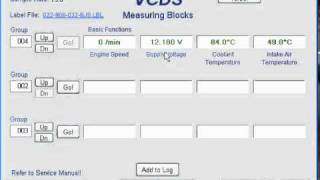
- VCDS (VAG-COM): Engine (01) -> Measuring Blocks (08) -> Group 062 — To diagnose a suspected throttle body failure. This allows you to watch the live data from the two internal throttle position sensors (G187 and G188) to check for smooth, opposing operation as you press the accelerator pedal.
- VCDS (VAG-COM): Airbag (15) -> Fault Codes (02) — This is the first step in diagnosing the 'Crash Signal' cause. It will show if codes like '00595 - Crash Data Stored' are present. VCDS cannot clear this specific code, confirming the need for a specialized reset.
Wiring & Ground Locations
- J234 Airbag Control Module — Typically located under the center console, on the transmission tunnel, forward of the gear shifter. Access requires removing center console trim.. This is the module that stores crash data and sends the signal to the Engine Control Module that triggers the 'Crash Signal' variant of P1523.
- J220/J338 Engine/Throttle Control Modules (A4 B6) — The main Engine Control Unit (ECU/ECM) is located in a sealed black plastic box in the plenum chamber at the base of the windshield on the driver's side. The Throttle Valve Control Module is integrated into the throttle body itself.. These are the primary modules involved in the throttle-related cause of P1523. Poor grounds or wiring to the ECU can cause a variety of throttle faults.
- Engine to Chassis Ground Cable (A4 B6) — Connects from the passenger side front frame rail (near the secondary air pump) to the engine mount.. A missing or corroded main engine ground can cause a host of electrical issues, including erratic sensor readings and module communication problems that could potentially trigger a P1523 fault.
- A125 Splice — A wiring splice in early models like the Audi TT (8N).. On certain models, the 'crash signal' wire is on a shared circuit (splice A125) with the hazard flasher switch. A fault in the switch or this splice can send an erroneous crash signal to the ECU.
Real Owner Repair Stories
- AudiWorld Forums user 'Arty29' (Audi RS5 V8 (similar DBW system)) — Intermittent throttle body fault on Bank 2, EPC light, and limp mode.
❌ Tried (didn't work) Updating connectors as per Audi recommendation, Swapping throttle bodies from Bank 1 to Bank 2 (fault remained on Bank 2), Running a new, separate wiring loom from the throttle body to the ECU, Replacing the throttle body
✅ What actually fixed it The Audi dealer found and repaired an issue with the wiring loom related to 'pin 47' which is associated with the throttle body. This resolved the issue after multiple other attempts failed. - audi-sport.net forum user (Audi A3 (8L Chassis)) — Airbag light blinked, hazards came on, car would crank but not start. VAG-COM showed P1523 / 17931 'Crash Signal from Airbag Controller: Implausible Signal' in the Engine module, but no faults in the Airbag module.
❌ Tried (didn't work) Attempting to clear the code with VAG-COM (it would not clear).
✅ What actually fixed it The user was advised that an implausible signal fault is often due to a voltage issue. The recommended fix was to check the airbag controller (located near the gearstick on that model), and if necessary, remove it to reflow the solder on the microprocessor and output pins, or replace the controller entirely.
OEM Part Supersession History
06B133062B→06B133062M— Revision and update by the manufacturer (Bosch).
Model Year Variations Within This Range
- 1999-2002 (approx): Earlier models, particularly the A4 B5 and TT 8N, may have a throttle body with a separate, black plastic electronic control unit bolted to the side. Later models (like the A4 B6) integrate the electronics more seamlessly into the metal housing. While functionally similar, the physical appearance and part numbers differ.
- Audi TT (8N): The first-generation Audi TT is specifically noted for having the hazard flasher switch on the same electrical circuit as the crash signal wire, making it a unique point of failure for the 'Crash Signal' variant of P1523 that is not commonly seen on A4 or A6 models.
Diagnostic Flowchart
Other Known Issues on This Vehicle
Issues unrelated to this code that are worth knowing about as an owner of this generation:
- 1.8T Engine Oil Sludge 🔴 High — Common on longitudinal engines (A4, Passat) especially with poor maintenance history or use of non-synthetic oil. Can lead to blocked oil pickup tube and catastrophic engine failure.
- 2.0T FSI (EA113) Cam Follower Wear 🔴 High — A critical wear item. The follower for the high-pressure fuel pump (HPFP) can wear through, destroying the HPFP and the intake camshaft. Recommended inspection/replacement every 20-30k miles. (Ref: VW TSB 2013147)
- Instrument Cluster Pixel Failure 🟡 Low — Extremely common across all models. The central red LCD screen (FIS display) loses pixels or becomes unreadable, especially when warm.
- Ignition Coil Pack Failure 🟠 Medium — Frequent failure item causing engine misfires. Multiple revisions of coil packs were released. Many owners keep a spare in the trunk. (Ref: Recalls were issued for certain production runs.)
- DSG/Mechatronic Unit Failure (A3/TT) 🔴 High — On models equipped with the DSG transmission, the mechatronic unit can fail, causing jerky shifting, loss of gears, or complete transmission failure. Very expensive to repair. (Ref: Various service campaigns and warranty extensions were offered.)
- Plastic Cooling System Components 🟠 Medium — Coolant flanges, water pumps with plastic impellers, and various hoses become brittle with age and heat cycles, leading to coolant leaks and potential overheating.
Used vs. New Parts: Buying Guide for This Vehicle
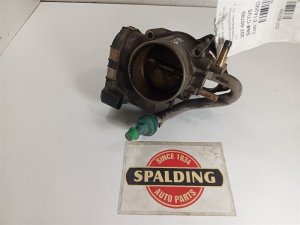
When a used part is the smart pick: A used throttle body from a reputable dismantler can be a cost-effective option, especially if the failure is electronic and cleaning is not a fix. It is a simple bolt-on part. A used airbag control module is ONLY a viable option if it is from a vehicle confirmed to have no crash data stored and the part number is an exact match.
Donor-vehicle mileage cap: roughly under 80000 miles for the part to have meaningful remaining life.
What to inspect on the donor part:
- For Throttle Body: Check for a clean throttle plate and bore; excessive carbon may indicate a high-mileage or poorly maintained donor. Ensure all connectors are intact with no broken clips or bent pins.
- For Airbag Module: Must have a clear history (no crash). The part number, including any suffix letters, must be an exact match to the original. Verify the donor vehicle's VIN to check its history if possible.
OEM-only on this vehicle (don't cheap out):
- Airbag Control Module: While reset services exist, buying a used module is risky. If replacing, an OEM new part is the safest option to guarantee compatibility and function. Ross-Tech explicitly warns against using reset/re-cocked used modules for safety reasons.
Aftermarket brands forum-validated for this vehicle:
- Throttle Body: Bosch is the original equipment manufacturer for most of these vehicles. Buying a Bosch-branded part is equivalent to OEM but often cheaper.
Brands owners have reported issues with on this vehicle:
- Unbranded, 'no-name' electronic parts from online marketplaces. For a critical component like a throttle body, failure can leave you stranded. Sticking to the OEM (Bosch/VDO) or a reputable OE-supplier is highly recommended by forum users.
Real Owner Stories
Aggregated from forums and TSBs cited above. Mileages and costs reflect what owners reported in those sources.
Audi A3 8L
Symptoms: Airbag light blinked 4 times, hazard lights came on, and fault code P1523 (17931) was stored in the engine ECU as an 'Implausible Signal'.
What fixed it: The owner identified the fault on the Engine ECU (Address 01) rather than the Airbag ECU, though the context ends before the final physical repair, it points to the Crash Signal from Airbag Controller.
Source hint: Audi-Sport.net report cited in owner_reports
Related OBD-II Codes
Frequently Asked Questions
My Audi A3 8L has P1523 and the hazards are flashing, but the Airbag ECU is clear. Is this normal?
Does VW TSB 2013147 apply to my 2.0T FSI Audi engine?
Can I fix the P1523 'Crash Data Stored' issue by just clearing the codes with VCDS?
Is there a specific oil I should use for my Audi A4 to prevent the engine issues mentioned in the TSBs?
I have a TT and the car won't start with a crash signal code; what should I check besides the airbag module?
What scan tool groups do I use for a Throttle Body Alignment (TBA) on my Audi?
Helpful Videos


We Have This Part in Stock

The information in this article is provided for general reference and educational purposes only. Vehicle specifications, procedures, and part compatibility can vary by production date, trim level, and region. Always consult your vehicle's factory service manual and verify part numbers before purchasing or performing repairs. Safety-critical components such as airbags, seat belts, and braking systems should be installed by a qualified professional.
- Audi A3, A4, A6, TT:
- 🧭 Diagnostic Flowchart
- 🎬 Helpful Videos
- 🛍️ Shop This Part
- What's Unique About the 1999-2009 Audi A3, A4, A6, TT
- Symptoms You May Notice
- Most Likely Causes
- Rare But Worth Checking
- Diagnosis Steps
- Parts You'll Likely Need
- Related Codes That Often Appear With This One
- Technical Service Bulletins (TSBs) & Recalls
- Mechanic-Grade Diagnostic Values
- Scan Tool Commands That Help
- Wiring & Ground Locations
- Real Owner Repair Stories
- OEM Part Supersession History
- Model Year Variations Within This Range
- Other Known Issues on This Vehicle
- Used vs. New Parts: Buying Guide for This Vehicle
- Real Owner Stories
- Audi A3 8L
- Related OBD-II Codes
- Frequently Asked Questions
- 🎟️ Get 5% Off