

P1524 on 2009-2017 Audi Q5: Fuel Pump Relay Circuit Causes and Fixes
On the Audi Q5, code P1524 indicates an electrical fault with the fuel pump circuit, almost always caused by a failed Fuel Pump Control Module (J538). This module is located under the rear seat and is a common failure item causing a 'crank, no start' or stalling condition. Expect to pay $100-$200 for a new module, which is a straightforward DIY replacement.
- P1524 on an Audi Q5 is a fuel system electrical code, NOT an oil pressure code.
- The most common cause is a failed Fuel Pump Control Module (J538), not a simple relay.
- Symptoms are typically a 'crank, no start' condition or the engine stalling unexpectedly.
- The fix is usually replacing the module located under the rear seat, which is a manageable DIY job.
- Always verify the correct part number for your specific model year, as it changed during the production run.
What's Unique About the 2009-2017 Audi Q5
The key difference is the code's definition. Generic scan tools often mislead technicians by displaying a common but incorrect definition related to oil pressure. On modern Audis, including the Q5, there isn't a traditional, simple fuel pump relay in the fuse box. Instead, this function is handled by a dedicated Fuel Pump Control Module (J538), which is the component that most frequently fails and triggers the P1524 code. This module uses Pulse Width Modulation (PWM) to vary fuel delivery based on engine load and demand, making it more complex than a simple on/off relay. Ignoring the Audi-specific definition can lead to misdiagnosis, such as unnecessary oil system repairs.
Symptoms You May Notice
- Engine cranks but will not start.
- Engine stalls unexpectedly while driving, especially at low speeds.
- Intermittent starting issues, may require multiple crank attempts to start.
- Check Engine Light is on.
- No audible hum from the fuel pump (located under the rear seat) when the ignition is first turned to the 'on' position.
- Replacing oil pressure sensors or VVT solenoids (This is due to applying the incorrect, generic definition of P1524).
- Replacing the fuel pump when the control module is the actual cause. This is a common mistake as the symptoms point to fuel starvation.
Most Likely Causes
- Failed Fuel Pump Control Module (J538) 🔴 High Probability → Shop Fuel Pump This electronic module is a known failure point on this Audi platform (B8). It is responsible for regulating voltage to the fuel pump and can fail from electrical stress, heat, and age, causing an open or shorted circuit. Forum discussions frequently point to this module as the primary cause for P1524 and related fuel delivery faults.
How to confirm: The module is located under the rear passenger seat (on left-hand drive vehicles), beneath a metal cover. After confirming fuses are good, gain access to the module. Check for power and ground at the connector. A key diagnostic step is to check for a PWM signal from the ECM on the signal wire (often a yellow/blue wire) during cranking. Given the high failure rate, many owners and shops proceed with replacement if basic power/ground checks pass.
Typical fix: Replace the Fuel Pump Control Module. This is a plug-and-play component that does not typically require programming.
Est. part cost: $90-$200 - Blown Fuse 🟡 Medium Probability
How to confirm: Check the fuses related to the fuel pump and its control module. On this platform, the primary fuse is typically a 20A fuse located in the fuse panel on the right side of the trunk (ST3, Fuse 1). A short in the module or wiring can cause this fuse to blow.
Typical fix: Replace the blown fuse. If the fuse blows again immediately, it confirms a short circuit in the wiring or, more likely, the control module itself.
Est. part cost: $1-$5 - Damaged Wiring or Connector ⚪ Low Probability The wiring harness to the control module is located under the rear seat and can potentially be damaged by moisture, physical stress from rear-seat passengers, or previous repairs.
How to confirm: Visually inspect the wiring harness and connector for the Fuel Pump Control Module. Look for signs of corrosion, chafed wires, or loose pins. Use a multimeter to check for continuity on the power, ground, and signal wires between the ECM, fuse panel, and the module connector.
Typical fix: Repair the damaged section of the wiring harness or replace the connector.
Est. part cost: $20-$100
Rare But Worth Checking
- Failed Fuel Pump: → Shop Fuel Pump While possible, it's less common for the pump itself to cause the specific P1524 electrical fault code. A failing pump is more likely to cause other codes related to fuel pressure (like P0087 or P310B) or make a loud whining noise before it fails completely. However, an internal short in the fuel pump motor could theoretically cause an electrical fault in the control module circuit.
Diagnosis Steps
- Verify the Check Engine Light is on and scan for codes. Confirm that P1524 is present, and check for other related codes like P3089 or P0230.
- Check for a 'crank, no start' or stalling symptom. Listen for the fuel pump priming (a faint 2-second hum from the rear of the vehicle) when the ignition is first turned on. If you hear nothing, the pump is not getting power.
- Inspect the 20A fuse for the fuel pump, typically located in the right-side trunk fuse panel (position ST3, Fuse 1).
- If the fuse is intact, access the Fuel Pump Control Module. On a left-hand drive Q5, this involves removing the rear seat bench. The module is under a black metal plate on the passenger side floor.
- Disconnect the electrical connector and inspect for any signs of corrosion, moisture, or damage.
- Using a multimeter, confirm battery voltage is present at the power pin and that the ground pin has good continuity to the chassis.
- If power and ground are good, the most common failure is the module itself. Replacement is the next logical step for most DIYers.
- For advanced diagnosis: If a new module does not resolve the issue, use an oscilloscope to check for the PWM signal from the ECM on the signal wire. If the signal is missing, the fault lies in the wiring between the ECM and the module, or a rare ECM driver failure.
Parts You'll Likely Need
- Fuel Pump Control Module
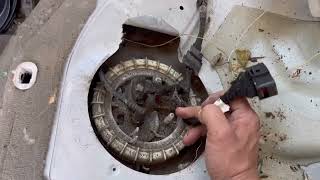
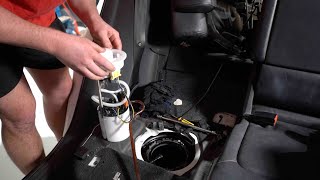
(OEM #8K0906093F (or supersessions 8K0906093B, D, H) for ~2009-2012 models. 4G0906093J (or supersessions 4G0906093F, G, H) for ~2013-2017 models.)— This is the electronic controller that replaces a traditional relay 🎬 Watch: Understanding fuel pump controller issues and stalling on this vehicle. It is the most common failure point for the P1524 code, causing a loss of power to the fuel pump.
Trusted brands: Vemo, Hella, URO Parts, Genuine Audi, Pierburg (OEM)
OEM price range: $170-$240
Aftermarket price range: $90-$150
Related Codes That Often Appear With This One
- P0230 — This code for 'Fuel Pump Primary Circuit Malfunction' is very similar and can be triggered by the same failure of the fuel pump control module or its wiring.
- P3089 — This code for 'Signal Line for Fuel Pump Electronics - Electrical Malfunction' points directly to a problem with the communication wire between the ECM and the Fuel Pump Control Module, often caused by a bad module or a wiring issue.
Platform-Specific Known Issues
- Accessing the module requires removing the rear seat bottom cushion, which can be tricky without the proper technique. It is held in by two clips at the front edge that must be pulled up sharply to release.
Mechanic-Grade Diagnostic Values
- Voltage at J538 Module Connector (Power Supply) — expected: Approximately battery voltage between terminals 3 and 4 with ignition on.. Failure: No voltage indicates a wiring or fuse issue before the module.
- Voltage at Fuel Pump Connector (from J538) — expected: 4.0 to 5.7 V at idle, between terminals 1 and 4. Voltage should rise, then fall, then return to idle value during a brief throttle burst.. Failure: No voltage or erratic voltage that doesn't follow the throttle indicates a failed J538 module.
- Low-Pressure Fuel System Pressure (at schrader valve) — expected: Approximately 6 bar (87 psi) to 8 bar (116 psi). A Ross-Tech forum user noted their healthy system showed 70 psi (4.8 bar) when activating the pump with VCDS.. Failure: Pressure below 4 bar (58 psi) indicates a problem with the low-pressure pump, filter, or control module.
- ECM Signal to J538 Module — expected: A Pulse Width Modulated (PWM) signal of approximately 5.0 V during start and idle.. Failure: A missing or flat-lined signal points to a wiring issue between the ECM and J538, or a rare ECM driver failure.
Scan Tool Commands That Help
- VCDS (VAG-COM): Engine -> Output Tests -> Fuel Pump Electronics — This command directly activates the J538 module to run the in-tank fuel pump. If you hear the pump run during this test but it doesn't prime with the ignition key, it strongly suggests a fault in the trigger signal from the ECM or the module's processing of that signal, rather than the pump itself.
- VCDS (VAG-COM): Engine -> Measuring Blocks -> Group 103 — To monitor the low-pressure fuel system. Field 1 shows the actual low-side fuel pressure as read by the G410 sensor. This is useful to compare against a mechanical gauge to verify the sensor's accuracy.
- OBDeleven: Control Units -> Engine -> Output test -> Fuel pump electronics — Similar to VCDS, this allows you to selectively activate the fuel pump to test its function and the integrity of the control module's output stage.
Wiring & Ground Locations
- J538 Connector — Under the rear seat bench on the passenger side (LHD), beneath a metal access plate.. This is the central point for testing. Pin 3 is power in (from fuse), Pin 4 is ground, and Pin 5 is the PWM signal from the ECM. The output to the pump is via Pins 1 and 2.
- Ground Point 654 / 663 — On the right D-pillar, behind the trunk trim.. This is a major chassis ground point in the rear of the vehicle. While not the direct ground for the J538 module, a poor connection here can cause intermittent electrical issues for various components in the trunk area, including the fuse panel that powers the module.
- Ground Point 51 / 675 — Under the trunk floor covering, near the battery on the right side.. This is a primary ground connection for components in the rear, including the battery itself. A loose or corroded connection here can cause widespread voltage issues, affecting the stability of the power supply to the fuel pump control module.
- Fuse Holder ST3 (Right Trunk) — In the fuse panel located on the right side of the trunk/cargo area.. This panel contains the fuse for the Fuel Pump Control Module (J538), typically a 20A or 25A fuse at position 1 on the black carrier. This is the first place to check for a complete loss of power to the module.
Real Owner Repair Stories
- AudiWorld Forums user 'spijun' (2014 Audi Q5) — Not specified, but was seeking to replace the Fuel Pump Control Module.
✅ What actually fixed it The user successfully replaced the Fuel Pump Control Module (J538). They noted the main difficulty was disconnecting the electrical connector, which was easier to do after unbolting the module from the floor pan to get better access to the release tab.
OEM Part Supersession History
8K0906093B, 8K0906093D, 8K0906093F→8K0906093H— Internal component revisions for improved reliability and heat management.
Heads up: These parts are for the pre-facelift (2009-2012) Q5. While they may physically connect, using a pre-facelift module on a post-facelift car (or vice-versa) can cause communication errors or improper fuel delivery.4G0906093F, 4G0906093G, 4G0906093H→4G0906093J— Component and software updates for the facelifted platform.
Heads up: These parts are for the facelift (2013-2017) Q5. They are not backwards compatible with the pre-facelift models.
Model Year Variations Within This Range
- 2013-2017: The 2013 model year marked the Q5 facelift. For the 3.2L V6 FSI, this was the last year it was offered before being fully replaced by the supercharged 3.0T V6. This means a 2013 3.2L Q5 uses the newer '4G0' series fuel pump control module, even though the engine is from the earlier generation. Always confirm the part number by VIN for 2013 models.
Diagnostic Flowchart
Other Known Issues on This Vehicle
Issues unrelated to this code that are worth knowing about as an owner of this generation:
- Intake Valve Carbon Buildup 🔴 High — Very common on all FSI (direct injection) engines. Typically requires cleaning every 50,000-80,000 miles. Symptoms include rough idle, misfires, and loss of power. (Ref: Audi issued TSBs that involved an ECU software update to adjust valve timing to help mitigate, but not eliminate, the issue. Manual cleaning (walnut blasting) is the ultimate solution.)
- Timing Chain Tensioner Failure 🔴 High — A significant issue for the 3.2L V6. The plastic guides on the tensioners can fail, or the tensioners can lose hydraulic pressure, causing a rattling noise on startup. If ignored, the chain can jump time, leading to catastrophic engine damage. (Ref: No recall, but a well-known issue. The upper tensioners can sometimes be replaced with the engine in the car, but a full timing service requires engine removal as the chains are on the rear of the engine.)
- Plastic Water Pump & Thermostat Housing Leaks 🟠 Medium — The water pump and thermostat housing are made of plastic and are prone to cracking and leaking over time, leading to coolant loss and potential overheating. (Ref: Recalls and extended warranties were issued for the 2.0T engine's electric coolant pump, but the 3.2L V6's mechanical pump and plastic housing are also known failure points without a specific recall campaign.)
- Oil Consumption / PCV System Failure 🟠 Medium — Some 3.2L FSI engines can consume oil due to issues with the PCV (Positive Crankcase Ventilation) system or piston rings. A failed PCV valve is a common and relatively simple fix, but excessive consumption may point to deeper engine issues.
Used vs. New Parts: Buying Guide for This Vehicle
When a used part is the smart pick: Given that brand new, warrantied aftermarket modules are available for under $100, buying a used module is generally not recommended. An exception might be if you can source a module from a very low-mileage, late-model-year donor vehicle for a significantly lower price. However, the risk of the used part failing soon after installation is high, as this is a known failure item.
Donor-vehicle mileage cap: roughly under 50000 miles for the part to have meaningful remaining life.
What to inspect on the donor part:
- Verify the part number on the used module exactly matches the one being replaced or its official supersession.
- Inspect the electrical connector pins for any signs of heat damage, melting, or corrosion.
- Check the casing for any signs of water intrusion or physical damage.
Aftermarket brands forum-validated for this vehicle:
- Hella
- Pierburg (often the Original Equipment Manufacturer)
- Vemo
Brands owners have reported issues with on this vehicle:
- While URO Parts offers a lifetime warranty and is a budget-friendly option, some forum discussions across VAG platforms express mixed experiences with the long-term reliability of their electronic components compared to OEM or brands like Hella/Pierburg.
Real Owner Stories
Aggregated from forums and TSBs cited above. Mileages and costs reflect what owners reported in those sources.
2014 Audi Q5
Symptoms: The owner confirmed the location of the module under the rear seat and sought to verify if replacement was a DIY-friendly task.
What fixed it: Replacement of the Fuel Pump Control Module.
Source hint: AudiWorld Forums: Corroborated the location of the Fuel Pump Control Module under the rear seat on a 2014 Q5 and confirmed it was a DIY-friendly replacement.
2011 Audi S5 (B8 platform)
Symptoms: The owner detailed the process of replacing the J538 module and noted the difficulty of removing it from the access hole without care.
What fixed it: Replacement of the J538 Fuel Pump Control Module.
Source hint: Reddit r/Audi: A user with a 2011 Audi S5 (B8 platform mate) details the process of replacing the J538 module. URL: https://www.reddit.com/r/Audi/comments/jifm0r/help_replacing_fuel_pump_control_module_2011_audi/
Related OBD-II Codes
Frequently Asked Questions
Where is the Fuel Pump Control Module (J538) located on my 2009-2017 Audi Q5?
Is there a specific fuse I should check for the P1524 code on my Q5?
Does the replacement Fuel Pump Control Module require dealer programming for the CALB 3.2L V6?
What are the common symptoms of a failing J538 module on the Audi B8 platform?
Are there any TSBs for the 3.2L FSI engine regarding carbon buildup or timing issues?
Can I use a used Fuel Pump Control Module to fix the P1524 code?
Helpful Videos
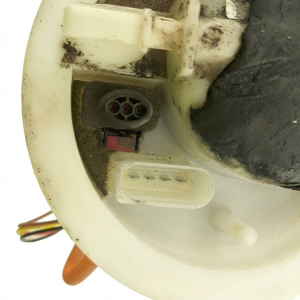
Used OEM Parts in Stock
New Aftermarket Parts Available


The information in this article is provided for general reference and educational purposes only. Vehicle specifications, procedures, and part compatibility can vary by production date, trim level, and region. Always consult your vehicle's factory service manual and verify part numbers before purchasing or performing repairs. Safety-critical components such as airbags, seat belts, and braking systems should be installed by a qualified professional.
- Audi Q5:
- 🧭 Diagnostic Flowchart
- 🎬 Helpful Videos
- 🛍️ Shop This Part
- What's Unique About the 2009-2017 Audi Q5
- Symptoms You May Notice
- Most Likely Causes
- Rare But Worth Checking
- Diagnosis Steps
- Parts You'll Likely Need
- Related Codes That Often Appear With This One
- Platform-Specific Known Issues
- Mechanic-Grade Diagnostic Values
- Scan Tool Commands That Help
- Wiring & Ground Locations
- Real Owner Repair Stories
- OEM Part Supersession History
- Model Year Variations Within This Range
- Other Known Issues on This Vehicle
- Used vs. New Parts: Buying Guide for This Vehicle
- Real Owner Stories
- 2014 Audi Q5
- 2011 Audi S5 (B8 platform)
- Related OBD-II Codes
- Frequently Asked Questions
- 🎟️ Get 5% Off