

P1524 on 2012-2015 Fiat 500: Causes and Fixes for Oil Pressure Issues
P1524 on a Fiat 500 with the 1.4L MultiAir engine indicates an oil pressure problem that has disabled the variable valve timing system. The most common cause is low or incorrect engine oil. If an oil change doesn't fix it, the issue could be a failing MultiAir actuator ('brick'), a clogged MultiAir oil filter, or a faulty sensor. The 'brick' is the most costly repair.
- P1524 is a serious code for your Fiat 500 that points directly to an oil pressure problem in the MultiAir system.
- Before doing anything else, check your engine oil level and service history. Using the correct 5W-40 full synthetic oil is non-negotiable for this engine.
- The code is often accompanied by a symptom where the engine cranks quickly but won't start, which is a classic sign of the MultiAir actuator losing its oil prime.
- If a proper oil change doesn't fix the code, the next steps involve checking a small secondary oil filter and potentially replacing the expensive MultiAir actuator, also known as the 'brick'.
What's Unique About the 2012-2015 Fiat 500

The Fiat 500's 1.4L engine uses a unique MultiAir technology that replaces the intake camshaft with an electro-hydraulic system to actuate the valves. This system is critically dependent on the correct oil pressure, volume, viscosity, and cleanliness to function. Unlike conventional engines where oil pressure issues might just affect timing phasers, on a MultiAir engine, it directly impacts the ability to open the intake valves. If the MultiAir actuator (or 'brick') loses its oil prime after the car sits, the intake valves may not open at all, leading to a characteristic 'cranks fast but does not start 🎬 Watch: How to fix a no-start condition caused by lost prime.' or 'no compression' symptom.
Diagnostic Flowchart

Tap your situation to follow the diagnostic path that matches what you're seeing on this vehicle.
Symptoms You May Notice

- Check Engine Light (MIL) is on
- Reduced engine power and poor acceleration
- Rough or unstable idle
- Engine stalling
- Engine cranks fast but does not start, as if there is no compression
- Engine has a long crank time before starting, especially after sitting for a short period (5-10 minutes)
- Ticking noise from the top of the engine area, particularly at idle
- Replacing spark plugs or ignition coils. While misfires can be a symptom, the P1524 code points directly to an oil pressure problem, not an ignition problem.
- Replacing camshaft or crankshaft position sensors. These are typically not related to this specific oil pressure-related code.
- Assuming the MultiAir 'brick' has failed without first checking oil level, type, and the secondary MultiAir filter. Many owners have fixed the code with a proper oil change.
Most Likely Causes

- Low or Incorrect Engine Oil 🔴 High Probability The MultiAir system is extremely sensitive to oil viscosity and level. Using the wrong type of oil (not full synthetic 5W-40 meeting FIAT 9.55535-S2 spec) or running it even slightly low can immediately cause pressure issues and trigger codes.
How to confirm: Check the oil level on the dipstick. Ensure it is at the 'Full' mark. Smell the oil for a gasoline scent, which could indicate dilution from a leaking injector. Verify the oil type used during the last service; it must be full synthetic 5W-40 meeting Fiat specifications.
Typical fix: Perform an oil and filter change using the manufacturer-specified full synthetic 5W-40 oil and a high-quality OEM filter. Ensure the oil is filled to the correct level. In many documented cases, this alone resolves the code.
Est. part cost: $50-$90 - Failed MultiAir Actuator ('Brick') 🟡 Medium Probability The MultiAir actuator is a complex hydraulic component that is a known failure point, especially if oil change intervals are extended or incorrect oil is used. Internal passages can clog with sludge, or the internal solenoids can fail, requiring replacement of the entire unit.
How to confirm: After confirming oil pressure and quality are good, diagnosis typically requires a Fiat-specific scan tool (like wiTECH or MultiECUScan) to test the actuator's solenoids. If the brick has lost its prime, it may need to be reprimed by cranking the engine multiple times. A persistent P1524 after all other steps points to a failed brick.
Typical fix: Replacement of the entire MultiAir actuator unit. This is an expensive part and a moderately labor-intensive job that requires a special tool (No. 10259A or 10259B) to compress the springs for installation. 🎬 See how to use the special tool to remove the actuator.
Est. part cost: $700-$1200 - Clogged MultiAir Oil Filter 🟡 Medium Probability → Shop Engine Oil Filter Adapter A small, secondary oil filter screen protects the MultiAir actuator. This filter can become clogged with debris or sludge, starving the unit of oil and causing P1524.
How to confirm: The filter is located on the side of the cylinder head, under the upper engine mount and timing cover. It must be removed for inspection. This is often done during a timing belt service due to the labor overlap.
Typical fix: Clean or, more commonly, replace the small MultiAir filter (Part #68189847AA). 🎬 Watch this walkthrough on replacing the MultiAir supply filter. This is often done as a preventative measure when troubleshooting this code.
Est. part cost: $15-$40 - Faulty Oil Pressure Sensor ⚪ Low Probability
How to confirm: Compare the sensor's reading on a scan tool with a reading from a mechanical oil pressure gauge. If the mechanical gauge shows good pressure but the sensor reads low, the sensor is likely faulty. Inspect wiring to the sensor, which is located on the back of the engine block.
Typical fix: Replace the oil pressure sensor and inspect the connector for corrosion or damage.
Est. part cost: $25-$60
Rare But Worth Checking
- Failing Oil Pump: → Shop Engine Oil Pump While not common, a weak oil pump can fail to generate the pressure needed for the MultiAir system, especially at idle or when the engine is hot. This would require verifying pressure with a mechanical gauge.
- Clogged Oil Pump Pickup Screen: → Shop Engine Oil Pump If the engine has a history of sludge due to poor maintenance, the oil pump pickup screen in the oil pan can become clogged, restricting oil flow to the entire engine.
- PCM Software Issue: Multiple Technical Service Bulletins indicate that the PCM software may be too sensitive or have logic errors that incorrectly set P1524. An update at a dealership may be required to resolve the issue, especially if it appears with other specific codes.
Diagnosis Steps
- Verify the engine oil level and condition. If low, top it off to the 'Full' mark. If the oil is old, dirty, or smells of fuel, proceed to the next step.
- Perform a complete oil and filter change using the correct OEM-specified full synthetic 5W-40 oil. This is the most critical and cost-effective first step.
- Clear the code and test drive the vehicle. If the code returns, continue diagnosis.
- If the engine cranks but won't start, it may have lost prime. Try cranking the engine for 10-15 seconds with the spark plugs removed, pausing, and repeating several times. This can sometimes re-prime the MultiAir actuator and allow the engine to start.
- Connect a mechanical oil pressure gauge to verify the actual engine oil pressure. Compare this reading to the manufacturer's specifications to rule out a bad sensor or failing oil pump. A reading below 15 PSI at idle is a major concern.
- Inspect and replace the small MultiAir oil filter screen located under the timing cover. This is a common point of restriction.
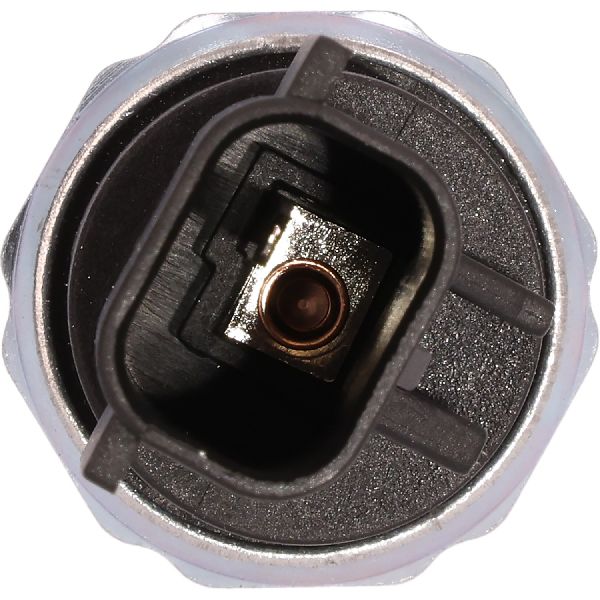
- If oil pressure is confirmed to be good and the filter is clean, inspect the wiring and connector for the main oil pressure sensor. The sensor is a 2-pin switch located on the engine block, often near the oil filter housing.
- Check for any available PCM software updates by referencing TSBs like 18-053-16. A dealership may need to perform a flash update.
- If all other steps fail to resolve the issue, the MultiAir actuator ('brick') is the most likely culprit and may require replacement.
Parts You'll Likely Need
- Engine Oil and Filter — The MultiAir system is highly sensitive to oil quality and level. Using the correct full synthetic 5W-40 oil is the first and most important step in resolving this code.
Trusted brands: Mopar, Pennzoil (Euro), Liqui Moly
OEM price range: $70-$100
Aftermarket price range: $50-$80 - MultiAir Actuator
(OEM #68463929AA)— This is the core component of the variable valve timing system and a common failure point if oil maintenance is neglected. Its failure is a primary cause of P1524 when oil level and quality are confirmed to be good.
Trusted brands: Mopar
OEM price range: $800-$1200
Aftermarket price range: $700-$1000 - MultiAir Oil Filter Screen
(OEM #68189847AA)— This small filter can get clogged with sludge, restricting oil flow to the MultiAir actuator and causing pressure-related codes. It's a critical and relatively inexpensive part to replace during diagnosis.
Trusted brands: Mopar
OEM price range: $25-$40
Aftermarket price range: $15-$30 - Oil Pressure Sensor
(OEM #55202374)— If the sensor provides an incorrect reading to the PCM, it can trigger the P1524 code even if the actual oil pressure is normal.
Trusted brands: Bosch, Mopar
OEM price range: $40-$70
Aftermarket price range: $25-$50
Related Codes That Often Appear With This One
- P1128 — This code for "Closed Loop Fueling Not Achieved" is listed in the same Technical Service Bulletins as P1524, suggesting it can be set as a consequence of the engine running in a default, inefficient state.
- P1607 — This code for "PCM Internal Shutdown Timer Rationality" is also mentioned in TSBs alongside P1524. It indicates a potential software-related issue or a secondary fault triggered by the primary oil pressure problem.
- P1523 — This code for "VVA Low Oil Pressure" is often seen with P1524 and points to the same root causes related to the MultiAir system's oil supply.
Technical Service Bulletins (TSBs) & Recalls
- 18-010-15 REV. D: Notes P1524 on 2014 vehicles and a symptom of 'Cranks fast, as if no compression.'
- 18-027-15 REV. C: Lists P1524-00 for vehicles with sales code EAF, often appearing with P1128-00 and P1607-00.
- 18-053-16: Supersedes earlier TSBs, involves a PCM software update to address P1524 and other codes for 2012-2013 models with the 1.4L engine (EAF). Symptoms addressed include intermittent fast crank and crank-no-start.
Platform-Specific Known Issues
- Fiat has issued several Technical Service Bulletins (TSBs), such as 18-053-16, that involve reprogramming the Powertrain Control Module (PCM) to address issues that can cause P1524, often along with codes P1128 and P1607.
- A common symptom related to this issue is a 'fast crank' or 'cranks like no compression' condition. This happens because if the MultiAir brick loses its oil prime after sitting, the intake valves won't open, preventing the engine from building compression to start. Some owners have successfully resolved this by repeatedly cranking the engine to rebuild pressure.
Mechanic-Grade Diagnostic Values
- Engine Oil Pressure at Idle (warmed up) — expected: >15-20 PSI. Failure: Pressure drops below 15 PSI.
- Engine Oil Pressure for VVT/MultiAir Activation — expected: Must exceed 41 PSI to activate and maintain >36 PSI to stay active.. Failure: Pressure fails to reach or maintain these thresholds, disabling the system.
- Oil Pressure Sensor (Switch) Activation Threshold — expected: Switch activates (sends signal) below 5 PSI and deactivates above 15 PSI.. Failure: Sensor does not switch within this range, providing a false signal to the PCM.
Hidden / Shadow Codes Worth Checking
- P1524-79: Spark Plug anti fouling diagnosis- mechanical linkage failure. (see via Requires a Fiat-specific scan tool like wiTECH or MultiECUScan. Generic OBD-II readers may provide a confusing or incorrect description for this sub-code.)
Scan Tool Commands That Help
- MultiECUScan / wiTECH: Uniair actuator dispersion correction — This is a required service function to be performed after replacing the MultiAir actuator ('brick') to calibrate the new unit.
- MultiECUScan / wiTECH: VVT Solenoid Actuator Test — Used to individually test each of the four solenoids on the MultiAir actuator. The tool commands the solenoid to cycle, and the technician should hear an audible click, confirming electrical and basic mechanical function.
Wiring & Ground Locations
- Main Engine Ground Strap — Connects from the battery negative terminal, to the chassis/body just below the battery tray, and continues down to a bolt on the engine block or gearbox.. This strap is a notorious failure point due to corrosion. A poor ground can cause a wide range of electrical issues and incorrect sensor readings, potentially contributing to false codes. Access requires removing the battery and battery tray.
- Oil Pressure Sensor Connector — On the engine block, often described as being on the back or left side, near the oil filter housing.. This is a 2-pin connector that can become loose, corroded, or have damaged wires, leading to an incorrect signal and triggering P1524.
Real Owner Repair Stories
- RamForum.com & Reddit user reports (Dodge/Ram trucks with Hemi/MultiAir engines and the same P1524 code) — Check engine light with P1524, oil pressure stuck low (e.g., 35 PSI) regardless of RPM.
❌ Tried (didn't work) Initially assuming a bad sensor or oil pump.
✅ What actually fixed it Changing the engine oil and, critically, replacing a cheap aftermarket oil filter with a high-quality OEM (Mopar) or equivalent (Wix) filter. Oil pressure immediately returned to normal (e.g., 55-60 PSI). - The FIAT Forum user report (Fiat 500 0.9 TwinAir (different engine but same MultiAir principle)) — Engine cranks but will not start after running over an object, damaging the oil sump, and losing all engine oil.
❌ Tried (didn't work) Replacing the sump and refilling with new oil.
✅ What actually fixed it The suggested fix was that the MultiAir system had lost its prime. The procedure is to clear codes, remove spark plugs, and crank the engine on the starter several times to build oil pressure and re-prime the hydraulic system before attempting to start it again.
OEM Part Supersession History
55257643 (and others like 04892697AA-AG, 04893099AA-AD)→68463929AA— Standard part revision and consolidation by the manufacturer.
Heads up: The newest part number (68463929AA) is the correct replacement for all previous versions listed for this engine application.
Model Year Variations Within This Range
- 2014: Technical Service Bulletin #18-010-15 REV. D specifically highlights P1524 as a potential issue for 2014 vehicles that may also exhibit a 'cranks fast, as if no compression' symptom, pointing to a potential software sensitivity or specific issue in that model year's calibration.
Helpful Videos

We Have This Part in Stock


The information in this article is provided for general reference and educational purposes only. Vehicle specifications, procedures, and part compatibility can vary by production date, trim level, and region. Always consult your vehicle's factory service manual and verify part numbers before purchasing or performing repairs. Safety-critical components such as airbags, seat belts, and braking systems should be installed by a qualified professional.
- Fiat 500:
- 🧭 Diagnostic Flowchart
- 🎬 Helpful Videos
- 🛍️ Shop This Part
- What's Unique About the 2012-2015 Fiat 500
- Symptoms You May Notice
- Most Likely Causes
- Rare But Worth Checking
- Diagnosis Steps
- Parts You'll Likely Need
- Related Codes That Often Appear With This One
- Technical Service Bulletins (TSBs) & Recalls
- Platform-Specific Known Issues
- Mechanic-Grade Diagnostic Values
- Hidden / Shadow Codes Worth Checking
- Scan Tool Commands That Help
- Wiring & Ground Locations
- Real Owner Repair Stories
- OEM Part Supersession History
- Model Year Variations Within This Range
- 🎟️ Get 5% Off