

P1556 on 2018-2019 VW Beetle 2.0T: Turbo Underboost Causes and Fixes
On a 2018-2019 VW Beetle, code P1556 means the turbo isn't producing enough boost. The most common causes are a torn diverter valve or a faulty N75 boost control solenoid. Start by checking for boost leaks and inspecting these two inexpensive valves before suspecting the turbo itself.
- P1556 means your Beetle's turbo is not making the boost it's supposed to, resulting in a loss of power.
- Do not immediately assume the turbo has failed. The most likely culprits are much cheaper: a torn diverter valve, a bad N75 control valve, or a cracked vacuum/boost hose.
- A smoke test is the most reliable way to find hidden boost leaks in the charge pipes.
- If you replace the diverter valve, choose the updated piston-style version (Rev 'D' or newer) for better longevity.
- If all other components are good, a seized wastegate arm on the turbo itself is possible and is an expensive repair that usually requires replacing the entire turbocharger.
What's Unique About the 2018-2019 Volkswagen BEETLE
The 2018-2019 Beetle uses the EA888 Gen3 2.0T engine, which is shared across many VW and Audi models like the GTI and A3. This engine's turbo system has well-documented failure points. While very reliable overall, components like the electronic diverter valve and the wastegate control system are known weak spots that degrade over time, leading to boost issues like P1556. The original diaphragm-style diverter valves are prone to tearing, and the turbo's internal wastegate pivot arm can seize from corrosion, a problem noted on VWs of this era, which can also trigger this code.
Diagnostic Flowchart
Tap your situation to follow the diagnostic path that matches what you're seeing on this vehicle.
Symptoms You May Notice
- Significant loss of engine power, especially during acceleration
- Vehicle may enter 'limp mode' with reduced RPM and speed limits.
- Hesitation or surging during acceleration
- Poor fuel economy
- Illuminated Check Engine Light (CEL) or EPC (Electronic Power Control) light
- Excessive or unusual air surging/whooshing sound from the engine bay under boost.
- Replacing the turbocharger before checking for simple boost leaks, a bad diverter valve, or a faulty N75 valve. These smaller components are far more common failure points and much less expensive to fix.
Most Likely Causes
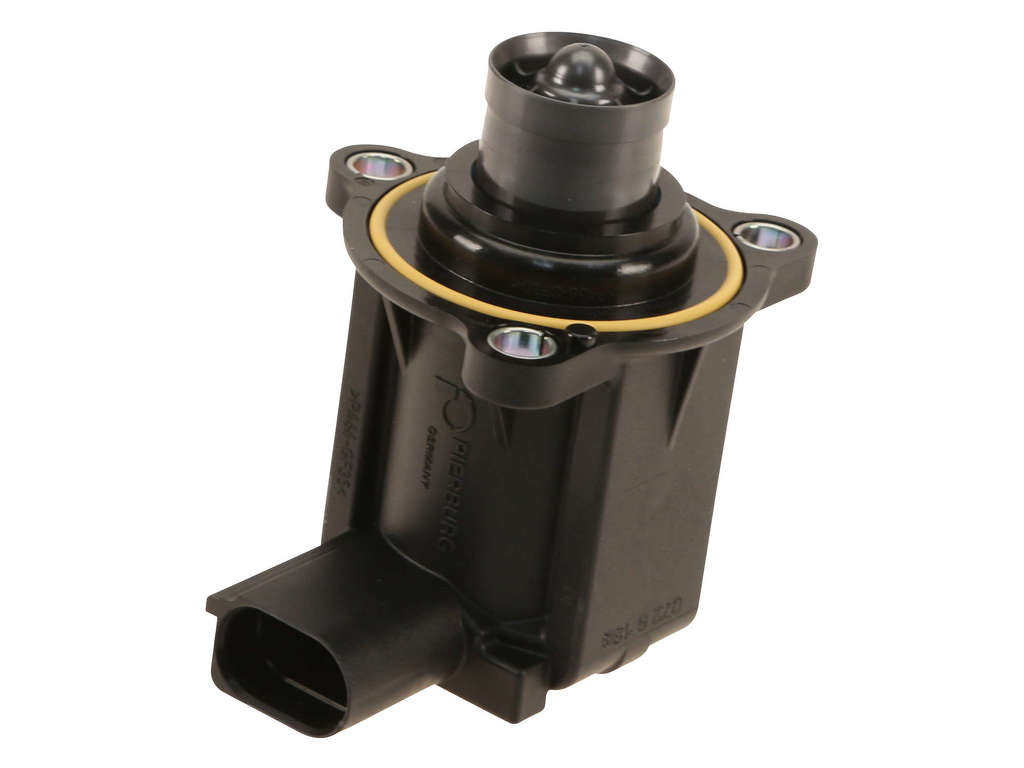
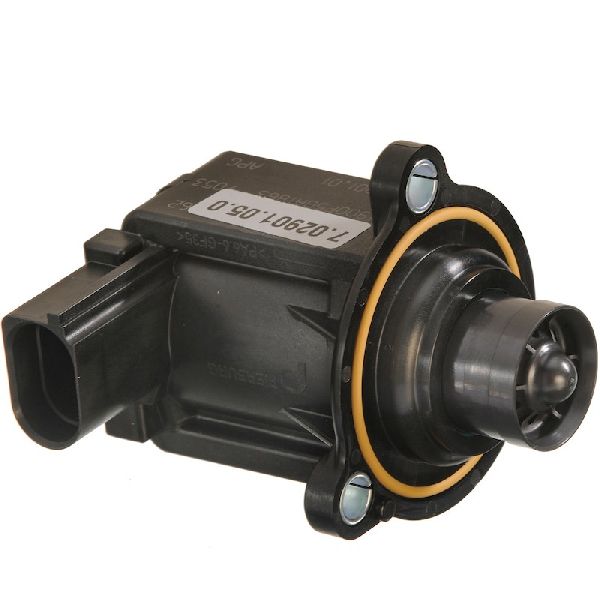
- Leaking or Torn Diverter Valve (DV) 🔴 High Probability → Shop Turbocharger The factory-installed diverter valve often uses a rubber diaphragm that is known to tear over time, creating a direct boost leak at the turbocharger. This is a very common failure on the 2.0T engine.
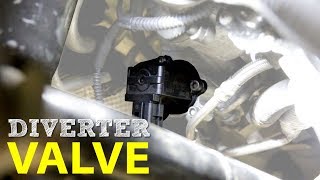
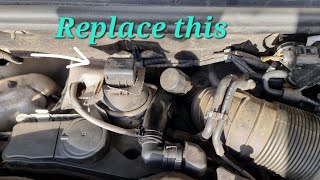
How to confirm: Remove the three 5mm Allen bolts holding the diverter valve to the turbo compressor housing and visually inspect the diaphragm for tears or holes. The valve is located on the passenger side of the engine, on the turbo itself, often accessible from below the car. 🎬 Watch: Step-by-step guide to installing a new diverter valve.
Typical fix: Replace the faulty valve with a new one. An updated piston-style valve (often called 'Revision D' or later, part number 06H145710D) is recommended over the original diaphragm design for improved durability.
Est. part cost: $80-$150 - Faulty N75 Wastegate Control Valve or Electronic Actuator 🔴 High Probability This electronic solenoid or actuator constantly cycles to manage boost pressure and can wear out or fail electronically, preventing it from properly controlling the turbo's wastegate. The EA888 Gen3 engine in this Beetle uses a fully electronic wastegate actuator integrated into the turbocharger assembly.
How to confirm: For N75 Valve (if applicable): Test the valve with a multimeter; resistance should be between 25-35 ohms. Use a vacuum pump to check if it holds and releases vacuum when 12V is applied. Check for battery voltage at the connector with the key on. For Electronic Actuator: A capable scan tool (like VCDS) is needed to run output tests and check for specific actuator fault codes. Voltage between pins 3 and 4 should be 1.26V to 1.43V with key on, engine off. Resistance of the internal motor should be 1.44 - 1.96 Ω.
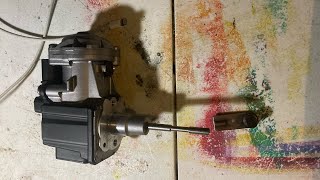
Typical fix: Replace the N75 valve or electronic actuator. The electronic actuator is often replaced as part of the complete turbocharger assembly, but the actuator itself can be replaced and calibrated separately by specialists.
Est. part cost: $40-$250 - Boost/Vacuum Leak 🟡 Medium Probability The engine bay contains numerous rubber and plastic hoses for the turbo and vacuum systems. With age and heat cycles, these can crack, become brittle, or disconnect, especially at the intercooler connections.
How to confirm: Perform a visual inspection of all charge pipes and vacuum lines. The most effective method is to use a smoke tester, which pressurizes the system with smoke to reveal the exact location of any leaks. 🎬 Watch: How to perform a smoke test to find leaks. Pay close attention to the intercooler and all pipe connections.
Typical fix: Replace the cracked hose or leaking gasket. Ensure all clamps are secure.
Est. part cost: $10-$200 - Sticking/Seized Turbocharger Wastegate Actuator Arm ⚪ Low Probability → Shop Turbocharger The pivot arm for the internal wastegate can seize due to corrosion, especially on vehicles that are driven gently and don't regularly exercise the turbo. This prevents the wastegate from closing fully to build boost.
How to confirm: With the engine cool, attempt to move the wastegate actuator rod by hand. It should move smoothly through its range of motion without binding. Any binding or excessive play indicates a problem. If using a vacuum pump on vacuum-actuated models, the actuator should hold vacuum for at least 30 seconds.
Typical fix: In many cases, the wastegate is integral to the turbocharger, requiring a full turbo replacement. Some specialists may be able to free the seized arm, but it is often a temporary fix.
Est. part cost: $1500-$3500
Rare But Worth Checking
- Clogged Catalytic Converter: A severely clogged catalytic converter can create excessive exhaust backpressure, preventing the turbo from spooling up effectively. This would typically be accompanied by other symptoms like a sulfur smell and a more severe, progressive loss of power. One owner on a forum reported this as the final solution after replacing the turbo and all related valves.
- Faulty Boost Pressure Sensor (MAP Sensor): A faulty MAP sensor can send incorrect boost readings to the ECU, causing it to believe there is an underboost condition when there isn't one. This is less common than a mechanical fault but should be considered if all else fails.
Diagnosis Steps
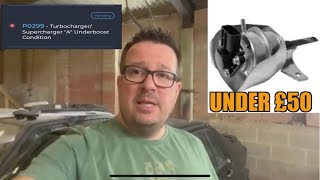
- Read the fault codes with an OBD-II scanner to confirm P1556 and check for any other codes, 🎬 See how to diagnose and fix common underboost fault codes. especially P0299.
- Using a capable scan tool (like VCDS or OBDeleven), log 'Charge Pressure Specified Value' and 'Charge Pressure Actual Value' while performing a full-throttle pull in 3rd or 4th gear (safely). A large, consistent gap between the two values confirms the underboost condition.
- Perform a thorough visual inspection of all accessible charge pipes and vacuum lines running to and from the turbo, intercooler, and intake manifold. Look for obvious cracks, loose connections, or disconnected hoses.
- Conduct a boost leak test (smoke test). This involves pressurizing the intake system with low-pressure smoke to pinpoint any leaks in pipes, hoses, or gaskets that aren't visually apparent.
- Remove and inspect the turbocharger diverter valve (DV). On the 2.0T engine, it is mounted directly to the compressor housing with three 5mm Allen bolts. Check for any tears in the rubber diaphragm if it's the older style.
- Test the electronic wastegate actuator. With a multimeter, check the voltage between pins 3 and 4 of the actuator connector with the key on, engine off. The reading should be between 1.26V and 1.43V. Check the resistance between pins 5 and 6 at the ECU connector; it should be stable and between 1.44 - 1.96 Ω while moving the actuator arm by hand.
- If all other components check out, inspect the turbo wastegate actuator arm for free movement. It should not be seized, sticky, or have excessive play.
- If no mechanical faults are found, investigate the boost pressure (MAP) sensor for incorrect readings.
Parts You'll Likely Need
- Turbocharger Diverter Valve
(OEM #06H145710D)— This is a very common failure point. The original diaphragm design is prone to tearing, causing a boost leak. The 'D' revision is an updated, more durable piston design.
Trusted brands: Pierburg (OEM), GFB (Go Fast Bits), Volkswagen Genuine
OEM price range: $120-$160
Aftermarket price range: $60-$150 - N75 Wastegate Frequency Control Valve
(OEM #06F906283F)— This solenoid is critical for boost control and is a common electronic failure item that leads to underboost or overboost conditions. Note: The EA888 Gen3 engine uses a fully electronic actuator, not this vacuum-based valve, but this part is relevant for earlier 2.0T engines often confused with the Gen3.
Trusted brands: Pierburg (OEM), Bosch, Hella
OEM price range: $60-$100
Aftermarket price range: $40-$80 - Turbocharger Assembly
(OEM #06K145722H (example, verify by VIN))— Required if the internal wastegate pivot arm has seized or if the turbo has failed internally, as it is not typically serviceable separately. This is the most expensive and labor-intensive repair for this code.
Trusted brands: IHI (OEM), BorgWarner
OEM price range: $1500-$2500
Aftermarket price range: $900-$1800
Related Codes That Often Appear With This One
- P0299 — P0299 is the generic SAE code for 'Turbocharger/Supercharger Underboost Condition'. P1556 is the manufacturer-specific equivalent, and they frequently appear together to report the same fault.
Technical Service Bulletins (TSBs) & Recalls
- VIN4APIN20190610: Mentions that a customer may state the MIL is on with code P1556. It serves as a master list of potential codes for a MIL-on complaint rather than a specific diagnostic procedure for P1556.
Platform-Specific Known Issues
- The NHTSA Technical Service Bulletin #VIN4APIN20190610 lists P1556 as a potential code that may cause the Malfunction Indicator Lamp (MIL) to illuminate on 2018-2019 Beetles, among other codes. This TSB is a general information bulletin for technicians noting various customer complaints and associated codes.
- Owner Experience: Clogged Catalytic Converter: A user on ClubGolfPortugal.com chased a P1556 code, replacing the N75 valve, vacuum lines, and even the turbo to no avail. The final culprit was a clogged catalytic converter, which had been damaged by oil from the previously failing turbo. Freeing the exhaust post-turbo immediately solved the limp mode issue, confirming the blockage
Mechanic-Grade Diagnostic Values
- Electronic Wastegate Actuator position voltage — expected: 1.26V - 1.43V. Failure: Voltage outside this range indicates incorrect physical adjustment of the actuator rod.
- Electronic Wastegate Actuator internal motor resistance — expected: 1.44 - 1.96 Ω at ~70°F (21°C). Failure: A very high or infinite resistance reading at any point while manually moving the actuator arm indicates a dead spot in the motor's commutator.
- Vacuum-style Wastegate Actuator diaphragm test — expected: Holds vacuum for at least 30 seconds. Failure: If the vacuum gauge drops, the diaphragm inside the actuator is torn and leaking.
Hidden / Shadow Codes Worth Checking
- 17964: This is the VAG-specific fault number corresponding to the SAE standard code P1556. (see via VCDS or other VAG-specific diagnostic tools.)
- Fault Frequency / Reset Counter: Not a code, but hidden data shown with a DTC in VCDS. 'Fault Frequency' counts how many times the fault condition has been met. 'Reset Counter' tracks how many successful drive cycles have occurred without the fault. A high frequency count indicates a persistent, hard fault, while a low count may suggest an intermittent issue. (see via VCDS Fault Code Screen.)
Scan Tool Commands That Help
- VCDS (VAG-COM): Basic Settings -> First adaptation of charge pressure actuator (ID 04304) — This procedure is mandatory after replacing the turbocharger or the electronic wastegate actuator to calibrate the new part's start and end positions with the ECU.
- VCDS (VAG-COM): Measuring Blocks -> [Turbo] button — When logging specified vs. actual boost pressure, pressing the [Turbo] button increases the data sampling rate significantly (e.g., over 30 samples/second), providing a much more detailed log for diagnosing intermittent boost issues.
- VCDS (VAG-COM): Output Tests (Selective Output Test) — Can be used to manually cycle the N75 valve (on applicable models) or command the electronic wastegate actuator to move, allowing a technician to verify its mechanical function without the engine running.
Wiring & Ground Locations
- Ignition Coil Grounds — Individual ground wires from each ignition coil connector bolt to studs on the valve cover.. These ground studs are notorious for breaking or stripping when removing the 10mm nut. A poor ground connection can cause misfires and general electrical noise that could potentially interfere with sensor readings, though it's not a direct cause of P1556. Ensuring good engine grounds is a critical step in any electrical diagnosis.
- GND 1 / 12 — Main engine compartment ground points, typically located below the battery tray and on the chassis rail below the headlight.. The ECU and its related sensors and actuators rely on these main ground connections. Corrosion or a loose connection at these points can cause a wide range of unpredictable issues, including incorrect sensor readings and faulty actuator operation.
Real Owner Repair Stories
- YouTube user 'GasCars' (VW Golf 1.9 TDI (older engine, but similar principle)) — P1556 code, intermittent turbo activation, limp mode.
❌ Tried (didn't work) Replaced the turbocharger ($700), Replaced the EGR valve
✅ What actually fixed it Replacing a faulty boost control solenoid/purge valve (equivalent to the N75 valve). This was a cheap part that solved the issue after the expensive turbo replacement failed to do so. - YouTube channel 'Piezas de coche' (SEAT Altea 1.9 TDI with 250,000 km) — P1556, vehicle enters limp mode on acceleration.
❌ Tried (didn't work) Replaced N75 and N18 solenoid valves, Replaced MAP sensor, Replaced MAF sensor, Replaced all vacuum tubes, Cleaned EGR valve twice, Turbo was only 2 years old
✅ What actually fixed it The video suggests that after all common boost-related parts are eliminated, the Engine Coolant Temperature (ECT) sensor should be checked. A faulty ECT can provide incorrect data to the ECU, causing it to enter a protective limp mode by cutting boost, even without setting a specific fault code for the ECT sensor itself.
"I Checked Everything" — The Actual Cause
- In cases where a smoke test reveals no boost leaks and all solenoids/actuators appear to function, a faulty Engine Coolant Temperature (ECT) sensor can be the hidden cause. The ECU may interpret a faulty reading from the ECT sensor as a critical engine problem and command a protective limp mode by cutting turbo boost, triggering a P1556 code. Technicians often miss this because they focus exclusively on the charge air system and don't consider unrelated sensors that influence ECU protective strategies.
OEM Part Supersession History
Various older PNs, including an early version of 06H145710C with a rubber diaphragm.→06H145710D— The original diverter valves used a rubber diaphragm that was prone to tearing under increased boost pressure, causing a significant boost leak. The 'D' revision (and some later 'C' revisions) uses a much more durable piston-style design.
Heads up: There is confusion regarding the 'C' revision. An early version used the failure-prone diaphragm, while a later version used a piston design similar to the 'D' revision. To guarantee the upgraded part, ordering revision 'D' (06H145710D) is the safest approach.
Model Year Variations Within This Range
- 2018-2019: No significant mechanical or electronic variations affecting the diagnosis of P1556 have been identified between the 2018 and 2019 model years for the VW Beetle 2.0T. Both use the mature EA888 Gen3 engine with an electronic wastegate actuator.
Helpful Videos

We Have This Part in Stock



The information in this article is provided for general reference and educational purposes only. Vehicle specifications, procedures, and part compatibility can vary by production date, trim level, and region. Always consult your vehicle's factory service manual and verify part numbers before purchasing or performing repairs. Safety-critical components such as airbags, seat belts, and braking systems should be installed by a qualified professional.
- Volkswagen BEETLE:
- 🧭 Diagnostic Flowchart
- 🎬 Helpful Videos
- 🛍️ Shop This Part
- What's Unique About the 2018-2019 Volkswagen BEETLE
- Symptoms You May Notice
- Most Likely Causes
- Rare But Worth Checking
- Diagnosis Steps
- Parts You'll Likely Need
- Related Codes That Often Appear With This One
- Technical Service Bulletins (TSBs) & Recalls
- Platform-Specific Known Issues
- Mechanic-Grade Diagnostic Values
- Hidden / Shadow Codes Worth Checking
- Scan Tool Commands That Help
- Wiring & Ground Locations
- Real Owner Repair Stories
- "I Checked Everything" — The Actual Cause
- OEM Part Supersession History
- Model Year Variations Within This Range
- 🎟️ Get 5% Off