

P1571 on 2007-2012 Hyundai Santa Fe: Brake Switch Malfunction Causes and Fixes
On a 2007-2012 Santa Fe, P1571 almost always means the brake light switch has failed or the small plastic stopper pad on the pedal has disintegrated. This was a major recall item. The fix is very cheap, often under $20 for parts, and is a simple 1/5 difficulty DIY repair.
- P1571 on a 2007-2012 Santa Fe is almost certainly a problem with the brake light switch system.
- Before buying any parts, check the driver's floor mat for broken plastic pieces from the brake pedal stopper pad.
- This issue was a major safety recall (NHTSA 13V113000); check if your vehicle has had the recall service performed.
- This is a safety-critical repair due to the potential for brake light failure, but it is very easy and inexpensive to perform yourself.
What's Unique About the 2007-2012 Hyundai Santa Fe
The 2007-2012 Santa Fe (second generation, 'CM') is highly prone to this specific code due to a widespread, well-documented issue with the stop lamp switch. The problem was so common that Hyundai issued a massive safety recall (NHTSA Campaign 13V113000) covering 2007-2011 model year Santa Fe vehicles to replace the faulty switch. Therefore, for this specific vehicle, P1571 is less of a diagnostic mystery and more of a known failure point that was addressed by the manufacturer. The issue was not limited to the Santa Fe; it affected a wide range of Hyundai and Kia models from the era, indicating a systemic supplier or design problem.
Generation note: This guide covers the second generation (CM) Hyundai Santa Fe. A major recall for this issue, NHTSA 13V113000 (Hyundai Recall 110), specifically covered the 2007-2011 model years within this generation. The 2012 model uses a similar design and is also prone to the same failures, though it was not included in that specific recall campaign.
Symptoms You May Notice
- Brake lights do not work when the pedal is pressed
- Brake lights are stuck on, even with the vehicle off, leading to a drained battery.
- Electronic Stability Control (ESC) warning light is illuminated on the dashboard.
- Cruise control will not engage or will not disengage when the brake is pressed.
- Inability to shift the transmission out of Park without using the manual override.
- With push-button start models, the vehicle may not start, displaying a "press brake pedal to start" message even when the pedal is depressed.
- Replacing the ESC or ABS module. The ESC light is on because the system needs a valid signal from the brake switch to function correctly. The switch is the cause, the light is the effect.
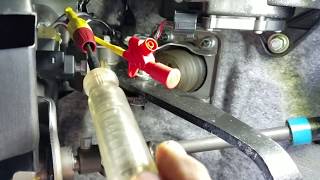
- Replacing the transmission neutral safety switch when the vehicle won't shift out of Park. The issue is the brake-shift interlock, which requires the brake signal to release the shifter. 🎬 See how a bad switch causes a stuck gear shifter
- Replacing wheel speed sensors. While a faulty wheel speed sensor can also trigger the ESC/ABS lights, it is much less common for this specific code and set of symptoms on this vehicle.
Most Likely Causes
- Disintegrated Brake Pedal Stopper Pad 🔴 High Probability → Shop Brake Pedal The original plastic stopper pads become brittle over time due to age and temperature cycling, eventually crumbling into pieces. This is a very common failure across many Hyundai and Kia models of this era.
How to confirm: Look on the driver's side floor mat for small, broken pieces of colored plastic. Then, look up at the brake pedal arm where it would contact the brake light switch's plunger. You will see an empty hole where the stopper pad should be. When the pad is gone, the plunger passes through the hole and is not depressed when the pedal is at rest, making the car think the brakes are always on.
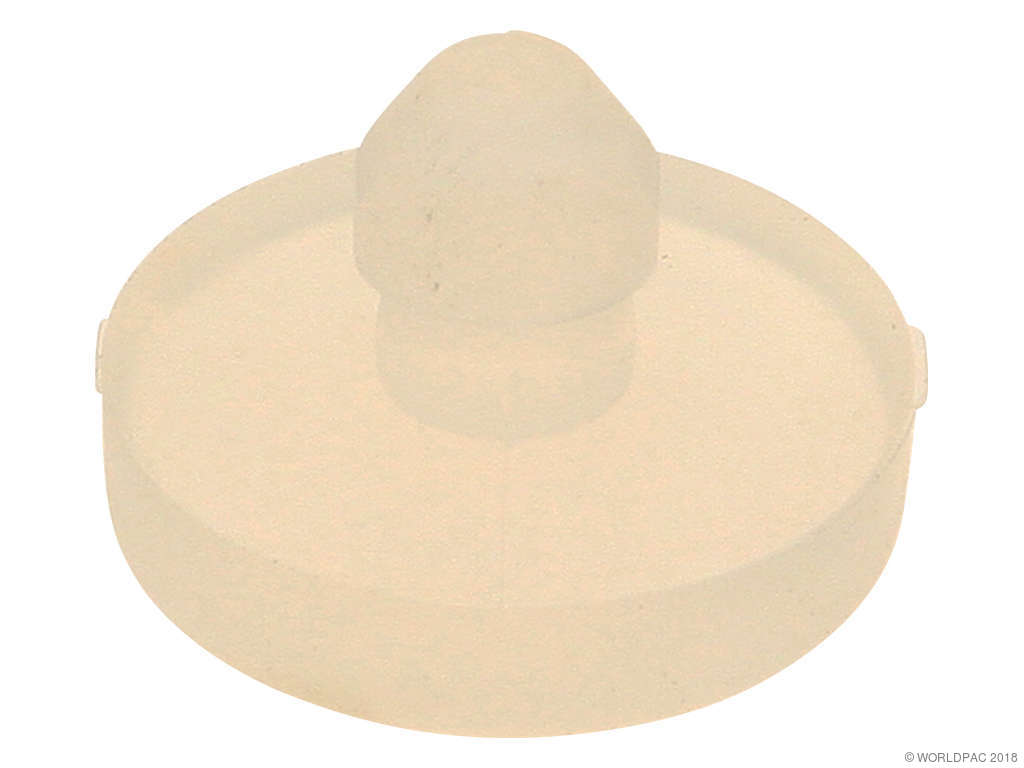
Typical fix: Install a new, more durable rubber stopper pad. The OEM part number for the improved part is 32876-25000. This is a simple, tool-free repair that involves depressing the brake pedal by hand and inserting the new stopper into the hole.
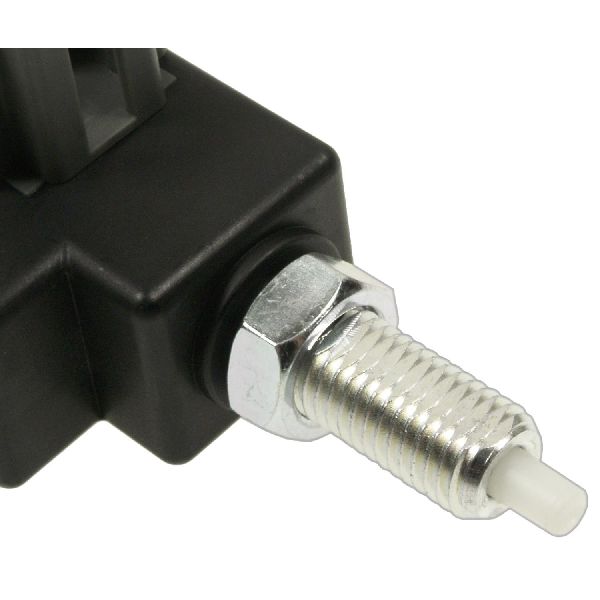
Est. part cost: $2-$10 - Faulty Brake Light Switch (Stop Lamp Switch) 🔴 High Probability → Shop Brake Light Switch The switch itself was the subject of a massive safety recall (NHTSA 13V113000) for high failure rates due to faulty internal contacts. Even if the recall was performed, replacement switches can also fail over time.
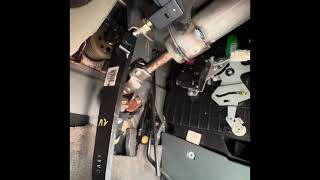
How to confirm: First, check if your vehicle's VIN is part of the recall and if the service was performed via Hyundai's official recall lookup site. If the stopper pad is intact, the switch is the next likely culprit. It can be tested with a multimeter for continuity as the plunger is depressed and released. Often, simply replacing the switch is the most time-effective 🎬 Watch: How to diagnose and replace the brake switch diagnostic step given its low cost and high failure rate.
Typical fix: Replace the brake light switch. This is a simple twist-and-lock part located on the brake pedal bracket. The OEM part number is typically 93810-3K000 (4-pin) for this generation, which superseded older versions. Disconnect the electrical connector, twist the old switch to remove, and install the new one, ensuring the plunger depth is set correctly.
Est. part cost: $15-$40
Rare But Worth Checking
- Blown Fuse: Always a good idea to check the simple things first. Check the fuse box for any fuses related to the 'Stop Lamp' or brake circuits. Consult the owner's manual for the specific fuse location.
- Wiring or Connector Issue: Less common than part failure, but the wiring or connector to the brake light switch could be damaged, corroded, or loose from being kicked by the driver's foot. A visual inspection is warranted during diagnosis.
Diagnosis Steps
- Check the driver's side floor for broken plastic fragments. This is the tell-tale sign of a failed stopper pad.
- Visually inspect the brake pedal arm. Look for a small hole where the stopper pad should be. If it's missing, this is your problem.
- If the stopper pad is intact, have an assistant stand behind the vehicle. Test the brake lights. Are they off, always on, or working correctly?
- Check the associated fuses in the vehicle's fuse panel (both in the cabin and under the hood) labeled 'STOP LP' or similar.
- If fuses and the stopper pad are good, the brake light switch is the most likely failure. Given the low cost, replacement is often easier than testing.
- To test the switch, use a multimeter to check for continuity across the appropriate pins. The continuity should change state when the plunger is depressed and released.
- If a new switch does not resolve the issue, inspect the wiring harness and connector leading to the switch for any signs of damage, corrosion, or loose pins.
Parts You'll Likely Need
- Brake Pedal Stopper Pad
(OEM #32876-25000)— This small plastic piece is the most common failure point. It becomes brittle and disintegrates, preventing the brake light switch from being depressed correctly. The part number listed is for the improved rubber version.
Trusted brands: Genuine Hyundai, Dorman
OEM price range: $2-$5
Aftermarket price range: $5-$10 - Brake Light Switch (Stop Lamp Switch)
(OEM #93810-3K000)— This switch was the subject of a major safety recall and is a known high-failure item on this vehicle. The 93810-3K000 is a common 4-pin replacement part number for this application.
Trusted brands: Genuine Hyundai/Kia, Beck/Arnley, Standard Motor Products (SMP)
OEM price range: $25-$40
Aftermarket price range: $15-$30
Technical Service Bulletins (TSBs) & Recalls
- NHTSA Campaign 13V113000 / Hyundai Recall 110 - Stop Lamp Switch Replacement
- Hyundai Service Campaign 136 - Brake Pedal Stopper Pad Replacement
Platform-Specific Known Issues
- Safety Recall 110 (NHTSA Campaign: 13V113000): Hyundai recalled 2007-2011 Santa Fe models to replace the stop lamp switch due to a high rate of failure that could cause brake lights to malfunction, cruise control to not cancel, and the ESC light to illuminate.
- Brake Pedal Stopper Pad Campaign 136: While not a full safety recall, Hyundai also had a service campaign (136) to replace the pedal stopper pad on certain vehicles. Owners may have received notifications about this.
Mechanic-Grade Diagnostic Values
- Brake Light Switch Continuity Test (4-Pin Switch) — expected: Using a multimeter in continuity mode: Pins 1 & 2 should have continuity (beep) only when the plunger is out (pedal pressed). Pins 3 & 4 should have continuity only when the plunger is in (pedal released).. Failure: If either pair of pins shows no continuity in its active state, or has continuity in both states, the switch is faulty.
- Brake Light Switch Power Supply — expected: Using a test light or multimeter, the white wire at the switch connector should show 12V+ with the ignition on.. Failure: No power at the white wire indicates a blown fuse or a wiring issue upstream of the switch.
- Scan Tool Live Data — expected: In the ECM or BCM data stream, the 'Brake Switch' or 'Stop Lamp Switch' PID should read 'Off' or 'Inactive' with the pedal released, and change to 'On' or 'Active' the moment the pedal is depressed.. Failure: If the status does not change when the pedal is pressed, or is stuck in one state, it confirms the signal is not reaching the computer.
Hidden / Shadow Codes Worth Checking
- P0504: Brake Switch 'A'/'B' Correlation. This code may appear with or instead of P1571. The 4-pin switch has two separate internal circuits; this code sets if the ECM receives illogical signals from them (e.g., both on or both off simultaneously). (see via Standard OBD-II scanner.)
Scan Tool Commands That Help
- Hyundai GDS (Global Diagnostic System) or equivalent professional scanner: Live Data / Data Stream for Engine Control Module (ECM) or Body Control Module (BCM) — This is the definitive way to confirm if the computer is receiving the signal from the brake switch. By observing the 'Brake Switch' parameter change from 'Off' to 'On' as the pedal is pressed, you can instantly verify the entire circuit up to the computer. If the switch tests good with a multimeter but the scan tool shows no change, the problem is in the wiring between the switch and the module.
Wiring & Ground Locations
- Brake Switch Connector — Directly on the brake light switch, located above the brake pedal on its support bracket.. The connector can be damaged by being kicked or can develop corrosion. The white wire is typically the 12V power feed from the fuse. A visual inspection is crucial if a new switch doesn't solve the problem.
- Chassis Ground Points — General locations include under the driver's side dash, behind the kick panels, and on the firewall. Key grounds for the main electrical system are also located near the under-hood fuse box.. While a rare cause for this specific code, a poor or corroded ground for the BCM or ECM can cause a wide range of bizarre electrical issues, including misinterpretation of sensor inputs. This should be investigated if primary causes are ruled out.
Real Owner Repair Stories
- JM Auto Repair on YouTube (2009 Hyundai Santa Fe) — Shifter stuck in Drive, would not move to other gears, even with shift-lock override.
❌ Tried (didn't work) Attempting to use the shift-lock override button.
✅ What actually fixed it The mechanical shifter assembly under the center console was binding due to lack of lubrication. The fix was to disassemble the console trim, access the shifter mechanism, and apply spray silicone and grease to all moving parts, which restored smooth operation. - YouTube user 'That Tune In Guy' (2009 Hyundai Santa Fe) — Will not start in Park, hard to shift gears, remote start not working.
❌ Tried (didn't work) Initial assumption was a bad neutral safety switch or brake switch.
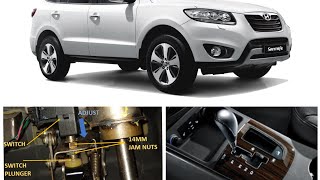
✅ What actually fixed it The shifter cable was out of adjustment and the shifter lever on the transmission itself was binding due to rust. The diagnostic step was to disconnect the cable at the transmission and test the shifter handle and transmission lever independently. The final fix involved cleaning and lubricating the transmission's shifter lever and correctly adjusting the cable to ensure it fully engaged Park.
OEM Part Supersession History
93810-2H000, 93810-32000, 93810-32001, 93810-38100, 93810-38110→93810-3K000— Multiple revisions were made to address the high failure rate of the internal contacts, which was the subject of a major safety recall.
Heads up: The replacement part 93810-3K000 is a 4-pin switch. Using a generic 2-pin switch may allow brake lights to function but will cause failures in the cruise control and ESC systems which rely on the second circuit.
Model Year Variations Within This Range
- All years, but symptom varies: The primary symptom can differ based on the ignition system. Models with a traditional key may primarily exhibit an inability to shift out of Park. Models with a push-button start system will often present as a no-start condition, as the computer does not receive the 'brake applied' signal required to initiate engine start.
- 2007-2011 vs 2012: The official NHTSA safety recall (13V113000) for the stop lamp switch covered the 2007-2011 model years. The 2012 model was not included in this specific campaign but uses a nearly identical design and is known to suffer from the exact same failures (stopper pad and switch).
Diagnostic Flowchart
Other Known Issues on This Vehicle
Issues unrelated to this code that are worth knowing about as an owner of this generation:
- Faulty Fuel Level Sensors 🟠 Medium — Very common, especially on 2007-2009 models. Often triggers a P0463 code and causes an erratic or empty fuel gauge reading.
- Leaking Valve Cover Gaskets (V6 models) 🔴 High — Common on the 3.3L V6. The front gasket leaks oil directly onto the alternator, causing alternator failure and potential stalling. (Ref: A recall was issued for some vehicles to address this.)
- Leaking Oil Pressure Switch (V6 models) 🟠 Medium — The switch, located in the engine valley under the intake manifold, is prone to leaking. The leak can be significant and is often misdiagnosed as a rear main seal leak.
- Engine Stalling / Theta II Engine Issues 🔴 High — Affects 2.4L Theta II engines in later models (2010-2012). Issues include stalling and potential catastrophic engine failure due to bearing wear. (Ref: Part of the massive Hyundai Theta II engine settlement and recall campaigns.)
- Rapid Wear of Suspension Components 🟡 Low — Ball joints, tie rods, and control arm bushings can wear out prematurely, leading to suspension noise and alignment problems.
Used vs. New Parts: Buying Guide for This Vehicle
When a used part is the smart pick: For this specific repair, buying a used part is never recommended. Both the brake light switch and the stopper pad are wear items that fail due to age and use. The cost of new parts is extremely low (typically $2-$30), making the risk and short lifespan of a used part a poor value proposition.
OEM-only on this vehicle (don't cheap out):
- No parts for this repair must be OEM, but due to the low cost and history of faulty parts, using a Genuine Hyundai/Kia switch (93810-3K000) is a highly recommended and safe choice.
Aftermarket brands forum-validated for this vehicle:
- Brake Light Switch: Beck/Arnley, Standard Motor Products (SMP) are often cited as reliable alternatives that meet or exceed OE specifications.
- Brake Stopper Pad: Dorman is a widely available and acceptable aftermarket replacement for the stopper pad.
Brands owners have reported issues with on this vehicle:
- Generic, unbranded brake light switches from online marketplaces should be avoided. They may use inferior internal contact materials (e.g., tin-plated brass instead of silver alloy) that can lead to intermittent operation or premature failure.
Real Owner Stories
Aggregated from forums and TSBs cited above. Mileages and costs reflect what owners reported in those sources.
2007-2011 Hyundai Santa Fe
Symptoms: Brake lights malfunctioning, cruise control failing to cancel, and the ESC light illuminating on the dashboard.
What fixed it: Replacement of the stop lamp switch under Safety Recall 110.
Source hint: NHTSA Campaign 13V113000 / Hyundai Recall 110 - Stop Lamp Switch Replacement
2007-2012 Hyundai Santa Fe
Symptoms: Brake lights staying on even with the vehicle off, resulting in a drained battery; small pieces of broken colored plastic found on the driver's side floor mat.
What fixed it: Installation of a new rubber stopper pad (Part #32876-25000) into the brake pedal arm.
Source hint: Hyundai Service Campaign 136 - Brake Pedal Stopper Pad Replacement
2007-2012 Hyundai Santa Fe
Symptoms: Brake lights staying on and ESC light on.
What fixed it: Replacing the brake light switch/stop lamp switch.
Source hint: https://www.hyundai-forums.com/threads/brake-lights-staying-on-and-esc-light-on.117006/
Related OBD-II Codes
Frequently Asked Questions
Is there a safety recall for the brake light switch on my 2007-2011 Santa Fe?
What is the part number for the improved brake pedal stopper pad?
My Santa Fe won't shift out of Park and the ESC light is on; are these related to P1571?
Does Hyundai have a service campaign for the plastic piece on the brake pedal?
Which brake light switch should I use for my 2007-2012 Santa Fe?
Why won't my push-button start Santa Fe start even when I'm pressing the brake?
Helpful Videos
We Have This Part in Stock


The information in this article is provided for general reference and educational purposes only. Vehicle specifications, procedures, and part compatibility can vary by production date, trim level, and region. Always consult your vehicle's factory service manual and verify part numbers before purchasing or performing repairs. Safety-critical components such as airbags, seat belts, and braking systems should be installed by a qualified professional.
- Hyundai Santa Fe:
- 🧭 Diagnostic Flowchart
- 🎬 Helpful Videos
- 🛍️ Shop This Part
- What's Unique About the 2007-2012 Hyundai Santa Fe
- Symptoms You May Notice
- Most Likely Causes
- Rare But Worth Checking
- Diagnosis Steps
- Parts You'll Likely Need
- Technical Service Bulletins (TSBs) & Recalls
- Platform-Specific Known Issues
- Mechanic-Grade Diagnostic Values
- Hidden / Shadow Codes Worth Checking
- Scan Tool Commands That Help
- Wiring & Ground Locations
- Real Owner Repair Stories
- OEM Part Supersession History
- Model Year Variations Within This Range
- Other Known Issues on This Vehicle
- Used vs. New Parts: Buying Guide for This Vehicle
- Real Owner Stories
- 2007-2011 Hyundai Santa Fe
- 2007-2012 Hyundai Santa Fe
- 2007-2012 Hyundai Santa Fe
- Related OBD-II Codes
- Frequently Asked Questions
- 🎟️ Get 5% Off