

P1571 on 2009-2014 Hyundai Sonata: Brake Switch Circuit Malfunction Causes and Fixes
On a 2009-2014 Sonata, code P1571 is almost always caused by a disintegrated plastic brake pedal stopper pad (Part No. 32876-3Q100), a tiny part that costs under $10. This prevents the brake light switch from working correctly, causing symptoms like brake lights staying on, inability to shift from park, or a no-start condition. The fix is a very easy 15-minute DIY replacement. The second most common cause is a faulty brake light switch (Part No. 93810-3S000), also covered by a recall.
- P1571 on a 2009-2014 Sonata is almost certainly a brake signal issue, not a major computer or transmission problem.
- Before buying any parts, check the driver's side floor for broken plastic bits and look at the brake pedal arm for a missing stopper pad. This is the most common cause and a sub-$10 fix.
- This is a high-safety-impact issue. Do not drive the vehicle until fixed, as your brake lights may be malfunctioning.
- Check if your vehicle has an open recall for either the stopper pad (Recall 136) or the switch (Recall 110), as the repair may be performed by a dealer for free.
- The repair for either the stopper pad or the switch is very simple and can be done by a DIYer with basic tools in under 30 minutes.
What's Unique About the 2009-2014 Hyundai Sonata
The 2009-2014 (YF generation) Sonata is highly susceptible to this code due to two widespread, documented issues. The most common is the failure of a small, brittle plastic 'stopper pad' on the brake pedal arm, which was the subject of a major recall (Hyundai Recall 136). This tiny part crumbles, letting the switch plunger pass through a hole, making the car think the brake is always pressed. A second, also common issue covered by another recall (Hyundai Recall 110), is the premature failure of the electronic brake light switch itself.
Generation note: The 2009-2014 range primarily covers the sixth generation (YF) Sonata, which launched for the 2011 model year in the US. Recalls for the most common causes specifically target the 2011-2012 models for the stopper pad and 2009-2011 for the switch, but the parts and issues are relevant to the entire generation and platform mates like the Kia Optima.
Symptoms You May Notice
- Brake lights stay on even when the pedal is released
- Brake lights do not turn on when the pedal is pressed
- ESC (Electronic Stability Control) or Traction Control warning light is on
- Unable to shift the transmission out of Park
- Car with push-button start will not start
- Cruise control cannot be set or deactivates unexpectedly
- Intermittent operation of push-button start
- Replacing the battery when a push-button start model won't start. The no-start is often due to the computer not receiving the 'brake applied' signal, not a dead battery.
- Assuming a faulty transmission shift interlock solenoid when the shifter is stuck in Park. The solenoid is usually functional but is not receiving the release signal from the brake switch.
Most Likely Causes
- Deteriorated Brake Pedal Stopper Pad 🔴 High Probability → Shop Brake Pedal The original stopper pad material becomes brittle and crumbles over time due to material composition. This was the subject of Hyundai Recall 136 (NHTSA 15V759000) for 2011-2012 models, affecting over 300,000 vehicles.
How to confirm: Look on the driver's side floor mat for small, broken pieces of colored plastic. Then, look up at the brake pedal arm and you will see an empty hole where the brake light switch plunger goes through, instead of pressing against a pad. A YouTube video by 'Fixing it Forward' titled 'Hyundai Sonata brake light staying on and lack of acceleration easy fix' clearly shows the disintegrated part and replacement.
Typical fix: Replace the stopper pad. It is a small plastic grommet that simply pushes into the hole on the brake pedal arm. This is a well-documented DIY fix that takes less than 15 minutes. 🎬 Watch: Quick DIY fix for stuck-on brake lights
Est. part cost: $2-$10 - Faulty Brake Light Switch 🟡 Medium Probability → Shop Brake Light Switch The switch itself is prone to internal failure, causing intermittent contact. This was the subject of Hyundai Recall 110 (NHTSA 13V113000), which covered over 1.7 million Hyundai vehicles, including the 2009-2011 Sonata.
How to confirm: If the stopper pad is intact, the switch is the next likely culprit. A multimeter can be used to test for continuity across the switch's 4 pins when the plunger is depressed and released. A malfunctioning switch may cause brake lights not to work at all, whereas a failed stopper pad usually causes them to stay on.
Typical fix: Replace the brake light switch. This involves unplugging the electrical connector, unscrewing the old switch from its bracket, and installing the new one, ensuring proper adjustment. 🎬 Watch: Step-by-step brake light switch replacement demo
Est. part cost: $15-$50 - Blown Fuse ⚪ Low Probability
How to confirm: Check the vehicle's fuse boxes (both in the cabin and engine bay) for any blown fuses related to the brake lights ('STOP LP'), stop lamps, or ECU. The main fuse to check is the 15A 'Stop Lamp' fuse in the driver's side interior fuse panel.
Typical fix: Replace the blown fuse with a new one of the same amperage.
Est. part cost: $1-$5
Rare But Worth Checking
- Wiring Harness Issue: A forum user reported that a wiring harness was improperly routed from the factory, causing a wire to chafe against a moving part and short out, leading to repeated brake switch failure.
- Low Battery Voltage: A weak or failing battery can cause numerous, seemingly unrelated electronic glitches and communication codes, including brake switch errors.
- Misadjusted Brake Light Switch: → Shop Brake Light Switch Even a functional switch can cause these symptoms if it is not installed and adjusted correctly. If the plunger is not depressed enough when the pedal is at rest, the car will think the brakes are always on. If it's too far, the lights may not activate when the pedal is pressed. Proper adjustment is critical after replacement.
Diagnosis Steps
- Check for Recalls: First, use your VIN to check the NHTSA or Hyundai website for open recalls related to the brake pedal stopper pad (Recall 136 / NHTSA 15V759000) or the brake light switch (Recall 110 / NHTSA 13V113000).
- Inspect the Floor: Look on the driver's side floor mat for broken plastic fragments. This is the tell-tale sign of a failed stopper pad.
- Inspect the Brake Pedal Arm: Look above the brake pedal to where the brake light switch makes contact. If you see a small hole and the switch's plunger goes right through it, the stopper pad is missing and is the cause of your problem.
- Test Brake Lights: Have a helper observe the brake lights. Are they stuck on? This usually points to a failed stopper pad. Do they not light up at all? This often points to a failed switch or blown fuse.
- Check Fuses: If the stopper pad is intact and lights don't work at all, check the 'STOP LP' fuse in the interior fuse panel.
- Test the Switch: If the stopper pad is good and the fuse is okay, the switch itself is the likely suspect. It can be tested with a multimeter for proper operation. The TSB for recall 110 provides a procedure for testing the switch by checking if the brake lights turn on/off when the plunger is released/depressed.
Parts You'll Likely Need
- Brake Pedal Stopper Pad
(OEM #32876-3Q100)— This is the most frequent failure point. The original part deteriorates, crumbles, and falls out, causing the P1571 code. The updated part is made of a more durable material.
Trusted brands: Genuine Hyundai
OEM price range: $5-$10
Aftermarket price range: $2-$8 - Brake Light Switch / Stop Lamp Switch
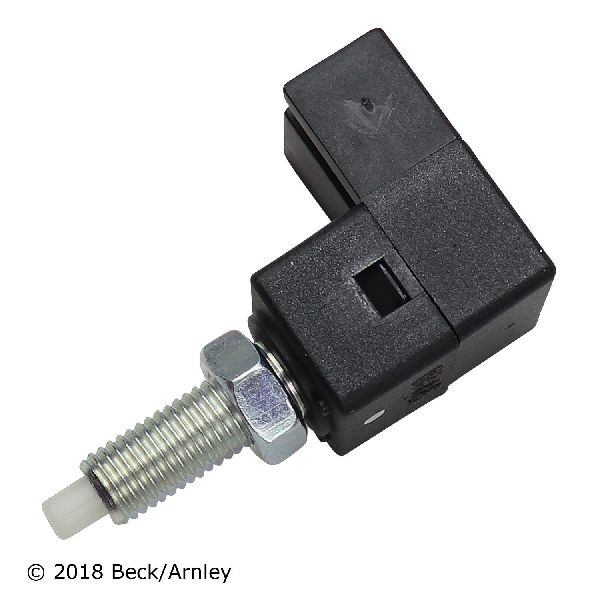
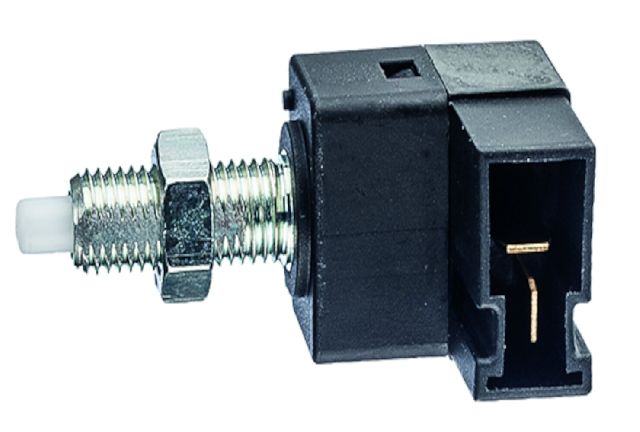
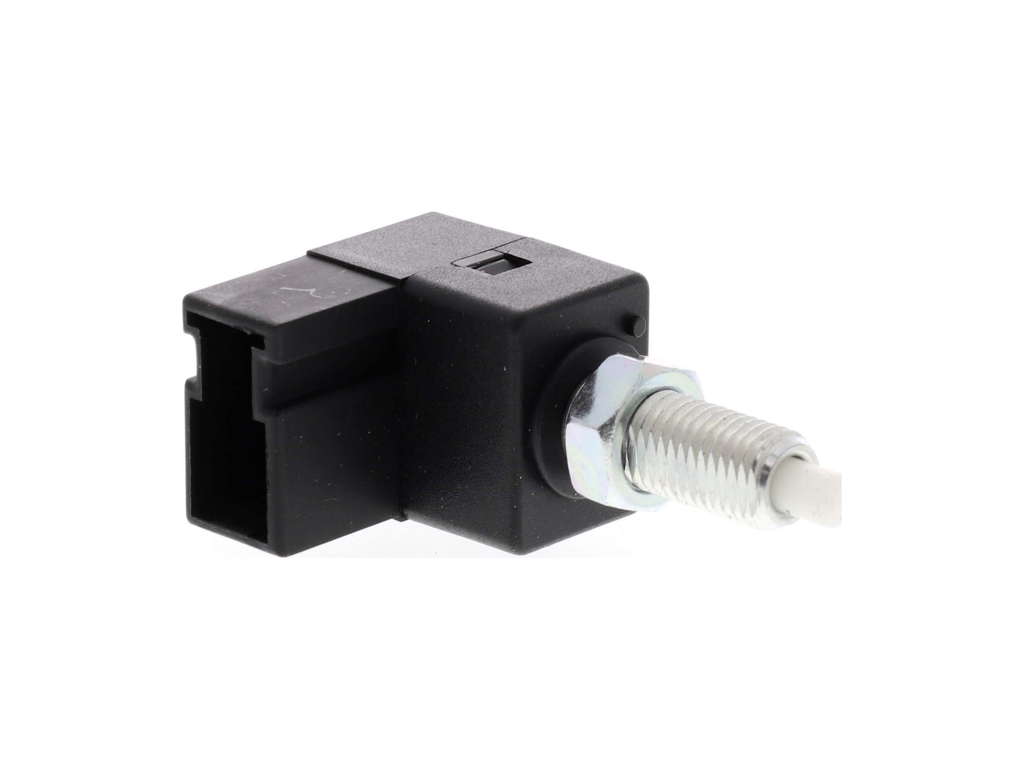
(OEM #93810-3S000)— The second most common cause, this 4-pin electronic switch fails internally, leading to intermittent or total loss of the brake signal. This was the subject of a large-scale recall.
Trusted brands: Genuine Hyundai, Beck/Arnley, Standard Motor Products
OEM price range: $25-$50
Aftermarket price range: $15-$35
Related Codes That Often Appear With This One
- C1513 — This is a more specific 'Brake Switch Error' code. A Hyundai TSB notes this code can be triggered when the stopper pad is missing, as the switch remains on for an extended period (over 60 seconds) without brake pressure being applied.
- P0504 — This is a generic OBD-II code for 'Brake Switch A/B Correlation'. The 4-pin switch has two separate internal switches. This code sets when the ECM sees an illogical combination of signals from those two switches (e.g., one says the pedal is pressed while the other says it's released).
Technical Service Bulletins (TSBs) & Recalls
- TSB 16-01-007: This TSB supersedes a previous version and provides the service procedure for replacing the brake pedal stopper pad under Recall 136. It explicitly adds a step to check and set the stop lamp switch gap to 1.0-2.0mm after replacement.
- TSB 15-01-056: The original TSB for Recall 136, detailing the replacement of the stopper pad.
- TSB for Recall 110: Details the replacement procedure for the faulty stop lamp switch. It notes to ensure the new part is the updated version and not the original one marked 'INFAC'.
Platform-Specific Known Issues
- Hyundai Recall 136 (NHTSA 15V759000): Addresses the deteriorating brake pedal stopper pad on 2011-2012 Sonatas. The fix is to replace the pad with an improved part (32876-3Q100).
- Hyundai Recall 110 (NHTSA 13V113000): Addresses the failing brake light switch on 2009-2011 Sonatas (and many other Hyundai models). The fix is to replace the switch.
Mechanic-Grade Diagnostic Values
- Brake Light Switch Continuity Test (4-Pin Switch) — expected: With the switch removed: Pins 1 & 2 should have continuity when the plunger is released (pedal pressed) and no continuity when the plunger is depressed (pedal released). Pins 3 & 4 work the opposite way: no continuity when the plunger is released, and continuity when the plunger is depressed.. Failure: If either pair of pins does not switch between continuity and open circuit as the plunger is operated, the switch is faulty.
- Brake Light Switch Input Voltage — expected: With the ignition on, one of the four pins at the connector should show battery voltage (~12V) at all times. This is the power feed from the fuse.. Failure: No voltage on any pin indicates a problem upstream, likely a blown 'STOP LP' fuse or a wiring issue.
- Brake Light Switch Output Voltage — expected: When the brake pedal is pressed, the output pin for the brake lights should show battery voltage (~12V).. Failure: If input voltage is present but output voltage does not appear when the pedal is pressed, the switch is faulty.
- Stop Lamp Switch Gap — expected: 1.0 - 2.0mm. This is the specified clearance to check after installing a new stopper pad, according to Hyundai TSB 16-01-007.. Failure: Incorrect gap can lead to the switch not activating or deactivating properly, mimicking a failed part.
Scan Tool Commands That Help
- Hyundai GDS (Global Diagnostic System): Current Data / Data Analysis — The GDS can monitor the live status of the brake switch ('Select Lever Switch') as seen by the car's modules. This is useful for diagnosing intermittent issues or confirming if a misadjusted switch is sending a constant 'on' or 'off' signal.
- Hyundai GDS (Global Diagnostic System): Flight Recorder — For intermittent faults where the symptoms don't appear on demand, the GDS flight recorder can be activated. It continuously buffers data and saves a recording of the time period *before* the technician hits the trigger, helping to capture the data from an elusive event.
Wiring & Ground Locations
- Stop Lamp Switch Connector — Located directly above the brake pedal arm, under the driver's side dashboard.. This 4-pin connector is the primary interface for the switch. Testing for power, ground, and signal output happens here. Corrosion or loose pins can mimic a failed switch.
- Interior Fuse Box ('Stop Lamp' fuse) — On the driver's side of the dashboard, typically behind a small removable panel near the driver's left knee.. This is the location of the 15A fuse that protects the brake light circuit. It is a primary check if the brake lights do not work at all.
- Ground Point (e.g., MM01) — Various ground points are located throughout the cabin, often bolted to the chassis behind kick panels or under the dash. For the 2014 Sonata, ground point MM01 is a key grounding location in the driver-side dash area.. A poor ground connection for the brake light circuit can cause intermittent or no operation. While not a common cause for this specific code, it's a possibility in cases of unusual electrical issues.
Real Owner Repair Stories
- YouTube user PSK AUTO (Hyundai (model not specified, but demonstrates the common 4-pin switch)) — Brake lights would not shut off after installing a new switch.
❌ Tried (didn't work) The new switch was installed, but the problem persisted.
✅ What actually fixed it The new brake light switch was misadjusted. The threaded body of the switch allows for adjustment to set the correct distance between the plunger and the pedal arm. By carefully adjusting the switch in and out, a 'sweet spot' was found where the lights operated correctly. - YouTube user boris donovan (2011 Hyundai Sonata) — Push-button start would not work, displaying 'press brake pedal to start engine' message even with the pedal depressed.
❌ Tried (didn't work) Initially suspected a faulty brake light switch.
✅ What actually fixed it The 15A 'Stop Lamp' fuse in the interior fuse box was blown. Replacing the fuse resolved the no-start condition.
OEM Part Supersession History
93810-3K000→93810-3S000 (or 93810-3K000QQH)— The original switch was prone to failure and was the subject of a major recall (Recall 110). The new part is an updated design for improved reliability. The color of the connector body was changed from black to gray on the new part.
Heads up: Never install the old version of the switch (often marked 'INFAC') into a vehicle covered by the recall. While it may fit, it is known to be faulty.
Model Year Variations Within This Range
- 2009-2011: These model years were the primary focus of Recall 110 for the faulty brake light switch itself.
- 2011-2012: These model years were the primary focus of Recall 136 for the deteriorating brake pedal stopper pad.
Diagnostic Flowchart
Other Known Issues on This Vehicle
Issues unrelated to this code that are worth knowing about as an owner of this generation:
- Theta II Engine Seizure/Failure 🔴 High — Very common, particularly in 2011-2014 models with the 2.4L GDI and 2.0L Turbo engines. Can occur at any mileage but often reported between 60,000 and 120,000 miles. (Ref: Subject of multiple recalls (e.g., Hyundai Recall 132) and a massive class-action lawsuit settlement which extended warranties.)
- Steering Coupler Degradation 🟠 Medium — Extremely common. The flexible rubber coupler in the steering column disintegrates, causing a prominent clicking or clunking noise when turning the steering wheel. (Ref: Hyundai extended the warranty for this part to 10 years/100,000 miles for many models, including the 2011-2014 Sonata.)
- Subframe Corrosion (Salt Belt) 🔴 High — Common for vehicles operated in 'Salt Belt' states. Road salt can cause severe corrosion of the front and rear subframes, potentially leading to suspension component failure. (Ref: Subject of recalls (e.g., NHTSA 13V-354 for rear crossmember on earlier models) and a class-action settlement for front subframe corrosion.)
Used vs. New Parts: Buying Guide for This Vehicle
When a used part is the smart pick: For this specific repair, using a used part from a junkyard is strongly discouraged. Both the stopper pad and the brake light switch are known failure items that were subject to massive recalls. A used part is highly likely to be the original, failure-prone version.
What to inspect on the donor part:
- Not applicable. Do not buy these parts used.
OEM-only on this vehicle (don't cheap out):
- Brake Pedal Stopper Pad (32876-3Q100)
- Brake Light Switch (93810-3S000)
Aftermarket brands forum-validated for this vehicle:
- While OEM is strongly recommended due to the recall history, reputable brands like Standard Motor Products or Beck/Arnley are generally considered reliable alternatives for the switch if the OEM part is unavailable.
Brands owners have reported issues with on this vehicle:
- Avoid unbranded, no-name parts from online marketplaces. For the stopper pad, cheap aftermarket versions may use the same brittle plastic as the original failed part. For the switch, cheap clones may use inferior internal contacts (e.g., tin-plated brass instead of silver alloy) that lead to premature failure.
Real Owner Stories
Aggregated from forums and TSBs cited above. Mileages and costs reflect what owners reported in those sources.
Hyundai Sonata (year not specified)
Symptoms: Brake lights not working, cruise control not working, ABS and ESC warning lights were on when driving, 'brake switch a circuit' code on scanner.
What fixed it: Replaced the brake/stoplight switch located by the brake pedal.
Source hint: YouTube comment by LIVE DEMO on 'How To: Replace Hyundai Sonata Brake Switch | LIVE DEMO'
2011 Hyundai Sonata
Symptoms: The brake warning light failed to disengage with the traction control warning light illuminated.
What fixed it: Identified as a failure related to the brake pedal stopper pad (Recall 136).
Source hint: CarComplaints.com report regarding NHTSA 15V759000
2011-2014 Hyundai Sonata 2.4L GDI — ~90000 miles
Symptoms: Engine seizure/failure, which is a common known issue for this platform alongside the brake switch problems.
What fixed it: Subject of Hyundai Recall 132 and class-action settlement for engine replacement.
Source hint: Known issues section regarding Theta II Engine Seizure
Related OBD-II Codes
Frequently Asked Questions
My 2011 Sonata's brake lights are staying on and I found plastic bits on the floor. Is there a recall for this?
I can't shift my 2010 Sonata out of Park and the cruise control won't set. Could this be the brake switch?
Which fuse should I check if my brake lights aren't working at all?
What is the specific gap adjustment required when replacing the brake pedal stopper pad?
My push-button start Sonata is acting intermittently and won't always start. Is this related to P1571?
Is there a specific brand of switch I should avoid when performing this repair?
Helpful Videos
We Have This Part in Stock


The information in this article is provided for general reference and educational purposes only. Vehicle specifications, procedures, and part compatibility can vary by production date, trim level, and region. Always consult your vehicle's factory service manual and verify part numbers before purchasing or performing repairs. Safety-critical components such as airbags, seat belts, and braking systems should be installed by a qualified professional.
- Hyundai Sonata:
- 🧭 Diagnostic Flowchart
- 🎬 Helpful Videos
- 🛍️ Shop This Part
- What's Unique About the 2009-2014 Hyundai Sonata
- Symptoms You May Notice
- Most Likely Causes
- Rare But Worth Checking
- Diagnosis Steps
- Parts You'll Likely Need
- Related Codes That Often Appear With This One
- Technical Service Bulletins (TSBs) & Recalls
- Platform-Specific Known Issues
- Mechanic-Grade Diagnostic Values
- Scan Tool Commands That Help
- Wiring & Ground Locations
- Real Owner Repair Stories
- OEM Part Supersession History
- Model Year Variations Within This Range
- Other Known Issues on This Vehicle
- Used vs. New Parts: Buying Guide for This Vehicle
- Real Owner Stories
- Hyundai Sonata (year not specified)
- 2011 Hyundai Sonata
- 2011-2014 Hyundai Sonata 2.4L GDI — ~90000 miles
- Related OBD-II Codes
- Frequently Asked Questions
- 🎟️ Get 5% Off