

P1603 on 2005-2010 Hyundai Tucson: CAN Communication Error Causes and Fixes
On a 2005-2010 Hyundai Tucson, P1603 indicates a communication failure between the engine (ECM) and transmission (TCM) computers. The most likely cause is a wiring or connector problem between the two modules, not a failed computer. Start by inspecting all related wiring, connectors, and ground points for corrosion or damage before replacing any parts.
- P1603 on your Tucson means the engine and transmission computers aren't talking to each other.
- Do not immediately assume a control module is bad. The problem is most often found in the wiring or connectors between the ECM and TCM.
- A thorough visual inspection of the wiring harness for damage, corrosion, or loose connections is the most important first step.
- Ensure your battery is healthy and fully charged, as low voltage can trigger communication faults.
- Due to the complexity of CAN bus diagnostics, professional help is recommended if a visual inspection doesn't reveal the problem.
What's Unique About the 2005-2010 Hyundai Tucson
For the first-generation (JM) Tucson, this code is almost always an electrical fault rather than a catastrophic component failure. The communication protocol between the ECM and TCM is sensitive to voltage drops and physical wiring integrity. Owners and technicians report that exhaustively checking the wiring harness for corrosion, damage, or loose pins is the most critical step, as these are far more common failure points than the control modules themselves. The platform mate, the 2005-2010 Kia Sportage, experiences identical issues pointing to a shared vulnerability in the wiring harness design.
Symptoms You May Notice
- Check Engine Light is on
- Harsh or erratic shifting
- Transmission may feel like it's slipping
- Vehicle enters 'limp mode' (stuck in one gear)
- Engine may stall or shut off while driving
- Abrupt increases in engine RPM without a change in speed
- Inability to communicate with the TCM using a scan tool
- Flashing 'N' (Neutral) indicator on the instrument cluster
- Replacing the Engine Control Module (ECM) or Transmission Control Module (TCM) without first performing a thorough inspection of the wiring harness and connectors.
- Overlooking a corroded ground strap as the source of the intermittent communication failure.
Most Likely Causes
- Damaged or Corroded Wiring Harness 🔴 High Probability The wiring harness between the ECM and TCM can be exposed to moisture, heat, and vibration over time, leading to corrosion or physical damage to the wires or connector pins. A common chafe point is where the harness runs near the starter motor and transmission bell housing.
How to confirm: Perform a detailed visual inspection of the wiring harness and connectors between the Engine Control Module (located in the engine bay) and the Transmission Control Module (often located under the center console or behind the glove box). Unplug connectors and check for green/white corrosion, bent or broken pins, or rodent damage. Pay extremely close attention to the harness section that routes down towards the transmission.
Typical fix: Repair the damaged section of wire or clean/replace the affected connector. In some cases, applying dielectric grease to cleaned connectors can prevent future corrosion.
Est. part cost: $10-$50 - Poor Electrical Connection or Ground 🟡 Medium Probability Ground straps, particularly those from the engine block to the chassis, can corrode or become loose, creating high resistance and disrupting sensitive module communications.
How to confirm: Check that the main battery terminals are clean and tight. Inspect the main chassis and engine ground straps for tightness and corrosion. A common ground point to check is on the driver's side inner fender. Ensure the connectors for the ECM and TCM are fully seated.
Typical fix: Clean all ground connection points to bare metal and tighten securely. Clean and re-seat all module connectors.
Est. part cost: $0-$10 - Low Battery Voltage or Failing Alternator ⚪ Low Probability → Shop Alternator
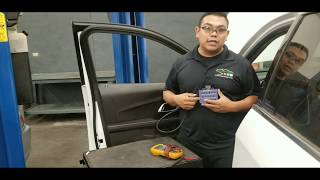
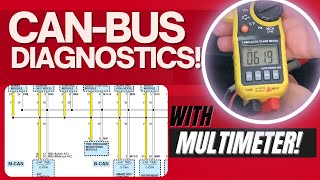
How to confirm: With the engine off, check the battery voltage using a multimeter; it should be at least 12.4V. With the engine running, check the alternator output; it should be between 13.7V and 14.7V. 🎬 See how to perform quick CAN bus resistance and voltage tests. A low or fluctuating voltage can cause communication modules to drop offline intermittently.
Typical fix: Charge or replace the battery, or replace the alternator if it is not charging correctly.
Est. part cost: $150-$400
Rare But Worth Checking
- Failed Transmission Control Module (TCM): → Shop Transmission Assembly While possible, the TCM itself is not the most common point of failure. This should only be considered after all wiring, connection, and power supply issues have been completely ruled out.
- Failed Engine Control Module (ECM): → Shop Engine Control Module (ECM) The ECM is the least likely cause. It is more likely to be the 'reporter' of the problem than the cause itself. An ECM failure typically presents with multiple other codes and more severe symptoms.
- Aftermarket Accessories: Improperly installed remote starters, alarms, or audio equipment can interfere with the CAN bus network by tapping into the wrong wires, causing communication errors.
Technical Service Bulletins (TSBs) & Recalls
While the 2005-2010 Tucson is primarily affected by wiring issues, manufacturer bulletins for other Hyundai models highlight the persistence of P1603 within the brand's transmission control systems. For instance, TSB Bulletin #23-01-019H notes that P1603 can be associated with the Intelligent Variable Transmission (IVT) and may require a transmission replacement if software updates fail. Similarly, TSB Bulletin #24-01-018H describes illuminated warning lights due to P1603 and other TCU codes, recommending a TCU update. Furthermore, TSB Bulletin #22-01-030H includes software optimizations for the distance traveled since DTCs were cleared in relation to this code.
Diagnosis Steps
- Scan for all DTCs. Note any other 'U' codes or 'P' codes, as they can help pinpoint the location of the network fault. The presence of P0700 is expected.
- Check Battery and Charging System Health. Ensure battery voltage is above 12.4V with the engine off and that the alternator is charging correctly (13.7V-14.7V) when running.
- Inspect Connectors and Grounds. Perform a close visual inspection of the ECM and TCM connectors for any signs of corrosion, damage, or loose pins. Check that all engine and chassis grounds are clean and tight. Pay special attention to the ground strap on the inner fender.
- Inspect the Wiring Harness. Carefully inspect the entire length of the wiring harness between the ECM and TCM. Look for chafing, melting, or any signs of previous, improper repairs. Focus on the area where the harness passes near the starter and bell housing.
- Check CAN Bus Resistance (Advanced). Disconnect the battery. Use a multimeter to measure the resistance between Pin 6 (CAN High) and Pin 14 (CAN Low) on the OBD-II port. A healthy network should read approximately 60 Ohms. A reading of 120 Ohms suggests an open circuit or a faulty terminating resistor in one of the modules. 🎬 Watch this walkthrough on performing a professional CAN bus resistance check.
- Isolate Modules. If wiring, grounds, and power are confirmed to be good, the fault may lie with one of the control modules (TCM or ECM). This step is best performed by a professional.
- After any repair, clear the codes and perform a test drive to ensure the fault does not return.
Parts You'll Likely Need
- Wiring Harness Repair Supplies — This is for fixing the most common cause: damaged or corroded wiring. This includes wire, terminals, and connector pigtails.
OEM price range: $20-$100
Aftermarket price range: $10-$50 - Transmission Control Module (TCM)
(OEM #Varies by year and engine. e.g., 95440-2E300 for some models.)— Replaced only after all wiring and connection issues have been ruled out as the cause of the communication failure.
Trusted brands: Hyundai (OEM)
OEM price range: $400-$700
Aftermarket price range: $250-$500 - Engine Control Module (ECM)
(OEM #Varies significantly by year and engine.)— This is the least likely part to fail but is a possibility if both the wiring and the TCM are confirmed to be good.
Trusted brands: Hyundai (OEM)
OEM price range: $600-$900
Aftermarket price range: $300-$600
Related Codes That Often Appear With This One
- U0101 — U0101 is a generic code for 'Lost Communication with TCM'. P1603 is Hyundai's specific code for a very similar fault. They often appear together, pointing to the same underlying communication issue.
- U0001 — This code means 'High Speed CAN Communication Bus', indicating a general network problem. It can appear with P1603 if the wiring fault is affecting the entire CAN bus.
- P0700 — This is a general transmission fault code requested by the TCM. It essentially tells the ECM to turn on the Check Engine Light. It will almost always be present alongside more specific transmission-related codes like P1603.
Platform-Specific Known Issues
- A frequently reported failure point is the wiring harness chafing against the engine block or transmission housing, particularly near the starter motor. Over time, vibrations can wear through the loom and insulation, causing the CAN wires to short to each other or to ground. A thorough inspection of this specific area is highly recommended.
Mechanic-Grade Diagnostic Values
- CAN Bus Network Resistance — expected: Approximately 60 Ohms. Failure: A reading of 120 Ohms indicates an open circuit or a fault in one of the two terminating resistors (likely within the ECM or TCM). A reading significantly less than 60 Ohms suggests a short circuit between the CAN wires.
- CAN High Voltage — expected: 2.5V to 3.0V (Key On, Engine Off). Failure: Voltage outside this range, or a static voltage with no fluctuation during communication attempts, indicates a bus or module fault.
- CAN Low Voltage — expected: 2.0V to 2.5V (Key On, Engine Off). Failure: Voltage outside this range, or a static voltage with no fluctuation, points to a bus or module fault. A healthy bus should show CAN High and CAN Low as mirror images of each other centered around 2.5V on an oscilloscope.
Scan Tool Commands That Help
- Hyundai GDS: Resetting Auto T/A adaptive values — This function should be performed after replacing the TCM or the transmission itself to clear the old learned shift parameters and force the new module to learn the transmission's characteristics.
Wiring & Ground Locations
- TCM Location — Typically located under the center console, requiring removal of console trim, or behind the glove box.. This is one of the two main modules that must communicate. Its connector is a primary inspection point for corrosion or damage.
- G05 — At the left kick panel, inside the cabin near the driver's feet.. This is a major interior ground point. A loose or corroded connection here can disrupt communication to modules located inside the cabin, like the TCM.
- G06 — In the engine compartment, to the left of the cooling fan motor.. This is a key ground point in the engine bay. A poor connection here can affect the ECM and other engine-side components on the CAN network.
Real Owner Repair Stories
- Forum user report (principle from a similar vehicle) (Vehicle with 'No Communication with TCM' code) — Transmission in limp mode, scanner could not communicate with the TCM, TCM fuse would blow intermittently.
❌ Tried (didn't work) Initial wiring checks showed no obvious faults., Considered replacing the TCM.
✅ What actually fixed it A deep inspection of the wiring harness path revealed a section had melted against the hot exhaust manifold due to a broken plastic harness clip. The wires inside had fused together, causing a short. Repairing the wires and properly securing the harness away from the exhaust resolved the issue. - Forum user report (principle from a similar vehicle) (Vehicle with intermittent Stabilitrak warnings and harsh shifting) — Intermittent loss of communication, various warning lights, harsh shifting.
❌ Tried (didn't work) Checking all visible ground points., Inspecting wiring near the engine.
✅ What actually fixed it The root cause was discovered under the main engine bay fuse box. A bolt securing a primary harness connector to the bottom of the fuse box was loose, and one of the pins in that connector was bent, causing a poor connection for the TCM power/communication circuit. Tightening the bolt and straightening the pin permanently fixed the fault.
OEM Part Supersession History
95440-39506→95440-39507, 95440-39508, 95440-39509— Annual part revisions and updates by the manufacturer.
Heads up: Part numbers for the 2.7L V6 engine TCM changed frequently. 95440-39506 was for 10/2006-05/2007 models, -39507 for 05/2007-05/2008, -39508 for 05/2008-06/2008, and -39509 for 06/2008-10/2009. You must match the part number to the vehicle's specific production date and equipment.95440-39515→N/A— Specific part for a different configuration.
Heads up: Part number 95440-39515 is often listed for the 2.0L AWD models, while 95440-39516 is for other configurations. Swapping these will likely result in a no-start or no-communication condition.
Model Year Variations Within This Range
- 2005-2010: The exact Transmission Control Module (TCM) part number is highly specific and varies based on the production date, engine (2.0L I4 vs 2.7L V6), and drivetrain (FWD vs AWD). There were several part number updates throughout the generation. It is critical to match the OEM part number from the original module exactly when sourcing a replacement.
Diagnostic Flowchart
Other Known Issues on This Vehicle
Issues unrelated to this code that are worth knowing about as an owner of this generation:
- Subframe and Suspension Component Corrosion 🔴 High — Very common in regions that use road salt ('Salt Belt'). Can occur at any mileage but worsens significantly over time. (Ref: Hyundai Recall 113 (NHTSA 13V-354) was issued to inspect, treat, or replace affected rear crossmembers and control arms.)
- Crankshaft Position Sensor Failure 🟠 Medium — A known failure item that occurs over time due to heat exposure, often causing stalling or no-start conditions. (Ref: No specific recall, but it is a widely documented common repair.)
- Timing Belt Replacement (V6 Engine) 🔴 High — This is a critical maintenance item. The 2.7L V6 is an interference engine, and the belt must be replaced at recommended intervals (typically 60,000 miles) to prevent catastrophic engine failure.
- Airbag Warning Light / Front Airbag Issues 🟠 Medium — A recall was issued for some 2005-2007 models regarding the driver's frontal airbag deployment for small-statured adults. (Ref: NHTSA Campaign Number: 08V161000.)
Used vs. New Parts: Buying Guide for This Vehicle
When a used part is the smart pick: A used part is a smart choice for sourcing connector pigtails or a section of wiring harness to repair a damaged area. A used TCM is a high-risk purchase and should only be considered as a last resort after all wiring, ground, and power supply issues have been definitively ruled out. The high probability of the fault being in the wiring means a used TCM will likely not fix the issue.
Donor-vehicle mileage cap: roughly under 120000 miles for the part to have meaningful remaining life.
What to inspect on the donor part:
- For a used TCM, inspect the case for any signs of physical damage or pry marks.
- Check the connector pins carefully; they must be perfectly straight and free of any green or white corrosion.
- Ask the seller if the donor vehicle had any flood or fire damage; avoid these parts.
- For a wiring harness section, ensure the plastic loom is intact and the wires inside are flexible, not brittle or cracked.
OEM-only on this vehicle (don't cheap out):
- Transmission Control Module (TCM)
Brands owners have reported issues with on this vehicle:
- Unbranded, no-name TCMs sold on marketplaces without a warranty or return policy.
Real Owner Stories
Aggregated from forums and TSBs cited above. Mileages and costs reflect what owners reported in those sources.
2005-2010 Hyundai Tucson
Symptoms: Symptoms consistent with a CAN communication failure, such as erratic shifting, limp mode, or a Check Engine Light.
What fixed it: The wiring harness had chafed against the engine block or transmission housing near the starter motor. Repairing the damaged wires in that specific location resolved the issue.
Source hint: vehicle_specific_issues
Hyundai Tucson (general)
Symptoms: Symptoms related to a corroded wiring harness, which became a point of contention for warranty coverage.
What fixed it: The corroded wiring harness needed to be repaired or replaced.
Source hint: Reddit r/Hyundai/comments/n1u2sy/hyundai_wont_cover_wiring_harness_issue/
Related OBD-II Codes
Frequently Asked Questions
Where is the most common place for the wiring to fail and cause a P1603 on my 2005-2010 Tucson?
I found a used Transmission Control Module (TCM) online. Is it a good idea to buy it to fix my P1603 code?
My mechanic wants to check the CAN bus resistance. What should the reading be for my Tucson?
My Tucson is from a 'Salt Belt' state. Could rust be related to my P1603 code?
Besides the Check Engine Light, what are some common symptoms of a P1603 on this vehicle?
I also have a 2007 Kia Sportage. Can it have the same P1603 problem?
Helpful Videos
![How To Test CAN BUS With A Multimeter [CAN Bus Resistance Check] Mechanic Mindset](https://img.youtube.com/vi/JPE42HSJxAk/mqdefault.jpg)
Used OEM Parts in Stock
New Aftermarket Parts Available

The information in this article is provided for general reference and educational purposes only. Vehicle specifications, procedures, and part compatibility can vary by production date, trim level, and region. Always consult your vehicle's factory service manual and verify part numbers before purchasing or performing repairs. Safety-critical components such as airbags, seat belts, and braking systems should be installed by a qualified professional.
- Hyundai Tucson:
- 🧭 Diagnostic Flowchart
- 🎬 Helpful Videos
- 🛍️ Shop This Part
- What's Unique About the 2005-2010 Hyundai Tucson
- Symptoms You May Notice
- Most Likely Causes
- Rare But Worth Checking
- Technical Service Bulletins (TSBs) & Recalls
- Diagnosis Steps
- Parts You'll Likely Need
- Related Codes That Often Appear With This One
- Platform-Specific Known Issues
- Mechanic-Grade Diagnostic Values
- Scan Tool Commands That Help
- Wiring & Ground Locations
- Real Owner Repair Stories
- OEM Part Supersession History
- Model Year Variations Within This Range
- Other Known Issues on This Vehicle
- Used vs. New Parts: Buying Guide for This Vehicle
- Real Owner Stories
- 2005-2010 Hyundai Tucson
- Hyundai Tucson (general)
- Related OBD-II Codes
- Frequently Asked Questions
- 🎟️ Get 5% Off