

P1604 on 2008-2016 Audi A4: Internal Control Module Error Causes and Fixes
P1604 on an Audi A4 most likely indicates an internal fault within the Engine Control Module (ECM) or its related wiring. This is not a simple DIY fix, as replacing the ECM requires professional programming and adaptation to the vehicle's immobilizer system. Before condemning the ECM, check for water damage in the plenum area and verify all power and ground connections.
- P1604 on an Audi is an electrical fault related to the Engine Control Module (ECM), not a simple mechanical starting issue.
- Before suspecting the ECM, thoroughly inspect for water damage in the plenum/cowl area, as this is a very common failure point on the B8 platform.
- Do not drive the vehicle, as the engine could stall at any time.
- Diagnosis involves checking the ECM's power, ground, and connectors before condemning the unit itself.
- Replacing the ECM is a job for a professional, as it requires specialized tools to program the new unit to the car's security system.
- Be wary of online resources that define this code as 'Startability Malfunction', as this is incorrect for Audi and can lead to replacing the wrong parts.
What's Unique About the 2008-2016 Audi A4
The key challenge with P1604 on the Audi A4 (B8 generation) is the lack of widespread documentation in owner forums, suggesting it's a rare code. Unlike many trouble codes with common, well-documented fixes, P1604 points to a complex electronic issue. The primary platform-specific issue is that the ECM is not a 'plug-and-play' part. It is tied to the vehicle's immobilizer system, and any replacement requires specialized programming to adapt the new module to the car's keys and other components, a process often called 'Component Protection' adaptation. Furthermore, the B8 platform is known for clogged plenum drains under the windshield, which can cause water to flood the electronics box and damage the ECM, making this a critical first check.
Generation note: The 2008-2016 model years cover the entire Audi A4 B8 generation, including the 2013-2016 facelift (B8.5). The diagnostic approach and the complexity of ECM replacement are consistent across this entire generation. The vulnerability to clogged plenum drains is also present across all B8 models.
Symptoms You May Notice
- Engine is difficult or impossible to start.
- Engine runs erratically, stutters, or misfires.
- Reduced engine power and poor acceleration.
- Vehicle enters 'limp mode' or emergency running mode.
- Check Engine Light is on.
- Communication errors with the diagnostic scan tool.
- Multiple, seemingly unrelated warning lights on the dashboard (ABS, traction control, etc.).
- Radiator fans running at full speed with the engine off.
- Replacing fuel pumps, spark plugs, or ignition coils. Because the generic definition for P1604 on other car brands is 'Startability Malfunction', mechanics unfamiliar with Audi may chase fuel and ignition issues when the root cause is the ECM itself.
Most Likely Causes
- Poor Power or Ground Supply to ECM 🟡 Medium Probability Complex wiring harnesses and exposure to elements over time can lead to corrosion or damage at critical connection points. The main power and ground connections for the engine harness have a reputation for failing.
How to confirm: Using a multimeter, verify battery voltage and check for voltage drop at the ECM's main power and ground pins. Inspect the main engine wiring harness, battery terminals, and chassis ground points for corrosion or damage. A VAG-specific scan tool like VCDS may show low voltage errors or allow logging of supply voltage in Measuring Value Block 4.
Typical fix: Clean or repair corroded terminals, repair damaged wires, or replace faulty ground straps.
Est. part cost: $10-$100 - Defective Engine Control Module (ECM) 🟡 Medium Probability → Shop Engine Control Module (ECM) Internal components of the ECM can fail over time due to heat cycles, vibration, or voltage spikes. A very common cause on this platform is water damage from clogged plenum chamber drains, which allows rainwater to flood the electronics box where the ECM is located.
How to confirm: This is typically a diagnosis of exclusion. If all power, ground, and communication network wiring to the ECM test perfectly, and there is no evidence of water ingress, the module itself is the likely culprit. This often requires a specialist to test the ECM on a bench.
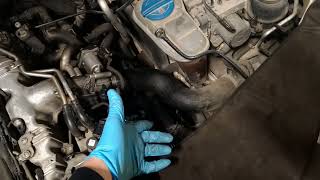
Typical fix: The ECM must be replaced or sent for repair. 🎬 See this walkthrough on ECM replacement and professional programming The new or used module must then be professionally programmed (cloned or adapted) to the vehicle's VIN and immobilizer system.
Est. part cost: $400-$1200 (Used/Remanufactured), $1800+ (New OEM). - Software or Data Corruption ⚪ Low Probability Can occur after improper ECU tuning (flashing) or, in rare cases, from a severe voltage fluctuation, such as from jump-starting incorrectly.
How to confirm: This can sometimes be identified with advanced diagnostic tools that can check the software version and integrity (e.g., checking for EEPROM errors like P1640). Often confirmed when a software reflash resolves the issue.
Typical fix: Have a dealership or qualified specialist reflash the ECM with the latest factory software.
Est. part cost: $150-$400
Rare But Worth Checking
- CAN Bus Communication Failure: While less common for this specific code, a fault on the Controller Area Network (CAN bus) can sometimes manifest as an internal module error if the ECM cannot communicate with other critical modules. A cluster of communication-related DTCs alongside P1604 would point to this.
Diagnosis Steps
- Scan for all stored fault codes in all vehicle modules using a VAG-specific tool like VCDS, not just a generic OBD-II reader. Note any communication errors.
- CRITICAL: Inspect the plenum chamber at the base of the windshield for standing water and debris. Remove the cover for the electronics box and inspect the ECM and its connectors for any signs of moisture, corrosion, or water damage.
- Check the battery and charging system. Ensure voltage is stable and above 12.4V at rest. 🎬 Watch: Troubleshooting battery drain and low voltage issues Low or fluctuating voltage can cause numerous electronic faults in VAG vehicles.
- Inspect the ECM connectors for any signs of corrosion, moisture, or damaged pins. Clean as necessary.
- Verify the ECM has a solid power supply and ground connection using a multimeter and wiring diagram. Check for voltage drop on both power and ground circuits, paying close attention to main harness ground points like G11 (plenum) and G12 (engine compt).
- If all wiring, power/ground connections, and the ECM itself are confirmed to be dry and in good condition, the fault is highly likely to be internal to the ECM.
- Consult a professional service that specializes in Audi electronics for ECM testing, repair, or replacement and programming.
Parts You'll Likely Need
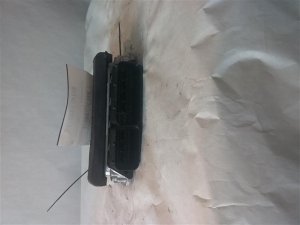
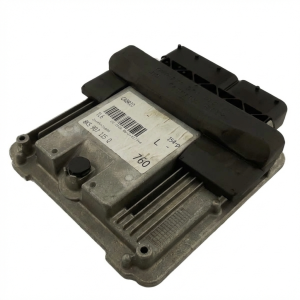
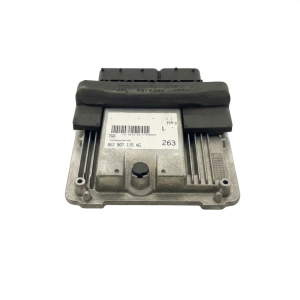
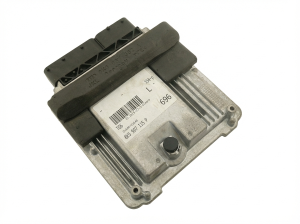
- Engine Control Module (ECM) — This code directly points to an internal failure of the ECM. If external wiring and water damage are ruled out, the module itself is the cause.
Trusted brands: Bosch, Continental
OEM price range: $1800-$2100
Aftermarket price range: $400-$900 (Used/Remanufactured/Repaired)
Related Codes That Often Appear With This One
- P1640 (Internal Control Module: EEPROM Error)
- U-codes indicating communication loss with the ECM (e.g., U0100)
- Various codes in other modules (ABS, Transmission) due to faulty data from the ECM.
Platform-Specific Known Issues
- Water Damage from Clogged Plenum Drains: A primary suspect for any ECM-related issue on a B8 platform vehicle. The drains located in the plenum chamber (under the plastic cowl at the base of the windshield) are prone to clogging with leaves and debris. When they clog, rainwater fills the chamber and can flood the sealed electronics box that houses the ECM, causing corrosion and short circuits. Symptoms often appear after heavy rain and can include random electrical faults, fans running constantly, or a no-start condition. Regular cleaning of these drains is critical preventative maintenance. 🎬 Watch: How to find and clean your plenum drain plugs
Mechanic-Grade Diagnostic Values
- ECM Supply Voltage via VCDS — expected: Stable battery voltage (typically 13.7-14.7V with engine running) with no significant drops or fluctuations.. Failure: Voltage that is unstable, bounces around, or shows significant drops during a drive cycle.
- ECM Power and Ground Pin Voltage Drop — expected: Less than 0.2V drop on the power side and less than 0.1V drop on the ground side.. Failure: Voltage drop readings higher than the expected values, indicating high resistance in the circuit.
Hidden / Shadow Codes Worth Checking
- 007: A fault type or sub-code often displayed next to P1604 in VCDS, defined as 'Output Driver IC Error'. This provides more specific detail that the fault is within the ECM's internal circuitry that controls other components. (see via VAG-specific scan tools like VCDS (VAG-COM) or ODIS.)
Scan Tool Commands That Help
- ODIS (Dealer Tool): Component Protection Adaptation — This is a mandatory, online function required after installing a new or used ECM to make it fully functional in the vehicle. It adapts the module to the car's anti-theft system.
- VCDS (Ross-Tech): Log Measuring Value Block (MVB) 004 — To monitor the ECM's voltage supply during a drive. This helps identify intermittent power or ground issues that could cause a P1604 code.
Wiring & Ground Locations
- ECM Fuses: F3 (5A), F4 (5A), F6 (15A) — In the main fuse box located in the engine bay, under the plenum cover near the windshield.. These are the primary fuses supplying power to the Engine Control Module. A blown fuse will cause a no-power condition, leading to a no-start and potentially this code.
- Ground Point G11 — In the plenum chamber (engine compartment, right side), near the battery.. This is a primary chassis ground point. Corrosion here is common due to its location and can cause a wide range of electrical issues, including insufficient grounding for the ECM.
- Ground Point G12 — On the left rear of the engine compartment.. This ground point serves the Motronic Engine Control Module (ECM). A poor connection here directly impacts the ECM's ability to function and can trigger internal fault codes.
- ECM Connector T94 — The main 94-pin electrical connector at the Engine Control Module (J623) itself.. This is the central connection point for all power, ground, and sensor inputs/outputs. Technicians must reference pinouts for this connector to perform voltage drop and continuity tests on the ECM's circuits.
Real Owner Repair Stories
- Audi A4 Klub Polska forum user (Audi A4 2.0 TDI (BRD engine)) — Car would not start ('not firing'). Multiple errors on the dash for ABS, traction control, etc. Instrument cluster lights were noticeably dimmer than normal. The P1604-007 'Output Driver IC Error' was present in the engine module.
❌ Tried (didn't work) The user noted the issue was intermittent; sometimes after fiddling with the key, it would start and run perfectly with no codes.
✅ What actually fixed it The user suspected a faulty ECU, noting it had a sticker indicating a previous repair in 2009. The final resolution was not posted in the thread, but the symptoms strongly pointed to an intermittent internal ECM failure or a severe power supply issue.
OEM Part Supersession History
e.g., 8K2907115D, 8K2907115AA→Varies— Hardware and software revisions.
Heads up: There is no simple supersession list. Part numbers MUST be matched exactly, or compatibility must be confirmed with a dealer or specialist. Installing an incompatible ECM, even if it physically fits, will not work. The primary method for using a donor ECM is cloning, not finding a 'compatible' part number.
Model Year Variations Within This Range
- 2008-2012 (B8): These pre-facelift models have hydraulic power steering, a different MMI system (3G), and distinct front-end styling (rounded grille corners, dotted LED DRLs).
- 2013-2016 (B8.5): The facelift models feature electromechanical power steering, an updated MMI (3G+), and revised styling (angled grille corners, solid LED DRL light bars). Some internal components, like the DSG mechatronics, were reportedly updated for better reliability, though specific ECM changes are not widely documented.
Diagnostic Flowchart
Other Known Issues on This Vehicle
Issues unrelated to this code that are worth knowing about as an owner of this generation:
- Excessive Oil Consumption (2.0T Engine) 🔴 High — Very common on early B8 models (approx. 2009-2012) with the 2.0T TFSI engine. Caused by faulty piston rings. Can occur at any mileage, with consumption rates as high as 1 quart every 300-600 miles. (Ref: A class-action lawsuit led to an extended warranty and repair program, but many of these have expired. The fix involves new pistons, rings, and sometimes a PCV valve update and ECU reflash.)
- Timing Chain Tensioner Failure (2.0T Engine) 🔴 High — Affects pre-facelift B8 models (approx. 2009-2013) with the 2.0T engine. The original tensioner can fail without warning, causing the timing chain to jump, leading to catastrophic engine damage. (Ref: Audi issued TSBs and a warranty extension (U35) to 10 years/100,000 miles for affected vehicles, though this has expired for most. A visual inspection through a small port can determine if the updated tensioner is installed.)
- Water Pump Failure (2.0T Engine) 🟠 Medium — Common across the B8 generation. The plastic housing of the water pump/thermostat assembly can crack or the gasket can fail, causing coolant leaks. Failure can occur as early as 25,000 miles, but is more common at higher mileage.
- PCV Valve Failure 🟠 Medium — The Positive Crankcase Ventilation (PCV) valve, or oil separator, can fail, leading to increased oil consumption, rough idle, and oil leaks. Audi released updated versions of the part. (Ref: An emissions service action (17F9) was issued for some 2011-2014 models related to the crankcase pressure regulating valve.)
- Clogged Plenum Drains Leading to Water Ingress 🔴 High — Debris like leaves clogs the drains in the plenum chamber under the windshield, causing water to overflow into the cabin or the electronics box housing the ECM.
Used vs. New Parts: Buying Guide for This Vehicle
When a used part is the smart pick: A used ECM is a very smart and cost-effective choice for this repair, but ONLY if you use a professional ECU cloning service. This avoids the high cost of a new OEM module and expensive dealer programming for Component Protection.
Donor-vehicle mileage cap: roughly under 150000 miles for the part to have meaningful remaining life.
What to inspect on the donor part:
- Match the OEM part number EXACTLY (e.g., 8K2907115D) unless the cloning service confirms cross-compatibility.
- Source from a reputable salvage yard that guarantees the part is functional.
- Inspect the donor ECM's connectors for any signs of corrosion, bent pins, or physical damage.
- Avoid any units that show signs of water ingress or a swollen case.
OEM-only on this vehicle (don't cheap out):
- For this specific repair, a 'new OEM' part is the alternative to a 'cloned used' part. There are no reliable 'new aftermarket' ECMs.
Aftermarket brands forum-validated for this vehicle:
- N/A for the ECM itself. The key is the quality of the cloning service, not the brand of the used part (which will be OEM Bosch or Continental). Reputable cloning services include DUDMD Tuning, The ECU Pro, and ECU Team Corp.
Brands owners have reported issues with on this vehicle:
- Avoid any service that offers a 'virginized' or 'immo off' ECM without a full clone. While these may allow the car to start, they can cause other issues with vehicle functions and diagnostics.
Real Owner Stories
Aggregated from forums and TSBs cited above. Mileages and costs reflect what owners reported in those sources.
2011 Audi A4 2.0T
Symptoms: Owner needed to replace the ECU and found that a standard swap would not work due to the immobilizer.
What fixed it: The ECU had to be adapted to the vehicle and immobilizer system, which was noted as a non-DIY job for most.
Source hint: Reddit r/MechanicAdvice | I have a 2011 Audi A4 and need to replace the ECU...
2008-2016 Audi A4 (B8 Platform)
Symptoms: Battery drain after rain and water damage to a control module due to the plenum overflowing with water.
What fixed it: Cleaning the clogged plenum drains to prevent water from filling the chamber and flooding the electronics.
Source hint: AudiWorld Forums | B8: how to fix plenum over flowing with water?
Audi A4 2.0 TDI
Symptoms: P1604 code (Output Driver IC Error) accompanied by multiple electrical faults including dim lights, ABS/traction errors, and a no-start condition.
What fixed it: The owner suspected the ECU was the culprit due to the internal driver error code.
Source hint: Audi A4 Klub Polska | 2.0 tdi [BRD] - Błąd P1604 - 007 - Output Driver IC Error
Related OBD-II Codes
Frequently Asked Questions
Can I just swap in a used ECM from another B8 A4 to fix the P1604 code?
Why are my radiator fans running at full speed even when my Audi A4 is turned off?
Is there a specific maintenance step to prevent the ECM water damage mentioned in the common causes?
Does the 2008-2016 Audi A4 have a specific measuring block to check ECM voltage using VCDS?
Could a bad ground point cause P1604, and where should I look on my A4?
Are there any other Audi models that suffer from this same P1604/water ingress issue?
Helpful Videos
We Have This Part in Stock

The information in this article is provided for general reference and educational purposes only. Vehicle specifications, procedures, and part compatibility can vary by production date, trim level, and region. Always consult your vehicle's factory service manual and verify part numbers before purchasing or performing repairs. Safety-critical components such as airbags, seat belts, and braking systems should be installed by a qualified professional.
- Audi A4:
- 🧭 Diagnostic Flowchart
- 🎬 Helpful Videos
- 🛍️ Shop This Part
- What's Unique About the 2008-2016 Audi A4
- Symptoms You May Notice
- Most Likely Causes
- Rare But Worth Checking
- Diagnosis Steps
- Parts You'll Likely Need
- Related Codes That Often Appear With This One
- Platform-Specific Known Issues
- Mechanic-Grade Diagnostic Values
- Hidden / Shadow Codes Worth Checking
- Scan Tool Commands That Help
- Wiring & Ground Locations
- Real Owner Repair Stories
- OEM Part Supersession History
- Model Year Variations Within This Range
- Other Known Issues on This Vehicle
- Used vs. New Parts: Buying Guide for This Vehicle
- Real Owner Stories
- 2011 Audi A4 2.0T
- 2008-2016 Audi A4 (B8 Platform)
- Audi A4 2.0 TDI
- Related OBD-II Codes
- Frequently Asked Questions
- 🎟️ Get 5% Off