

P1604 on 2001-2006 Chrysler Sebring 2.4L: PCM Internal Failure Causes and Fixes
On this Chrysler Sebring, P1604 means the Powertrain Control Module (PCM) has detected an internal memory error. Before replacing the expensive PCM, thoroughly check the battery, terminals, and all PCM power and ground wires, as voltage issues from bad connections or even faulty aftermarket accessories are a common trigger for this code.
- P1604 on your Sebring means the engine computer (PCM) has detected an internal memory error.
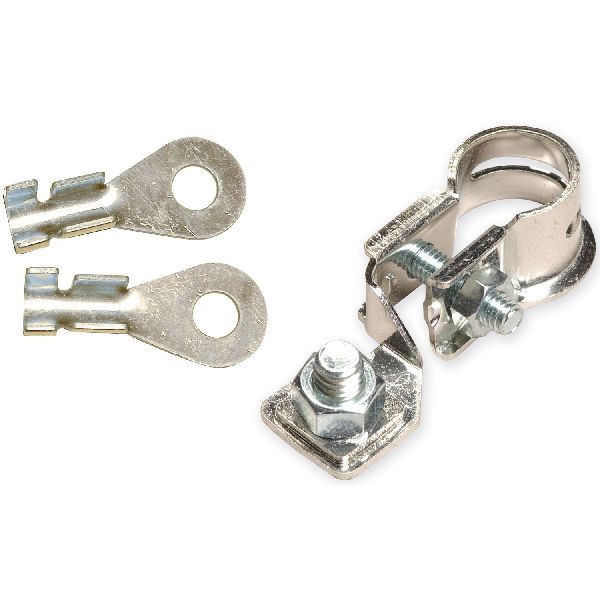
- Before replacing the PCM, always check the simplest things first: ensure the battery is strong and the battery terminals are clean and tight.
- Inspect all power and ground wires connected to the PCM for damage or corrosion, especially the ground points on the strut towers.
- If you have an aftermarket remote starter or alarm, it could be the source of the voltage issue triggering the code.
- Only if all electrical connections are perfect should you replace the PCM.
- A replacement PCM must be programmed to your vehicle's VIN to function correctly.
What's Unique About the 2001-2006 Chrysler Sebring
Unlike many other manufacturers that use P1604 to indicate a general starting problem, Chrysler uses it to flag a very specific internal computer fault. However, this 'internal' fault is often triggered by an external problem. On these Sebring models and their platform mates like the Dodge Stratus, a weak battery, corroded battery terminals, or poor ground connections can cause a momentary voltage drop to the PCM, making it fail its self-test and incorrectly report an internal failure. Owners often find that fixing the power supply fixes the code without needing to replace the computer. This applies specifically to the sedan and convertible models which are on the Chrysler JR platform; the coupe (discontinued after 2005) was based on a Mitsubishi platform.
Symptoms You May Notice
- Check Engine Light is on
- Engine may crank but not start
- Engine may stall intermittently
- Vehicle may run perfectly fine with the light on
- Other seemingly unrelated electrical issues
- Transmission may enter 'limp-home' mode (stuck in one gear)
- Aftermarket remote start fails and triggers the code
- Replacing fuel system or ignition components. Because some generic definitions label this a 'Startability Malfunction', owners might mistakenly chase fuel or spark issues. The Chrysler-specific definition points directly to the PCM or its supporting electrical circuits.
Most Likely Causes
- Poor Power or Ground Supply to the PCM 🔴 High Probability Aging wiring, battery terminals prone to corrosion, and chassis grounds can degrade over time, causing unstable voltage to the sensitive PCM. Forum users frequently report issues with main ground straps on the strut towers or to the engine/transmission case.
How to confirm: Load test the battery. Clean battery posts and terminals until they are shiny. Follow the main ground cable from the battery to the chassis and ensure the connection is clean and tight. Inspect key ground points, such as the G103 ground on the driver's side strut tower, for corrosion or looseness. Inspect the PCM connectors for corrosion and test for stable voltage and clean ground at the PCM connector pins per the factory service manual, wiggling the harness during testing to uncover intermittent connections.
Typical fix: Clean or replace battery terminals, replace a weak battery, or clean/repair ground connections. In some cases, owners have had to run new ground wires to solve the problem.
Est. part cost: $10-$200 - Failing Powertrain Control Module (PCM) 🟡 Medium Probability → Shop Engine Control Module (ECM) The PCM is the ultimate cause if all power and ground inputs are verified to be perfect. Internal electronic components can fail over time due to heat cycles and age. This is a common final diagnosis in many forum threads after electrical checks are completed.
How to confirm: After exhaustively confirming that all power, ground, and data lines to the PCM are clean and providing correct voltage under load, the PCM itself is condemned. This is a process of elimination.
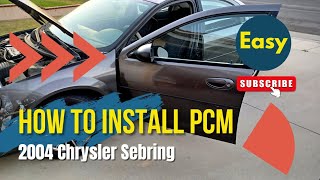
Typical fix: Replace the Powertrain Control Module. 🎬 See this walkthrough for replacing and installing the PCM. The replacement unit must be programmed with the vehicle's VIN and mileage to work with the security system (SKIM).
Est. part cost: $200-$500
Rare But Worth Checking
- Improperly Installed Aftermarket Accessories:
Diagnosis Steps
- Verify the code with an OBD-II scanner. Note any other codes present, especially P1603, P0700, or P0513.
- Inspect the battery. Ensure it is fully charged and load test it to confirm its health. A weak battery is a very common cause.
- Thoroughly clean the battery terminals and cable ends, even if they look clean. Remove any corrosion and ensure they are tight.
- Trace and inspect the main battery ground cable to the chassis and engine block. Pay special attention to ground points on the strut towers (like G103) which are known to be problematic. Ensure these connections are clean, tight, and free of corrosion.
- Disconnect the PCM harness connectors (with the battery disconnected) and inspect for any signs of corrosion, moisture, or pushed-out pins.
- If equipped with the tools and wiring diagrams, perform a voltage drop test on the power and ground circuits directly at the PCM connector to ensure the module is receiving stable voltage under load. Wiggle the harness during the test to check for intermittent faults.
- Consider any aftermarket accessories. If a remote starter or alarm is installed, test vehicle operation with the accessory fuse pulled to see if the code still returns.
- If all power and ground circuits are confirmed to be good and the code returns after being cleared, the PCM is likely faulty.
- Replace the PCM with a new or remanufactured unit programmed to your vehicle's VIN and SKIM information to avoid a P0513 code.
Parts You'll Likely Need
- Powertrain Control Module (PCM)
(OEM #Varies by year and options (e.g., 04896115AD for a 2004 model), must be matched to VIN.)— This is the component that is replaced if all external electrical factors are ruled out. The code itself points to an internal fault within this module.
Trusted brands: Mopar (OEM), Cardone, Standard Motor Products, FS1 (Flagship One)
OEM price range: $400-$700
Aftermarket price range: $200-$500 - Battery — A weak or failing battery can cause voltage drops that trigger this code, making the PCM believe it has an internal fault.
Trusted brands: Interstate, DieHard, Duralast
OEM price range: $150-$250
Aftermarket price range: $120-$200
Related Codes That Often Appear With This One
- P1603 — P1603 is also an internal PCM communication failure code. Seeing them together strongly points towards a PCM power/ground issue or a failing PCM itself.
- P0700 — This code indicates the Transmission Control Module (TCM) has stored a fault. The PCM communicates with the TCM, and a failing PCM can disrupt this communication, causing the TCM to request the Check Engine Light be turned on.
- P0513 — Incorrect Immobilizer Key. This code often appears after a PCM has been replaced but not correctly programmed with the vehicle's VIN and security key information, creating a mismatch with the Sentry Key Immobilizer Module (SKIM).
Technical Service Bulletins (TSBs) & Recalls
- NHTSA #10000316 (Chrysler): This TSB notes that a Malfunction Indicator Lamp (MIL) may illuminate with several potentially erroneous DTCs, including P1604. This supports the idea that the code can be triggered by transient electrical issues rather than a hard part failure.
Platform-Specific Known Issues
- Ground wires on both the driver and passenger side strut towers are common points of failure due to corrosion or becoming loose. Owners report chasing various electrical gremlins, including P1604, that were ultimately solved by cleaning or re-securing these grounds.
- The placement of the PCM in the engine bay exposes it to heat cycles and vibration, which can contribute to eventual internal failure after many years of service.
Mechanic-Grade Diagnostic Values
- Battery Voltage, Engine Off — expected: At least 12.6 Volts. Failure: A reading below 12.4V indicates a discharged or failing battery that can cause transient voltage drops.
- Battery Voltage, Engine Running (Charging System Output) — expected: 13.7 to 14.7 Volts. Failure: Voltage below 13.7V may indicate a failing alternator that is not adequately supplying power to the vehicle's modules.
- PCM Power Supply Voltage — expected: Battery voltage (12V+). Failure: Voltage significantly lower than battery voltage, or unstable voltage when wiggling the harness, indicates a wiring or connection issue.
- PCM Ground Circuit Resistance — expected: Less than 1.0 Ohm. Failure: Resistance higher than 1.0 Ohm between the PCM ground pin and the negative battery terminal indicates a poor ground connection.
Scan Tool Commands That Help
- Chrysler DRB III: PCM Replaced — This is a required service function to be performed after installing a new or used PCM. It allows the existing Sentry Key Immobilizer Module (SKIM) to sync its unique 'secret key' data with the replacement PCM. This procedure requires a 4-digit security PIN, which can be obtained from a Chrysler dealer with proof of ownership.
- Chrysler DRB III or equivalent: VIN Rewrite — This function is used to program the vehicle's VIN into the replacement PCM. This must be done before the 'PCM Replaced' function can be successfully executed, as the SKIM module verifies the PCM's VIN as part of the security handshake.
Wiring & Ground Locations
- PCM Connector C1 — At the Powertrain Control Module in the engine bay.. This connector carries the primary power and ground feeds for the PCM. Key pins to test are Pin 2 (Fused Ignition Switch Output) for power and Pin 18 (Ground).
- G103 — A central ground lug on the driver's side strut tower, near the evap purge solenoid.. This is a critical grounding point for multiple modules. Corrosion or looseness here is a well-documented cause of various electrical faults, including those that could trigger a P1604.
- G102 / G111 — Located on the shock towers (G102 on right, G111 on left on similar platforms).. These are additional major ground points in the engine bay. Although G111 is primarily for O2 sensors, multiple circuits often share these ground studs, and a failure at any of them can introduce electrical noise and voltage instability affecting the PCM.
- Main Engine/Transmission Ground Strap — A large braided strap typically running from the chassis (often near the battery or strut tower) to the engine block or transmission case.. This is the primary path for high-amperage return current from the starter. If this ground is compromised, the starter will attempt to ground through smaller wires, causing massive voltage drops and potentially frying other components, which can easily trigger a P1604.
Real Owner Repair Stories
- YouTube user 'that james guy' (Chrysler PT Cruiser with similar electronics) — Check Engine Light with codes P1604, P0700. After replacing PCM, also got P0513.
❌ Tried (didn't work) Clearing the code (it returned), Disconnecting the battery for an extended period to reset modules
✅ What actually fixed it Replacing the PCM resolved the P1604 code. However, this immediately created a P0513 (Incorrect Immobilizer Key) because the new PCM was not programmed to the car's security system. The final fix requires either programming the new PCM to the car or sending it to a specialist for a 'SKIM delete'. - Chrysler Sebring / 200 Convertible Club forum user (2001 Chrysler Sebring) — No start, a small ground wire was melting/burning.
❌ Tried (didn't work) Cleaning multiple known ground points on the driver's side.
✅ What actually fixed it The diagnosis was a missing or failed main engine ground strap. The starter was trying to pull hundreds of amps through a small-gauge wire, causing it to overheat. The fix was to install a new, heavy-gauge main ground wire between the engine/transmission and the chassis.
OEM Part Supersession History
Varies (e.g., 04896115AD for 2004)→Varies— Software updates and minor hardware revisions.
Heads up: CRITICAL: You must use a PCM with the exact same OEM part number when replacing. A PCM from a different model year (e.g., a 2005 PCM in a 2006 vehicle) may physically fit but will be incompatible and cannot be reprogrammed with the correct VIN, preventing the car from starting.
Model Year Variations Within This Range
- 2001-2006: While the engine and platform remained the same, Chrysler used different PCM hardware and software calibrations throughout the years. A PCM from one year is generally not compatible with another. For example, a PCM from a 2005 model will not work in a 2006 model, as the VIN cannot be rewritten, which will cause an immobilizer fault.
Diagnostic Flowchart
Used vs. New Parts: Buying Guide for This Vehicle
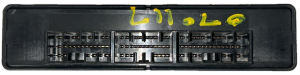
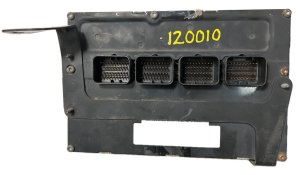
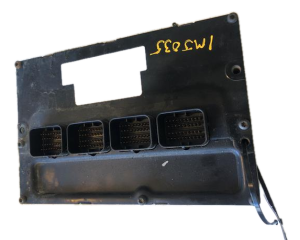
When a used part is the smart pick: A used PCM from a junkyard is a viable, cost-effective option ONLY if you can find a unit with the EXACT same OEM part number as your original. It is not a plug-and-play repair and will require programming.
Donor-vehicle mileage cap: roughly under 150000 miles for the part to have meaningful remaining life.
What to inspect on the donor part:
- Verify the part number on the used PCM's sticker matches your original PCM's sticker perfectly.
- Inspect the donor vehicle for signs of flood or fire damage.
- Examine the PCM connectors for corrosion, bent pins, or physical damage.
- Obtain the VIN of the donor vehicle if possible, as some programming services may ask for it.
OEM-only on this vehicle (don't cheap out):
- Powertrain Control Module (PCM): While aftermarket 'remanufactured' units are widely available, a used OEM unit is often more reliable than a poorly rebuilt aftermarket one, provided it is programmed correctly. Avoid generic 'fits all' modules.
Aftermarket brands forum-validated for this vehicle:
- Cardone (Remanufactured)
- Standard Motor Products (Remanufactured)
- Flagship One (FS1) (Remanufactured and Programming Services)
- SoloPCM (Remanufactured and Programming Services)
Brands owners have reported issues with on this vehicle:
- Unbranded, no-name sellers on marketplaces without a warranty or programming support. The complexity of the SKIM immobilizer system makes support essential.
Real Owner Stories
Aggregated from forums and TSBs cited above. Mileages and costs reflect what owners reported in those sources.
2006 Chrysler Sebring 2.7L
Symptoms: The check engine light was on, but the car seemed to run perfectly. Codes P1603, P1604, P0613, and P0700 were present.
What fixed it: The owner was advised that the PCM was the likely issue and was planning to order a replacement. The final resolution was not posted, but another user suggested finding a replacement PCM on eBay.
Source hint: Chrysler Forum - '06 Sebring 2.7 Codes P1603,P1604, P0613 - Chrysler Forum'
2006 Chrysler Sebring — 234779 miles
Symptoms: Codes P1604 and P0501 were present, diagnosed as an internal PCM failure.
What fixed it: The PCM was replaced under warranty by a dealership. The owner was informed that the module installed was the last one available in the United States.
Source hint: DeMark Auto Repair & Parts via RepairPal
Chrysler Sebring
Symptoms: The owner was troubleshooting a no-start condition and various other electrical issues that were triggering the P1604 code.
What fixed it: The problem was ultimately solved by cleaning and re-securing the G103 ground lug on the driver's side strut tower and another key ground on the passenger side.
Source hint: Chrysler Forum - *Chrysler Sebring / 200 Convertible Club* thread
Chrysler PT Cruiser
Symptoms: The vehicle would crank but not start and had a P1604 code, which was identified as a 'PCM Dual Port RAM Read/Write Integrity Failure'.
What fixed it: After thoroughly checking all power and ground connections to the PCM and confirming they were good, the owner replaced the PCM, which resolved the issue.
Source hint: YouTube - 'Why Won't Wilma Start??'
Related OBD-II Codes
Frequently Asked Questions
My 2004 Sebring has a P1604 code but seems to run perfectly fine. Is this possible?
Where are the most common ground wire problem spots on my Sebring that could cause a P1604?
My aftermarket remote start stopped working and now I have a P1604 code. Are these related?
If I need to replace the PCM in my Sebring, can I just install a used one from a junkyard?
Is there a Technical Service Bulletin (TSB) for the P1604 code on this Chrysler Sebring?
My transmission is stuck in one gear and I have a P1604 code. Could these issues be connected?
How can I be sure the PCM is actually bad before spending hundreds of dollars to replace it?
Helpful Videos
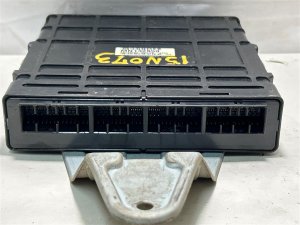
Used OEM Parts in Stock
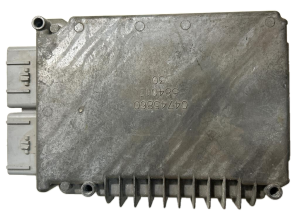
New Aftermarket Parts Available


The information in this article is provided for general reference and educational purposes only. Vehicle specifications, procedures, and part compatibility can vary by production date, trim level, and region. Always consult your vehicle's factory service manual and verify part numbers before purchasing or performing repairs. Safety-critical components such as airbags, seat belts, and braking systems should be installed by a qualified professional.
- Chrysler Sebring:
- 🧭 Diagnostic Flowchart
- 🎬 Helpful Videos
- 🛍️ Shop This Part
- What's Unique About the 2001-2006 Chrysler Sebring
- Symptoms You May Notice
- Most Likely Causes
- Rare But Worth Checking
- Diagnosis Steps
- Parts You'll Likely Need
- Related Codes That Often Appear With This One
- Technical Service Bulletins (TSBs) & Recalls
- Platform-Specific Known Issues
- Mechanic-Grade Diagnostic Values
- Scan Tool Commands That Help
- Wiring & Ground Locations
- Real Owner Repair Stories
- OEM Part Supersession History
- Model Year Variations Within This Range
- Used vs. New Parts: Buying Guide for This Vehicle
- Real Owner Stories
- 2006 Chrysler Sebring 2.7L
- 2006 Chrysler Sebring — 234779 miles
- Chrysler Sebring
- Chrysler PT Cruiser
- Related OBD-II Codes
- Frequently Asked Questions
- 🎟️ Get 5% Off