

P1604 on 2015-2019 Subaru Outback 2.5L: Startability Malfunction Causes and Fixes
On a 2015-2019 Subaru Outback, P1604 means the engine is struggling to start. The most common causes are a weak battery or a software issue requiring an ECM update from a dealer. Start by testing your battery; if it's healthy, investigate a potential fuel pump or sensor issue, but be aware of the official Subaru software fix detailed in TSB 11-193-19.
- P1604 means your Outback is struggling to start, but it doesn't name the broken part.
- Always check the battery first; it's the most common and easiest fix.
- Be aware of the official Subaru TSB (11-193-19) that fixes this code with a software update.
- P1604 often appears with other codes; use them as clues to find the real problem.
What's Unique About the 2015-2019 Subaru Outback
For the 5th generation Outback, this code is particularly notable because Subaru has issued Technical Service Bulletins (TSBs), specifically 11-193-19, to address it. This indicates a known pattern of this code appearing due to issues that can be resolved with an ECM software update. While many vehicles can log a P1604 for generic reasons like a weak battery, on this specific Outback, a software glitch in the ECM's diagnostic logic is a documented and probable cause that a dealer can address by reprogramming the module. The TSB explicitly states the update addresses extended cranking and a P1604 that may be stored without illuminating the Check Engine Light.
Symptoms You May Notice
- Engine cranks for a long time before starting.
- Engine starts and then immediately stalls.
- No-start condition (engine cranks but does not fire up).
- Check Engine Light may or may not be illuminated (the TSB notes it can be stored in memory without a light).
- Intermittent starting problems; may start fine several times then fail.
- Replacing the starter motor when the battery is the actual cause.
- Replacing fuel injectors when the fuel pump or filter is the problem.
- Assuming the car has no codes because the Check Engine Light is off, when P1604 can be stored without illuminating the light.
Most Likely Causes
- Weak or Failing Battery 🔴 High Probability → Shop Vehicle Battery Modern Outbacks have significant electrical demands and are known for batteries that fail prematurely. A battery that can't maintain sufficient voltage (above ~10.0V) during cranking is a primary cause of starting issues and can trigger P1604.
How to confirm: Test the battery with a multimeter; it should read ~12.6V when off. During cranking, the voltage should not drop below 10.0V. A professional load test is the most definitive confirmation. Forum users on subaruoutback.org frequently discuss premature battery failure as a root cause for various electrical gremlins. NHTSA ODI #11403236 describes a situation where a battery drained over a short period, resulting in a P1604 Startability Malfunction alongside low voltage codes for the radar and ABS systems.
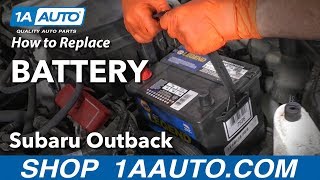
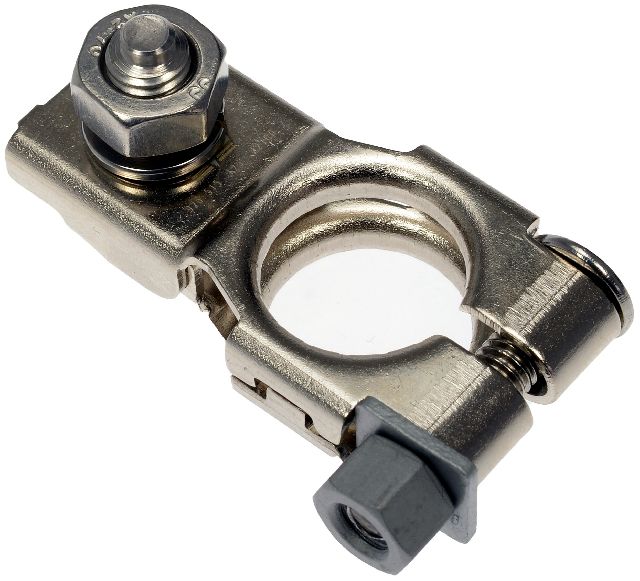
Typical fix: Replace the battery. Ensure terminals are clean and tight. 🎬 Watch: How to replace the battery on your Outback.
Est. part cost: $150-$300 - Outdated ECM Software 🟡 Medium Probability Subaru has released TSB 11-193-19 specifically to address P1604 and extended cranking via a software update. This suggests the original logic was too sensitive or had a flaw that misinterprets a borderline start as a failure. Similarly, TSB Bulletin #11-192-19 for other Subaru models notes that new ECM files address isolated concerns of extended cranking and P1604 stored without a Check Engine light.
How to confirm: A Subaru dealer or a well-equipped independent shop can check your vehicle's VIN against TSB 11-193-19 to see if the update is applicable. The TSB was part of the October 2019 software update.
Typical fix: Reprogram (reflash) the Engine Control Module with the updated software file. This must be done with Subaru-specific diagnostic tools.
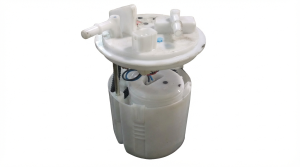
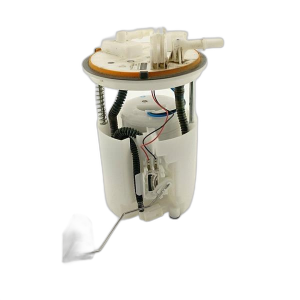
Est. part cost: $100-$250 (Labor cost at a dealership) - Failing Fuel Pump or Clogged Filter 🟡 Medium Probability → Shop Fuel Pump The fuel pump must provide adequate pressure for the engine to start quickly. A weak pump or clogged in-tank filter can't build pressure fast enough, leading to a long crank that triggers P1604. A 2019 WRX owner with P1604 noted a high fuel pump duty cycle, pointing to a struggling pump.
How to confirm: Listen for a faint 2-second hum from the rear seat area when the key is turned to 'ON'. The definitive test is to connect a fuel pressure gauge to the fuel system and verify the pressure meets manufacturer specifications (typically 40-60 PSI) during crank and run.
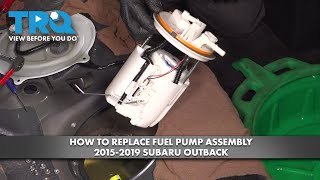
Typical fix: Replace the fuel pump assembly. The fuel filter is integrated into the pump assembly on this model. 🎬 See this walkthrough for replacing the fuel pump assembly.
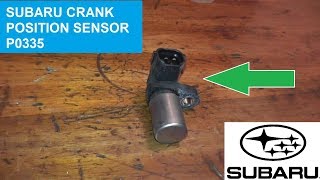
Est. part cost: $300-$600 - Faulty Crankshaft Position Sensor ⚪ Low Probability → Shop Engine Crankshaft Position Sensor The ECM needs a signal from the crankshaft sensor to know the engine is rotating. If this sensor fails or provides an erratic signal, the ECM won't trigger spark or fuel injection correctly, causing a crank-no-start condition.
How to confirm: Scan for other codes (a bad sensor often throws its own code). A diagnostic scanner can be used to check for an RPM signal during cranking. If RPM is 0 while the engine is turning, the sensor is a likely culprit. Resistance should be approximately 2.0 kOhms.
Typical fix: Replace the crankshaft position sensor. The OEM part number is often 22053AA053.
Est. part cost: $50-$150
Rare But Worth Checking
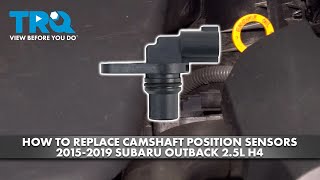
- Faulty Camshaft Position Sensor: While less common than the crankshaft sensor, a failing camshaft sensor can also cause starting issues on the FB25 engine. The OEM part number is often 22056AA270.
- Rodent Damage to Wiring: A crank-no-start can be caused by chewed wires, particularly to critical components like the crankshaft position sensor or fuel pump wiring.
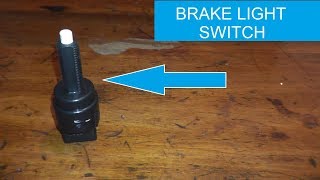
- Faulty Brake Light Switch: → Shop Brake Light Switch On models with push-button start, a failing brake light switch can prevent the car from recognizing that the brake pedal is depressed, thus inhibiting starting and sometimes causing a cascade of warning lights. This is a known issue on many Subaru models of this era and was subject to a major recall. 🎬 Watch: How to test and replace the brake light switch.
Diagnosis Steps
- Scan for Codes: Use an OBD-II scanner to confirm P1604 and, more importantly, check for any other codes. Address other, more specific codes first, as P1604 is often a secondary code.
- Check the Battery: Visually inspect terminals for corrosion. Use a multimeter to check for a static voltage of at least 12.4V. Critically, watch the voltage while an assistant cranks the engine; it should not drop below 10.0V. A drop below this indicates a weak battery that needs replacement.
- Check for TSBs: Call a Subaru dealer with your VIN and ask if TSB 11-193-19 is open for your vehicle. This is a crucial step for this specific platform.
- Listen for the Fuel Pump: Turn the key to the 'ON' position (without starting) and listen for a 2-second hum from the rear seat area. No hum may indicate a bad pump, relay, or wiring issue.
- Inspect Brake Light Switch (Push-Start Models): Have an assistant stand behind the car. Press the brake pedal and confirm the brake lights illuminate. If they don't, or flicker, the brake light switch is a likely culprit for a no-start condition.
- Advanced Diagnostics: If the problem persists, professional diagnosis may be needed to test fuel pressure with a gauge and check the live data stream from the crankshaft and camshaft position sensors for a valid RPM signal during cranking.
Parts You'll Likely Need
- Battery — A weak battery is the most frequent cause of starting problems and is the easiest component to test and replace. These vehicles are sensitive to low cranking voltage.
Trusted brands: Interstate, DieHard, Deka
OEM price range: $200-$350
Aftermarket price range: $150-$300 - Fuel Pump Assembly
(OEM #42022AL02A (example, verify with VIN))— A failing fuel pump is a common cause of long-crank conditions that trigger P1604.
Trusted brands: Denso, Hitachi
OEM price range: $500-$700
Aftermarket price range: $250-$450 - Crankshaft Position Sensor
(OEM #22053AA053)— A no-RPM signal from this sensor will cause a crank-no-start condition, directly leading to a P1604.
Trusted brands: Bosch, Denso, Duralast
OEM price range: $70-$120
Aftermarket price range: $40-$80
Related Codes That Often Appear With This One
- P1603 — P1603 is often defined as 'Engine Stall Malfunction'. Since P1604 can be set by a start-and-stall event, these two codes frequently appear together, as seen in a 2015 Legacy with the same issue.
- P030x (e.g., P0302) — A misfire code (P0300-P0304) might accompany P1604 if the starting issue is related to a problem in the ignition system, like a bad spark plug or coil on a specific cylinder. NHTSA ODI #11627701 notes a case where P1604 was found alongside a P0304 cylinder 4 misfire during a no-start diagnosis.
- P2610 — This code for 'ECM/PCM Engine Off Timer Performance' is also addressed in Subaru TSBs related to ECM logic and has been known to appear alongside other starting-related issues.
Technical Service Bulletins (TSBs) & Recalls
- 11-193-19: 'Extended Cranking and DTC P1604- Reprogramming File Availability' - Published October 2019, this TSB announces a software update to fix this specific issue, noting that the code may be stored without an active Check Engine Light.
- TSB Bulletin #11-192-19: This bulletin notes that new ECM files address isolated concerns of an extended cranking (hard starting) condition and a DTC P1604 which may be stored in the ECM memory without illuminating the Check Engine light.
Platform-Specific Known Issues
- Subaru has acknowledged a condition of extended cranking and P1604 that can be fixed with an ECM software update, as detailed in TSB 11-193-19. This should be a primary consideration after verifying battery health.
- Owners on forums like subaruoutback.org report a higher-than-average rate of battery failure, sometimes within 2-3 years, which can be the underlying cause of this code.
Mechanic-Grade Diagnostic Values
- Crankshaft Position Sensor Resistance — expected: ~2.0 kOhms. Failure: No reading (open circuit) or a reading that is significantly different.
- Battery Voltage During Cranking — expected: Should remain above 10.0V. Failure: A drop below 10.0V indicates a weak battery that cannot supply sufficient power for the ECM and other modules to operate correctly during startup.
- Fuel Pressure — expected: Approximately 43.5 PSI (3 bar) base pressure.. Failure: Significantly lower pressure during cranking indicates a weak fuel pump or clogged filter, leading to a long-crank condition.
Scan Tool Commands That Help
- Subaru Select Monitor (SSM) or equivalent J2534 tool: FlashWrite Reprogramming — This function is required to apply the software update detailed in TSB 11-193-19. It reprograms the ECM with new logic to correct overly sensitive 'startability' monitoring. A stable power supply (13.5V) must be connected to the vehicle during this procedure.
- Subaru Select Monitor (SSM): Current Data Display & Save — To diagnose the root cause of P1604, a technician can monitor live data PIDs like 'Engine Speed', 'Fuel Pump Duty Cycle', and 'Battery Voltage' during cranking to see which parameter is out of spec.
Wiring & Ground Locations
- Main ECU/Engine Grounds — On the top of the intake manifold, there are several ground wires attached with 12mm bolts. These are the primary grounds for the ECU.. Poor ECU grounding can cause a host of intermittent electrical issues, including no-start or long-crank conditions that trigger P1604. Corrosion on these points is common and they should be removed, cleaned, and re-secured.
- Chassis to Engine Block Ground Straps — Braided ground straps are typically located on both the driver and passenger sides, connecting the engine block/exhaust manifold area to the vehicle's frame rails.. These main straps carry the high current required by the starter motor. If they are corroded or broken, the starter may crank slowly or erratically, and the voltage available to the ECU can drop, leading to a P1604 code.
- Battery to Chassis Ground — The main negative battery cable connects directly to the chassis, typically on the strut tower or inner fender.. This is the foundational ground point for the entire electrical system. Any corrosion or looseness here will affect every component, including the starting and engine management systems.
Real Owner Repair Stories
- Reddit user in r/subaru (Subaru Outback, Gen 4 (similar architecture)) — P1604 code appeared and would return immediately after clearing, but the car had absolutely no starting or running issues.
❌ Tried (didn't work) Clearing the code with a scanner.
✅ What actually fixed it The user was advised to clean all battery terminals and main engine/chassis ground points. The implication is that a borderline ground connection was causing a logic fault in the ECM's start-monitoring, even without a perceptible starting problem. - NHTSA ODI #11627701 — An owner reported a no-start condition where the dealership diagnosed a P1604 Startability Malfunction and a P0304 Cylinder 4 misfire. While fuel pressure was within spec, the vehicle required towing for professional diagnosis.
Model Year Variations Within This Range
- 2018-2019: Later models in this generation (2018+) may feature the updated FB25D engine with direct injection. While the fundamental causes of P1604 remain the same, the fuel system is different, featuring a high-pressure fuel pump in addition to the in-tank pump.
- 2015-2019: Subaru issued TSB 11-193-19 in October 2019 to provide a software update for the ECM to fix erroneous P1604 codes. Vehicles manufactured after this date or that have had the update applied are less likely to have the code appear due to a software logic issue.
Diagnostic Flowchart
Used vs. New Parts: Buying Guide for This Vehicle
When a used part is the smart pick: For this repair, used parts are generally not recommended for the key components. The primary fixes are often a new battery or a software update. If a sensor is confirmed bad, a used OEM sensor from a low-mileage, accident-damaged vehicle can be a cost-effective alternative to a new aftermarket part.
Donor-vehicle mileage cap: roughly under 60000 miles for the part to have meaningful remaining life.
What to inspect on the donor part:
- For sensors, ensure the connector is not damaged and the housing has no cracks.
- Verify the donor vehicle's mileage if possible.
- Avoid parts from vehicles that show signs of flood damage or heavy corrosion.
OEM-only on this vehicle (don't cheap out):
- ECM Reprogramming: This is a software fix that must be performed by a dealer or a qualified independent shop with Subaru-specific tools.
- Crankshaft/Camshaft Position Sensors: While aftermarket options exist, many forum and professional sources report that non-OEM sensors can have incorrect resistance or signal outputs, leading to persistent or new codes. Sticking with genuine Subaru (or the original supplier, like Denso) is highly advised.
Aftermarket brands forum-validated for this vehicle:
- Battery: Interstate, Deka, DieHard, most major AGM battery brands.
- Fuel Pump: Denso, Hitachi (often the OEM supplier).
Brands owners have reported issues with on this vehicle:
- Generic, unbranded crankshaft or camshaft position sensors from online marketplaces are frequently cited as problematic.
Real Owner Stories
Aggregated from forums and TSBs cited above. Mileages and costs reflect what owners reported in those sources.
2015 Subaru Outback — 171000 miles
Symptoms: The car would crank and start, but then instantly die. Revving the engine during startup was the only way to keep it running. The problem was intermittent.
What fixed it: No solution was reported in the thread.
Source hint: Reddit r/MechanicAdvice
2016 Subaru Outback 2.5i
Symptoms: Experienced a no-start condition where the engine would only make a single click when turning the key. The issue was intermittent and temporarily resolved by disconnecting the battery. Codes P0335, P0345, and P0340 were also present.
What fixed it: No definitive fix was reported; the owner was investigating the crankshaft sensor as a possible cause.
Source hint: Reddit r/MechanicAdvice
NHTSA ODI #11403236
Symptoms: The owner reported that the battery appeared to drain over a relatively short period of time. This resulted in a P1604 Startability Malfunction, along with low voltage codes for the back and side radar (B2320) and antilock brakes (C1413).
What fixed it: The report highlights battery drainage as the root cause for the cascade of electrical malfunctions.
Related OBD-II Codes
Frequently Asked Questions
Is there a recall or software update for the P1604 code on my 2017 Outback?
My Outback's battery is only two years old. Could it really be the cause of P1604?
I scanned my car and found P1604, but the Check Engine Light isn't on. Is this normal?
How much does the TSB 11-193-19 software update typically cost?
I want to replace the fuel filter to fix my Outback's long cranking. Where is it located?
My push-start Outback won't start and has a P1604. Could it be the brake light switch?
Helpful Videos

Used OEM Parts in Stock
New Aftermarket Parts Available




The information in this article is provided for general reference and educational purposes only. Vehicle specifications, procedures, and part compatibility can vary by production date, trim level, and region. Always consult your vehicle's factory service manual and verify part numbers before purchasing or performing repairs. Safety-critical components such as airbags, seat belts, and braking systems should be installed by a qualified professional.
- Subaru Outback:
- 🧭 Diagnostic Flowchart
- 🎬 Helpful Videos
- 🛍️ Shop This Part
- What's Unique About the 2015-2019 Subaru Outback
- Symptoms You May Notice
- Most Likely Causes
- Rare But Worth Checking
- Diagnosis Steps
- Parts You'll Likely Need
- Related Codes That Often Appear With This One
- Technical Service Bulletins (TSBs) & Recalls
- Platform-Specific Known Issues
- Mechanic-Grade Diagnostic Values
- Scan Tool Commands That Help
- Wiring & Ground Locations
- Real Owner Repair Stories
- Model Year Variations Within This Range
- Used vs. New Parts: Buying Guide for This Vehicle
- Real Owner Stories
- 2015 Subaru Outback — 171000 miles
- 2016 Subaru Outback 2.5i
- NHTSA ODI #11403236
- Related OBD-II Codes
- Frequently Asked Questions
- 🎟️ Get 5% Off