

P1614 on 1997-2006 BMW 3 Series: Meaning is Uncertain, Likely Immobilizer or Throttle System Fault
The definition of code P1614 for a BMW 3 Series is not well-documented and is highly uncertain. Online sources show conflicting information, pointing to either an immobilizer/key recognition issue (EWS) or a problem with the electronic throttle system (MDK/DK). This ambiguity exists because it is a manufacturer-specific code not found in many public BMW fault lists. Professional diagnosis with a BMW-specific scan tool (like INPA or ISTA) is required to determine the actual fault.
- The definition of P1614 for a 1997-2006 BMW 3 Series is uncertain. Do not trust generic code definitions.
- The fault is almost certainly related to the anti-theft/immobilizer system (EWS) OR the electronic throttle body.
- Diagnosis MUST begin with a BMW-specific scan tool to read the proprietary fault description.
- Do not purchase any parts until you have confirmed the true nature of the fault using an advanced scan tool.
- Trying a spare key is a simple, no-cost first step if you suspect an immobilizer problem.
What's Unique About the 1997-2006 BMW 3 Series
The primary issue is that P1614 is a manufacturer-specific code, and BMW's official definition is not widely published. Unlike more common OBD-II codes, this one does not appear in many BMW-specific fault code lists for the E36 and E46 generations. This rarity and lack of documentation mean that generic code readers may display a misleading or incorrect definition. A BMW-specific diagnostic tool is essential to read the proprietary fault description stored in the car's Digital Motor Electronics (DME) module, which will point to the correct system (EWS or throttle control).
Generation note: This range covers the end of the E36 generation (approx. 1997-1999) and the entire E46 generation (approx. 1998-2006). Both generations use an EWS immobilizer system and, on later models, an electronic throttle body, making them susceptible to the underlying issues this ambiguous code represents. The lack of a clear definition for P1614 applies to both generations.
Symptoms You May Notice
- Engine will not start (most likely if it is an immobilizer issue)
- Engine cranks but does not fire
- Security or key light illuminated on the dashboard
- Reduced engine power or 'limp mode' (most likely if it is a throttle body issue)
- Poor, uneven, or no acceleration
- Rough or erratic idle
- Engine stalling
- Replacing the battery without confirming it's the cause.
- Replacing the starter when the immobilizer is preventing the engine from firing.
- Replacing the fuel pump when the immobilizer has disabled it.
- Cleaning the throttle body when the issue is actually a faulty key transponder.
Most Likely Causes
- UNVERIFIED: Defective Key Transponder 🟡 Medium Probability The transponder chip in the key (PCF7935 ID44 for EWS systems) can fail, lose its programming, or the key's battery can die, preventing the EWS system from authorizing engine start. This is a common immobilizer fault on many makes and models.
How to confirm: Try starting the car with a spare key. If the spare key works, the original key's transponder chip is likely faulty.
Typical fix: Replace and program a new key via a dealership or qualified locksmith.
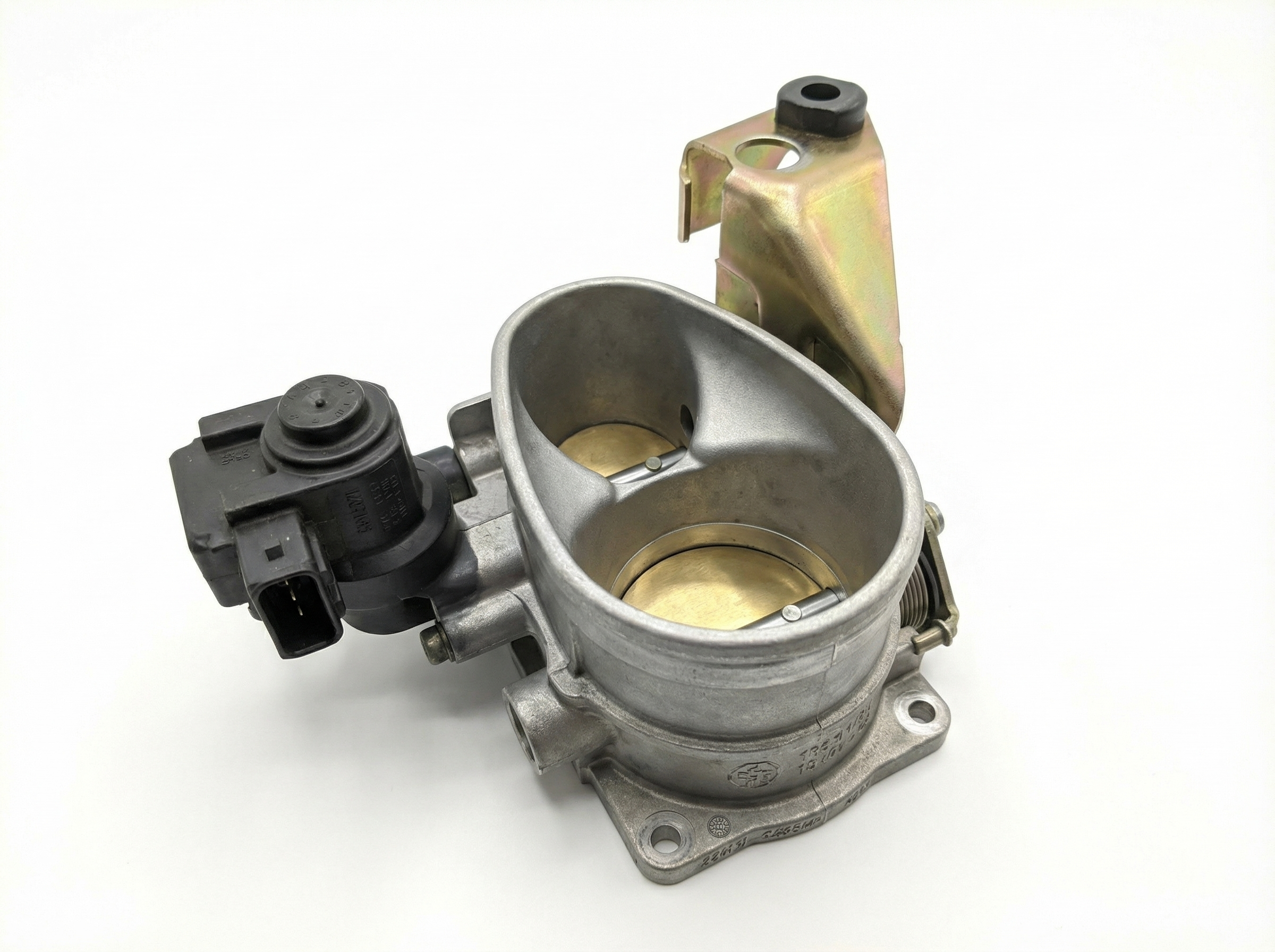
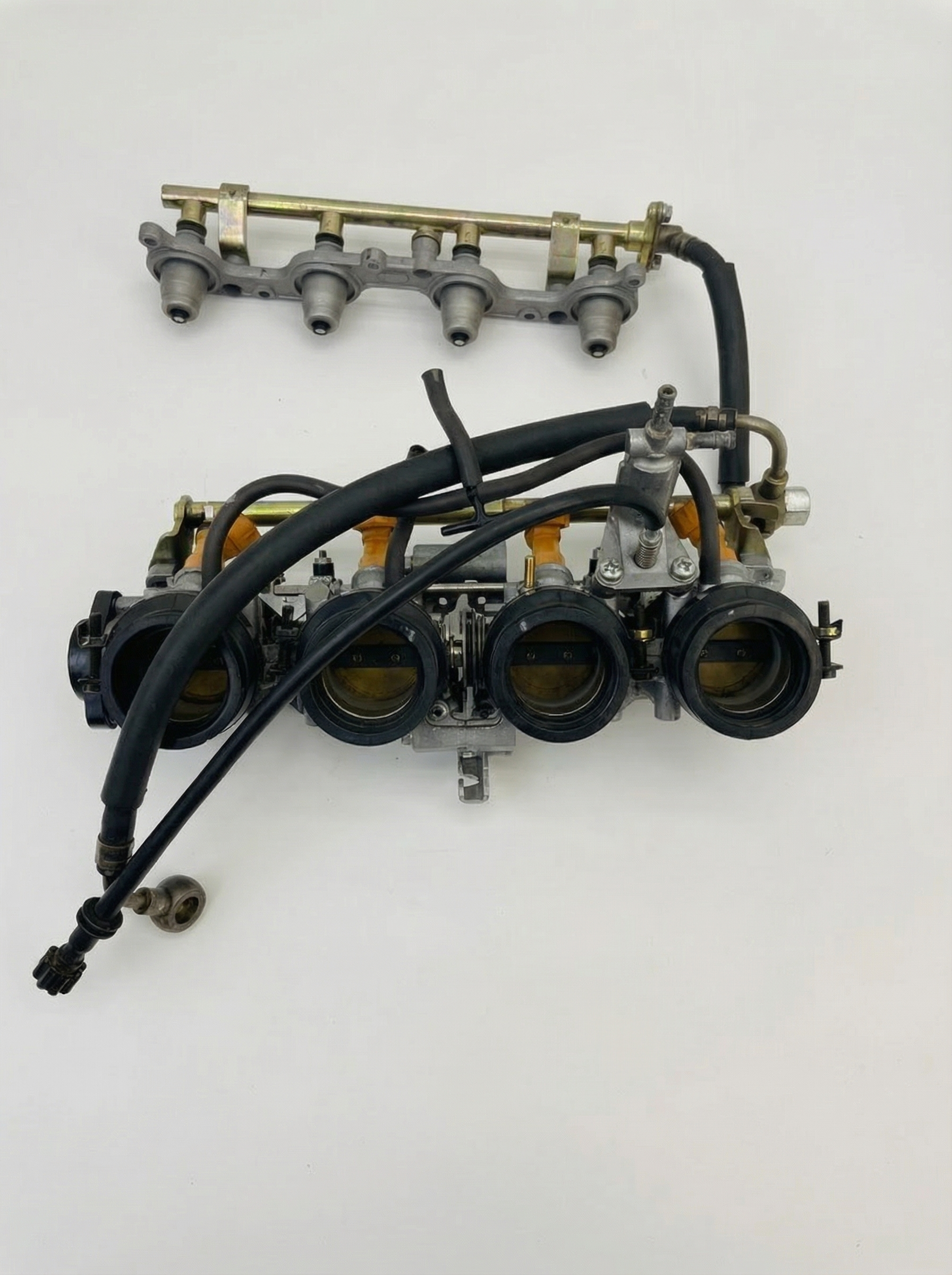
Est. part cost: $150-$400 - UNVERIFIED: Electronic Throttle Body Malfunction 🟡 Medium Probability → Shop Fuel Injection Throttle Body The electronic throttle body (MDK) or its position sensors can fail, leading to incorrect airflow and triggering a fault in the DME. Symptoms include poor acceleration, rough idle, and limp mode.
How to confirm: A BMW-specific scan tool is needed to monitor throttle position sensor data and check for other throttle-related fault codes. Visual inspection for carbon buildup may also be useful.
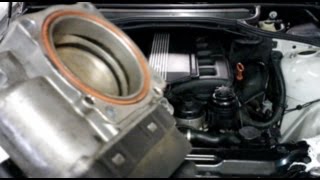
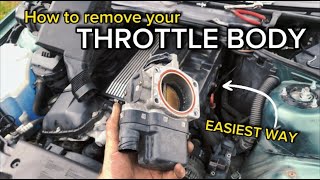
Typical fix: Clean or replace the throttle body assembly. 🎬 Watch: Step-by-step E46 throttle body removal guide
Est. part cost: $200-$500 - UNVERIFIED: Faulty Immobilizer (EWS) Antenna Ring ⚪ Low Probability → Shop Antenna The antenna ring around the ignition switch reads the key chip. Failure is a known issue on some European vehicles, preventing the key signal from reaching the EWS module. This part is relatively inexpensive but crucial for the system to function.
How to confirm: Requires advanced diagnostics to check the signal from the antenna ring. A simple check is to observe if the no-start condition is intermittent and can be affected by wiggling the key.
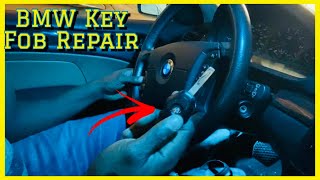
Typical fix: Replace the EWS antenna ring. The OEM part number is typically 61356964556. 🎬 See how a bad key and antenna ring cause a no-crank
Est. part cost: $15-$50
Rare But Worth Checking
- EWS and DME Misalignment:
Diagnosis Steps
- CRITICAL FIRST STEP: Scan the vehicle with a high-quality, BMW-specific diagnostic tool (e.g., ISTA, INPA, or a professional-grade scanner). Do not rely on a generic OBD-II reader.
- Record the exact fault code description provided by the BMW-specific software. This will clarify if the issue is with the immobilizer (EWS), throttle body (DK/MDK), or another system.
- If the fault is immobilizer-related, try starting the vehicle with all available spare keys. A working spare key strongly indicates a problem with the primary key.
- If spare keys also fail, use the diagnostic software to check the EWS-DME alignment. If they are out of sync, perform the re-alignment procedure.
- If the fault is throttle-related, inspect the throttle body wiring and connector for damage. Use the scan tool to monitor live data from the throttle position sensors while pressing the accelerator pedal. The readings should be smooth and correspond to pedal movement.
- Based on the confirmed fault, proceed with targeted diagnostics for that specific system (e.g., testing the EWS antenna ring signal or cleaning/replacing the throttle body).
Parts You'll Likely Need
- EWS Antenna Ring
- Electronic Throttle Body Assembly
- Replacement Key with Transponder
Mechanic-Grade Diagnostic Values
- Voltage at EWS3 module connector, Pin 2 — expected: +12V when the key is in the crank position. Failure: No voltage indicates a problem with the ignition switch or wiring, not the EWS module itself.
- Voltage at EWS3 module connector, Pin 10 — expected: Constant +12V (ignition on or off). Failure: No voltage indicates a blown fuse (e.g., F67 on E46) or wiring issue supplying power to the module.
- Continuity at EWS3 module connector, Pin 9 — expected: Good continuity to chassis ground. Failure: High resistance or an open circuit indicates a bad ground connection for the EWS module.
Hidden / Shadow Codes Worth Checking
- DME-EWS 3.3 interface: This is not a P-code but a descriptive fault seen in BMW-specific software like INPA. It directly indicates a loss of synchronization or communication between the Engine Control Module (DME) and the EWS immobilizer module. (see via BMW-specific diagnostic software such as INPA or ISTA.)
Scan Tool Commands That Help
- INPA: EWS-DME Alignment (Reset Start Value) 🎬 Watch: How to diagnose EWS issues using INPA — This function is used to re-synchronize the rolling code between the EWS and DME after a battery disconnect, or if modules have lost their pairing. It is a critical step before replacing either module.
- INPA: EWS Status Check — Before attempting an alignment, use this function to read the live status of the EWS module. It can show if keys are recognized and enabled, and if the DME communication line is active. This helps differentiate a bad key from a module communication fault.
Wiring & Ground Locations
- Main Engine Ground Strap — On the passenger side of the engine, connecting the engine block/engine mount area to the chassis frame rail.. A corroded or loose main engine ground can cause a host of electrical issues, including no-start conditions and communication errors between modules like the DME and EWS. This is a common failure point on older E46s.
- Chassis Ground Pack (Passenger Side) — Under the passenger side front carpet, near the door sill. A stud with multiple brown ground wires is located here.. This is a central grounding point for various interior electronics. Water ingress from a clogged sunroof drain or bad door seal can cause corrosion here, leading to intermittent electrical faults.
- Chassis Ground Pack (Driver Side) — Under the driver's side front carpet, in a similar position to the passenger side.. Provides grounding for driver-side electronics. Corrosion here can cause unpredictable behavior in modules located in this area.
- EWS Module Connector — Located high up in the driver's side footwell, above the pedals, often attached near the steering column.. This is the central connection point for the immobilizer system. Probing specific pins here is necessary for advanced diagnostics, such as checking for power, ground, and communication signals from the key antenna and DME.
OEM Part Supersession History
61356965426→61356965427— Part number revision for the EWS2 Antenna Ring, though the part listed for E46 models is typically 61356964556.
Heads up: It is critical to distinguish between the EWS2 antenna ring (used on early E36s) and the EWS3 ring (used on E46). While they look similar, their electronic properties may differ. Always verify the part number with the vehicle's VIN.
Model Year Variations Within This Range
- 1997-1999 (E36): These later E36 models used the EWS2 system. The diagnostic and key systems are slightly different from the EWS3 system found in the subsequent E46 generation.
- 1999-2006 (E46): The E46 platform primarily uses the EWS3 system. The key transponder chip is a PCF7935 (ID44).
- 2001-2006 (E46 Facelift): Sedans and Tourings were facelifted for the 2002 model year (starting production in late 2001), while Coupes and Convertibles were facelifted for the 2004 model year. These changes were mostly cosmetic but included updates to lighting and interior electronics modules. While the core EWS3 system remained, software in related modules may have been updated, affecting diagnostics.
Diagnostic Flowchart
Other Known Issues on This Vehicle
Issues unrelated to this code that are worth knowing about as an owner of this generation:
- Cooling System Failure 🔴 High — Very common, often occurs between 60,000 and 100,000 miles. Key failure points are the plastic expansion tank, radiator necks, water pump, and thermostat housing.
- Rear Subframe Mounting Point Cracks 🔴 High — A well-documented chassis flaw where the rear subframe mounting points on the chassis floor can crack and tear, especially on higher-power models and cars driven hard. Preventative reinforcement plates are a common modification. (Ref: BMW issued a recall and repair procedure for affected vehicles, but many cars on the road may not have been fixed.)
- VANOS Seal Failure 🟠 Medium — The original Buna-N rubber seals in the variable valve timing (VANOS) unit degrade over time (typically 50,000+ miles), causing loss of low-end torque, rough idle, and poor fuel economy. Upgraded Viton seal kits are a common and permanent fix.
- Window Regulator Failure 🟡 Low — Extremely common. The plastic clips and cables in the window regulators fail, causing the window to drop into the door, become stuck, or make clicking noises. Affects both front and rear windows.
- M54 Engine Oil Consumption 🟠 Medium — The M54 engine (found in 325i, 330i models from ~2001-2006) is known for higher-than-average oil consumption, often attributed to a poorly designed crankcase ventilation (CCV) system and piston rings that can get stuck.
- Oil Leaks (Oil Filter Housing Gasket, Valve Cover Gasket) 🟠 Medium — Gaskets for the oil filter housing and valve cover become hard and brittle with age and heat cycles, leading to significant oil leaks. These are considered routine maintenance items on high-mileage E46s.
Used vs. New Parts: Buying Guide for This Vehicle
When a used part is the smart pick: A used EWS Antenna Ring is generally a safe and cost-effective repair. A used throttle body can also be a viable option, provided it comes from a reputable seller with a warranty and is confirmed to be the correct part number for the vehicle's engine and year.
Donor-vehicle mileage cap: roughly under 120000 miles for the part to have meaningful remaining life.
What to inspect on the donor part:
- For throttle bodies, check for excessive carbon buildup or scoring on the throttle plate.
- Ensure all electrical connectors are free of corrosion or damage.
- Verify the part number on the used component matches the original exactly.
OEM-only on this vehicle (don't cheap out):
- Replacement Key
- EWS Module
Aftermarket brands forum-validated for this vehicle:
- Bosch (for throttle body)
Brands owners have reported issues with on this vehicle:
- Unbranded, no-name electronic components from online marketplaces should be avoided, as they often have high failure rates and can cause further diagnostic confusion.
Related OBD-II Codes
Frequently Asked Questions
Is there a recall for the chassis issues on my 1997-2006 BMW 3 Series?
My 3 Series won't start and the security light is on. Could it be the key?
Can I use a used EWS antenna ring to fix a P1614 code?
Why is my M54-equipped 325i/330i consuming so much oil?
I'm in limp mode with poor acceleration; could this be the throttle body?
What specific tool should I use to diagnose P1614 on my BMW?
Are there any aftermarket brands recommended for the throttle body?
Helpful Videos

We Have This Part in Stock

The information in this article is provided for general reference and educational purposes only. Vehicle specifications, procedures, and part compatibility can vary by production date, trim level, and region. Always consult your vehicle's factory service manual and verify part numbers before purchasing or performing repairs. Safety-critical components such as airbags, seat belts, and braking systems should be installed by a qualified professional.
- BMW 3 Series:
- 🧭 Diagnostic Flowchart
- 🎬 Helpful Videos
- 🛍️ Shop This Part
- What's Unique About the 1997-2006 BMW 3 Series
- Symptoms You May Notice
- Most Likely Causes
- Rare But Worth Checking
- Diagnosis Steps
- Parts You'll Likely Need
- Mechanic-Grade Diagnostic Values
- Hidden / Shadow Codes Worth Checking
- Scan Tool Commands That Help
- Wiring & Ground Locations
- OEM Part Supersession History
- Model Year Variations Within This Range
- Other Known Issues on This Vehicle
- Used vs. New Parts: Buying Guide for This Vehicle
- Related OBD-II Codes
- Frequently Asked Questions
- 🎟️ Get 5% Off