

P1614 on 2007-2012 Hyundai Santa Fe: Throttle Problem or Immobilizer Failure?
P1614 on a 2007-2012 Santa Fe has two common meanings that depend on your symptoms. If the car runs but has no power (limp mode), it's likely a failing electronic throttle body (~$150-$300 part). If the car won't start, it's an immobilizer issue, and the first step is to try your spare key or replace the key fob battery.
- P1614 on a 2007-2012 Santa Fe has two different meanings. Your symptoms are the key to diagnosis.
- If the car runs but has no power (limp mode), the problem is almost certainly the Electronic Throttle Body.
- If the car cranks but won't start, the problem is the anti-theft immobilizer. Try your spare key first.
- Do not replace parts without first matching your symptoms to the correct diagnostic path.
- Replacing the throttle body is a common, DIY-friendly repair for the limp-mode variant of this code.
What's Unique About the 2007-2012 Hyundai Santa Fe
The 2007-2012 Santa Fe (CM generation) is in a transitional period for Hyundai's use of the P1614 code. On many older Hyundai models, this code frequently pointed to the Electronic Throttle System (ETS). On newer models, like the 2013+ Santa Fe, it almost exclusively refers to the immobilizer anti-theft system. Because your vehicle falls in the middle of this change, you must rely on the symptoms to determine the cause. A car that runs poorly is an ETS issue, while a car that won't start is an immobilizer issue. This dual-meaning is a known point of confusion for Hyundai and Kia vehicles of this era.
Symptoms You May Notice
- Check Engine Light is on
- Vehicle enters 'limp home mode' with severely reduced engine power and acceleration
- Engine will not rev past a certain RPM (e.g., 2000 RPM)
- Engine stalls, especially at low speeds or when stopping
- OR: Engine cranks but will not start
- OR: Engine does not crank, and a key symbol or security light is flashing on the dashboard.
- Replacing the accelerator pedal position (APP) sensor when the issue is the throttle body itself.
- Replacing the ECM when the problem is a faulty key or simple wiring issue.
- Assuming it's an immobilizer problem when the car is in limp mode (and vice-versa).
- Replacing the brake light switch. While a faulty brake light switch can cause acceleration issues on some Hyundais, it typically does not set a P1614 code.
Most Likely Causes
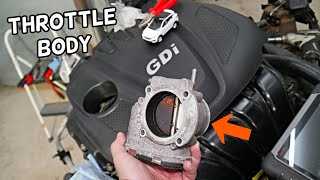
- Failing Electronic Throttle Body (ETB) 🔴 High Probability → Shop Fuel Injection Throttle Body The electronic components and motor within the throttle body assembly are a known failure point on various Hyundai/Kia models of this era using the 3.3L/3.8L V6 engines, leading to communication and performance issues.
How to confirm: This is the likely cause if the vehicle starts and runs but enters limp mode with no power. Often seen with codes like P2106 or P1295. Diagnosis involves checking for a smooth response from the throttle plate and verifying power/ground at the ETB connector. A simple key-cycle reset may temporarily clear the limp mode.
Typical fix: Replace the entire electronic throttle body assembly. A relearn procedure (often as simple as an idle cycle) is required after installation.
Est. part cost: $150-$350 - Faulty Ignition Key or Key Fob Battery 🟡 Medium Probability → Shop Ignition Switch This is a common issue on any vehicle with a transponder-based immobilizer system. The key's internal chip can be damaged or the fob battery can die, preventing communication.
How to confirm: This is the likely cause if the vehicle cranks but does not start, or won't crank at all. The first step is to try the spare key. If the spare key works, the original key is faulty. Replacing the key fob battery is another simple first step.
Typical fix: Replace the key fob battery or use the spare key. If both keys fail, a new key may need to be purchased and programmed by a dealer or automotive locksmith.
Est. part cost: $5-$15 for a battery, $150-$400 for a new programmed key - Damaged Wiring or Connectors ⚪ Low Probability
How to confirm: Visually inspect the wiring harness and connector at the electronic throttle body for any signs of damage, corrosion, or loose pins. Also, inspect the wiring around the ignition switch and immobilizer antenna coil for similar issues.
Typical fix: Repair or replace the damaged section of the wiring harness or the connector itself.
Est. part cost: $20-$100
Rare But Worth Checking
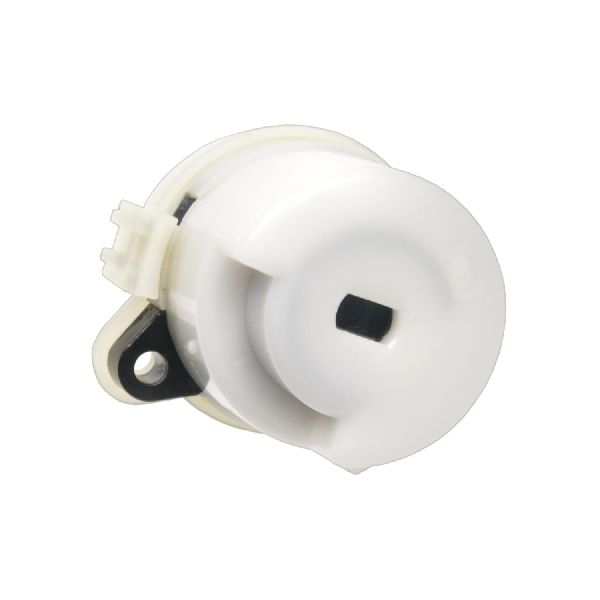
- Faulty Immobilizer Antenna Coil: → Shop Antenna The coil around the ignition cylinder reads the key's transponder chip. If it fails, it cannot receive the signal, even from a good key. This would cause a persistent no-start condition and is a known, though less common, failure point. 🎬 See how to diagnose and fix this immobilizer no-start issue
- Engine Control Module (ECM) Fault: While rare, an internal failure of the ECM can cause communication errors with either the throttle body or the immobilizer system, triggering the P1614 code.
Diagnosis Steps
- Identify the Primary Symptom: Is the car in 'limp mode' (runs but no power) OR is it a 'no-start' condition? This is the most important step.
- IF LIMP MODE:
- Scan for other codes like P2106, P1295, or P1193 which confirm an ETS issue.
- Attempt a simple reset: Turn the vehicle completely off, remove the key, wait 5-10 minutes, and restart. If this temporarily resolves the issue, it strongly points to an electronic glitch, often in the throttle body.
- Inspect the wiring and connector at the Electronic Throttle Body for damage or corrosion.
- With the help of a scan tool that can read live data, monitor the throttle position sensor readings while an assistant presses the gas pedal. Look for erratic or non-responsive data.
- If wiring is good and data is erratic, the Electronic Throttle Body is the most likely cause of failure.
- IF NO-START:
- Observe the dashboard. Is there a security light (often a car with a key symbol) flashing or staying on? A flashing light indicates a key recognition failure.
- Try your spare key. If the car starts, the original key's internal transponder chip is faulty or has lost programming.
- If you have a key fob, replace the internal battery (typically a CR2032). A weak battery can prevent the signal from reaching the car's antenna.
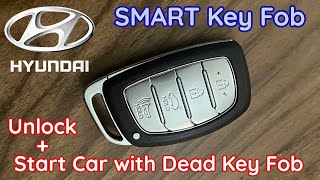
- For push-button start models, try placing the fob directly against the start button to overcome a weak battery signal. 🎬 Watch how to start your Hyundai with a dead key fob
- Inspect the fuse for the immobilizer system in the interior fuse panel.
- If all keys fail and fuses are good, the problem may be the immobilizer antenna coil or require professional diagnosis with a specialized scan tool.
Parts You'll Likely Need
- Electronic Throttle Body Assembly
(OEM #35100-3C200 (for 3.3L V6))— This is the most common fix for P1614 when symptoms include limp mode and loss of power. The internal electronics fail.
Trusted brands: Bosch, Hitachi, Duralast, Hyundai (Genuine)
OEM price range: $250-$400
Aftermarket price range: $150-$250 - Transponder Ignition Key — This is the fix for a P1614 no-start condition if the original key's internal transponder chip has failed.
OEM price range: $150-$400 (includes programming)
Aftermarket price range: $100-$250 (from an automotive locksmith)
Related Codes That Often Appear With This One
- P2106 — Indicates 'Throttle Actuator Control System - Forced Limited Power,' which is the 'limp mode' itself, often triggered by the ETS fault that sets P1614.
- P1295 — Another code related to the Electronic Throttle System, often indicating a problem with the throttle position sensor's data, which is part of the throttle body assembly.
- P1193 — This is a 'Limp Home Mode On' code, directly stating the vehicle's protective state, usually caused by the primary ETS fault.
Platform-Specific Known Issues
- The dual-meaning of P1614 (ETS vs. Immobilizer) is particularly prevalent in this CM generation, causing significant diagnostic confusion. Symptoms are the only reliable differentiator.
Mechanic-Grade Diagnostic Values
- TPS1 & TPS2 Voltage Sweep (3.3L V6, Key On, Engine Off) — expected: Using a scan tool, TPS1 should sweep smoothly from ~0.5V (closed) to ~4.5V (wide open). TPS2 should sweep inversely from ~4.5V (closed) to ~0.5V (wide open).. Failure: Any reading that is stuck, erratic, or does not sweep smoothly indicates a failed sensor within the throttle body assembly.
- Throttle Body Connector Voltage (2.4L I4, Key On, Engine Off) — expected: At the 6-pin connector: Pin 5 (Sensor Power) should have ~5V. Pin 3 (Ground) should have ~0V.. Failure: Absence of 5V reference power or a bad ground points to a wiring or ECM issue, not the throttle body itself.
- Immobilizer Antenna Coil Continuity — expected: A low resistance reading (continuity) between the two terminals of the coil connector.. Failure: An open circuit ('OL' on a multimeter) indicates the coil's internal winding is broken and the part has failed.
- Smart Key Module (SKM) Power — expected: With the key on, check for battery voltage (~12.6V) at the appropriate power input pins on the SKM connector under the dashboard.. Failure: No voltage indicates a wiring or fuse issue upstream of the module.
Scan Tool Commands That Help
- Hyundai GDS (or equivalent professional scanner): Antenna Status Check — For a no-start condition, this function actively tests the low-frequency antennas (at the ignition, in door handles, etc.) to confirm if they can detect the key fob, helping to isolate a faulty antenna.
- N/A - Manual Procedure: ETS Initialization / Relearn — After replacing the Electronic Throttle Body, this procedure is required to calibrate the new part. It involves a specific sequence of turning the ignition on and off for set durations to allow the ECM to learn the new throttle plate's closed position.
Wiring & Ground Locations
- Throttle Body Connector (2007-2009 3.3L V6) — The 6-pin connector on the electronic throttle body assembly.. This is the primary test point for the limp-mode issue. Pinout: Pin 1 (TPS2 Signal), Pin 2 (Sensor Ground), Pin 3 (TPS1 Signal), Pin 4 (5V Reference), Pin 5 (Motor +), Pin 6 (Motor -).
- Throttle Body Connector (2010-2012 2.4L I4) — The 6-pin connector on the electronic throttle body assembly.. This is the primary test point for the limp-mode issue on facelift models. Pinout: Pin 6 (TPS2 Signal, Pink/Black wire), Pin 5 (Sensor Power), Pin 3 (Sensor Ground).
- Immobilizer Antenna Coil — A plastic ring around the ignition lock cylinder, under the steering column shrouds.. This coil reads the key's transponder chip. A failure here or in its wiring is a direct cause of the no-start P1614 variant.
- Smart Key Module (SKM) — Located under the dashboard, typically to the right of the steering column.. This is the brain of the immobilizer system. Testing for power and ground at its connectors (e.g., M13-B, Pin 6 for antenna power) is a key diagnostic step for the no-start issue.
Real Owner Repair Stories
- Reddit r/AskMechanics user (2007 Hyundai Santa Fe 2WD 3.3L V6, 85,000 miles) — Car went into limp home mode, threw codes P161B, P2106, P1295.
❌ Tried (didn't work) Owner purchased an aftermarket Throttle Position Sensor to replace separately.
✅ What actually fixed it The mechanic advised that for this issue on this model, replacing the entire throttle body assembly is the correct repair, as aftermarket sensors often don't solve the problem and the sensor is not the typical failure point; the internal electronics of the assembly are. - JustAnswer user (2011 Hyundai Santa Fe) — Intermittent no-start. Key light on dash flashes, but engine turns over. Sometimes works after locking/unlocking the car.
❌ Tried (didn't work) Resetting immobilizer by disconnecting battery., Replacing batteries in key fobs.
✅ What actually fixed it The verified Hyundai mechanic advised that the symptoms point to a fault in the antenna ring around the ignition barrel or its wiring. The final recommendation was to inspect the wiring connector on the antenna coil for looseness before considering replacing the antenna itself.
When the Usual Fixes Don't Work
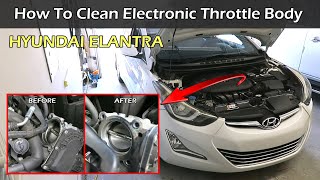
- While replacing the entire electronic throttle body assembly is the most common and recommended fix for the limp-mode variant of P1614, there are owner reports suggesting a less expensive first step. In at least one documented case on a 2008 Santa Fe with similar throttle-related codes, a thorough cleaning of the throttle body plate and bore was sufficient to resolve the problem. Given the low cost, attempting to clean the throttle body of carbon buildup before ordering a replacement part may be a worthwhile diagnostic step.
OEM Part Supersession History
35100-3C200→N/A— No supersession history found in searches for the 3.3L V6 throttle body. 35100-3C200 remains the specified part number for the 2007-2009 Santa Fe 3.3L.
Model Year Variations Within This Range
- 2007-2009: These pre-facelift models were equipped with either a 2.7L V6 or a 3.3L V6 engine. The common limp-mode issue is associated with the 3.3L V6 and its specific throttle body (PN 35100-3C200).
- 2010-2012: These facelift models received new powertrains: a 2.4L four-cylinder and a 3.5L V6. This change means the electronic throttle body, wiring pinouts, and specific diagnostic values will be different from the earlier 2007-2009 models. For example, the 2.4L engine uses a different throttle body and has a different connector pinout.
Diagnostic Flowchart
Other Known Issues on This Vehicle
Issues unrelated to this code that are worth knowing about as an owner of this generation:
- Front Valve Cover Gasket Oil Leak 🔴 High — Very common on 3.3L V6 models. Oil leaks directly onto the alternator, causing it to fail, which can lead to stalling or a no-start condition. (Ref: Service Campaign 936 (TSB 15-01-031), later superseded by Service Campaign 976 (TSB 23-01-076H).)
- Faulty Fuel Level Sending Units 🟠 Medium — Widespread issue causing erratic or inaccurate fuel gauge readings. The gauge may show empty after a fill-up or fluctuate randomly. Onset is common around 85,000-100,000 miles.
- Engine Failure / Excessive Oil Consumption 🔴 High — While more prominent on the 2012 model with the 2.4L Theta II engine, engine issues including stalling and premature failure have been reported across the generation. Hyundai has had multiple recalls and campaigns for engine issues, including a knock sensor software update (Campaign 953/966) to detect bearing wear. (Ref: Related to various engine recalls and knock sensor detection system (KSDS) updates (e.g., TSB 20-01-006H, 21-01-023H-4).)
- Failing AWD Coupler 🟠 Medium — On AWD models, the electronic coupler can fail, causing a binding or jerking sensation during sharp, low-speed turns (e.g., in parking lots).
- No Sound from Speakers 🟡 Low — Common on models with the factory navigation unit, where all audio (radio, calls, navigation prompts) suddenly stops working. Often requires a hard reset of the audio unit to fix.
Used vs. New Parts: Buying Guide for This Vehicle
When a used part is the smart pick: For the Electronic Throttle Body (ETB), a used OEM part from a reputable recycler or a low-mileage donor vehicle can be a cost-effective alternative to a new aftermarket part, which may have inconsistent quality.
Donor-vehicle mileage cap: roughly under 80000 miles for the part to have meaningful remaining life.
What to inspect on the donor part:
- Ensure the electrical connector and pins are free of corrosion or damage.
- Check that the throttle plate moves smoothly by hand and springs back shut without sticking.
- Look for a relatively clean throttle bore, as heavy carbon buildup can indicate high wear or other engine issues.
OEM-only on this vehicle (don't cheap out):
- Immobilizer Control Module (or Smart Key Module)
- Transponder Ignition Keys
Aftermarket brands forum-validated for this vehicle:
- Bosch (often an OEM supplier)
- Hyundai (Genuine OEM)
Real Owner Stories
Aggregated from forums and TSBs cited above. Mileages and costs reflect what owners reported in those sources.
2003 Hyundai Santa Fe
Symptoms: Vehicle experienced a 'Electronic Throttle System Module Malfunction' and entered Limp Home Mode.
What fixed it: Identified as an Electronic Throttle System (ETS) issue, corroborated by related code P1193.
Source hint: Hyundai-Forums.com thread titled '03-santa-fe-p1614-p1193'
2007 Hyundai Santa Fe
Symptoms: Vehicle entered limp mode with severely reduced power and multiple throttle-related error codes.
What fixed it: Electronic throttle body failure was confirmed as a known issue for this platform.
Source hint: Reddit r/MechanicAdvice post '2007_hyundai_santa_fe_limp_mode_p161b_p2106_p1295'
Related OBD-II Codes
Frequently Asked Questions
My 2007 Santa Fe is in 'limp mode' and won't rev past 2000 RPM. Is this related to P1614?
Does Service Campaign 936 apply to my 3.3L V6 Santa Fe if I'm having starting issues?
I have a flashing key symbol on my dashboard and the car won't start. Is my throttle body bad?
Can I just replace the battery in my key fob to fix a P1614 no-start condition?
Is there a specific TSB for the engine stalling and knock sensor issues on the 2012 Santa Fe?
My fuel gauge is acting erratic; is this part of the P1614 throttle issue?
Helpful Videos

Used OEM Parts in Stock
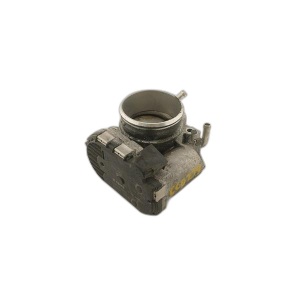
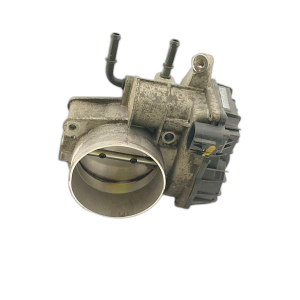
New Aftermarket Parts Available

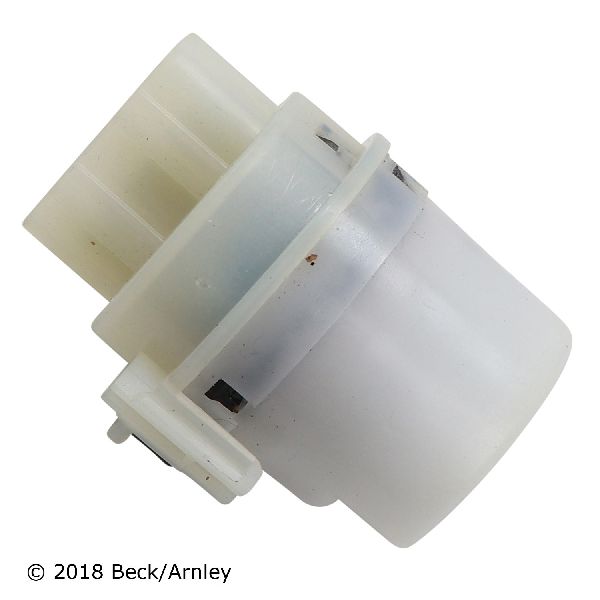



The information in this article is provided for general reference and educational purposes only. Vehicle specifications, procedures, and part compatibility can vary by production date, trim level, and region. Always consult your vehicle's factory service manual and verify part numbers before purchasing or performing repairs. Safety-critical components such as airbags, seat belts, and braking systems should be installed by a qualified professional.
- Hyundai Santa Fe:
- 🧭 Diagnostic Flowchart
- 🎬 Helpful Videos
- 🛍️ Shop This Part
- What's Unique About the 2007-2012 Hyundai Santa Fe
- Symptoms You May Notice
- Most Likely Causes
- Rare But Worth Checking
- Diagnosis Steps
- Parts You'll Likely Need
- Related Codes That Often Appear With This One
- Platform-Specific Known Issues
- Mechanic-Grade Diagnostic Values
- Scan Tool Commands That Help
- Wiring & Ground Locations
- Real Owner Repair Stories
- When the Usual Fixes Don't Work
- OEM Part Supersession History
- Model Year Variations Within This Range
- Other Known Issues on This Vehicle
- Used vs. New Parts: Buying Guide for This Vehicle
- Real Owner Stories
- 2003 Hyundai Santa Fe
- 2007 Hyundai Santa Fe
- Related OBD-II Codes
- Frequently Asked Questions
- 🎟️ Get 5% Off