

P1614 on 2000-2019 Nissan Sentra: NATS Immobilizer Failure Causes and Fixes
On a 2000-2019 Nissan Sentra, code P1614 means the car's anti-theft system (NATS) can't recognize the key. The most likely cause is a faulty key transponder or a dead battery in the key fob. Trying a spare key is the first step; if that fails, a new key and programming by a locksmith or dealer is often required. This code is frequently accompanied by P1610 (Lock Mode) after five failed start attempts.
- P1614 on your Sentra means the anti-theft system has disabled the car. You cannot drive it.
- Always try your spare key first. This is the simplest and most common fix.
- Do not repeatedly try to start the car, as this can trigger a P1610 'Lock Mode', which requires a professional to reset.
- This is not a DIY-friendly repair. Programming keys or modules requires specialized equipment.
- A weak car battery can cause this code. Ensure your battery is fully charged before pursuing more expensive repairs.
What's Unique About the 2000-2019 Nissan Sentra
Across the B15, B16, and B17 generations, the Sentra's NATS system is a common source of no-start issues. While the fundamental principle is the same, the components evolved. Early models use a simple transponder key, while later B16 and B17 generations introduced the Intelligent Key (push-button start), adding the key fob's battery as another potential failure point. A key difference is that models from 2009 onward feature 'Validate Before Crank' logic; if the key isn't recognized, the engine will not crank at all, whereas earlier models will typically crank but not fire. This can lead to misdiagnosing the issue as a bad starter.
Generation note: The 2000-2019 range covers three Sentra generations: - B15 (2000-2006): Uses a standard NATS transponder key. Issues are typically the key chip or antenna ring. Some owners report success with a "hard reset" by disconnecting the battery, though this is not a guaranteed fix. - B16 (2007-2012): Transitioned from standard keys to optional Intelligent Key fobs. Causes are similar to the B15, with the addition of potential key fob battery failures. - B17 (2013-2019): Intelligent Key systems are more common. BCM failures become a more frequently discussed cause in forums for this generation, sometimes triggered by voltage spikes from improper jump-starting.
Symptoms You May Notice
- Engine cranks but will not start (most common on pre-2009 models)
- Engine does not crank at all (common on 2009+ models)
- Solid or flashing red 'security indicator' light (icon of a car with a key inside) on the dashboard
- Vehicle starts intermittently
- Remote key fob functions (lock/unlock) may work, but the car still won't start
- Security light remains on solid when the key is in the ON position
- Replacing the starter when the engine doesn't crank (on 2009+ models). The no-crank condition is a function of the NATS system, not a faulty starter.
- Replacing the fuel pump because the engine cranks but won't start. The NATS system disables fuel and/or ignition, mimicking a fuel delivery problem.
Most Likely Causes
- Defective or Unprogrammed Ignition Key 🔴 High Probability → Shop Ignition Switch The transponder chip inside the key can be damaged from being dropped, or the battery in Intelligent Key fobs can die. The chip itself can also fail internally with age.
How to confirm: Try starting the vehicle with a spare key. If the spare key works, the original key is faulty. An automotive locksmith can also use a tool to test if the key is emitting a transponder signal.
Typical fix: Replace and reprogram the key. 🎬 Watch: How to program new keys on a Sentra This requires a trip to the dealer or an automotive locksmith with appropriate programming tools.
Est. part cost: $150-$400 - Faulty NATS Antenna Amplifier (Antenna Ring) 🟡 Medium Probability → Shop Antenna The antenna ring is an electronic component located around the ignition cylinder that can fail over time due to age and heat cycles. Physical damage during steering column repairs can also occur.
How to confirm: A technician with a diagnostic tool can check for a signal from the antenna when the key is turned. Visual inspection for damage to the wiring is also possible. Some advanced key tools can test the coil's output directly. A failed antenna will prevent the BCM from receiving the key's ID.
Typical fix: Replace the NATS antenna amplifier. 🎬 See how to diagnose and replace the antenna amplifier The part itself is not expensive, but the steering column covers must be removed for access. The system may require re-initialization after replacement.
Est. part cost: $50-$100 - Low Vehicle Battery Voltage 🟡 Medium Probability → Shop Vehicle Battery A weak main vehicle battery can cause unpredictable communication errors between the BCM and ECM, triggering a false NATS code. NATS components are sensitive to low voltage during startup.
How to confirm: Test the vehicle's battery with a multimeter. A healthy battery should read approximately 12.6 volts with the engine off. A load test is the most definitive way to confirm battery health.
Typical fix: Charge or replace the vehicle's 12V battery.
Est. part cost: $150-$250 - Faulty Body Control Module (BCM) ⚪ Low Probability → Shop Body Control Module The BCM integrates the immobilizer function. Electrical issues, such as those caused by improper battery disconnection, voltage spikes from jump-starting, or water intrusion can damage the BCM.
How to confirm: This requires advanced diagnostics. A technician will check for communication with the BCM and test its inputs and outputs. A lack of communication with the scan tool or failure to send a signal to the NATS antenna often points to a failed BCM.
Typical fix: Replace the BCM and program the new module to the vehicle and keys. This is a dealer or specialist-level repair.
Est. part cost: $300-$700
Rare But Worth Checking
- Radio Frequency (RF) Interference: Aftermarket remote starters, toll passes, or even other keys with transponders on the same keychain can interfere with the NATS signal. Before expensive repairs, try starting the car with only the Nissan key present, away from other electronics.
- Faulty Engine Control Module (ECM): While less common than a BCM failure, a faulty ECM can also cause P1614. This is usually the last component to be suspected after all other parts of the NATS system have been checked.
- Damaged Wiring or Connectors: A break or short in the wiring between the NATS antenna, BCM, and ECM can cause this code. This is more common on older vehicles or those with a history of rodent damage or previous electrical repairs.
Diagnosis Steps
- Attempt to start the vehicle with a known-good spare key. If it starts, the primary key is the issue.
- Check the vehicle's main battery voltage. Ensure it is above 12.4 volts and perform a load test if possible.
- Remove any other keys, fobs, or RFID cards from the keychain to eliminate potential radio frequency interference.
- Check all fuses related to the ignition, BCM, and anti-theft systems. A user on a 2003 Almera forum noted fuse #24 (10 amp) was relevant.
- Visually inspect the wiring and connectors at the NATS antenna ring (around the ignition cylinder) and the BCM for any visible damage or corrosion.
- If the above steps fail, use a professional scan tool to read codes from the BCM and ECM. Check for P1610 (Lock Mode). If P1610 is present, 🎬 Watch: Diagnosing P1610 and P1614 immobilizer codes it must be cleared after the P1614 fault is resolved.
- Use the scan tool to monitor the NATS system data stream to see if the key is being recognized by the antenna and BCM.
- If the key is not recognized, and the spare key also fails, the NATS antenna ring is the next most likely culprit. Advanced diagnostics with an oscilloscope can confirm if the BCM is sending a signal to the antenna.
- If the antenna is working but communication is still failing, advanced diagnostics on the BCM and its wiring are required.
Parts You'll Likely Need
- Transponder Key / Intelligent Key Fob — The transponder chip in the key is the most common failure point. It can be damaged or simply fail with age.
Trusted brands: Nissan OE
OEM price range: $150-$350
Aftermarket price range: $70-$150 - NATS Antenna Amplifier
(OEM #28231-9AM0B (for 2013-2019 B17 Sentra))— This ring around the ignition switch reads the key's transponder chip and is a common point of electrical failure.
Trusted brands: Nissan OE
OEM price range: $50-$100
Aftermarket price range: $30-$60 - Body Control Module (BCM)
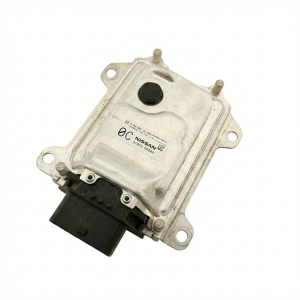
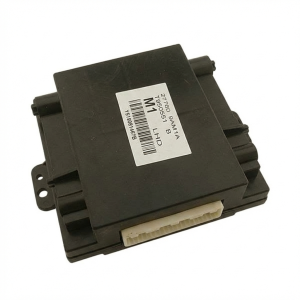
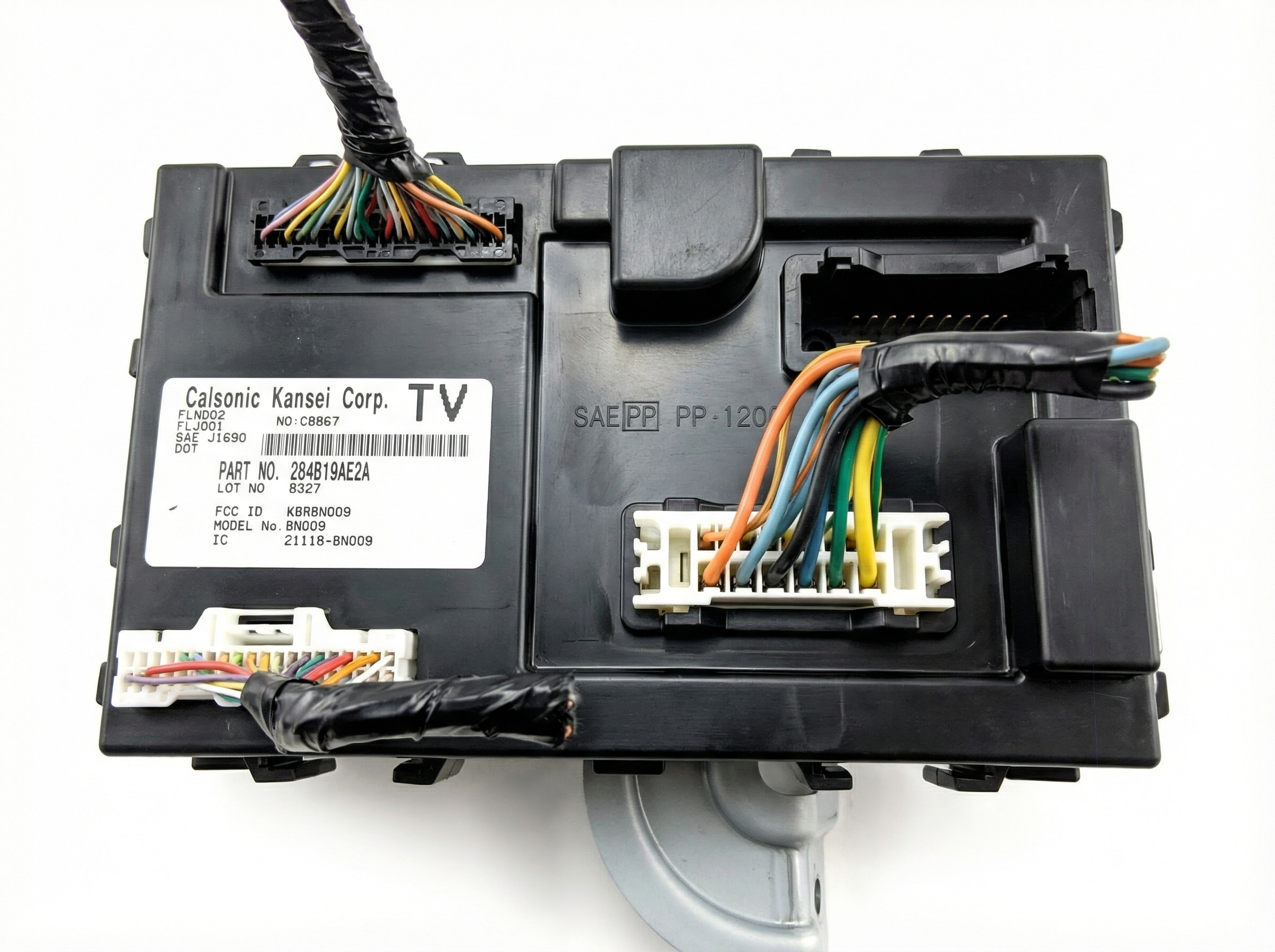
(OEM #284B1-9AM0A)— The BCM is the brain of the NATS system. An internal failure will prevent key recognition and communication with the ECM.
Trusted brands: Nissan OE
OEM price range: $500-$700
Aftermarket price range: $250-$450 (Remanufactured)
Related Codes That Often Appear With This One
- P1610 — This code means 'Lock Mode'. It is triggered after five or more consecutive failed start attempts with an unrecognized key. The system locks itself as a security measure, and the car will not start until this code is cleared with a professional scan tool, even if the P1614 fault is fixed.
- U1000 — This is a generic CAN (Controller Area Network) communication failure code. It can appear alongside P1614 if the root cause is a failing BCM or ECM that is disrupting the entire vehicle communication network.
- P1611 — ID DISCORD, IMM-ECM. This code indicates the result of the ID verification between the BCM and ECM was negative. It points more specifically to a mismatch in the security handshake between the two modules, often after one has been replaced without proper programming.
Platform-Specific Known Issues
- P1610 Lock Mode Reset Procedure: If the vehicle enters 'Lock Mode' (P1610), some forums suggest a manual reset procedure may work without a scan tool on older models. The procedure involves cy
Mechanic-Grade Diagnostic Values
- NATS Antenna Coil Resistance — expected: Approximately 12.1 ohms. Failure: A reading that is significantly higher (open circuit) or lower (short circuit) indicates a faulty antenna coil.
- NATS Antenna Amplifier Power Supply — expected: Battery Voltage. Failure: Voltage significantly lower than the vehicle's battery voltage points to a problem in the power supply wiring or a related fuse.
- NATS Antenna Amplifier Ground Circuit — expected: Near 0 ohms (continuity to ground). Failure: High resistance or an open circuit (OL) reading indicates a broken, loose, or corroded ground connection.
Scan Tool Commands That Help
- Nissan CONSULT-II / CONSULT-III: C/U INITIALIZATION — This function must be performed when replacing the NATS ignition key, IMMU (BCM), or ECM. It erases all previously registered keys and prepares the system for new key registration.
- Nissan CONSULT-II / CONSULT-III: SELF-DIAGNOSTIC RESULTS — Used to read the specific fault from the NATS system. After a failed initialization, it may display 'DIFFERENCE OF KEY' or 'LOCK MODE'.
- Advanced Aftermarket Scanners (e.g., Autel): Key Learning / Add a Key — Used to register new or existing keys to the immobilizer system after a component replacement or to add a spare key. This function often requires a security PIN code on NATS 5 and later systems.
Wiring & Ground Locations
- BCM (Body Control Module) — On B16 (2007-2012) Sentra models, the BCM is located high up in the driver's side dash, to the right of the steering column, making it difficult to access. On B17 (2013-2019) models, it is often found behind the dashboard or under the driver-side kick panel.. The BCM is the central control unit for the NATS immobilizer. All communication from the key and antenna amplifier flows through the BCM before being sent to the ECM. Poor connections, corrosion from water intrusion, or a bad ground at the BCM can directly cause a P1614 code.
- BCM Ground Circuit (B16) — On a 2011 Sentra, the ground circuit for the BCM is on connector M20, terminal 67.. A faulty ground is a common cause of intermittent and difficult-to-diagnose electronic issues. Verifying continuity between this terminal and the chassis ground is a critical step before replacing the BCM itself.
- NATS Antenna Amplifier Connector — The harness connector for the NATS antenna amplifier is located directly at the ignition switch cylinder.. This is the primary connector where voltage and ground tests are performed to diagnose the antenna amplifier circuit. A loose or corroded connection here will prevent the key's signal from being read.
Real Owner Repair Stories
- Nissan Forum (2007 Nissan Sentra 2.0L with Intelligent Key, 137,000 miles) — Car died upon arrival at home. Would crank but not start. Solid immobilizer light on the dash. Codes P1610 and P1614 present.
❌ Tried (didn't work) Tightening a loose negative battery cable, Replacing the 12V battery, Replacing the entire steering column with a used one, Clearing codes (they returned immediately), Various manual reset procedures (battery disconnect, panic button, etc.)
✅ What actually fixed it The issue remained unresolved even after a mobile locksmith attempted to program a new key. The locksmith noted he could read the ECM, but the ECM was not responding to commands to clear the P1610/P1614 codes, speculating the ECM itself was faulty, possibly damaged by a voltage spike from the initial loose battery cable incident. - YouTube channel 'Pine Hollow Auto Diagnostics' (2006 Nissan 350Z (shares NATS architecture)) — No-start condition with P1610 and P1614 codes.
❌ Tried (didn't work) Attempting to re-learn the key with a scan tool failed repeatedly.
✅ What actually fixed it Using a key tool, the technician confirmed the key was emitting a transponder signal. However, when testing the NATS antenna amplifier (coil) at the ignition switch, there was no signal detected. A close visual inspection revealed physical damage to the coil windings on the antenna ring. Replacing the NATS antenna amplifier allowed the key to be reprogrammed successfully and resolved the no-start condition.
Model Year Variations Within This Range
- 2000-2006 (B15) and some early B16: These models typically use NATS versions 2 through 4. These systems do not require a security PIN code for key programming but may require a timed security access procedure with the CONSULT-II tool.
- Approx. 2007-2019 (B16/B17): These models use NATS version 5 or later, which requires a security PIN to be entered into the diagnostic tool (like CONSULT-III) to perform key registration or module initialization. For 2013+ models, the Pre-PIN is a rolling code, meaning the PIN must be retrieved and used in the same session without closing the diagnostic software.
Diagnostic Flowchart
Other Known Issues on This Vehicle
Issues unrelated to this code that are worth knowing about as an owner of this generation:
- Continuously Variable Transmission (CVT) Failure 🔴 High — Extremely common on B16 (2007-2012) and especially B17 (2013-2019) generations, often appearing between 60,000 and 100,000 miles. Symptoms include shuddering, hesitation, whining, and complete loss of power. (Ref: Multiple TSBs, including NTB17-034, were issued for CVT judder and related codes. Class action lawsuits also led to warranty extensions for some model years.)
- Blown Head Gasket (QR25DE Engine) 🔴 High — A notorious issue on the B15 Sentra SE-R (2002-2006) with the 2.5L QR25DE engine. Often caused by the engine's design, which includes a catalytic converter integrated into the exhaust manifold that can break down and ingest material, and a thin sealing surface between cylinders.
- Brake Master Cylinder Failure 🔴 High — Common on the B16 Sentra (2007-2012), leading to a soft brake pedal that goes to the floor and increased stopping distances. (Ref: Recalls were issued for 2007-2009 models (e.g., NHTSA #08V-311, 09V-431) due to master cylinders leaking brake fluid.)
- Crankshaft and Camshaft Position Sensor Failure 🟠 Medium — Common on the B15 generation (2000-2006), causing stalling, hard starting, or no-start conditions. (Ref: Recalls were issued for early models due to defective sensors that could cause the engine to stop while driving.)
- Intake Manifold Butterfly Valve Screws (QR25DE Engine) 🔴 High — On the B15 SE-R's QR25DE engine, the screws holding the butterfly valves in the intake manifold could loosen and fall into the engine, causing catastrophic damage.
Used vs. New Parts: Buying Guide for This Vehicle
When a used part is the smart pick: A used NATS Antenna Amplifier is a good candidate as it is a simple electronic component that does not require programming. A used BCM or ECM can be a cost-effective option IF you use a mail-in cloning service to transfer the data from your original module to the donor module. This makes the replacement part plug-and-play, avoiding expensive dealer programming.
Donor-vehicle mileage cap: roughly under 150000 miles for the part to have meaningful remaining life.
What to inspect on the donor part:
- For a BCM/ECM, ensure the part number matches your original module EXACTLY.
- Inspect connectors on any used electronic module for signs of corrosion, bent pins, or water damage.
- Source parts from vehicles in dry climates to minimize the risk of moisture-related failure.
OEM-only on this vehicle (don't cheap out):
- Body Control Module (BCM)
- Engine Control Module (ECM)
Brands owners have reported issues with on this vehicle:
- Unbranded, no-name key fobs from online marketplaces often have weak transponder chips that fail to program or have a very short lifespan.
Real Owner Stories
Aggregated from forums and TSBs cited above. Mileages and costs reflect what owners reported in those sources.
2005 Nissan 350Z
Symptoms: The car experienced both P1610 and P1614 codes. It was explained that the P1610 'Lock Mode' was triggered by 5 consecutive failed start attempts.
What fixed it: The issue was diagnosed as a potential bad key, antenna ring, or BCM; a DIY procedure was used to attempt to escape Lock Mode.
Source hint: MY350Z.COM - 'P1610 p1614 help!!'
Nissan 350Z
Symptoms: The dealer claimed the vehicle needed a new Body Control Module (BCM) for a no-start condition.
What fixed it: Advanced diagnostics using an oscilloscope proved the BCM was actually sending a signal, but the NATS antenna amplifier (antenna ring) was dead and not responding. Replacing the antenna ring fixed the vehicle.
Source hint: Pine Hollow Auto Diagnostics - 'Nissan Dealer Says: "Needs a BCM!"...or Does It?'
Related OBD-II Codes
Frequently Asked Questions
My 2013 Sentra is shuddering and losing power; is this related to the P1614 immobilizer code?
I have a P1610 code on my Nissan; do I need a scan tool to fix it?
Could a weak car battery cause my Sentra to show a security light and not start?
My 2003 Sentra SE-R has a no-start and a security light; could it be the engine design issue?
Is there a specific fuse I should check for NATS issues on older Nissan models?
Why does my 2009+ Sentra not even crank, while older models still crank but won't start?
Helpful Videos

We Have This Part in Stock

The information in this article is provided for general reference and educational purposes only. Vehicle specifications, procedures, and part compatibility can vary by production date, trim level, and region. Always consult your vehicle's factory service manual and verify part numbers before purchasing or performing repairs. Safety-critical components such as airbags, seat belts, and braking systems should be installed by a qualified professional.
- Nissan Sentra:
- 🧭 Diagnostic Flowchart
- 🎬 Helpful Videos
- 🛍️ Shop This Part
- What's Unique About the 2000-2019 Nissan Sentra
- Symptoms You May Notice
- Most Likely Causes
- Rare But Worth Checking
- Diagnosis Steps
- Parts You'll Likely Need
- Related Codes That Often Appear With This One
- Platform-Specific Known Issues
- Mechanic-Grade Diagnostic Values
- Scan Tool Commands That Help
- Wiring & Ground Locations
- Real Owner Repair Stories
- Model Year Variations Within This Range
- Other Known Issues on This Vehicle
- Used vs. New Parts: Buying Guide for This Vehicle
- Real Owner Stories
- 2005 Nissan 350Z
- Nissan 350Z
- Related OBD-II Codes
- Frequently Asked Questions
- 🎟️ Get 5% Off