

P1614 on 2010-2021 Subaru Legacy: Immobilizer Failure Causes and Fixes
P1614 on a Subaru Legacy means the car's anti-theft system can't verify your key, preventing the engine from starting. The most common fix is trying your spare key or replacing a faulty key; if that fails, the issue may be the Body Integrated Unit (BIU), which can cost several hundred dollars to replace and program.
- P1614 means your Legacy won't start because of an anti-theft system fault.
- Always try your spare key first. This is the simplest and most co
What's Unique About the 2010-2021 Subaru Legacy
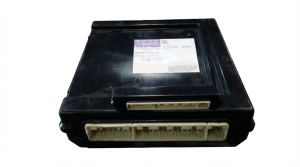
On these generations of Subaru Legacy, the Body Integrated Unit (BIU) is the central hub for the immobilizer system. While key failures are common on any car, Subarus from this era can be prone to BIU failures that cause a host of strange electrical issues, with P1614 being one of the potential symptoms. Unlike a simple sensor swap, replacing the BIU requires dealer-level programming to match it to the vehicle's other modules (including the instrument cluster and ECM) and keys, making it a more complex and costly repair.
Generation note: This range covers the 5th generation (2010-2014), 6th generation (2015-2019), and the start of the 7th generation (2020-2021) Legacy. While the immobilizer system's core function is the same, failures of the Body Integrated Unit (BIU) are noted as a particular concern on the earlier 2010-2011 models. However, the potential causes and diagnostic steps are broadly applicable across all years. The immobilizer system across these generations involves a handshake between the key, BIU, instrument cluster, and ECM.
Symptoms You May Notice
- Engine will not start (cranks but does not fire, or does not crank at all).
- Flashing security indicator light on the dashboard, even when the key is in the ignition. 🎬 Watch: Why your Subaru's security light is flashing
- In some cases, other erratic electrical behavior may be present, such as malfunctioning power windows, door locks, or lights, pointing towards a BIU failure.
- Keyless entry remote stops working intermittently or completely.
- Parasitic battery drain leading to a dead battery overnight.
- Replacing the starter motor, as the symptom is a no-start condition.
- Replacing the fuel pump, assuming a fuel delivery issue when the engine cranks but won't fire.
Most Likely Causes
- Defective or Unprogrammed Ignition Key 🔴 High Probability → Shop Ignition Switch The transponder chip inside the key fob can be damaged from being dropped, getting wet, or from a dead internal battery. Aftermarket or poorly copied keys may also lack the correct transponder chip.
How to confirm: The easiest and most important first step is to try starting the car with a spare key. If the spare key works, the original key is the problem. This is a common first diagnostic step mentioned by technicians.
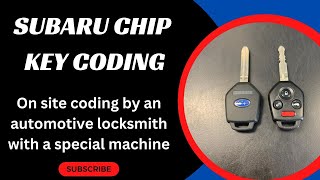
Typical fix: Replace the faulty key. A new key must be purchased from a dealer or qualified locksmith and programmed to the vehicle using specialized equipment.
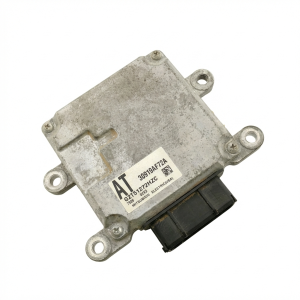
Est. part cost: $150-$400 - Failing Body Integrated Unit (BIU) 🟡 Medium Probability → Shop Body Control Module The BIU (Subaru's term for the Body Control Module) can fail internally, causing communication breakdowns. This is a known issue on some Subaru models of this era, leading to a variety of electrical gremlins.
How to confirm: This is diagnosed by ruling out all other causes and observing other unrelated electrical problems (e.g., parasitic battery drain, haywire dash lights, erratic wipers/locks). A professional scan tool is needed to check for communication errors with the BIU; code U0140 often accompanies P1614 in this scenario.
Typical fix: The BIU must be replaced and programmed by a Subaru dealer or a specialist with the correct equipment. A used BIU cannot be simply swapped in; it must be 'virginized' or cloned from the original unit to sync with the car's immobilizer system.
Est. part cost: $300-$700 - Faulty Immobilizer Antenna Ring ⚪ Low Probability → Shop Antenna The antenna ring is a coil around the ignition cylinder that reads the key's transponder chip. It can fail electronically over time, though it's less common than key or BIU failure.
How to confirm: A technician can test the resistance and signal output of the antenna ring using a multimeter and oscilloscope to see if it's energizing and reading the key. This is often a process of elimination after confirming the key is good but the BIU is not receiving a signal.
Typical fix: Replace the immobilizer antenna ring.
Est. part cost: $50-$150 - Low Vehicle Battery Voltage ⚪ Low Probability → Shop Vehicle Battery Low voltage can cause communication glitches between various electronic modules, including the immobilizer system. While not specific to Subaru, it's a common cause of mysterious electronic faults on modern cars.
How to confirm: Test the battery voltage with a multimeter. It should be above 12.4 volts with the engine off. Attempt to start the vehicle with a jump start or a fully charged battery. A user on a Nissan forum with a similar code (P1614/P1610) noted a related low voltage code (C1109).
Typical fix: Charge or replace the vehicle's battery.
Est. part cost: $100-$250
Rare But Worth Checking
- Wiring Harness Damage: Damage to the wiring between the BIU, antenna ring, and ECM can interrupt communication. This is uncommon but should be checked if other components test good, especially if there's been recent dash work or rodent activity.
- Faulty Engine Control Module (ECM): While rare, an internal failure of the ECM can cause this code. This is typically the last item to be considered after all other possibilities have been exhausted.
- Instrument Cluster Mismatch: → Shop Instrument Cluster On this platform, the instrument cluster is part of the immobilizer system and is paired with the BIU and ECM. If the cluster is replaced with a used unit without being properly virginized and reprogrammed, it will cause a no-start and may set a P1614 code.
Diagnosis Steps
- Attempt to start the vehicle with all known spare keys. If a spare key works, the primary key is faulty.
- If no keys work, check the vehicle's main battery. Ensure it has a full charge (above 12.4V) and that the terminals are clean and tight.
- Inspect the fuses related to the immobilizer system, Body Control Module (BCM), and Engine Control Module (ECM) in the interior and engine bay fuse panels.
- Visually inspect the wiring and connectors around the ignition cylinder and under the driver's side dash near the BIU for any obvious damage or loose connections.
- If the above steps do not resolve the issue, the vehicle needs to be diagnosed with a professional scan tool capable of reading Subaru body and immobilizer codes, such as the Subaru Select Monitor.
- A technician will use the scan tool to check for communication with the BIU and test the signal from the immobilizer antenna.
- Based on the scan tool data and electrical tests, the technician will pinpoint the faulty component (key, antenna, BIU, or wiring).
Parts You'll Likely Need
- Transponder Key — The transponder chip in the key is the most common point of failure in the immobilizer system.
Trusted brands: Subaru (OEM)
OEM price range: $150-$400
Aftermarket price range: $75-$200 - Body Integrated Unit (BIU)
(OEM #88281AJ01B (Example for 2010-2012 Legacy/Outback, always verify by VIN))— This module controls the immobilizer system and is a known failure point on this platform, often causing P1614 and other electrical issues.
Trusted brands: Subaru (OEM)
OEM price range: $400-$700
Aftermarket price range: $100-$250 (Used/Remanufactured)
Related Codes That Often Appear With This One
- U0140 — This code means 'Lost Communication With Body Control Module'. If P1614 appears with U0140, it strongly suggests the Body Integrated Unit (BIU) is the root cause of the problem.
- P1572 — Indicates an immobilizer communication failure detected by the ECM. Seeing this alongside P1614 reinforces that there is a handshake issue between the security modules.
Platform-Specific Known Issues
- BIU Failure Experience: A user on the LegacyGT.com forums described their 2005 Legacy (a predecessor generation, but with a similar system architecture) displaying a blank odometer ("------") and other intermittent gauge issues. The dealer diagnosed a failing BIU and noted that it must be programmed to the car with the Subaru Select Monitor, and that a used unit would not be plug-and-play. This highlights the complexity of the repair.
Mechanic-Grade Diagnostic Values
- Immobilizer Antenna Coil Resistance — expected: Less than 10 Ω. Failure: A resistance of 10 Ω or higher indicates a faulty antenna.
- BIU/Immobilizer Module Ground Circuit Resistance — expected: Less than 10 Ω. Failure: A reading of 10 Ω or higher points to an open or high-resistance ground circuit, which can cause communication errors.
- BIU/Immobilizer Module Ignition Circuit Voltage — expected: 10 V or more with ignition ON. Failure: Voltage below 10 V suggests an open or short in the power supply wiring to the module.
Scan Tool Commands That Help
- Subaru Select Monitor (SSM): Immobilizer Registration — This function is required after replacing the BIU, ECM, instrument cluster, or keys. It pairs the new components to the vehicle's security system.
- Subaru Select Monitor (SSM): System Operation Check Mode > Immobilizer System — This diagnostic test checks the communication line (interface check) between the Engine Control Module (ECM) and the immobilizer module to verify the wiring integrity.
- Subaru Select Monitor (SSM): Work Support > Unit Customizing — When installing a new BIU, this function is used to set the vehicle's market destination (e.g., US, Canada) and other vehicle-specific options. An incorrect setting can cause system malfunctions.
Wiring & Ground Locations
- Body Integrated Unit (BIU) — Located behind the passenger-side or driver's side dash panel, often near the fuse box.. The BIU is the master controller for the immobilizer system. All communication between the key, antenna, cluster, and ECM flows through this unit. A bad connection or faulty ground at the BIU is a primary suspect for P1614.
- Immobilizer Antenna — A plastic ring installed around the ignition lock cylinder where the key is inserted.. This antenna powers the key's transponder chip and reads its ID code. A break in the coil's wiring or a loose connector here will prevent the key from being recognized.
- Main Engine Ground — A critical ground bolt is often located under the intake manifold. Another key grounding point is a braided strap near the passenger side strut tower.. Poor engine or body grounds can introduce electrical noise and voltage drops, disrupting communication between the ECM and BIU, which can trigger immobilizer faults.
OEM Part Supersession History
88281AJ54A→88281AJ54B— Standard part revision by the manufacturer, likely for minor improvements or a change in supplier.
Model Year Variations Within This Range
- 2015-2021: Later generations (6th and 7th) more commonly feature keyless access with push-button start. While the core components (BIU, ECM, Cluster, Key) are still paired, the 'key' is a fob and the antenna system is more complex with multiple antennas in the vehicle. However, the fundamental cause of P1614 (a failure in the security handshake) remains the same.
- 2005-2017 (Covers early part of range): For models in this range, the immobilizer system consists of a matched set of the ECM, BIU, instrument cluster, and key transponders. Replacing any one of these components requires reprogramming or syncing the entire set.
Diagnostic Flowchart
Other Known Issues on This Vehicle
Issues unrelated to this code that are worth knowing about as an owner of this generation:
- Excessive Oil Consumption (FB Series Engines) 🔴 High — Common in 2011-2015 models with the FB25 engine. Can start as early as 30-60k miles. A class-action lawsuit was settled, extending the powertrain warranty to 8 years/100,000 miles for affected vehicles and reimbursing owners for past repairs. (Ref: Class Action Lawsuit Settlement)
- CVT Transmission Issues 🔴 High — Prevalent in earlier 2010-2015 models, with symptoms like shuddering, hesitation, or outright failure. Subaru extended the CVT warranty to 10 years/100,000 miles for many vehicles in response to customer feedback and complaints. (Ref: Warranty Extension Program)
- Defective Low-Pressure Fuel Pump 🔴 High — Affects certain 2018-2020 models. The Denso fuel pump impeller can fail, causing the engine to stall while driving. This led to a major recall and a class-action settlement. (Ref: NHTSA Recalls WRD-20, WRG-21)
- Spontaneously Cracking Windshields 🟠 Medium — A widely reported issue, particularly on 2015-2016 and 2020-2022 models, leading to multiple class-action lawsuits. The lawsuits alleged a manufacturing defect made the glass prone to cracking without impact. (Ref: Class Action Lawsuit Settlement)
- Prematurely Burnt-Out Headlights 🟡 Low — A common and frustrating complaint on 2010-2011 models, with owners reporting a need to replace headlight bulbs as often as every few months.
- Head Gasket Failure 🔴 High — While more notorious on older EJ-series engines, head gasket issues can still occur on the 2010-2012 Legacy models, leading to expensive repairs.
Used vs. New Parts: Buying Guide for This Vehicle
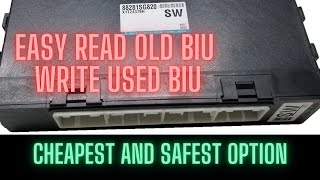
When a used part is the smart pick: A used Body Integrated Unit (BIU) is a cost-effective option if your original BIU is failing but can still be electronically read. A used part must have the exact same OEM part number to be compatible.
Donor-vehicle mileage cap: roughly under 150000 miles for the part to have meaningful remaining life.
What to inspect on the donor part:
- Verify the part number on the used BIU matches your original unit exactly.
- Inspect the unit for any signs of water damage, corrosion on the pins, or physical damage to the casing.
- Source the part from a vehicle that was not involved in a flood or fire.
OEM-only on this vehicle (don't cheap out):
- Transponder Key / Key Fob
Brands owners have reported issues with on this vehicle:
- Unbranded or generic transponder keys from online marketplaces, as they often have unreliable chips that fail to program or lose their programming.
Real Owner Stories
Aggregated from forums and TSBs cited above. Mileages and costs reflect what owners reported in those sources.
2005 Subaru Legacy
Symptoms: The odometer displayed blank dashes ("------") and the vehicle experienced intermittent gauge issues.
What fixed it: The dealer diagnosed a failing Body Integrated Unit (BIU) and replaced it using a Subaru Select Monitor for programming.
Source hint: LegacyGT.com - 'i Need expert Body Control Unit help'
Subaru Forester (2014-2021 era)
Symptoms: Widespread electrical failures including malfunctioning power windows and door locks.
What fixed it: Replacement of the failed Body Integrated Unit (BIU), which also controls the immobilizer system.
Source hint: Reddit (r/SubaruForester)
Related OBD-II Codes
Frequently Asked Questions
Can I swap in a used Body Integrated Unit (BIU) from a salvage yard to fix my P1614 code?
My 2010 Legacy has P1614 and the odometer shows '------'. Is this related?
Is there a warranty extension for the fuel pump on my 2019 Subaru Legacy?
Could a weak car battery cause the P1614 immobilizer code on my Subaru?
Does the CVT warranty extension apply to my 2014 Legacy?
Why is my security indicator light flashing even when the key is in the ignition?
Helpful Videos


We Have This Part in Stock

The information in this article is provided for general reference and educational purposes only. Vehicle specifications, procedures, and part compatibility can vary by production date, trim level, and region. Always consult your vehicle's factory service manual and verify part numbers before purchasing or performing repairs. Safety-critical components such as airbags, seat belts, and braking systems should be installed by a qualified professional.
- Subaru Legacy:
- 🧭 Diagnostic Flowchart
- 🎬 Helpful Videos
- 🛍️ Shop This Part
- What's Unique About the 2010-2021 Subaru Legacy
- Symptoms You May Notice
- Most Likely Causes
- Rare But Worth Checking
- Diagnosis Steps
- Parts You'll Likely Need
- Related Codes That Often Appear With This One
- Platform-Specific Known Issues
- Mechanic-Grade Diagnostic Values
- Scan Tool Commands That Help
- Wiring & Ground Locations
- OEM Part Supersession History
- Model Year Variations Within This Range
- Other Known Issues on This Vehicle
- Used vs. New Parts: Buying Guide for This Vehicle
- Real Owner Stories
- 2005 Subaru Legacy
- Subaru Forester (2014-2021 era)
- Related OBD-II Codes
- Frequently Asked Questions
- 🎟️ Get 5% Off