

P1621 on 2007-2012 Hyundai Santa Fe: Decoding Immobilizer, Fuel Cut, and A/C Relay Faults
P1621 on a 2007-2012 Hyundai Santa Fe is highly ambiguous, pointing to an immobilizer, fuel cut valve, or A/C relay fault. A professional scan is required to get the specific definition before attempting any repair. Do not buy parts until the system at fault is confirmed. Secondary symptoms like a flashing security light (immobilizer) or non-working A/C can provide clues.
- P1621 for a 2007-2012 Santa Fe is ambiguous and can mean an issue with the Immobilizer, Fuel Cut Valve, or A/C Relay.
- DO NOT buy any parts until you use a professional scanner to get the Hyundai-specific definition for the code on your vehicle.
- Check for secondary symptoms: a flashing security light points to the immobilizer, while a non-working A/C points to the A/C relay.
- A simple A/C relay swap is a quick and cheap diagnostic step if you suspect an A/C-related fault.
- For immobilizer issues, cleaning the antenna coil connector and applying dielectric grease is a known fix for poor connections and should be tried before replacing parts.
What's Unique About the 2007-2012 Hyundai Santa Fe
The key issue for the 2007-2012 Santa Fe (and many other Hyundai models) regarding P1621 is the lack of a single, publicly documented definition. This ambiguity is the platform's most significant challenge with this code. Unlike codes that point to a single sensor, P1621 requires an initial diagnostic step with an advanced scanner to simply identify which of the three possible systems—anti-theft, fuel control, or climate control—has registered the fault. This makes it a particularly confusing code for DIY diagnosis. Forum discussions for the Santa Fe specifically mention immobilizer-related codes (P1693, P1690) leading to antenna coil replacement, corroborating that the anti-theft system is a valid potential cause for this generation.
Symptoms You May Notice
- Check Engine Light is on
- Vehicle may not start (if immobilizer or fuel cut related)
- Engine may stall unexpectedly (if fuel cut or immobilizer related)
- Flashing security/immobilizer indicator light on the dashboard (if immobilizer related)
- A/C compressor does not engage or blows warm air (if A/C relay related)
- Difficulty starting the engine
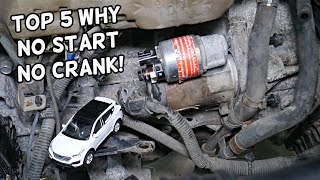
- Engine cranks but does not start 🎬 See common reasons why your Santa Fe won't start or crank
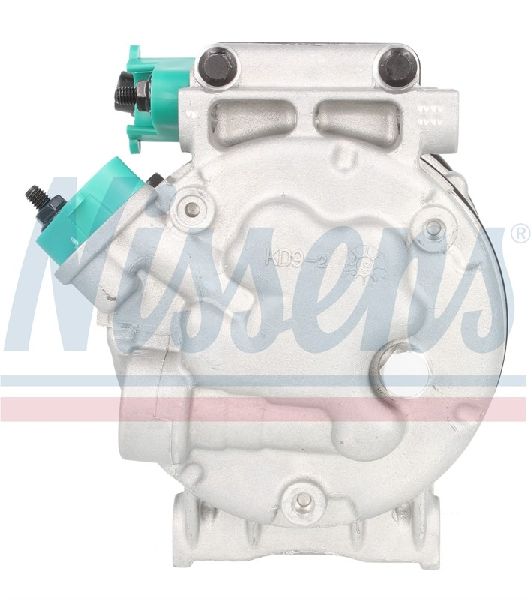
- Replacing the A/C compressor when only the relay is bad.
- Replacing the fuel pump when the issue is with the fuel cut valve circuit or an immobilizer fault.
- Replacing the ECM without confirming the specific fault definition with a proper scan tool.
- Replacing the immobilizer antenna coil when the issue is a poor connection at the connector.
Most Likely Causes
- Faulty A/C Compressor Relay 🟡 Medium Probability → Shop A/C Compressor Relays are common wear items and can fail due to heat and vibration in the engine bay fuse box. This is a multi-purpose relay used in many Hyundai/Kia applications.
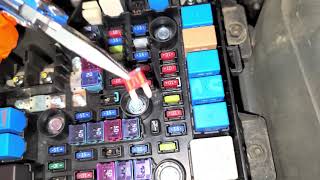
How to confirm: If the A/C is not working, locate the A/C relay in the under-hood fuse box. On the 2012 Santa Fe, it is a black, 4-pin relay. 🎬 Watch: How to find and test your A/C relay and fuses Swap it with an identical relay from a non-essential system (like the horn) to see if the A/C engages.
Typical fix: Replace the A/C relay.
Est. part cost: $10-$40 - Immobilizer System Fault 🟡 Medium Probability Can be caused by a weak key transponder battery, a damaged key, a poor connection at the immobilizer antenna, or a faulty antenna coil itself.
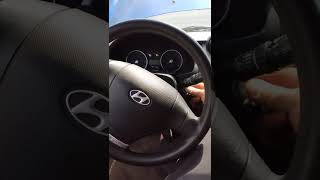
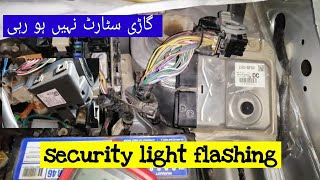
How to confirm: Confirm with a Hyundai-specific scanner. Look for a flashing security light. Try using a spare key. 🎬 Watch: How to reset the immobilizer if your car won't start Inspect wiring and apply dielectric grease or stabilizer to the immobilizer antenna connector pins, as poor connections have been noted by dealers. Test for 12V power at the antenna coil connector with the ignition on.
Typical fix: Use a spare key, replace the battery in the key fob, clean and secure the antenna connector, or replace the immobilizer antenna coil. In rare cases, the ECM may need reprogramming or replacement.
Est. part cost: $5-$400 - Fuel Cut Valve or Circuit Fault ⚪ Low Probability While listed as a possible definition, there are very few documented cases of this specific failure causing P1621 on this platform compared to immobilizer or A/C issues. The 'fuel cut valve' may refer to a component within the high-pressure fuel pump on GDI engines or the fuel pump assembly itself.
How to confirm: Confirm with a Hyundai-specific scanner. Visually inspect the wiring and connector at the high-pressure fuel pump or main fuel pump assembly for damage or corrosion. Test the circuit with a multimeter for continuity and proper voltage per the service manual.
Typical fix: Repair the damaged wiring or replace the component identified by the scanner (e.g., high-pressure fuel pump).
Est. part cost: $50-$150 - Weak or Failing Vehicle Battery ⚪ Low Probability → Shop Vehicle Battery Low system voltage during startup can cause communication glitches between various electronic modules, sometimes triggering spurious codes like P1621. This is a common issue across many modern vehicles, not specific to the Santa Fe.
How to confirm: Test the battery with a multimeter or a dedicated battery tester. A healthy battery should read above 12.4 volts at rest. Check for clean, tight terminal connections.
Typical fix: Recharge or replace the vehicle's 12V battery.
Est. part cost: $150-$250
Rare But Worth Checking
- Faulty Engine Control Module (ECM): → Shop Engine Control Module (ECM) This is a last-resort diagnosis. The ECM is rarely the cause of the problem and should only be considered after all other possibilities related to the specific fault (A/C, immobilizer, or fuel cut) have been exhaustively ruled out.
Diagnosis Steps
- CRITICAL STEP: Connect a professional-grade OBD-II scanner capable of reading Hyundai-specific manufacturer codes. Read the code and, more importantly, the specific definition provided by the tool. This will tell you which of the three systems is at fault.
- IF 'Immobilizer Fault': Check for a flashing security light on the dashboard. Try starting the vehicle with a different key. Inspect the ignition switch area for a damaged immobilizer antenna ring. Check for low battery voltage. A known issue is a poor connection at the immobilizer antenna connector; disconnect it, apply a contact enhancer like Stabilant 22A or dielectric grease, and reconnect securely.
- IF 'A/C Relay Circuit Fault': Check if the A/C is blowing cold. If not, locate the A/C relay in the engine bay fuse box. Swap the relay with a known-good, identical relay (e.g., from the horn circuit) and see if the A/C compressor engages. If it does, the original relay is faulty. If the swap doesn't work, check the 10A A/C fuse in the same fuse box.
- IF 'Fuel Cut Valve Malfunction': This is the least likely cause. Visually inspect the wiring and connector for the fuel cut valve (often part of the high-pressure fuel pump on GDI models) for any signs of damage, corrosion, or looseness. Use a multimeter to test the circuit for power, ground, and continuity according to the vehicle's service manual.
- In all cases, inspect the vehicle's battery terminals for corrosion and ensure they are tight. Test the battery voltage to rule out low voltage as a contributing factor.
Parts You'll Likely Need
- A/C Compressor Control Relay
(OEM #95224-2D000)— If the fault is identified as A/C related, the relay is a common, inexpensive, and easy-to-replace failure point. This is a multi-purpose relay used for the horn, fuel pump, etc.
Trusted brands: Standard Motor Products, Hyundai OEM
OEM price range: $20-$40
Aftermarket price range: $10-$25 - Immobilizer Antenna Coil
(OEM #95440-2B100 (discontinued) or 95440-2B110)— If the fault is immobilizer-related and a spare key or connector cleaning doesn't solve it, the antenna coil that reads the key transponder is a potential cause. A forum user with an '07 Santa Fe had this part replaced by the dealer to fix starting issues.
Trusted brands: Hyundai OEM
OEM price range: $60-$110
Platform-Specific Known Issues
- A known dealer fix for intermittent no-start conditions with immobilizer codes on the 2007 Santa Fe was to apply a contact stabilizer (Stabilant 22A) to the immobilizer antenna connector pins, suggesting a poor connection is a more common failure than the part itself.
Mechanic-Grade Diagnostic Values
- Immobilizer Antenna Coil Power Supply — expected: 12V+ at the power supply pin on the electrical connector with the ignition ON.. Failure: No voltage or low voltage suggests a wiring fault, blown fuse (e.g., 10A 'ROOM LP' fuse), or an issue with the power source.
- A/C Relay Load Side Voltage — expected: Constant 12V+ on one pin (from the battery via a fuse) and 12V+ on the output pin to the compressor clutch only when the relay is activated by the ECM.. Failure: No voltage on the supply pin points to a fuse or wiring issue. No output voltage when commanded on (and the relay clicks) points to a faulty relay.
Hidden / Shadow Codes Worth Checking
- U-Series Codes (e.g., U0100): While not a direct sub-code of P1621, if the root cause is immobilizer-related, it may be accompanied by U-series (communication) codes between the ECM, BCM, and Smart Key Module. The absence or presence of these codes helps narrow the diagnosis. (see via Hyundai GDS (Global Diagnostic System) or equivalent high-end scanner capable of polling all vehicle modules.)
Scan Tool Commands That Help
- Hyundai GDS (or equivalent): Actuation Test: A/C Compressor Relay ON/OFF — If the scanner defines P1621 as an A/C fault, this command directly tests the control circuit. It forces the relay to click, confirming if the ECM signal, wiring, and relay coil are functional.
- Hyundai GDS (or equivalent): Smart Key Code Saving / Key Teaching — If the fault is immobilizer-related, this function is required to program new keys or re-register existing keys. It requires a specific PIN code obtained from a Hyundai dealer.
- Hyundai GDS (or equivalent): Immobilizer Data Stream — When diagnosing an immobilizer fault, the live data stream can show the number of keys taught to the vehicle and whether the key in the ignition is currently being recognized, which helps differentiate a key problem from an antenna or module problem.
Wiring & Ground Locations
- BCM (Body Control Module) — Under the driver's side of the dashboard, located behind the interior fuse box.. The BCM is often involved in the immobilizer system communication chain. A poor connection or fault at the BCM can trigger communication-related codes.
- G39 / G52 — On pre-refresh models (e.g., 2009), these grounds are located at the left rear of the engine compartment.. These are primary grounds for the PCM/ECM. A loose or corroded ground here can cause a multitude of incorrect codes and unpredictable electronic behavior, including faults that might trigger P1621.
- Immobilizer Control Module — At the base of the steering column.. This is the central processing unit for the anti-theft system. All wiring checks for an immobilizer fault will lead to or from this module and its connectors.
- Immobilizer Antenna Connector — A 6-pin connector attached to the antenna coil ring around the ignition switch.. This connector is a known weak point. Intermittent no-start issues have been resolved by simply cleaning and securing this specific connector.
Real Owner Repair Stories
- Hyundai-Forums.com user report (2007 Hyundai Santa Fe) — Year-long intermittent no-start condition. Engine would crank but not fire. Security light behavior was not specified but immobilizer was suspected.
❌ Tried (didn't work) Initial dealer replaced the immobilizer antenna coil.
✅ What actually fixed it A second dealer found a poor connection at the immobilizer antenna connector. They treated the connector pins with a contact stabilizer (Stabilant 22A) which permanently resolved the no-start issue. - YouTube user 'P1621 & P0193 FIXED see how we FIXED it' (Vehicle not specified, but symptoms and codes are highly relevant.) — Engine would cut out while driving. Could be restarted temporarily but would continue to stall. Initially only code P1621 was present.
❌ Tried (didn't work) Replaced the ECU kit.
✅ What actually fixed it After several weeks, a second code, P0193 (Fuel Rail Pressure Sensor Circuit High), appeared. The live data showed extremely high pressure readings. Replacing the fuel rail pressure sensor fixed both codes and the stalling problem.
OEM Part Supersession History
95440-2B100→95440-2B110— The original part is discontinued. The reason for the supersession is not officially documented, but it is often due to minor revisions in manufacturing or materials.
Heads up: The parts are expected to be interchangeable, but it is always best practice to use the latest revision (95440-2B110) when replacing.
Model Year Variations Within This Range
- 2007-2009: These pre-refresh models primarily used the 2.7L Mu and 3.3L Lambda V6 engines. Critically, for US-market vehicles, the transponder-based immobilizer system was less common and sometimes noted as being specific to Canadian models, making an immobilizer-related P1621 less likely on a US model from these years.
- 2010-2012: These post-refresh models introduced the 2.4L Theta II I4 and 3.5L Lambda II V6 engines and updated exterior/interior styling. The immobilizer system was more standardized. This engine change means wiring diagrams and the location of fuel system components may differ from the 2007-2009 models.
Diagnostic Flowchart
Other Known Issues on This Vehicle
Issues unrelated to this code that are worth knowing about as an owner of this generation:
- Faulty Fuel Level Sender 🔴 High — Very common on 2007-2009 models, typically appearing around 85,000-100,000 miles. Causes erratic fuel gauge readings or a gauge that reads empty, often triggering code P0463. (Ref: While no specific recall is cited, this is a widely documented service issue. TSB 12-FL-003 exists for fuel system issues on other Hyundai models, but not specifically this one.)
- Valve Cover Gasket Oil Leak 🔴 High — Common on models with the 3.3L V6 engine. The front valve cover gasket leaks oil directly onto the alternator below, causing alternator failure and potential stalling. (Ref: A recall/service campaign was issued for this problem, though some owners report the fix was ineffective.)
- Faulty Crankshaft Position Sensor 🟠 Medium — Can cause intermittent stalling or a crank-no-start condition. It's a common failure point on this platform.
- Transmission Hesitation and Hard Shifting 🟠 Medium → Shop Transmission Assembly — Reported on 2007-2009 models, causing sluggish or jerky gear engagement.
- Erratic Idle / Clogged EGR Valve 🟡 Low — Carbon buildup can clog the EGR valve, leading to a rough or fluctuating idle.
Used vs. New Parts: Buying Guide for This Vehicle
When a used part is the smart pick: For a part like the Immobilizer Antenna Coil, a used part from a reputable salvage yard is a reasonable choice. It is not a high-wear item and failure is often due to wiring connection issues rather than the coil itself. Relays can also be sourced used, but are inexpensive enough new that it's often not worth the effort.
Donor-vehicle mileage cap: roughly under 150000 miles for the part to have meaningful remaining life.
What to inspect on the donor part:
- For an immobilizer coil, inspect the plastic ring for any cracks or signs of heat damage.
- Check that the electrical connector and a few inches of its pigtail are intact with no cut wires or corrosion on the pins.
- Verify the part number on the used component matches the required original or superseded part number.
OEM-only on this vehicle (don't cheap out):
- Engine Control Module (ECM)
Aftermarket brands forum-validated for this vehicle:
- Standard Motor Products (for relays)
Real Owner Stories
Aggregated from forums and TSBs cited above. Mileages and costs reflect what owners reported in those sources.
2007 Hyundai Santa Fe
Symptoms: Year-long intermittent no-start problem; the dealer found immobilizer codes.
What fixed it: After first replacing the antenna coil, a second dealer found a poor connection at the antenna connector and treated it with Stabilant 22A.
Source hint: https://www.hyundai-forums.com/threads/starting-problem.112108/ - A 2010 thread on "hyundai-forums.com"
Related OBD-II Codes
Frequently Asked Questions
My 2007 Santa Fe has a no-start condition and the dealer mentioned a contact stabilizer. What is that for?
Can a bad A/C relay cause a P1621 code on my 2012 Santa Fe?
Is there a recall for the oil leak that hits the alternator on the 3.3L V6 engine?
Why is my fuel gauge reading empty even though I just filled up my 2008 Santa Fe?
Could a weak battery be the reason I'm seeing P1621 on my dashboard?
Helpful Videos
We Have This Part in Stock


The information in this article is provided for general reference and educational purposes only. Vehicle specifications, procedures, and part compatibility can vary by production date, trim level, and region. Always consult your vehicle's factory service manual and verify part numbers before purchasing or performing repairs. Safety-critical components such as airbags, seat belts, and braking systems should be installed by a qualified professional.
- Hyundai Santa Fe:
- 🧭 Diagnostic Flowchart
- 🎬 Helpful Videos
- 🛍️ Shop This Part
- What's Unique About the 2007-2012 Hyundai Santa Fe
- Symptoms You May Notice
- Most Likely Causes
- Rare But Worth Checking
- Diagnosis Steps
- Parts You'll Likely Need
- Platform-Specific Known Issues
- Mechanic-Grade Diagnostic Values
- Hidden / Shadow Codes Worth Checking
- Scan Tool Commands That Help
- Wiring & Ground Locations
- Real Owner Repair Stories
- OEM Part Supersession History
- Model Year Variations Within This Range
- Other Known Issues on This Vehicle
- Used vs. New Parts: Buying Guide for This Vehicle
- Real Owner Stories
- 2007 Hyundai Santa Fe
- Related OBD-II Codes
- Frequently Asked Questions
- 🎟️ Get 5% Off