

P1621 on 2007-2010 Pontiac G6: Control Module Memory Fault Causes and Fixes
On a 2007-2010 Pontiac G6, code P1621 almost always indicates an internal memory failure in the Transmission Control Module (TCM). The most common fix is replacing the TCM and having it programmed by a professional. For G6 models with the 4-speed automatic, the TCM is an external unit in the engine bay. For models with the 6-speed automatic, it is an integrated TEHCM inside the transmission, which is more costly to replace. Expect costs to range from $400 to over $1,400, depending on the transmi
- P1621 on a Pontiac G6 is a serious code indicating an internal memory failure, almost always within the Transmission Control Module (TCM).
- Symptoms are primarily transmission-related, including harsh shifting, getting stuck in gear (limp mode), and potential stalling.
- This is not a DIY repair. The TCM/TEHCM must be professionally programmed to the vehicle's VIN after installation.
- The location of the TCM dictates repair cost: 4-speed models have an easier-to-access external module, while 6-speed models have a labor-intensive internal TEHCM.
- Before condemning the TCM, always verify battery voltage and check for solid power and ground connections to the module, as electrical issues can mimic a module failure.
What's Unique About the 2007-2010 Pontiac G6
For this generation of Pontiac G6, the P1621 code is strongly associated with a failing Transmission Control Module (TCM), an issue highlighted in GM Technical Service Bulletins. Depending on the specific transmission in your G6 (like the 4-speed 4T45-E or the 6-speed 6T40), the TCM may be a separate unit in the engine bay or an integrated component (TEHCM) inside the transmission itself. The 4-speed's external TCM is located on the driver's side strut tower and is easier to access. The internal TEHCM in 6-speed models is more prone to failure due to constant exposure to heat and vibration, and its replacement is significantly more labor-intensive and expensive.
Diagnostic Flowchart
Tap your situation to follow the diagnostic path that matches what you're seeing on this vehicle.
Symptoms You May Notice
- Check Engine Light is on
- Harsh, erratic, or delayed shifting
- Vehicle gets stuck in one gear (limp mode), often 2nd or 3rd gear
- Transmission warning light may be illuminated
- Vehicle may stall or not start
- Poor fuel economy
- Loss of communication with the TCM on a scan tool
- Service StabiliTrak or Power Steering messages may appear intermittently
- Replacing shift solenoids or other internal transmission parts. The P1621 code points to an electronic control issue, not a mechanical one. While the TCM is often inside the transmission, the mechanical components are usually not the cause of this specific code.
- Replacing the Engine Control Module (ECM). While P1621 can technically be set by any module, on the G6 it is most frequently traced back to the TCM as per service bulletins and extensive owner reports.
- Replacing the starter. If a no-start symptom is present, the starter may be blamed. However, if the root cause is a failed TCM, a bad ground, or a cracked fuse box, a new starter will not solve the problem.
Most Likely Causes
- Internal Transmission Control Module (TCM/TEHCM) Failure 🔴 High Probability → Shop Transmission Assembly As referenced in GM TSBs #PIP4653E and #05-06-04-060A, internal memory faults in the TCM are a known issue. For models with the 6-speed automatic (6T40/6T45), the TCM is part of the TEHCM located inside the transmission, where constant heat cycles and vibration can degrade internal circuit boards and solder joints, leading to failure. For the 4-speed (4T45-E), the external TCM is still the most common point of failure for this code.
How to confirm: A professional scan tool will confirm the P1621 code is stored in the TCM. If attempts to communicate with or reprogram the module fail, or if the code returns immediately after a reflash, the module is condemned.
Typical fix: Replace the Transmission Control Module and program the new unit to the vehicle's VIN. If the TCM is the internal TEHCM, this also requires removing the transmission pan/cover, replacing fluid, and a new gasket.
Est. part cost: $200-$700 - Low or Unstable Battery Voltage ⚪ Low Probability → Shop Vehicle Battery All modern control modules are sensitive to voltage fluctuations. TSB #05-06-04-060A specifically advises repairing any low voltage conditions before diagnosing memory codes like P1621. A weak battery or failing alternator can cause transient memory errors during startup.
How to confirm: Test the battery with a multimeter or electronic battery tester. It should read above 12.4V at rest. Check the alternator output, which should be between 13.7V and 14.7V with the engine running. Check for corroded battery terminals or ground straps.
Typical fix: Charge or replace the battery. If the alternator is faulty, it will need to be replaced. Clean or replace corroded cables and ground connections.
Est. part cost: $150-$300 - Poor Power or Ground Connection to the TCM ⚪ Low Probability Corrosion on connectors or bad grounds are common issues on aging vehicles, particularly at ground points on the transmission case like G105. A poor connection can cause a voltage drop or a complete loss of communication to the module, mimicking an internal fault and sometimes causing a no-start condition.
How to confirm: Using a wiring diagram for your specific G6 model, inspect the TCM connector for corrosion or damage. Use a multimeter to verify that the module is receiving correct battery voltage and has a solid connection to ground. A key test is to measure voltage on the ground wire at the TCM connector; a reading of anything significantly above 0.1V (e.g., seeing 12V) indicates a bad ground. The main TCM ground is G105, located on a transmission stud.
Typical fix: Clean or repair the corroded/damaged wiring or connectors. Disassemble, clean, and tighten ground connections like G105 to the chassis or engine block.
Est. part cost: $5-$50
Rare But Worth Checking
- Cracked Underhood Fuse Box Circuit Board: → Shop Fuse Box
Diagnosis Steps
- Verify Battery Health: Ensure the battery voltage is above 12.4 volts and the charging system is working correctly (13.7-14.7V). Low voltage can cause spurious module errors.
- Scan All Modules: Use a professional-grade scan tool to read codes from all vehicle modules, not just the engine. Confirm that code P1621 is stored in the Transmission Control Module (TCM).
- Check for TSBs: Check for any Technical Service Bulletins (TSBs) related to P1621 for your specific vehicle and transmission, specifically #PIP4653E and #05-06-04-060A.
- Inspect TCM Wiring and Connectors: Visually inspect the wiring harness and connector at the TCM for any signs of damage, corrosion, or loose pins. For 4-speed models, the TCM is on the driver's side strut tower. For 6-speeds, this involves inspecting the main transmission harness connector.
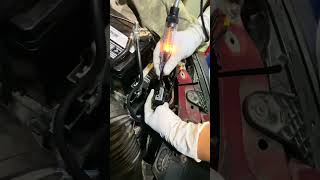
- Verify Power and Ground: Using a wiring diagram, test for proper power and ground at the TCM connector. Pay special attention to ground G105 on the transmission stud, which is a known failure point. 🎬 See how to diagnose bad grounds and CAN bus wiring issues. A voltage drop test on the ground circuit should show less than 0.1 volts.
- Attempt Reprogramming: In some cases, a software glitch can be fixed by reprogramming the module with the latest GM calibration using the SPS software. TSB #PIP4653E suggests this as a diagnostic step. If this fails or the code returns, the module is faulty.
- Condemn the TCM: If all external wiring, power, and grounds are good, and reprogramming is not an option or fails, the TCM has failed internally and must be replaced.
Parts You'll Likely Need
- Transmission Control Module (TCM/TEHCM)
(OEM #24256960 (TEHCM for 6-speed), 24234274 / 24234503 (TCM for 4-speed))— This is the component that has failed internally, causing the P1621 code. The specific part number depends on the transmission (4-speed vs. 6-speed) and model year.
Trusted brands: ACDelco (OEM), Cardone (Remanufactured), Dorman (Remanufactured)
OEM price range: $350-$700
Aftermarket price range: $250-$500
Related Codes That Often Appear With This One
- P0700 — P0700 is a generic code that means the TCM has stored a fault. It acts as a 'check engine light' for the transmission system and will almost always appear when a specific TCM code like P1621 is present.
- P0601, P0603, P0604, P062F — These are all internal control module memory or processor error codes. Their presence alongside P1621 strongly confirms the control module itself has failed, as noted in TSBs #PIP4653E and #05-06-04-060A.
- U0101 — This code means 'Lost Communication With TCM'. It often appears if the TCM has failed completely, has an intermittent power/ground issue, or if there's a problem on the vehicle's communication network.
Technical Service Bulletins (TSBs) & Recalls
- PIP4653E: Discusses DTCs P0601, P0603, P0604, P062F or P1621 stored in the Transmission Control Module (TCM), indicating an internal fault. Recommends attempting to reprogram the module before replacement.
- 05-06-04-060A: Notes that control module DTCs like P1621 can be shared in multiple modules and provides diagnostic information, advising to check for voltage issues first.
Platform-Specific Known Issues
- The 6-speed automatic transmission (6T40/6T45) used in some G6 models features a Transmission Electro-Hydraulic Control Module (TEHCM) that is located inside the transmission. This design makes it prone to failure from heat and vibration and significantly increases the labor cost for replacement compared to the externally-mounted TCM on the 4-speed (4T45-E) models.
- A no-start condition, especially when the engine is hot, can be caused by a cracked circuit board inside the underhood fuse panel, a unique issue documented by owners.
- The main ground for the TCM, G105, is located on a transmission stud and is a common point of failure due to corrosion or broken wires, leading to a variety of symptoms including no-start and loss of communication codes like U0101.
Mechanic-Grade Diagnostic Values
- CAN Bus Network Resistance — expected: ~60 Ohms. Failure: A reading of ~120 Ohms indicates an open circuit or a failed terminating resistor in one of the modules. A reading near 0 Ohms indicates a short between the CAN High and CAN Low wires.
- CAN Bus Voltage (Key On, Engine Off) — expected: CAN High (Pin 6) and CAN Low (Pin 14) voltages should add up to approximately 5V. For example, CAN High might be at 3.5V and CAN Low at 1.5V.. Failure: Voltages that are stuck high, low, or do not mirror each other indicate a network problem, short, or faulty module.
- TCM Ground Wire Voltage (Key On) — expected: Less than 0.1 Volts. Failure: Measuring significant voltage (e.g., 12V) on the ground wire at the TCM connector indicates an open or high-resistance ground circuit (bad ground).
Scan Tool Commands That Help
- GM SPS (Service Programming System): Replace and Program ECU — This function is mandatory after installing a new or used TCM/TEHCM. It downloads the correct VIN-specific software and calibrations to the module, allowing it to communicate with other vehicle systems and function correctly.
- GM Tech 2 / GDS2: Solenoid Automated Cleaning Process — If shifting performance problems are present along with the P1621 code in a 6-speed TEHCM, this function can be run to cycle the solenoids and attempt to clear debris before condemning the entire module.
Wiring & Ground Locations
- G105 — On a stud on the transmission, located on the left rear side of the engine compartment, often below the upper coolant hose.. This is a primary ground for the Transmission Control Module (TCM) and Engine Control Module (ECM). It is a known failure point; corrosion or broken wires here can cause a no-start, loss of communication with the TCM (U0101), and can be misdiagnosed as a failed TCM.
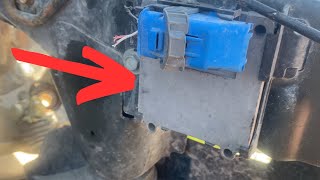
- TCM (4-Speed) — Mounted to the driver's side (LH) strut tower in the engine compartment.. This is the location of the externally-mounted Transmission Control Module for vehicles with the 4T45-E 4-speed automatic transmission, making it relatively easy to access for testing and replacement.
- G103 — On top of the left front strut tower in the engine compartment.. This is a major engine compartment ground point. While not the primary TCM ground, poor connections here can cause various electrical issues that could be misdiagnosed.
- G106 — Location varies by engine. On 2.4L and 3.5L models, it's at the left rear of the engine. On 3.6L models, it's at the right front of the engine.. This ground serves various engine components. Knowing its location is critical for a comprehensive check of all grounds when diagnosing electrical faults.
Real Owner Repair Stories
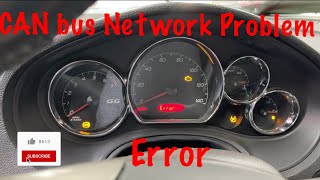
- YouTube channel 'A2Z Auto Masters' (2007 Pontiac G6 3.5L V6) — No crank, no start. Error messages on the instrument cluster and loss of communication with the TCM.
❌ Tried (didn't work) Initial scan showed communication codes, pointing towards a network issue or failed module.
✅ What actually fixed it The problem was traced to the main ground bundle that bolts to the top of the transmission. The wires had corroded and broken off from the ring terminal. The final fix was cutting back the bad wiring, exposing fresh wire, and crimping on a new ring terminal to re-establish a solid ground connection. - YouTube channel 'ScannerDanner' (Pontiac G6 (year/engine not specified, but G6 platform)) — Intermittent no-start condition. Would sometimes start after wiggling wires.
❌ Tried (didn't work) The vehicle was starting and running when it arrived, making diagnosis difficult.
✅ What actually fixed it The issue was a bad ground at G105 on the transmission stud. The mechanic measured 12 volts on the ground wire at a related component, confirming the open ground. Wiggling the G105 ground wires would make or break the connection. Repairing the faulty ground connection resolved the no-start issue.
Model Year Variations Within This Range
- 2007-2010: The physical location of certain ground points, such as G106, varies depending on the engine installed (2.4L, 3.5L, 3.6L, or 3.9L). For example, on 2009 models, G106 is at the left rear of the engine for most engines but at the right front for the 3.6L V6.
Helpful Videos

We Have This Part in Stock






The information in this article is provided for general reference and educational purposes only. Vehicle specifications, procedures, and part compatibility can vary by production date, trim level, and region. Always consult your vehicle's factory service manual and verify part numbers before purchasing or performing repairs. Safety-critical components such as airbags, seat belts, and braking systems should be installed by a qualified professional.
- Pontiac G6:
- 🧭 Diagnostic Flowchart
- 🎬 Helpful Videos
- 🛍️ Shop This Part
- What's Unique About the 2007-2010 Pontiac G6
- Symptoms You May Notice
- Most Likely Causes
- Rare But Worth Checking
- Diagnosis Steps
- Parts You'll Likely Need
- Related Codes That Often Appear With This One
- Technical Service Bulletins (TSBs) & Recalls
- Platform-Specific Known Issues
- Mechanic-Grade Diagnostic Values
- Scan Tool Commands That Help
- Wiring & Ground Locations
- Real Owner Repair Stories
- Model Year Variations Within This Range
- 🎟️ Get 5% Off