

P1621 on 2008-2010 Pontiac G8: Transmission Control Module Memory Failure Causes and Fixes
On a 2008-2010 Pontiac G8, code P1621 almost always indicates an internal memory failure within the Transmission Control Module (TCM). For V8 models with the 6L80E transmission, the TCM is located inside the transmission oil pan, making replacement more labor-intensive. The most common fix is replacing the TCM, which requires professional programming. Expect repair costs to range from $600 to $1,500, depending on the engine and TCM location.
- P1621 on a Pontiac G8 is a serious code that points directly to a failure inside the Transmission Control Module (TCM).
- On V8 models (GT, GXP), the TCM is located inside the transmission pan, making the repair more involved than on V6 models.
- Symptoms often include a Check Engine Light, erratic or harsh transmission shifting, and getting stuck in 'limp mode'.
- This is not a DIY-friendly repair. The replacement TCM must be professionally installed and programmed to your car's VIN.
- Before replacing the TCM, have a mechanic verify its power and ground connections are secure and that the vehicle's battery is healthy.
- The most common fix is replacing the TCM with a new or remanufactured unit from a reputable brand like ACDelco or Dorman.
What's Unique About the 2008-2010 Pontiac G8
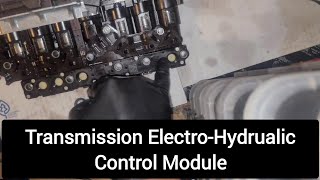
While P1621 can technically occur in various modules, its appearance on the Pontiac G8 is strongly linked to the Transmission Control Module (TCM). GM Technical Service Bulletins (TSBs) specifically guide technicians to investigate this code within the transmission controller for this platform. [TSB #PIP4653E] This indicates a known weakness or pattern of failure in the TCM used in these vehicles. On G8 GT and GXP models (V8 engine) with the 6L80E transmission, the TCM is a Transmission Electro-Hydraulic Control Module (TEHCM) located inside the transmission, bolted to the valve body. This internal location subjects the module to constant heat and vibration, a primary contributor to its failure. V6 models use a different transmission (5L40E) with an externally mounted TCM, which is easier to access.
Diagnostic Flowchart
Tap your situation to follow the diagnostic path that matches what you're seeing on this vehicle.
Symptoms You May Notice
- Check Engine Light (Malfunction Indicator Lamp) is on
- Transmission may shift harshly or erratically
- Vehicle may get stuck in one gear (limp mode)
- Loss of communication with the TCM via a scan tool
- PRNDL gear indicator on the dash may be blank or incorrect
- Vehicle may stall or be hard to start
- Replacing the Engine Control Module (ECM)
- Replacing external transmission sensors or solenoids
- Assuming it's a simple battery issue without further diagnosis
- Replacing the entire transmission when only the internal TEHCM has failed
Most Likely Causes
- Internal Transmission Control Module (TCM) Failure 🔴 High Probability → Shop Transmission Assembly As highlighted by manufacturer TSBs, the TCM is the known weak point for this code on the G8 platform. [TSB #PIP4653E] For V8 models with the 6L80E transmission, the TCM is located inside the transmission, where constant exposure to high temperatures and vibration leads to the breakdown of solder joints and electronic components. 🎬 See how technicians test and rebuild these internal TCM circuits. This is a common failure pattern on many GM vehicles using this transmission.
How to confirm: A professional technician will use a high-level scan tool to confirm the P1621 code is stored in the TCM. After ruling out power and ground issues to the module, if the code returns immediately after clearing, if the module is unresponsive, or if a re-flash attempt fails, it is condemned.
Typical fix: Replace the Transmission Control Module and program the new unit to the vehicle's VIN. For V8 models, this involves draining the transmission, removing the oil pan, and replacing the TEHCM assembly 🎬 Watch: This walkthrough shows how to remove the internal TCM. on the valve body. For V6 models, the external TCM is replaced.
Est. part cost: $250-$950
Rare But Worth Checking
- Poor Power or Ground Connection to the TCM: While less common than outright module failure, a corroded or loose wire can cause low voltage, leading to memory errors. It's worth inspecting the main transmission harness connector and critical ground points like G101, G106, and G201 before replacing the expensive module. A poor ground connection is a common cause of electrical problems that can mimic module failure.
- Low Vehicle Voltage: A failing battery or alternator can cause a host of electrical issues across the vehicle. While it's unlikely to be the sole cause of a persistent P1621, it's a foundational check. Ensure the battery holds a charge above 12.4 volts and the alternator charges between 13.7-14.7 volts. TSB #05-06-04-060A specifically advises checking for voltage issues first when diagnosing memory codes. [TSB #05-06-04-060A]
Diagnosis Steps
- Connect a professional-grade OBD-II scanner capable of reading transmission codes to the vehicle.
- Verify that code P1621 is present and note if it is stored in the Engine Control Module (ECM) or Transmission Control Module (TCM). Note any other codes, especially P0700, P0601, P0603, P0604, or U0101.
- Check the vehicle's battery and charging system to ensure they are operating within specifications (12.4V+ static, 13.7-14.7V charging).
- Inspect the wiring harness and connector at the Transmission Control Module for any signs of corrosion, damage, or loose pins. The location differs for V6 (external) and V8 (internal connector at transmission case).
- Using a multimeter and wiring diagrams, verify that the TCM is receiving proper power and has a solid ground connection at the harness connector. Check power at the 'TCM Fuse 9' (15A) in the rear fuse block and check grounds G101/G106.
- Attempt to clear the codes. If P1621 returns immediately, it strongly suggests an internal module fault.
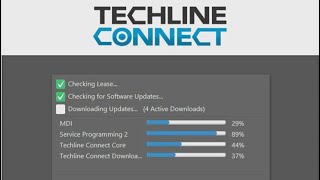
- A final diagnostic step is to attempt a software re-flash with a tool like GM's Service Programming System (SPS) via Techline Connect. If the procedure fails or the code returns, the module is faulty.
- If all external wiring, power, and grounds are good, the TCM is the cause of the fault and should be replaced.
Parts You'll Likely Need
- Transmission Control Module (TCM)
(OEM #V6 (5L40E): 24239402, 92196977, 24244411; V8 (6L80E): 24252114, 24256861 (Verify by VIN))— This module is the most common point of failure for a P1621 code on this platform, as confirmed by GM TSBs. [TSB #PIP4653E] The internal memory fails, requiring module replacement. Part numbers differ between the V6 and V8 models due to different transmissions.
Trusted brands: ACDelco, Dorman
OEM price range: $400-$950
Aftermarket price range: $250-$700
Related Codes That Often Appear With This One
- P0700 — This is a generic code that the TCM sends to the ECM to request the Check Engine Light be turned on. It's a flag that says 'the transmission has a problem'.
- P0601 — Means 'Internal Control Module Memory Check Sum Error'. It is a very similar fault and is often listed alongside P1621 in GM service bulletins, indicating a critical internal module failure. [26, TSB #05-06-04-060A, TSB #PIP4653E]
- P0603 — Means 'Internal Control Module Keep Alive Memory (KAM) Error'. This also points to an internal memory fault. [TSB #05-06-04-060A, TSB #PIP4653E]
- P0604 — Means 'Internal Control Module Random Access Memory (RAM) Error'. Another code indicating a severe internal module problem. [TSB #05-06-04-060A, TSB #PIP4653E]
- U0101 — Means 'Lost Communication with TCM'. This code often appears when the TCM fails internally and can no longer communicate on the vehicle's data network.
Technical Service Bulletins (TSBs) & Recalls
- PIP4653E: Mentions that DTCs P0601, P0603, P0604, P062F or P1621 may be stored in the Transmission Control Module, indicating a module fault.
- 05-06-04-060A: Communicates that DTCs including P1621 relate to control module memory and can be shared in multiple modules.
Platform-Specific Known Issues
- GM Technical Service Bulletin #PIP4653E specifically addresses finding codes like P1621 in the Transmission Control Module and points towards an internal fault.
- GM Technical Service Bulletin #05-06-04-060A notes that P1621 is one of several codes related to control module memory performance that can be set across different modules.
- On G8 GT/GXP models with the 6L80E V8, the TCM is integrated into the valve body assembly (TEHCM) inside the transmission pan. This location increases labor time and cost for replacement compared to the externally-mounted TCM on V6 models.
Scan Tool Commands That Help
- GM Service Programming System (SPS) / Techline Connect: Replace and Reprogram ECU — This function is mandatory after installing a new TCM/TEHCM. 🎬 Watch: A guide to programming the new module with SPS2. It downloads the correct software and VIN information into the new module, allowing it to communicate with the rest of the vehicle.
- GM Service Programming System (SPS) / Techline Connect: Transmission Adaptive Pressure Reset — After programming a new TCM, this function may be required to reset the learned shift pressure values, ensuring smooth shifting from the start.
Wiring & Ground Locations
- TCM Fuse 9 (15A) — In the rear fuse block, located in the left side of the trunk compartment.. This fuse supplies battery power directly to the Transmission Control Module. A blown fuse will cause a no-communication condition and may set various codes, including P1621, although a complete loss of power is more likely to set a U0101 code.
- G101 — On the lower front of the engine block.. This is a primary ground point for both the Engine Control Module (ECM) and the Transmission Control Module (TCM). A poor connection here can cause erratic behavior, communication loss, and memory-related fault codes like P1621.
- G106 (V6 Engine) — On the right front of the engine block.. For the 3.6L V6 engine, this is a key ground point. A loose or corroded connection here can interrupt the ground path for the TCM, leading to unpredictable electronic faults.
- X175 Connector — The main 16-pin round electrical connector on the passenger side of the 6L80E transmission case (V8 models).. This is the sole electrical link to the internal TEHCM. All power, ground, and communication signals pass through this connector. Checking for corrosion or pushed-back pins here is a critical step before condemning the internal module.
- G201 — Behind the right (passenger side) kick panel.. This is a major interior ground point for multiple modules, including the Body Control Module (BCM). While not a direct ground for the TCM, a problem here can cause network communication issues that may present as other module faults.
OEM Part Supersession History
24252114→24256861— Hardware and software revision for improved reliability of internal pressure switches and solenoids.
Heads up: While later part numbers may physically fit, using the incorrect generation of TEHCM can lead to a no-start or immediate limp-mode condition. Always verify the correct part number by VIN.24256861→24287420, 19431596— Further hardware and software updates to improve durability and address component shortages.
Heads up: These newer part numbers are generally for later model year GM trucks but are sometimes listed as compatible replacements. Programming with GM's SPS is critical for function.V6 (5L40E) TCMs: 24239402, 24239534→24244411— Consolidation and software updates for the externally mounted TCM used with the V6 engine.
Heads up: These part numbers are often associated with a generic hardware code of 24239785. They must be programmed for the specific vehicle.
Helpful Videos




The information in this article is provided for general reference and educational purposes only. Vehicle specifications, procedures, and part compatibility can vary by production date, trim level, and region. Always consult your vehicle's factory service manual and verify part numbers before purchasing or performing repairs. Safety-critical components such as airbags, seat belts, and braking systems should be installed by a qualified professional.
- Pontiac G8:
- 🧭 Diagnostic Flowchart
- 🎬 Helpful Videos
- What's Unique About the 2008-2010 Pontiac G8
- Symptoms You May Notice
- Most Likely Causes
- Rare But Worth Checking
- Diagnosis Steps
- Parts You'll Likely Need
- Related Codes That Often Appear With This One
- Technical Service Bulletins (TSBs) & Recalls
- Platform-Specific Known Issues
- Scan Tool Commands That Help
- Wiring & Ground Locations
- OEM Part Supersession History
- 🎟️ Get 5% Off