

P1629 on 2013-2017 Honda Accord: Internal PCM Malfunction
Code P1629 on a 2013-2017 Honda Accord indicates an 'Internal Control Module Malfunction,' specifically pointing to a failure within the Powertrain Control Module (PCM). This is a rare but serious code. The most common solution is to replace the PCM, which requires programming by a dealer or qualified shop.
- P1629 on a Honda Accord means the Powertrain Control Module (PCM) has an internal failure.
- This is a very rare code for the 2013-2017 Honda Accord.
- Do not confuse it with the anti-theft definition used by other manufacturers like GM.
- The most common fix is replacing the PCM, which must be programmed to the vehicle.
- Due to the complexity and need for programming, this repair should be handled by a professional technician or dealership.
What's Unique About the 2013-2017 Honda Accord
The 2013-2017 Honda Accord (9th generation) does not commonly experience the P1629 trouble code. Extensive searches of owner forums and repair databases show only isolated incidents. This suggests it is an extremely rare failure. When it does occur, the cause is almost universally a failed PCM, rather than a wiring or sensor issue that could be misdiagnosed.
Symptoms You May Notice
- Check Engine Light is on
- Vehicle will not start
- Engine cranks but does not fire
- Intermittent stalling
- ABS or VSA (Vehicle Stability Assist) warning light may be illuminated due to loss of communication with the PCM
- Replacing the PCM or ABS module without confirming a communication failure on the CAN bus network.
- Attempting to diagnose an immobilizer issue, which is the common meaning for other car brands but is not confirmed for Honda.
- Replacing other engine sensors before verifying the integrity of the PCM itself.
Most Likely Causes
Rare But Worth Checking
- Severe voltage fluctuations from a faulty alternator or battery causing damage to the PCM.
- Water intrusion into the PCM or its connectors.
- Incorrect jump-starting procedure causing a voltage spike.
- Loose or corroded main PCM ground connections (G101).
Diagnosis Steps
- This is a general guide. An internal PCM failure is difficult to definitively prove without substitution.
- Connect a professional, Honda-compatible scan tool (like the Honda HDS) to read the code and any associated trouble codes from all vehicle modules.
- Check for any available PCM software updates. Some TSBs for other issues involve updating PCM software, which could potentially resolve internal glitches.
- Verify stable power and ground to the PCM. Check the battery and charging system. Low or fluctuating voltage can cause myriad electronic issues.
- Inspect the main PCM ground connection, G101. On the 4-cylinder, this is located on the intake manifold plenum on the driver's side. On the V6, it is on the thermostat housing. Ensure it is clean, tight, and free of corrosion.
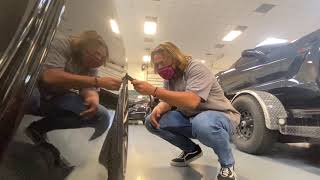
- Inspect the PCM and its connectors for any signs of physical damage, corrosion, or water intrusion. The PCM is located in the center of the engine bay near the firewall. 🎬 Watch: Locate the PCM in the engine bay
- If all power, ground, and communication network lines testing to the PCM are good, and no software updates are available, the PCM is condemned. The fault is internal and the unit must be replaced.
Parts You'll Likely Need
- Powertrain Control Module (PCM/ECU)
Related Codes That Often Appear With This One
- U0100 — Lost Communication With ECM/PCM. If the PCM is failing internally, other modules on the CAN bus will lose communication with it, triggering U-codes.
- U0129 — If the P1629 code truly means 'Lost Communication With Brake System Control Module', it would likely be accompanied by the standard SAE code U0129, which has the same definition.
Technical Service Bulletins (TSBs) & Recalls
- While no TSB directly addresses P1629, several TSBs for the 2013-2017 Accord involve PCM software updates for other issues (e.g., TSB 17-017 for torque converter judder, TSB A17-004 for catalyst monitor). Checking for the latest software is a critical diagnostic step.
Platform-Specific Known Issues
- { "title": "2014 Accord V6 PCM Failure", "description": "A user on DriveAccord.net with a 2014 Honda Accord V6 reported receiving the P1629 code. After diagnosis, the Honda dealership replaced the Powertrain Control Module (PCM) under warranty to resolve the issue. This provides a real-world example of the code leading to PCM replacement." }
Mechanic-Grade Diagnostic Values
- PCM Power Source (IGP) — expected: Battery voltage with ignition switch ON (II). Failure: About 0V indicates a power supply issue to the PCM.
- PCM Power Ground (PG1, PG2) — expected: Less than 1.0 V at all times. Failure: Voltage significantly above 0V indicates a bad ground connection.
- PCM Logic Ground (LG1) — expected: Less than 1.0 V at all times. Failure: Voltage significantly above 0V indicates a bad logic ground.
- Sensor Ground (SG1) — expected: Less than 1.0 V at all times. Failure: Voltage significantly above 0V indicates a bad sensor ground, which can cause erratic readings and potentially damage the PCM.
Scan Tool Commands That Help
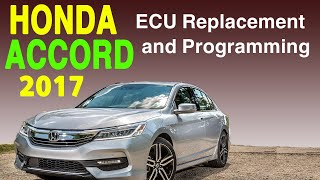
- Honda HDS (Honda Diagnostic System): Replace ECM/PCM — This function is mandatory after installing a new or used PCM. 🎬 Watch: Step-by-step ECU replacement and programming guide It syncs the replacement PCM with the vehicle's immobilizer unit and keys. Failure to perform this step will result in a no-start condition as the car will not recognize the new module.
Wiring & Ground Locations
- PCM — In the engine compartment, near the center of the firewall, often under a protective plastic cover.. The code P1629 directly indicates an internal failure of this module. Physical inspection for water damage or corrosion is a key step.
- G101 (Main PCM Ground) — On 4-cylinder models, it's located on the intake manifold plenum on the driver's side. On V6 models, it's on or near the thermostat housing.. A loose or corroded G101 is a known cause of intermittent electrical issues, including no-start conditions and strange behavior that can be misdiagnosed as a failed PCM. Verifying this ground is clean and tight is a critical diagnostic step before condemning the PCM.
- G402 — Located on the left side of the dash, behind interior panels.. This is an interior ground point. While less likely to be the primary cause than engine bay grounds, poor interior grounds can cause communication issues between modules.
Real Owner Repair Stories
- Reddit user u/Ok_Illustrator5129 (2017 Honda Accord EX) — Multiple warning lights on the dashboard, loss of power, and a check engine light for fuel injector #1.
❌ Tried (didn't work) Replaced all fuel injectors at the dealership for $1200.
✅ What actually fixed it The dealership ultimately diagnosed a failed Powertrain Control Module (PCM). The user was quoted an additional $1200 for the PCM replacement. This story highlights how a failing PCM can manifest as other component codes (like a fuel injector code) leading to expensive misdiagnosis.
Model Year Variations Within This Range
- 2016-2017: The 2016 model year introduced a significant facelift for the Accord, which included updated electronics and the introduction of the Honda Sensing suite of driver-assist features. This may result in different PCM hardware and software versions compared to the 2013-2015 models. When sourcing a used PCM, it is critical to match not only the main part number but also the model year range (pre-facelift vs. post-facelift) to ensure compatibility with other vehicle modules.
Diagnostic Flowchart
Other Known Issues on This Vehicle
Issues unrelated to this code that are worth knowing about as an owner of this generation:
- Starter Motor Failure / Grinding Noise 🔴 High — Common on 2013-2015 models, especially V6 with automatic transmission. Often occurs around 50,000 miles. (Ref: TSB 16-002 describes replacing the starter and re-indexing the torque converter ring gear to fix a clearance issue.)
- VTC Actuator Rattle on Cold Start 🟠 Medium — Common on 4-cylinder (K24) engines. Causes a brief, loud rattle for 1-2 seconds immediately after a cold start. (Ref: TSB 09-010 describes the diagnosis and replacement of the faulty VTC actuator.)
- Dim or Failed LED Daytime Running Lights (DRL) 🟡 Low — Very common on 2016-2017 models. The LED strip in one or both headlights will dim or go out completely. (Ref: Warranty Extension / TSB 19-042. Honda extended the warranty for this specific issue to 10 years with unlimited mileage.)
- Torque Converter Judder 🟠 Medium — Felt as a shudder or vibration when driving between 20-60 mph on models with automatic transmissions. (Ref: TSB 17-017 attributes this to deteriorated transmission fluid and provides a software update and fluid flush procedure.)
- Undersized/Weak Battery 🟡 Low — Common on all models. The OEM battery is often cited by owners as being undersized for the vehicle's electrical demands, leading to premature failure and various electrical gremlins when voltage is low.
Used vs. New Parts: Buying Guide for This Vehicle
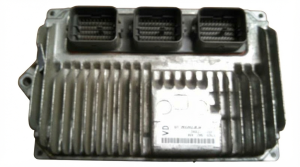
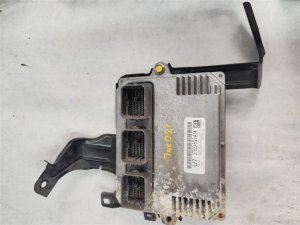
When a used part is the smart pick: A used PCM is a very cost-effective option for this repair, often costing less than 20% of a new OEM unit. Since P1629 indicates a rare internal failure rather than a common wear item, a used part from a reputable salvage yard is a smart choice, provided it can be programmed.
Donor-vehicle mileage cap: roughly under 150000 miles for the part to have meaningful remaining life.
What to inspect on the donor part:
- Verify the part number on the used PCM EXACTLY matches the original.
- Source the part from a vehicle that was not involved in a flood or front-end collision.
- Ensure the seller offers a warranty or return policy in case the unit is also faulty.
- Visually inspect the connectors for any bent pins, corrosion, or signs of water damage.
OEM-only on this vehicle (don't cheap out):
- Powertrain Control Module (PCM) - While a used OEM part is acceptable, aftermarket 'rebuilt' or 'remanufactured' PCMs from unknown brands should be avoided. The quality control is often poor, and they may have programming or compatibility issues. Stick with either a new Honda PCM or a used Honda PCM.
Aftermarket brands forum-validated for this vehicle:
- For this specific repair, no aftermarket brands are consistently recommended over a used OEM part. Companies like SIA Electronics offer repair services for your original module, which can be a good option.
Brands owners have reported issues with on this vehicle:
- Generic, unbranded PCMs sold on platforms like eBay or Amazon without a clear company history or warranty.
Real Owner Stories
Aggregated from forums and TSBs cited above. Mileages and costs reflect what owners reported in those sources.
2014 Honda Accord V6
Symptoms: The owner reported receiving the P1629 code and sought assistance on DriveAccord.net.
What fixed it: The Honda dealership replaced the Powertrain Control Module (PCM) under warranty.
Source hint: DriveAccord.net thread titled 'P1629 code' (https://www.driveaccord.net/threads/p1629-code.183330/)
Related OBD-II Codes
Frequently Asked Questions
Where is the PCM located on my 2013-2017 Honda Accord if I need to inspect it for P1629?
I have a 2014 Accord V6 with P1629; is there a specific ground connection I should check?
Could my Accord's weak battery be causing the P1629 code?
Are there any TSBs I should be aware of when diagnosing P1629 on my 2013-2017 Accord?
Can I use a used PCM from a salvage yard to fix P1629?
Does the 4-cylinder Accord have the same PCM ground location as the V6?
Helpful Videos
Used OEM Parts in Stock
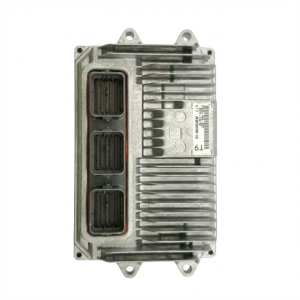
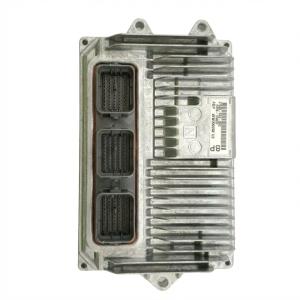
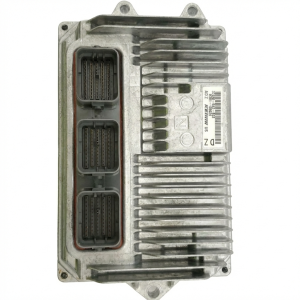
New Aftermarket Parts Available


The information in this article is provided for general reference and educational purposes only. Vehicle specifications, procedures, and part compatibility can vary by production date, trim level, and region. Always consult your vehicle's factory service manual and verify part numbers before purchasing or performing repairs. Safety-critical components such as airbags, seat belts, and braking systems should be installed by a qualified professional.
- Honda Accord:
- 🧭 Diagnostic Flowchart
- 🎬 Helpful Videos
- 🛍️ Shop This Part
- What's Unique About the 2013-2017 Honda Accord
- Symptoms You May Notice
- Most Likely Causes
- Rare But Worth Checking
- Diagnosis Steps
- Parts You'll Likely Need
- Related Codes That Often Appear With This One
- Technical Service Bulletins (TSBs) & Recalls
- Platform-Specific Known Issues
- Mechanic-Grade Diagnostic Values
- Scan Tool Commands That Help
- Wiring & Ground Locations
- Real Owner Repair Stories
- Model Year Variations Within This Range
- Other Known Issues on This Vehicle
- Used vs. New Parts: Buying Guide for This Vehicle
- Real Owner Stories
- 2014 Honda Accord V6
- Related OBD-II Codes
- Frequently Asked Questions
- 🎟️ Get 5% Off