

P1682 on 2005-2010 Pontiac G6: Ignition Circuit Fault Causes and Fixes
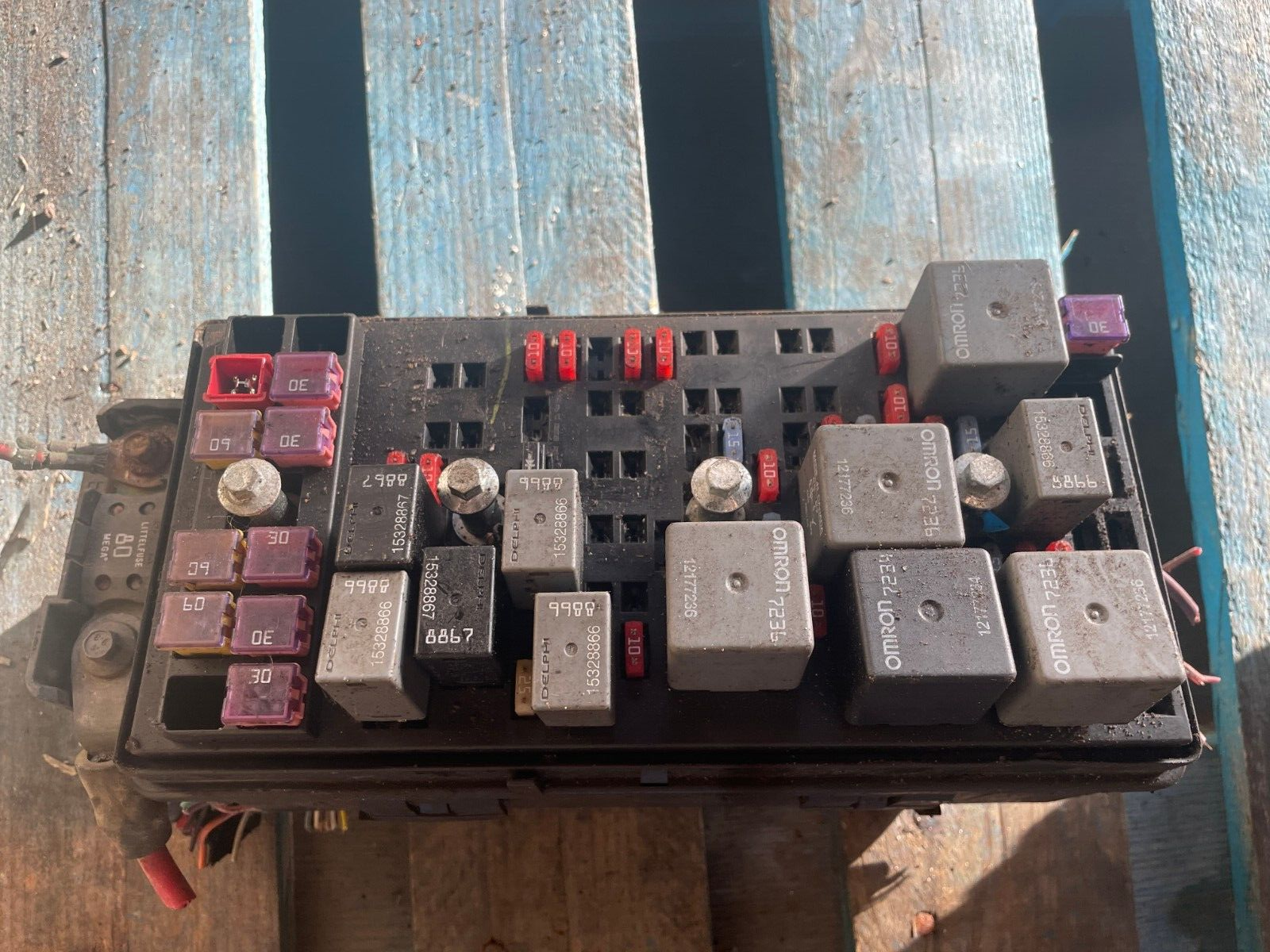
For a 2005-2010 Pontiac G6, code P1682 is almost always caused by a poor connection at the run/crank relay or a faulty relay itself in the underhood fuse box. Before replacing any parts, try swapping the relay with an identical one and inspect the fuse box terminals for looseness or corrosion. Wiggling the relay while trying to start the car can often confirm a bad connection.
- P1682 on a G6 is most often a problem in the underhood fuse box, not the ignition switch.
- Always start by swapping the Run/Crank relay with another identical relay as a free diagnostic step.
- Carefully inspect the relay's socket in the fuse box for loose or spread-open terminals.
- If you have a 2006 G6 with a 2.4L engine, be aware of the TSB that calls for an ECM reprogram before replacing any parts.
- Do not drive the vehicle, as it can stall without warning or fail to start.
What's Unique About the 2005-2010 Pontiac G6
Unlike many vehicles where an ignition circuit code points directly to the ignition switch, the Pontiac G6 and its GM Epsilon platform siblings (like the Chevy Malibu and Saturn Aura) are well-known for this code being caused by issues in the underhood fuse box (also called the UBEC or Power Distribution Center). The female terminals for the powertrain or run/crank relays can spread apart over time due to heat cycles and vibration, causing a poor connection that triggers the P1682 code, often leading to a crank-no-start or stalling condition. Experienced technicians and knowledgeable owners will almost always check the relays and fuse box connections before suspecting the ignition switch.
Symptoms You May Notice
- Engine cranks but will not start
- Engine stalls while driving, sometimes intermittently or when hitting a bump
- Reduced Engine Power message on the dash
- Check Engine Light is on
- Multiple warning lights on the instrument cluster (e.g., traction control, ABS) may appear along with the Check Engine Light
- Car fails to start, but starts if the run/crank relay is wiggled
- Engine fails to shut off immediately when the key is turned off
- Replacing the ignition switch first. On this platform, the problem is far more likely to be in the underhood fuse box or a relay.
- Replacing the battery without diagnosing the circuit. While a weak battery can cause various electrical issues, P1682 points to a specific voltage discrepancy that is usually independent of overall battery health.
Most Likely Causes
- Loose or Corroded Terminals in Underhood Fuse Box 🔴 High Probability → Shop Fuse Box The design of the fuse box terminals allows them to loosen over time with heat cycles and vibration, creating a poor connection for critical relays. This is a widely documented failure mode for this platform.
How to confirm: With the key off, locate the Run/Crank relay (often labeled 'RUN/CRK') in the underhood fuse box. Wiggle the relay; if it feels loose, the terminals are the likely cause. A definitive test is to have an assistant try to start the car while you wiggle the relay. If the car starts, you've found the problem. Visually, you can remove the relay and inspect the female terminals; they may look spread apart compared to adjacent terminals.
Typical fix: Carefully use a small, thin pick tool to bend the female terminals slightly inward for a tighter fit on the relay pins. This restores proper contact. If corrosion is heavy or the plastic housing is damaged, the entire fuse box may need replacement.
Est. part cost: $0 - $10 - Faulty Run/Crank or Powertrain Relay 🟡 Medium Probability Relays are a common failure item and are susceptible to failure from electrical spikes or simple wear and tear. Internal contacts can burn or the coil can fail.
How to confirm: The easiest test is to swap the suspect relay (usually 'RUN/CRK', #32) with an identical relay from a non-critical circuit in the same fuse box, such as the horn or cooling fan relay. If the car starts and runs reliably after the swap, the original relay was bad.
Typical fix: Replace the faulty relay with a new one. A common multi-use relay part number is GM 19116057 or ACDelco 15-50323.
Est. part cost: $10-$30 - ECM Reprogramming Needed (2006 2.4L specific) 🟡 Medium Probability A factory software glitch can cause this code to be set falsely on 2006 models with the 2.4L engine, often accompanied by code P1516.
How to confirm: This applies specifically to 2006 G6 models with the 2.4L engine. If you have checked relays and connections and found no physical issue, consult GM Technical Service Bulletin (TSB) 06-06-04-018A. A dealer or qualified shop with a Tech 2 scanner can check the current software calibration.
Typical fix: The Engine Control Module (ECM) needs to be reprogrammed with an updated calibration. This must be done by a GM dealership or a repair shop with the appropriate tools.
Est. part cost: $0 (parts), but labor for programming will apply. - Blown ECM or IGN Fuse ⚪ Low Probability
How to confirm: Visually inspect the fuses related to the ignition and ECM circuits in the underhood fuse panel (e.g., Fuses 3 and 16). Use a multimeter to test for continuity if visual inspection is unclear. A blown fuse indicates a deeper short circuit.
Typical fix: Replace the blown fuse. If the fuse blows again immediately, there is a short circuit in the corresponding wire or component that requires further diagnosis.
Est. part cost: $1-$5
Rare But Worth Checking
- Faulty Ignition Switch: → Shop Ignition Switch While this is a common cause on other vehicles, it's less common on the G6 for this specific code. It should only be considered after all fuse box and relay issues have been ruled out.
- Damaged Wiring Harness: A short or open in the wiring between the fuse box, ignition switch, and ECM can cause this code. This is rare without prior damage, but has been found in some cases where a wire breaks internally.
- Faulty Engine Control Module (ECM): → Shop Engine Control Module (ECM) ECM failure is rare. The ECM should only be replaced after all other possibilities have been exhaustively tested, as it is expensive and requires programming.
- Poor Battery Terminal Connection: A loose or corroded negative battery terminal has been noted in at least one detailed repair case to contribute to intermittent electrical problems, including a no-start condition that accompanies the P1682 code.
Diagnosis Steps
- Check for a crank-no-start condition. Note if the engine stalls or if there are other electrical symptoms.
- Scan for other DTCs that may be present, such as P0689 or U0100.
- Locate the underhood fuse box. Identify the Run/Crank relay (position #32) and an identical non-essential relay like the horn or fan.
- Have an assistant attempt to start the engine while you firmly wiggle the Run/Crank relay. If the engine starts, the connection is loose.
- If wiggling has no effect, swap the Run/Crank relay with the identical relay you identified. Attempt to start the vehicle. If it starts, the original relay is bad.
- If swapping doesn't work, remove the relay and closely inspect the female terminals in the fuse box socket. Look for corrosion or terminals that look spread open wider than their neighbors.
- If terminals are loose, disconnect the battery, then use a small, sturdy pick tool to carefully bend the female terminals inward to ensure a tighter grip on the relay pins.
- Inspect all fuses related to the ignition and ECM (check owner's manual for locations, but pay attention to fuses like #3 and #16). Replace any that are blown.
- Check the main battery terminals for tightness and corrosion, especially the negative terminal clamp.
- If you have a 2006 G6 with the 2.4L engine and no physical faults are found, refer to TSB 06-06-04-018A regarding a necessary ECM reprogram. 🎬 Watch: Troubleshooting the P1682 code on the 2.4L engine.
- Only after confirming all the above are good should you proceed to test the ignition switch circuits and wiring harness for continuity and proper voltage.
Parts You'll Likely Need
- Run/Crank Relay
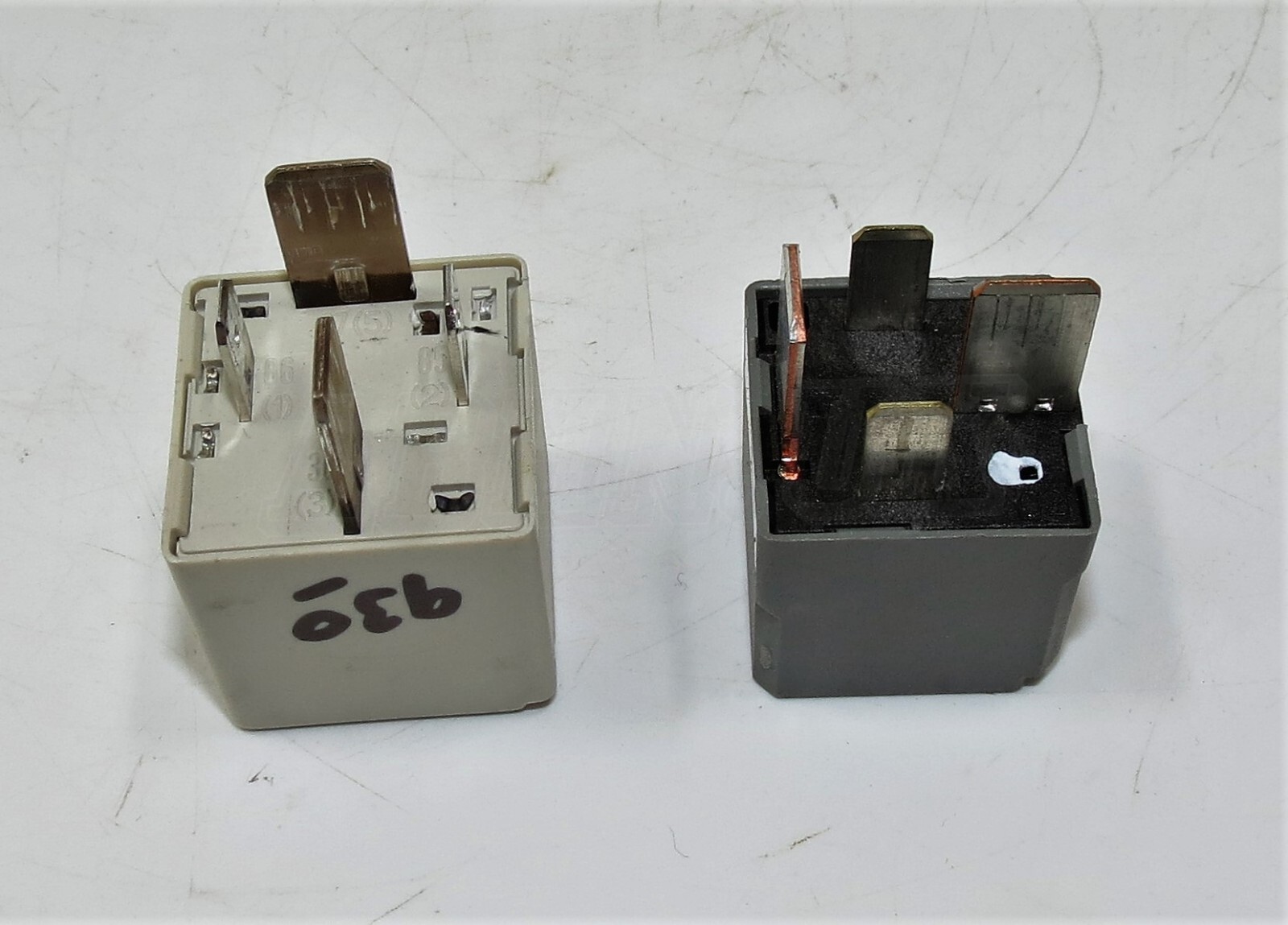
(OEM #19116057 (supercedes 15328866, 12193606))— This relay is a primary component in the ignition circuit checked by the ECM. It's a common failure point and an inexpensive first part to replace.
Trusted brands: ACDelco, Standard Motor Products, WVE
OEM price range: $20-$40
Aftermarket price range: $10-$25 - Underhood Fuse Block
(OEM #25883023 (example for 2008 model, verify by VIN))— Internal corrosion or loose terminals that cannot be repaired necessitate the replacement of the entire fuse block, a known issue for this code on the G6 and its platform mates.
Trusted brands: ACDelco (OEM), Dorman
OEM price range: $200-$300
Aftermarket price range: $150-$250
Related Codes That Often Appear With This One
- P0689 — This code relates to the ECM/PCM Power Relay Circuit. A fault in the fuse box or a bad relay that causes P1682 can directly affect the main power relay circuit as well. They are often diagnosed together.
- P1516 — TSB 06-06-04-018A specifically mentions that P1682 and P1516 can be set together due to a software issue on 2006 2.4L models, requiring an ECM reprogram.
- U0100 — This code indicates a loss of communication with the ECM. If the ECM loses power intermittently due to the fault causing P1682, other modules on the CAN bus will report a communication loss.
Technical Service Bulletins (TSBs) & Recalls
- 06-06-04-018A: Malfunction Indicator Lamp (MIL) On, DTCs P1682, P1516 Falsely Set (Reprogram ECM). This TSB addresses a software calibration issue specific to the 2006 2.4L engine that can cause the code to appear without a physical fault.
Platform-Specific Known Issues
- For the 2006 model year with the 2.4L LE5 engine, a known software issue can falsely trigger DTC P1682. GM released TSB #06-06-04-018A, which instructs technicians to reprogram the ECM with an updated calibration rather than replacing parts.
- The underhood fuse box (UBEC) is the most common point of failure for this code across the entire 2005-2010 G6 lineup and its platform mates due to the terminal connection design.
Mechanic-Grade Diagnostic Values
- Voltage difference between 'Ignition 1 Voltage' and 'EC Ignition Relay Feedback' scan tool parameters — expected: < 3.0 Volts. Failure: A difference greater than 3.0 Volts for more than one second will set the DTC.
- Resistance of Run/Crank Relay coil (pins 85 to 86) — expected: 50 - 120 Ohms. Failure: Reading of 'OL' (Open Loop/infinite resistance) or near 0 Ohms indicates a faulty relay.
- Resistance in either Ignition 1 voltage circuit wiring — expected: < 5.0 Ohms. Failure: A resistance of 5.0 Ohms or greater is sufficient to cause high resistance and trigger the DTC.
Wiring & Ground Locations
- Run/Crank Relay — Position #32 in the underhood fuse block.. This relay provides one of the two ignition voltage signals that the ECM monitors. A loose connection or failure here is the most common cause of P1682.
- IGN/ECM Fuses — Fuse #3 (Ignition 1) and Fuse #16 (Ignition) in the underhood fuse block.. These fuses protect the two separate ignition circuits that the ECM compares. A poor connection at these fuse terminals can also cause the voltage discrepancy.
- G106 (or similar) — A ground stud located on the top of the transmission housing, where multiple black ground wires for the ECM and TCM connect.. A corroded or broken ground at this location can cause an unstable voltage reference for the ECM, leading to various electrical faults, including a no-crank and potentially P1682 due to perceived voltage instability.
- Underhood Fuse Block (UBEC) Connectors — Large multi-pin connectors on the underside of the fuse block.. Corrosion or loose pins in these main connectors can cause widespread electrical issues, including interrupting the ignition voltage signals traveling from the relays to the ECM.
Real Owner Repair Stories
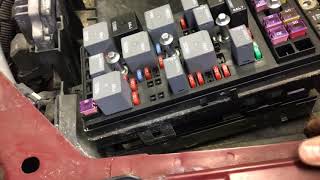
- YouTube user 'The Lo-fi Mofo' (2008 Pontiac G6 2.4L, 176,000 miles) — Intermittent stalling at stoplights, then a final crank-no-start condition. Stalled when running if the relay was wiggled.
❌ Tried (didn't work) Initially replaced relays, but the new relay was also loose.
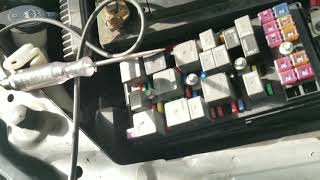
✅ What actually fixed it The female terminals for the run/crank relay in the fuse box had spread apart. The fix was to use a small pick tool to carefully bend the terminals back together for a tight fit on the relay pins. The car started and ran reliably afterward. - YouTube user 'Jersey Shore Fabricators' (2009 Pontiac G6 3.5L) — Intermittent no-start and stalling, specifically when it rains. Codes P1682 and P0685.
❌ Tried (didn't work) Replaced injector wiring harness for a separate issue., Replaced starter., Replaced battery terminals., Replaced the fuse box with a junkyard part, which initially did not solve the water-related issue.
✅ What actually fixed it Water was getting into the underhood fuse box. The final, successful fix was applying a liberal amount of dielectric grease to all the relay and fuse connections to waterproof them, preventing the intermittent shorting.
"I Checked Everything" — The Actual Cause
- The electrical equivalent for this code is when a technician swaps the run/crank relay and the problem persists, and the original relay even tests good on the bench. The actual, hidden cause is often the female pin sockets within the fuse block itself. The sockets have spread apart from heat and vibration (fretting), creating a poor connection. The fix is not replacing the relay again, but physically tightening the pin sockets in the fuse block with a pick tool or replacing the fuse block.
OEM Part Supersession History
25883023 (Underhood Fuse Block for a 2008 G6)→N/A— N/A
Heads up: Part numbers for the fuse block vary by year and options. A documented case showed a block ending in '3024' from a donor car with fog lights worked correctly in a car originally equipped with a '3023' block, indicating some cross-compatibility exists, but it's best to match part numbers or get one from a car with identical options.
Model Year Variations Within This Range
- 2006 (2.4L Engine): A specific software calibration issue can cause P1682, often with P1516. TSB 06-06-04-018A advises an ECM reprogram instead of parts replacement. This is unique to this year/engine combination.
Diagnostic Flowchart
Used vs. New Parts: Buying Guide for This Vehicle
When a used part is the smart pick: The Underhood Fuse Block (UBEC) is an excellent candidate for a used part from a salvage yard. New OEM units are costly, and a quality-inspected used part can provide a very economical and effective repair.
Donor-vehicle mileage cap: roughly under 100000 miles for the part to have meaningful remaining life.
What to inspect on the donor part:
- Inspect for a clean, unbroken cover, indicating it was protected from the elements.
- Look for any signs of white or green powdery corrosion on the terminals or plastic housing.
- Check for melted plastic around any of the relay or high-current fuse sockets.
- If possible, inspect the large connectors on the bottom to ensure pins are straight and free of corrosion.
- Avoid parts from vehicles with signs of flood damage.
OEM-only on this vehicle (don't cheap out):
- Engine Control Module (ECM)
Aftermarket brands forum-validated for this vehicle:
- ACDelco (for relays)
- Standard Motor Products (for relays)
- Dorman (for fuse block, though used OEM is often preferred)
Real Owner Stories
Aggregated from forums and TSBs cited above. Mileages and costs reflect what owners reported in those sources.
2008 Pontiac G6
Symptoms: The car had a P1682 code and would not start unless the owner went to the underhood fuse box and wiggled the run/crank relay.
What fixed it: The owner disassembled the fuse box and used a tool to bend the loose female terminals for the relay, creating a tighter and permanent connection.
Source hint: Pontiac G6 P1682 ignition circuit code SOLVED! - YouTube
2009 Pontiac G6
Symptoms: An intermittent no-start condition that primarily occurred when it rained, setting codes P1682 and P0685.
What fixed it: The issue was traced to the fuse block, and the correct repair was to replace the entire fuse block assembly.
Source hint: Pontiac G6 P1682 P0685 fuse block - YouTube
Chevrolet Trailblazer (GM Vehicle with similar issue)
Symptoms: Vehicle would not start when warm and was setting codes P1682, P0689, and P2176.
What fixed it: After discussion, the consensus pointed to a faulty fuse block as the culprit, and the owner decided to order a replacement fuse block to fix the problem.
Cost: $200-$250
Source hint: P1682, P0689, P2176 codes and no start when warm | GMTNation
Related OBD-II Codes
Frequently Asked Questions
My 2006 G6 has the 2.4L engine and code P1682, but the relays and connections seem fine. What's the issue?
My G6 won't start, but if I wiggle the 'RUN/CRK' relay in the fuse box, it fires right up. Do I need a new fuse box?
What's the quickest way to test if the Run/Crank relay itself is bad on my Pontiac G6?
My G6 is showing a 'Reduced Engine Power' message along with the P1682 code. Are these related?
I need to replace the Run/Crank relay on my G6. Is there a specific part number I should look for?
My car sometimes stalls when I hit a bump and then the Check Engine Light comes on with P1682. What should I check first?
Does this P1682 fuse box problem affect other cars besides the Pontiac G6?
Helpful Videos
We Have This Part in Stock

The information in this article is provided for general reference and educational purposes only. Vehicle specifications, procedures, and part compatibility can vary by production date, trim level, and region. Always consult your vehicle's factory service manual and verify part numbers before purchasing or performing repairs. Safety-critical components such as airbags, seat belts, and braking systems should be installed by a qualified professional.
- Pontiac G6:
- 🧭 Diagnostic Flowchart
- 🎬 Helpful Videos
- 🛍️ Shop This Part
- What's Unique About the 2005-2010 Pontiac G6
- Symptoms You May Notice
- Most Likely Causes
- Rare But Worth Checking
- Diagnosis Steps
- Parts You'll Likely Need
- Related Codes That Often Appear With This One
- Technical Service Bulletins (TSBs) & Recalls
- Platform-Specific Known Issues
- Mechanic-Grade Diagnostic Values
- Wiring & Ground Locations
- Real Owner Repair Stories
- "I Checked Everything" — The Actual Cause
- OEM Part Supersession History
- Model Year Variations Within This Range
- Used vs. New Parts: Buying Guide for This Vehicle
- Real Owner Stories
- 2008 Pontiac G6
- 2009 Pontiac G6
- Chevrolet Trailblazer (GM Vehicle with similar issue)
- Related OBD-II Codes
- Frequently Asked Questions
- 🎟️ Get 5% Off