

P1715 on 1998-2004 Ford F-150: Shift Solenoid 'B' Malfunction Causes and Fixes
On a 1998-2004 Ford F-150 with a 4R70W or similar transmission, P1715 almost always means the Shift Solenoid 'B' (SSB) is sticking or has failed electrically. The fix involves dropping the transmission pan to replace the shift solenoid assembly, which is a moderately difficult DIY job requiring fluid drainage and careful internal work.
- P1715 on a 1998-2004 F-150 means there is a problem with Shift Solenoid 'B'.
- The most likely cause is the solenoid itself sticking or failing, which requires replacement.
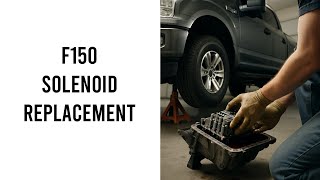
- The repair is done by removing the transmission pan to access the solenoid pack.
- Always replace the transmission filter and use a new pan gasket during the repair.
- Ensure you use the correct type of transmission fluid (Mercon V is common for this era) when refilling.
What's Unique About the 1998-2004 Ford F-150
For the 10th generation F-150 (1997-2004) and other Fords of this era using the 4R70W transmission family, this code is very specific. Unlike on many other makes where P1715 can point to speed sensors or other components, on this Ford truck it almost exclusively points to a sticking or electrically failed Shift Solenoid 'B'. The PCM's 'inductive signature' test is a sophisticated diagnostic that directly monitors the solenoid's electro-mechanical health, making the diagnosis more direct. The issue is typically the solenoid itself, located within the solenoid pack inside the transmission pan.
Generation note: This guide covers the 10th generation Ford F-150. The 1998-2003 models are all 10th gen. The 2004 model year was a split; this guide applies to the 2004 F-150 'Heritage' model (which is a 10th gen truck), not the redesigned 11th generation F-150 also released in 2004.
Symptoms You May Notice
- Check Engine Light is on
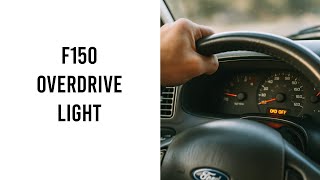
- Flashing Overdrive (O/D) light on the gear selector 🎬 Watch: Diagnosing a flashing overdrive light on this F-150
- Harsh or erratic shifting, particularly the 1-2 shift
- Delayed engagement into gear
- Transmission may feel like it's slipping between gears
- Transmission may be stuck in one gear (typically 2nd or 3rd as a limp-home mode)
- In some cases, no noticeable drivability issues other than the Check Engine Light.
- Replacing the entire transmission. While the fault is internal, it's usually a serviceable component (the solenoid pack) that does not require a full, expensive transmission replacement.
- Confusing it with a speed sensor issue. On many other vehicle brands (like Nissan or Subaru), P1715 relates to a turbine or input speed sensor, but on this generation of Ford, it is specifically for the shift solenoid 'B' inductive signature.
Most Likely Causes
- Sticking or Failed Shift Solenoid 'B' (SSB) 🔴 High Probability → Shop Transmission Valve Body Age, mileage, and fluid condition can cause the mechanical pintle inside the solenoid to stick or the internal coil winding to fail. A former Ford transmission engineer confirms a sticking solenoid is the primary trigger for this specific inductive signature code.
How to confirm: The solenoid is part of the solenoid pack/block inside the transmission pan. It can be tested with a multimeter for correct resistance. For a 4R70W, the shift solenoids should measure between 20-30 ohms. However, resistance tests only confirm electrical integrity, not the mechanical sticking that often causes this code. Replacement of the solenoid pack is the most common and definitive fix.
Typical fix: Replace the shift solenoid pack. Since all solenoids are of the same age and have been subjected to the same conditions, replacing the entire pack is the standard and recommended repair while the pan is off.
Est. part cost: $50-$180 - Contaminated or Low Transmission Fluid 🟡 Medium Probability → Shop Transmission Assembly Old, degraded fluid loses its lubricating properties and can contain microscopic debris that causes the fine tolerances within the solenoids to bind or stick. This is a common contributor to solenoid failure.
How to confirm: Check the transmission fluid level and condition on the dipstick. If the fluid is dark brown/black, smells burnt, or contains visible metallic or clutch material particles, it is contaminated and needs to be changed.
Typical fix: Perform a transmission fluid and filter change. If the fluid is heavily contaminated, a full fluid exchange may be necessary. If the P1715 code returns after a fluid service, the solenoid itself is almost certainly damaged and requires replacement.
Est. part cost: $40-$100 - Internal Wiring Harness or Connector Fault ⚪ Low Probability The wiring harness inside the transmission is submerged in hot fluid, which can make the plastic connectors brittle and prone to cracking over time. The main external bulkhead connector can also leak fluid, causing corrosion and poor connections at the pins.
How to confirm: After dropping the pan, visually inspect the internal wiring harness for brittle insulation, broken connector tabs, or burnt wires. Check the main external connector (case connector) for signs of fluid intrusion, corrosion, or pushed-out pins. A continuity test can be performed from the PCM connector to the transmission connector to rule out external wiring issues.
Typical fix: Replace the internal transmission wiring harness if any damage is found. Clean the external connector with electrical contact cleaner or replace the connector pigtail if it is damaged.
Est. part cost: $60-$120
Rare But Worth Checking
- Powertrain Control Module (PCM) Fault: This is extremely rare. The PCM's solenoid driver circuit could fail, but this should be considered only after all other possibilities (solenoid, wiring, fluid) have been exhaustively ruled out with proper testing. A PCM fault is a last-resort diagnosis.
Diagnosis Steps
- Scan for codes and confirm P1715 is present. Note any other transmission-related codes, such as P1714, P0731, or P0732.
- Check the transmission fluid level and condition. The fluid should be at the correct level and reddish in color. If it is low, dark, or smells burnt, a fluid and filter change is a good starting point.
- Inspect the main transmission wiring harness connector (the round case connector) for damage, corrosion, or fluid leaks. Fluid wicking into the connector is a known issue.
- If external checks are inconclusive, the next step is to drop the transmission pan to access internal components.
- Visually inspect the internal wiring harness for any signs of damage, such as brittle plastic, broken tabs, or discolored wires.
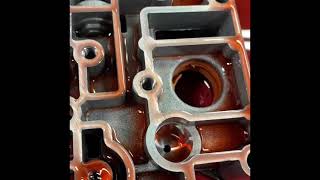
- Locate the shift solenoid pack. On 4R70W transmissions, it is a block containing the dual shift solenoids (SSA and SSB).
- Test the resistance of Shift Solenoid 'B' using a multimeter at the solenoid connector. Compare the reading to the manufacturer's specification, which is typically 20-30 ohms for these solenoids. An open circuit (OL) or a reading far out of spec confirms electrical failure.
- Even if the resistance is within spec, the solenoid can be mechanically stuck, which is a very common cause for the inductive signature fault. Given the high probability and the labor involved, replacement is the recommended action at this stage.
- Replace the shift solenoid pack. It is highly recommended to also replace the transmission filter and internal wiring harness at the same time, as they are of the same age and exposed to the same conditions.
- Reinstall the pan with a new gasket, refill with the correct type of transmission fluid (Mercon V is specified for most of these models), and torque the pan bolts to specification.
- Clear the codes from the PCM and perform a test drive, allowing the transmission to shift through all gears to verify the repair.
Parts You'll Likely Need
- Transmission Shift Solenoid Pack
(OEM #F8AZ-7G484-AA (superseded by 6L3Z-7G484-A))— This is the most common point of failure for a P1715 code, as the solenoid itself sticks or fails electrically. The OEM part number for the dual shift solenoid pack used from 1998-2008 is F8AZ-7G484-AA, which has been replaced by 6L3Z-7G484-A.
Trusted brands: Motorcraft, Bosch, Standard Motor Products (TCS70)
OEM price range: $120-$180
Aftermarket price range: $45-$100 - Transmission Filter Kit (with Gasket)
(OEM #F6AZ-7A098-A)— The filter and pan gasket must be replaced anytime the transmission pan is removed for service. This ensures clean fluid is circulating and the pan seals correctly.
Trusted brands: Motorcraft, Wix, ATP
OEM price range: $30-$50
Aftermarket price range: $15-$30 - Transmission Fluid
(OEM #XT-5-QMC (Mercon V))— The transmission must be refilled with fresh fluid after the service. Most 1998-2004 F-150s specify Mercon V fluid. A pan drop and refill typically requires 5-7 quarts.
Trusted brands: Motorcraft, Valvoline, Castrol
OEM price range: $8-$12 per quart
Aftermarket price range: $6-$9 per quart
Related Codes That Often Appear With This One
- P1714 — This code is for Shift Solenoid 'A' (SSA) Inductive Signature Malfunction. If both P1714 and P1715 appear, it strongly points to a problem with the dual solenoid pack, the internal harness, or a shared power/ground issue.
- P0731 — Code P0731 (Gear 1 Incorrect Ratio) can appear with P1715 if the faulty solenoid is preventing the transmission from engaging or holding first gear correctly.
- P0732 — Code P0732 (Gear 2 Incorrect Ratio) can appear if the faulty Shift Solenoid 'B' is causing issues with the 1-2 shift, leading to a detected slip or incorrect ratio in second gear.
Platform-Specific Known Issues
- The 1998-2004 F-150 primarily used the 4R70W (4-speed, Rear-wheel drive, 700 ft-lbs torque rating, Wide ratio) transmission. Some later or higher-torque models may have a 4R75W or 4R100. This P1715 issue is most documented on the 4R70W/4R75W family.
- A user on Ford F150 Forum with a 2000 F-150 4.6L with a 4R70W experienced a persistent P1715 code even after replacing the shift solenoid. The issue was suspected to be fluid in the bulkhead connector or a faulty case connector, highlighting the importance of checking the full circuit.
Mechanic-Grade Diagnostic Values
- Shift Solenoid 'A' (SSA) and 'B' (SSB) Resistance — expected: 20-30 Ohms. Failure: A reading of infinity (Open Loop) or significantly outside the 20-30 Ohm range indicates an electrical failure in the solenoid coil.
- Torque Converter Clutch (TCC) Solenoid Resistance — expected: 10-16 Ohms (for 1998+ models). Failure: A low reading (1-3 Ohms) indicates an incorrect early-style solenoid is installed. An out-of-spec reading indicates failure.
- Electronic Pressure Control (EPC) Solenoid Resistance — expected: 3-6 Ohms. Failure: A reading outside this range indicates a faulty EPC solenoid.
Scan Tool Commands That Help
- Ford IDS (Integrated Diagnostic System): Output State Control / KOER Solenoid Test — This bidirectional command allows a technician to command each shift solenoid on and off while the engine is running (Key On, Engine Running). The technician can feel for the solenoid 'click' or observe shift pressure changes, helping to confirm if the solenoid is mechanically and electrically responding to PCM commands. This can help differentiate a wiring fault from a stuck solenoid.
Wiring & Ground Locations
- Transmission Case Connector (C167) — On the passenger side of the transmission case, a round 10-pin connector.. This is the main electrical interface to the transmission. Fluid can leak through the connector seals, causing corrosion on the pins for Shift Solenoid B (Pin 8) and Solenoid Power (Pin 4), leading to an intermittent or failed connection that can set P1715.
- Ground Strap (Firewall to Engine) — Typically runs from the passenger side firewall to a stud on the back of the cylinder head or engine block.. A corroded or broken main engine ground strap can cause a host of electrical issues, including erratic sensor readings and improper module function. While not a direct cause, poor grounding can create electrical noise that might interfere with the sensitive inductive signature test performed by the PCM.
- Frame to Body Ground — Multiple locations, but a key one is on the passenger side, from the frame rail to the body, often near the transmission control module area on later models.. Corrosion at this point is common and can cause a weak ground path for the entire vehicle's electrical system, including the PCM and its related sensors and actuators. This can lead to unpredictable electrical faults.
Real Owner Repair Stories
- Ford F150 Forum user (2000 Ford F-150 4.6L 4R70W) — Check engine light with P1715 code after the truck sat for several years.
❌ Tried (didn't work) Replaced EPC solenoid, TCC solenoid, internal wiring harness, and filter. Code returned., Exchanged the new shift solenoid pack for another new one, thinking the first was faulty. Code still returned.
✅ What actually fixed it The user noted they found transmission fluid inside the external bulkhead connector when they first unplugged it. Although they cleaned it, the problem persisted. The final resolution was implied to be related to fixing this fluid intrusion/corrosion issue at the main case connector, as this was the last remaining unchecked item identified by the user and other forum members. - Ford Truck Enthusiasts Forum user 'Apocalypse' (Ford Truck with 4R70W (specific year/model not stated, but context implies F-150/Lightning)) — Check Engine Light with P1715, O/D light flashing.
❌ Tried (didn't work) Initial misdiagnosis by a forum member as a Turbine Speed Sensor., Clearing the code, which would return.
✅ What actually fixed it A Ford Master Tech on the forum stated the code can only be set by a sticking Shift Solenoid B. The user confirmed the fix was replacing the shift solenoid pack inside the transmission pan.
OEM Part Supersession History
F8AZ-7G484-AA→6L3Z-7G484-A— Updated part design for improved reliability and durability.
Heads up: The F8AZ-7G484-AA and 6L3Z-7G484-A are directly interchangeable for the 1998-2008 model years. Do not use a solenoid pack from a 1997 or earlier model, as the internal wiring and connector are different.
Model Year Variations Within This Range
- 1998 (vs. 1997 and earlier): In 1998, Ford changed the internal electronics of the 4R70W. Pre-1998 models used a different internal wiring harness and case connector pinout compared to the 1998-2008 models. While the external plugs may look similar and can physically connect, they are not electrically compatible. Swapping a 1998+ transmission into a 1997 or older truck (or vice-versa) without repinning the connector or swapping all internal electronics will result in immediate shifting problems and codes.
- 2003+: In 2003, Ford introduced the 4R75W/E, an evolution of the 4R70W. It featured an input shaft speed sensor and a stronger ring gear/gear set for durability. While the core architecture and solenoids relevant to P1715 remained the same as the 1998-2002 models, a transmission from a 2003+ vehicle will have this extra sensor.
Diagnostic Flowchart
Other Known Issues on This Vehicle
Issues unrelated to this code that are worth knowing about as an owner of this generation:
- Spark Plug Ejection (5.4L 2V Triton) 🔴 High — Common on 1997-2003 models. The aluminum cylinder heads have insufficient thread engagement for the spark plugs, leading to plugs being forcibly ejected during operation, which damages the cylinder head threads.
- Frame Rust 🔴 High — Very common in regions that use road salt. The frame is prone to severe rust, particularly around the front suspension bump stops and in the mid-section near the fuel tank. Can lead to structural failure if not addressed.
- Cracked Plastic Intake Manifold (4.6L V8) 🟠 Medium — The original composite intake manifold, particularly on early 4.6L models, can crack near the coolant crossover passage, causing a coolant leak.
- Warped Exhaust Manifolds 🟠 Medium — Common across V8 models. The cast iron exhaust manifolds are prone to warping, causing the mounting studs to break and resulting in an exhaust leak, which creates a ticking noise, especially when the engine is cold.
- Faulty GEM (Generic Electronic Module) 🟡 Low — The GEM, located behind the dash fuse panel, is susceptible to water intrusion from a leaking windshield seal. This can cause a wide range of bizarre electrical issues, such as the radio turning on by itself, power windows operating randomly, or the 4x4 system engaging unexpectedly.
Used vs. New Parts: Buying Guide for This Vehicle
When a used part is the smart pick: For this repair, a used part is generally not recommended. The primary failure is the solenoid pack itself, which is a wear-and-tear item. A used solenoid pack from a junkyard carries a high risk of being near the end of its life or already having the same sticking issue that causes P1715.
Donor-vehicle mileage cap: roughly under 80000 miles for the part to have meaningful remaining life.
What to inspect on the donor part:
- If sourcing a complete used transmission, look for one from a vehicle with documented low mileage.
- Check the fluid color and smell from the donor transmission if possible. Bright red fluid without a burnt smell is a positive sign.
- Avoid transmissions from vehicles that show signs of heavy towing or abuse.
OEM-only on this vehicle (don't cheap out):
- While not strictly OEM-only, using a Motorcraft (Ford OEM) shift solenoid pack is highly recommended for this repair. Aftermarket solenoids can have higher failure rates out-of-the-box or shortly after installation, leading you to do the job twice.
Aftermarket brands forum-validated for this vehicle:
- Bosch
- Standard Motor Products (SMP)
- Rostra Precision Controls
Brands owners have reported issues with on this vehicle:
- Avoid no-name, unbranded solenoid packs from online marketplaces. The cost savings are not worth the high probability of premature failure and the labor required to replace it again.
Real Owner Stories
Aggregated from forums and TSBs cited above. Mileages and costs reflect what owners reported in those sources.
2000 Ford F-150 4.6L
Symptoms: Persistent P1715 code even after replacing the shift solenoid, EPC, TCC, and internal harness.
What fixed it: The issue was suspected to be fluid intrusion in the external bulkhead connector or a faulty case connector.
Source hint: Ford F150 Forum: 'Annoying P1715 code!!!'
1998 Ford Explorer (5R55E transmission)
Symptoms: Confusion over the code definition, eventually identified as SSB Inductive Signature Malfunction.
What fixed it: Identified as a Shift Solenoid B (SSB) issue.
Source hint: Ford Truck Enthusiasts Forums: 'Trouble Code P1715'
Related OBD-II Codes
Frequently Asked Questions
What transmission is in my 1998-2004 Ford F-150 that would trigger a P1715 code?
I replaced the shift solenoid on my 2000 F-150 but the P1715 code is still there. What else should I check?
What should the resistance be for the shift solenoids in my F-150's 4R70W transmission?
Is there a specific type of transmission fluid I should use for my 1998-2004 F-150 when fixing this code?
Why does my F-150 feel like it's stuck in 2nd or 3rd gear when the O/D light flashes?
Can I just clean the solenoid instead of replacing the whole pack?
Helpful Videos
We Have This Part in Stock

The information in this article is provided for general reference and educational purposes only. Vehicle specifications, procedures, and part compatibility can vary by production date, trim level, and region. Always consult your vehicle's factory service manual and verify part numbers before purchasing or performing repairs. Safety-critical components such as airbags, seat belts, and braking systems should be installed by a qualified professional.
- Ford F-150:
- 🧭 Diagnostic Flowchart
- 🎬 Helpful Videos
- 🛍️ Shop This Part
- What's Unique About the 1998-2004 Ford F-150
- Symptoms You May Notice
- Most Likely Causes
- Rare But Worth Checking
- Diagnosis Steps
- Parts You'll Likely Need
- Related Codes That Often Appear With This One
- Platform-Specific Known Issues
- Mechanic-Grade Diagnostic Values
- Scan Tool Commands That Help
- Wiring & Ground Locations
- Real Owner Repair Stories
- OEM Part Supersession History
- Model Year Variations Within This Range
- Other Known Issues on This Vehicle
- Used vs. New Parts: Buying Guide for This Vehicle
- Real Owner Stories
- 2000 Ford F-150 4.6L
- 1998 Ford Explorer (5R55E transmission)
- Related OBD-II Codes
- Frequently Asked Questions
- 🎟️ Get 5% Off