

P1775 on 2013-2018 Ram 3500 6.7L Cummins: Solenoid Switch Valve Fixes
P1775 on a Ram 3500 with the 68RFE transmission almost always means the transmission solenoid pack has failed or the valve body is worn. The most common fix is to replace the solenoid pack, which costs between $350-$550 for the part. Expect a shop to charge $650-$1150 for the complete repair. Before replacing parts, verify with a dealer that the PCM software is up to date, as several TSBs address this code with a reflash.
- P1775 on a 6.7L Cummins with the 68RFE transmission points to a stuck Solenoid Switch Valve.
- The two most likely causes are a failed solenoid pack or a worn-out valve body bore; both are very common issues on this transmission.
- Always check for and perform any available PCM software updates before replacing expensive hardware, as this can sometimes resolve the issue.
- This is a complex repair that requires removing the transmission pan and valve body; professional service is highly recommended.
- When the repair is made, it is critical to also replace both transmission filters and refill with fresh ATF+4 fluid.
What's Unique About the 2013-2018 Ram 3500
The 68RFE transmission in this generation of Ram trucks is known for a specific design weakness that leads to code P1775. The valve body is made of aluminum, while the Solenoid Switch Valve that moves within it is steel. Over time, the harder steel valve wears out the softer aluminum bore, causing the valve to stick or leak pressure. This wear is a very common root cause of the problem, sometimes more so than the electronic solenoid pack itself. Because of this known issue, several TSBs have been released, and aftermarket companies like Sonnax and RevMax offer upgraded valve bodies and repair kits to provide a more permanent solution than simply replacing the solenoid pack.
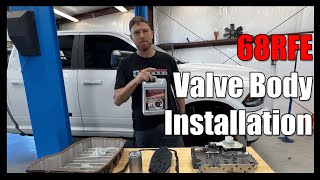
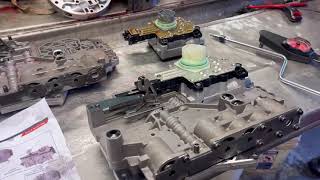
🎬 Watch: Upgrading the 68RFE valve body and solenoid packSymptoms You May Notice
- Vehicle enters 'limp mode' (stuck in a single gear, often 3rd or 4th)
- Engine stalls or feels like it's going to stall when coming to a stop
- Harsh or jerky shifting, especially a harsh clunk when downshifting to a stop below 5 mph.
- Check Engine Light (Malfunction Indicator Lamp) is illuminated
- Replacing only the solenoid pack when the valve body bore is worn. This is a very common mistake, as the new solenoid will not fix a mechanical sticking issue in the valve body itself.
Most Likely Causes
- Faulty Transmission Solenoid Pack 🔴 High Probability → Shop Transmission Assembly The solenoid pack is a complex electro-hydraulic part that is a common failure point on the 68RFE transmission. Internal failures or debris can cause the solenoids to stick.
How to confirm: Using a high-end scan tool, monitor solenoid command data and pressure switch states. A more definitive test is to measure the resistance of the solenoid circuits at the main transmission connector; for the L/R solenoid, it should be between 1.0 and 1.9 ohms.
Typical fix: Drop the transmission pan and replace the entire solenoid pack/block assembly. This is often done in conjunction with a valve body inspection or replacement.
Est. part cost: $350-$550 - Worn Solenoid Switch Valve (SSV) Bore in Valve Body 🔴 High Probability → Shop Transmission Valve Body This is a primary design weakness of the 68RFE. The steel SSV wears out the softer aluminum valve body bore, causing the valve to physically jam. This is a well-documented issue.
How to confirm: After removing the valve body, the SSV can be physically inspected for free movement. A transmission shop can also vacuum test the bore to check for leaks, which is a definitive diagnostic method.
Typical fix: Replace the entire valve body with a remanufactured unit that has a sleeved, repaired bore. Alternatively, a skilled technician can ream the bore and install an oversized valve kit from brands like Sonnax (e.g., part #99741-21K). 🎬 See how to install a solenoid switch valve repair kit
Est. part cost: $600-$1300 for a remanufactured valve body - Outdated Powertrain Control Module (PCM) Software 🟡 Medium Probability → Shop Engine Control Module (ECM) Chrysler/Ram has released multiple software updates that change the sensitivity and logic for setting transmission fault codes like P1775. TSB 18-043-17 specifically addresses this code.
How to confirm: A dealer or qualified shop must use a scan tool (like wiTECH) to check the current software calibration ID against the latest available version for the truck's VIN.
Typical fix: Reprogram (flash) the PCM to the latest software version. This should be done before replacing any hardware.
Est. part cost: $0 (if under warranty) - $200 - Dirty or Low Transmission Fluid ⚪ Low Probability → Shop Transmission Assembly While not a direct cause on its own, fluid that is degraded or contaminated with debris can accelerate wear and cause valves and solenoids to stick.
How to confirm: Check the transmission fluid level and condition. Dark, burnt-smelling fluid or fluid with metallic particles indicates a problem.
Typical fix: Perform a complete transmission fluid and filter change. However, if the code is already set, a fluid change alone is very unlikely to fix the underlying mechanical or electrical issue.
Est. part cost: $100-$200
Rare But Worth Checking
- Damaged Wiring or Corroded Connector: The main 23-pin transmission harness connector on the driver's side of the case is exposed to the elements. It's worth inspecting for corrosion, pushed-out pins, or fluid intrusion before condemning internal parts. Specifically check Pin 2 (L/R Solenoid Control) and Pin 14 (L/R Pressure Switch Sense).
Diagnosis Steps
- Check the transmission fluid level and condition. Ensure it is full and does not look or smell burnt.
- Use an advanced scan tool to check for any other transmission-related DTCs, particularly P1776 and P0841.
- Check for any available Technical Service Bulletins (TSBs) for your vehicle's VIN. A PCM software update may be required per TSB 18-043-17 or 18-091-16.
- Inspect the main transmission wiring harness and the 23-pin connector on the driver's side of the transmission for damage, corrosion, or loose connections. Pay close attention to pins 2 and 14.
- If the above steps do not reveal the issue, the transmission oil pan must be removed for further diagnosis.
- Drop the pan and inspect for excessive metal debris, which would indicate a more severe internal failure.
- Remove the valve body assembly. 🎬 Watch this step-by-step 68RFE valve body swap guide
- Physically inspect the Solenoid Switch Valve (SSV) to see if it moves freely in its bore. If it sticks or binds, the valve body is the likely culprit.
- If the SSV moves freely, the solenoid pack is the most probable cause of the failure.
Parts You'll Likely Need
- Transmission Solenoid Block/Pack (68RFE)
(OEM #68353383AC)— This is the most common hardware failure for code P1775. The Solenoid Switch Valve is controlled by this assembly. This part number supersedes multiple older versions including 5170877AA, 52119435AF, and 68353383AB.
Trusted brands: Mopar, RevMax, Rostra
OEM price range: $400-$550
Aftermarket price range: $350-$500 - Transmission Valve Body (68RFE) — If the valve bore for the SSV is worn, the entire valve body must be replaced, typically with an improved remanufactured unit.
Trusted brands: Sonnax (upgrade kits), RevMax, Suncoast
OEM price range: N/A (typically replaced with reman)
Aftermarket price range: $600-$1300 - Transmission Filter Kit (68RFE)
(OEM #68019688AA)— The two transmission filters (spin-on and sump) and the pan gasket must be replaced any time the pan is removed for service.
Trusted brands: Mopar, Wix, ATP
OEM price range: $50-$80
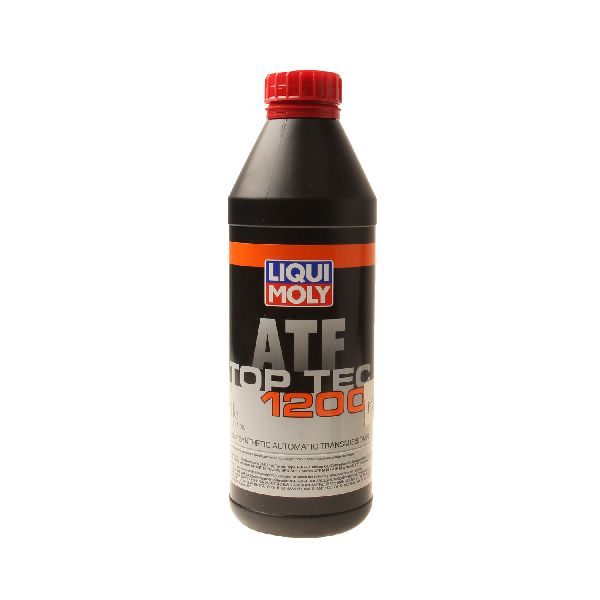
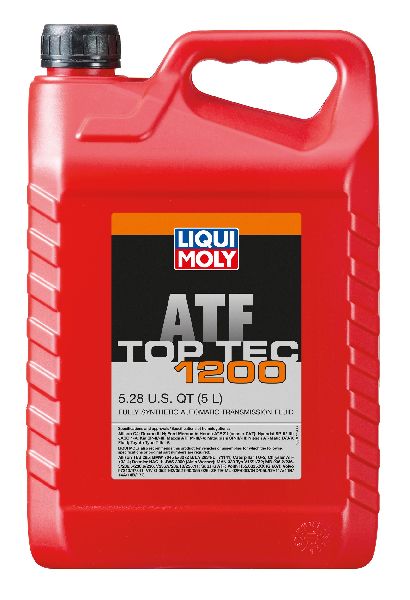
Aftermarket price range: $30-$60 - ATF+4 Automatic Transmission Fluid — The transmission must be refilled with approximately 7-9 quarts of the correct fluid after a pan drop and valve body service. Only Mopar ATF+4 or a licensed equivalent should be used.
Related Codes That Often Appear With This One
- P1776 — This code, 'Solenoid Switch Valve Latched in LR Position,' is the counterpart to P1775. Seeing both strongly points to a faulty solenoid pack or a worn valve body bore.
- P0841 — This code relates to the 'L/R Pressure Switch Sense Circuit.' Diagnostic procedures for P1775 often involve checking for P0841, as they are part of the same hydraulic circuit used by the PCM to monitor the SSV's position.
- P0700 — This is a generic code that simply means the Transmission Control Module (TCM) has requested the Check Engine Light to be turned on. It will always be present with a more specific transmission code like P1775.
- P0871 — This code for 'OD Pressure Switch Rationality' often indicates internal hydraulic leaks within the valve body or solenoid pack, which can be related to the same wear that causes P1775.
Technical Service Bulletins (TSBs) & Recalls
- TSB 18-043-17: Recommends a PCM software update, changing P1775 from a one-trip to a two-trip fault to prevent false MIL illumination.
- TSB 18-091-16: A powertrain control module update that addresses multiple DTCs, including P1775.
Platform-Specific Known Issues
- Solenoid Pack vs. Valve Body Dilemma: → Shop Transmission Valve Body A very common owner experience is replacing the solenoid pack to fix P1775, only for the code to return shortly after. This almost always indicates the root cause was not the solenoid itself, but wear in the aluminum valve body bore for the Solenoid Switch Valve. The new solenoid cannot overcome the mechanical binding of the valve in the worn bore.
- Model Year Connector Color: For 2011-2018 models, the original solenoid pack has a grey connector. The updated replacement part, 68353383AC, has a white connector and is compatible. However, the blue connector pack used on 2019+ models is not compatible with the 2013-2018 generation.
Mechanic-Grade Diagnostic Values
- L/R Solenoid Resistance — expected: 1.0 - 1.9 Ohms. Failure: A reading outside this range indicates a faulty solenoid coil.
- Most other solenoids (Multi-Select, Underdrive, Overdrive, 4C, 2C) — expected: Approx. 1.3 Ohms. Failure: Significant deviation from 1.3 Ohms suggests a problem with that specific solenoid.
- Pressure Control Solenoid Resistance — expected: Approx. 4.9 Ohms. Failure: A reading far from 4.9 Ohms points to a failure in the pressure control solenoid.
- Input and Output Speed Sensor Resistance — expected: Approx. 535 Ohms at room temperature. Failure: An open circuit or a reading far from this value indicates a failed speed sensor.
Scan Tool Commands That Help
- wiTECH, Autel, Launch, Snap-On, AlfaOBD: Quick Learn Procedure — This is a mandatory procedure after replacing the solenoid pack or valve body. The function allows the TCM to relearn clutch fill volumes and shift timing (Clutch Volume Indexes or CVIs). Failure to perform this can result in poor shifting, premature wear, or catastrophic damage.
- wiTECH (with Miller tool #8333): Pressure Switch Test — This is a dealer-level diagnostic to test the integrity of the pressure switch circuits between the TCM and the transmission connector. It helps definitively rule out a wiring harness issue before condemning internal components like the solenoid pack.
Wiring & Ground Locations
- C130 (23-Way Connector) — On the driver's side of the transmission case.. This is the main electrical interface for the transmission. Pin 2 is the L/R Solenoid Control circuit, and Pin 14 is the L/R Pressure Switch Sense circuit. Corrosion or damage to these specific pins can directly cause P1775.
- Main Body Ground — A common ground strap connects from the rear of the cylinder head to the firewall.. While not a direct cause, a poor ground can introduce electrical noise into the system, potentially causing the TCM to misinterpret sensor readings or fail to actuate solenoids correctly, which could contribute to setting false codes.
Real Owner Repair Stories
- Cummins Forum user (2013 Ram 2500 with 6.7L Cummins) — Check engine light on with codes P1776 and P0871, transmission in limp mode.
❌ Tried (didn't work) Replacing the transmission solenoid pack
✅ What actually fixed it The problem was ultimately resolved by replacing the entire transmission valve body with a remanufactured unit, confirming the root cause was a worn Solenoid Switch Valve bore, not the solenoid itself.
OEM Part Supersession History
Multiple, including 5170877AA, 52119435AF, 68353383AB (Grey Connector)→68353383AC (White Connector)— Updates to internal components and materials for improved reliability.
Heads up: The white connector pack (68353383AC) is the correct replacement for the earlier grey connector packs on 2011-2018 models. However, the blue connector solenoid pack used on 2019+ models is NOT backward compatible.
Model Year Variations Within This Range
- 2011-2018: These 'Gen 2' 68RFE transmissions use a valve body with 5 check balls and originally came with a grey connector solenoid pack. This differs from the 'Gen 1' (2007.5-2010) which used 7 check balls. The updated white connector solenoid pack is compatible with these models.
- 2013-2018: These models feature a stock transmission cooler thermal bypass valve that can restrict fluid flow to the cooler until the transmission is hot. In towing or performance scenarios, this can lead to heat spikes. Aftermarket solutions exist to force 100% of the fluid through the cooler at all times.
Diagnostic Flowchart
Other Known Issues on This Vehicle
Issues unrelated to this code that are worth knowing about as an owner of this generation:
- EGR Cooler and Valve Clogging 🔴 High — Very common, especially on trucks with significant idle time or short-trip usage. Often occurs after 100,000 miles. (Ref: Multiple TSBs exist for software updates related to EGR performance, such as 18-130-22.)
- Water Pump Failure 🟠 Medium — A known weak point. The original pump often has a plastic impeller and undersized bearing that can fail, leading to leaks from the weep hole or bearing noise.
- Front-End "Death Wobble" 🔴 High — Common on solid front axle Ram trucks, caused by worn components like the track bar, ball joints, or tie rod ends. Can be triggered by hitting a bump at highway speeds. (Ref: Recalls have been issued for some steering components like the drag link on certain model years.)
- HVAC Blend Door Actuator Failure 🟠 Medium — Actuators for the HVAC system can fail, causing a clicking noise from the dash and an inability to control air temperature or direction.
- Head Gasket Failure 🟠 Medium — More common on modified or tuned engines, but can occur on stock trucks under high stress. High cylinder pressures can lead to failure.
- Variable Geometry Turbocharger (VGT) Actuator Failure 🟠 Medium — The electronic actuator on the turbo can fail, or the turbo vanes can get stuck with soot, leading to poor performance and fault codes.
Used vs. New Parts: Buying Guide for This Vehicle
When a used part is the smart pick: A complete, low-mileage used transmission from a reputable wrecker can be a viable option if the entire unit is suspect. However, for individual components related to P1775, used parts are not recommended due to the high failure rate of the original designs.
Donor-vehicle mileage cap: roughly under 80000 miles for the part to have meaningful remaining life.
What to inspect on the donor part:
- Verify the donor vehicle's VIN to check for accident history or flood damage.
- Ask for a video of the donor vehicle running and shifting if possible.
- Inspect the transmission fluid from the donor unit; it should be red/pink and not smell burnt.
- Check for a warranty from the salvage yard, even if it's only 30-90 days.
OEM-only on this vehicle (don't cheap out):
- Transmission Solenoid Pack: While good aftermarket brands exist, many cheap, unbranded solenoid packs on platforms like Amazon or eBay are notoriously unreliable and should be avoided. A new Mopar unit is the safest bet.
- ATF+4 Fluid: Using anything other than licensed ATF+4 fluid can cause shifting problems and long-term damage.
Aftermarket brands forum-validated for this vehicle:
- Valve Bodies/Kits: Sonnax, RevMax, BD Diesel, Suncoast, Next Gen Drivetrain. These companies specialize in addressing the 68RFE's known weaknesses with features like sleeved SSV bores and billet accumulator pistons.
- Solenoid Packs: RevMax, Rostra, ATS Diesel.
Brands owners have reported issues with on this vehicle:
- Unbranded, 'no-name' solenoid packs from online marketplaces. These often use inferior materials and have a high rate of out-of-box failure or premature failure.
Real Owner Stories
Aggregated from forums and TSBs cited above. Mileages and costs reflect what owners reported in those sources.
2011-2018 Ram 6.7L Cummins (68RFE)
Symptoms: Owner replaced the solenoid pack to fix transmission codes, but the P1775 code was introduced immediately after the repair or persisted despite the new part.
What fixed it: The issue often points toward a deeper valve body wear problem (SSV bore) or a reassembly issue where the new solenoid cannot overcome mechanical binding.
Source hint: 2CarPros Forum - P1775 Discussion
2013-2018 Ram 3500 6.7L Cummins
Symptoms: Encountered a no-shift condition after attempting to replace the valve body and solenoid pack.
What fixed it: Ensuring the correct installation of the electrical connector and the actuator arm during the reassembly of the valve body.
Source hint: RamForum.com - '68 RFE Valve Body and Solenoid Replacement'
2013-2018 Ram 3500 6.7L Cummins — ~100000 miles
Symptoms: Truck experienced sticking valves and solenoids due to fluid degradation and debris accumulation over time.
What fixed it: While a fluid and filter change was performed, the underlying mechanical issue usually required a solenoid pack or valve body repair if the code was already set.
Source hint: Common Causes - Dirty or Low Transmission Fluid
Related OBD-II Codes
Frequently Asked Questions
Does TSB 18-043-17 apply to my 2013-2018 Ram 3500 regarding the P1775 code?
I replaced my solenoid pack but the P1775 code came back immediately. Did I get a bad part?
Which color connector should the replacement solenoid pack have for a 2015 Ram 3500?
Can a PCM flash fix my P1775 limp mode, or do I need a new valve body?
What are the specific resistance specs I should look for when testing the L/R solenoid circuit?
Is the P1775 code related to the 'Death Wobble' or EGR issues common on the 6.7L Cummins?
Helpful Videos
We Have This Part in Stock



The information in this article is provided for general reference and educational purposes only. Vehicle specifications, procedures, and part compatibility can vary by production date, trim level, and region. Always consult your vehicle's factory service manual and verify part numbers before purchasing or performing repairs. Safety-critical components such as airbags, seat belts, and braking systems should be installed by a qualified professional.
- Ram 3500:
- 🧭 Diagnostic Flowchart
- 🎬 Helpful Videos
- 🛍️ Shop This Part
- What's Unique About the 2013-2018 Ram 3500
- Symptoms You May Notice
- Most Likely Causes
- Rare But Worth Checking
- Diagnosis Steps
- Parts You'll Likely Need
- Related Codes That Often Appear With This One
- Technical Service Bulletins (TSBs) & Recalls
- Platform-Specific Known Issues
- Mechanic-Grade Diagnostic Values
- Scan Tool Commands That Help
- Wiring & Ground Locations
- Real Owner Repair Stories
- OEM Part Supersession History
- Model Year Variations Within This Range
- Other Known Issues on This Vehicle
- Used vs. New Parts: Buying Guide for This Vehicle
- Real Owner Stories
- 2011-2018 Ram 6.7L Cummins (68RFE)
- 2013-2018 Ram 3500 6.7L Cummins
- 2013-2018 Ram 3500 6.7L Cummins — ~100000 miles
- Related OBD-II Codes
- Frequently Asked Questions
- 🎟️ Get 5% Off