

P1775 on 2009-2012 Suzuki Equator 4.0L V6: Causes and Fixes for TCC Solenoid Fault
This code almost always points to a problem within the automatic transmission's valve body, specifically the integrated Transmission Control Module (TCM). The most common fix is replacing the entire valve body/TCM assembly, as the solenoid control circuits on the TCM are known to fail. Another major cause is coolant contamination from a failed radiator ('SMOD'), which destroys the TCM. Expect to pay $800-$1500 for a remanufactured part and professional installation.
- P1775 on your Equator points to a fault in the RE5R05A transmission's valve body.
- The most likely culprit is not the solenoid itself, but a failed Transmission Control Module (TCM) that is attached to the valve body.
- The most reliable fix is to replace the entire valve body/TCM assembly with a VIN-programmed remanufactured unit.
- This is not a beginner-friendly DIY job; professional service is strongly recommended.
- Before any repair, check the transmission fluid. If it's milky pink, you have a much bigger problem (coolant contamination) that must be addressed first.
What's Unique About the 2009-2012 Suzuki Equator
The Suzuki Equator is a rebadged Nissan Frontier, and it uses the Nissan RE5R05A automatic transmission. On this specific transmission, the Transmission Control Module (TCM) is not a separate, externally-mounted computer; it is physically attached to the valve body inside the transmission oil pan. A very common point of failure is the solder joints or pins on the TCM circuit board that control the solenoids. This means a simple solenoid replacement often won't fix the issue, as the root cause is the controller itself. These vehicles are also prone to an internal radiator failure that mixes coolant with transmission fluid (SMOD), which quickly destroys the TCM's electronics.
Symptoms You May Notice
- Harsh clunking or jerking, especially when slowing to a stop
- Transmission stuck in 'limp mode' (usually 2nd or 3rd gear)
- Sluggish acceleration from a stop
- Check Engine Light is on
- Delayed or harsh engagement when shifting from Park into Drive or Reverse
- Engine stalling when coming to a complete stop
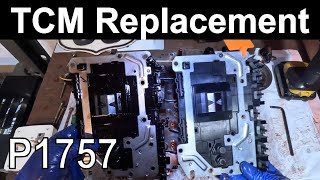
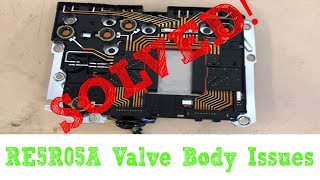
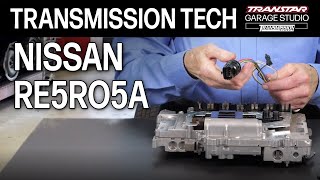
- Replacing only the TCC solenoid when the actual fault is a broken pin or bad solder joint 🎬 See how to identify common TCM and solenoid issues. on the integrated TCM.
- Performing a transmission fluid flush after SMOD has occurred, believing it will fix the electronic damage. It will not; the TCM is already destroyed.
Most Likely Causes
- Failed Transmission Control Module (TCM) 🔴 High Probability → Shop Transmission Assembly The TCM is integrated with the valve body inside the transmission. The electrical pins connecting the solenoids to the TCM's circuit board are a known weak point and can crack or develop bad solder joints, causing an open circuit. This is the most common non-SMOD related failure for this code.
How to confirm: After removing the valve body, perform a continuity test between the solenoid's external connector pin and the corresponding solder point on the TCM board. An open circuit confirms a broken connection. Visually inspect the pins for cracks.
Typical fix: Replace the entire valve body and TCM assembly with a remanufactured unit that is pre-programmed to the vehicle's VIN. In some cases, a skilled electronics technician can re-solder the broken pin, but replacement is the more reliable, long-term solution.
Est. part cost: $500-$1200 - Low or Contaminated Transmission Fluid (SMOD) 🔴 High Probability → Shop Transmission Assembly A well-known issue for this platform (affecting 2005-2010 models) is the potential for the internal radiator transmission cooler to fail, mixing coolant with the transmission fluid. This is known as SMOD (Strawberry Milkshake of Death). This contaminated fluid becomes a gel-like sludge that clogs valve body passages and, more importantly, is conductive and corrosive, short-circuiting the electronics on the TCM.
How to confirm: Check the transmission fluid level and condition. If the fluid is pink, milky, and looks like a strawberry milkshake, it is contaminated with coolant. Also check the coolant in the radiator overflow for signs of transmission fluid contamination.
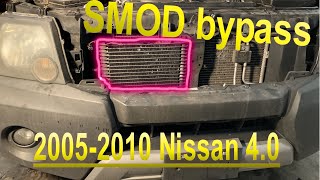
Typical fix: If contaminated with coolant, the transmission, valve body/TCM, radiator, and cooler lines must all be replaced. The damage is catastrophic and not repairable by a simple fluid flush. A preventative measure on at-risk vehicles is to replace the radiator before it fails or perform a 'bypass' to install an external transmission cooler. 🎬 Watch: How to perform a radiator bypass to prevent SMOD.
Est. part cost: $2000+ (for SMOD) - Defective Torque Converter Clutch (TCC) / Low Coast Brake Solenoid ⚪ Low Probability While solenoids can fail electrically (short or open circuit) or mechanically (sticking), it is far less common for the solenoid itself to be the root cause of P1775 on this platform compared to the TCM failing.
How to confirm: With the valve body removed, test the resistance of the solenoid with a multimeter. Compare the reading to the manufacturer's specification (note: there are different ohm versions of this solenoid, typically 10-15 Ohm or 20-40 Ohm).
Typical fix: Replace the individual solenoid on the valve body. This is only effective if the TCM itself and its connections are confirmed to be good, and there is no fluid contamination.
Est. part cost: $70-$150
Rare But Worth Checking
- Damaged Wiring Harness: Check the external wiring harness leading to the transmission for any signs of chafing, corrosion, or damage before assuming the problem is internal.
Diagnosis Steps
- Check the transmission fluid level and condition via the dipstick. Look for signs of coolant contamination (milky, pink fluid) or a very low/burnt fluid level. This is the most critical first step.
- Scan the computer for any other related trouble codes. P0700 is expected. U-codes may also be present.
- If fluid is contaminated (SMOD), the diagnosis is complete. The radiator, transmission, and cooler lines need replacement.
- If fluid is okay, the next step requires removing the transmission oil pan.
- Disconnect the transmission wiring harness and remove the bolts securing the valve body assembly.
- Carefully lower the valve body and TCM assembly from the transmission.
- Visually inspect the TCM circuit board for any obvious signs of damage, corrosion, or broken pins where the solenoids connect.
- Using a multimeter, test the resistance of the TCC / Low Coast Brake solenoid. Compare the reading to the factory specification.
- Perform a continuity test from the solenoid's connector pin on the TCM to its solder point on the board to check for the common open circuit failure.
- Based on these tests, determine if the solenoid is bad, the TCM is bad, or both.
Parts You'll Likely Need
- Transmission Valve Body with TCM
(OEM #31705-X428E (example, part number varies by VIN))— This is the most common failure. The TCM integrated onto the valve body develops broken electrical connections or is destroyed by coolant contamination, requiring the replacement of the entire assembly. Remanufactured units are typically programmed to your vehicle's VIN.
Trusted brands: Hitachi (OEM), Rostra, Sonnax (offers repair kits), Street Smart Transmission
OEM price range: $1000-$1800
Aftermarket price range: $500-$1200 - Low Coast Brake Solenoid — If diagnostic testing confirms the TCM is good but the solenoid itself has failed electrically, it can be replaced individually. This is an uncommon fix for this code.
Trusted brands: Hitachi, Bosch, Linesoon Industrial
OEM price range: $100-$200
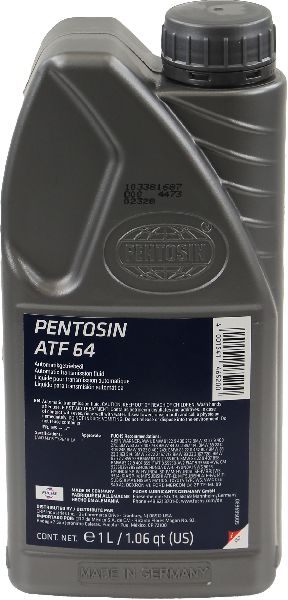
Aftermarket price range: $70-$150 - Automatic Transmission Fluid (Nissan Matic-S)
(OEM #999MP-MTS00P)— The transmission fluid must be drained to perform the repair and will need to be replaced with the correct fluid. Matic-S is the specified fluid and supersedes the older Matic-J.
Trusted brands: Nissan (OEM), Idemitsu Type S, Valvoline MaxLife Multi-Vehicle ATF, ENEOS
OEM price range: $15-$25 per quart
Aftermarket price range: $10-$18 per quart - Radiator — Required if the failure was caused by SMOD. It is also a highly recommended preventative replacement on 2009-2010 models to avoid catastrophic transmission failure.
Trusted brands: Koyo, Denso, Spectra Premium
OEM price range: $400-$600
Aftermarket price range: $150-$300
Related Codes That Often Appear With This One
- P0700 — P0700 is a generic code that simply means the Transmission Control Module (TCM) has requested the Check Engine Light to be turned on. It will almost always be present alongside a more specific transmission code like P1775.
- U1000 / U1001 — These are CAN communication codes. They can appear alongside P1775, especially if the TCM is failing due to internal electronic faults or coolant contamination, causing it to lose communication with other vehicle modules.
Technical Service Bulletins (TSBs) & Recalls
- Nissan TSB NTB09-128a: Addresses a 'Buzzing/Whining Noise from Timing Chain Area' on 2005-2010 VQ40DE engines by calling for the replacement of secondary timing chains and tensioner shoes.
Platform-Specific Known Issues
- SMOD Risk: The 2009 and some 2010 model year Equators fall into the risk category for the radiator defect that causes coolant to mix with transmission fluid, destroying the transmission. This is the single most critical issue to be aware of for this platform.
- Timing Chain Whine: Listen for a high-pitched whine from the front of the engine that increases with RPM. This is a sign of failing timing chain guides, a very common and expens
Mechanic-Grade Diagnostic Values
- Low Coast Brake Solenoid Resistance — expected: 23 Ohms. Some sources indicate a wider possible range of 10-15 Ohms or 20-40 Ohms depending on the specific version.. Failure: A reading of infinite resistance (open circuit) or a value significantly outside the expected range indicates a failed solenoid.
- Resistance of Other Valve Body Solenoids (Line Pressure, TCC, Direct Clutch, etc.) — expected: 3.3 Ohms.. Failure: A reading significantly different from 3.3 Ohms suggests a failure in that specific solenoid.
- Solenoid Current Draw (Live Data) — expected: The Low Coast Brake solenoid should read as 'On/Off' on a capable scan tool. Other solenoids operate between 0.0 to 0.8 amps.. Failure: No change in On/Off status when commanded, or current readings for other solenoids that are out of range.
Scan Tool Commands That Help
- Nissan CONSULT: DATA MONITOR — To monitor the On/Off status of the Low Coast Brake solenoid and view the current (amps) of the other solenoids in real-time to see if the TCM is attempting to command them.
- Nissan CONSULT or compatible high-level scan tool: Accelerator Pedal Released Position Relearn & Throttle Valve Closed Position Learning — These relearn procedures are often required after disconnecting the battery or replacing major electronic components like the TCM to ensure the system has correct baseline values.
Wiring & Ground Locations
- TCM on Valve Body — Inside the transmission, bolted to the valve body. Accessible after removing the transmission oil pan.. This is the location of the controller that sets the P1775 code. The pins connecting the solenoids to the TCM board are a common failure point, leading to open circuits that trigger this code.
- Main Transmission Harness Connector — On the exterior of the transmission case. The Type 2 valve body system (used in these model years) has a single green connector.. This is the primary external connection point for all electronic signals to and from the TCM. Corrosion or damage here can mimic an internal failure.
Real Owner Repair Stories
- YouTube channel 'Fix It Angel' (Nissan Pathfinder (with RE5R05A transmission)) — Intermittent transmission problems with codes P1754 and P1764 (solenoid circuit codes similar in nature to P1775).
❌ Tried (didn't work) A previous, unsuccessful repair attempt was visible on the TCM board.
✅ What actually fixed it The technician removed the valve body, inspected the TCM, and found a broken solder joint on one of the solenoid connector pins. The pin was de-soldered and then re-soldered correctly. After reassembly, a scan tool confirmed the codes did not return after a test drive. - Reddit user in r/MechanicAdvice (2012 Nissan Frontier) — P1774 code (Low Coast Solenoid), which is functionally related to P1775.
❌ Tried (didn't work) Cleared the code, but it returned the next day.
✅ What actually fixed it The user dropped the transmission pan and valve body controller. They visually inspected the TCM for broken leads and checked resistance with a multimeter, which showed no obvious faults. The next step identified was to test the solenoids themselves. This highlights the common diagnostic path of suspecting the TCM pins first, even before the solenoid.
OEM Part Supersession History
1st and 2nd Design RE5R05A Valve Body/TCM→3rd Design RE5R05A Valve Body/TCM— Design changes were made over the years, including modifications to accumulators and the addition of a reverse brake pressure control valve. Later designs are generally considered more refined.
Heads up: There are multiple versions of the valve body and TCM. Some have one accumulator, others have two. The solenoid resistance values can also differ. It is critical to match the replacement part to the vehicle's VIN to ensure compatibility and correct programming.
Model Year Variations Within This Range
- 2009-2010: These model years are at a higher risk for the radiator failure (SMOD) that allows coolant to contaminate the transmission fluid, destroying the TCM. While any year can have a radiator fail, the defect was most prevalent in the 2005-2010 Nissan platform generation.
- 2009-2012: The RE5R05A transmission used in this platform has several valve body designs (e.g., Type 2, Type 3, Type 4). While functionally similar, there are internal differences in components like pressure switches and the separator plate. The TCM may be manufactured by different suppliers like Bosch or Hitachi, which can affect part numbers. Replacement requires VIN matching.
Diagnostic Flowchart
Other Known Issues on This Vehicle
Issues unrelated to this code that are worth knowing about as an owner of this generation:
- Premature Timing Chain Tensioner & Guide Wear 🔴 High — Common on 2005-2010 models. Often presents as a high-pitched whining or buzzing noise that increases with RPM, typically starting around 80,000-120,000 miles. If left unaddressed, it can lead to catastrophic engine failure. (Ref: Nissan TSB NTB09-128a addresses this issue by replacing secondary timing chains and tensioner shoes.)
- IPDM (Intelligent Power Distribution Module) Failure 🔴 High — Common across many 2005+ Nissan platforms. The internal ECM relay fails, causing intermittent crank-no-start conditions or, more dangerously, sudden engine stalling while driving at low speeds. (Ref: NHTSA Campaign 10V517000 was a recall for this issue on earlier Nissan models (2005-2006) with the white-colored IPDM.)
- Fuel Level Sending Unit Failure 🟠 Medium — Very common issue where the fuel gauge becomes erratic or permanently reads empty, even with a full tank. This is due to premature wear on the sender's contacts inside the fuel tank.
Used vs. New Parts: Buying Guide for This Vehicle
When a used part is the smart pick: A used valve body/TCM assembly from a junkyard can be a cost-effective option if the failure is a common broken TCM pin and not SMOD. It is a gamble, but can save significant money over a remanufactured unit.
Donor-vehicle mileage cap: roughly under 80000 miles for the part to have meaningful remaining life.
What to inspect on the donor part:
- CRITICAL: Ensure the donor vehicle is a 2011 or newer model to minimize the risk of it having the SMOD-prone radiator.
- Check the transmission fluid from the donor vehicle. If it is pink/milky or dark and burnt, reject the part immediately.
- Ask for a photo of the radiator in the donor vehicle. If it's an aftermarket unit, it's a good sign the owner may have performed the preventative SMOD fix.
- Obtain the VIN of the donor vehicle to cross-reference part number compatibility.
Aftermarket brands forum-validated for this vehicle:
- Street Smart Transmission (Remanufactured)
- Sonnax (Offers valve and repair kits, not full assemblies)
- Rostra (Solenoids and some components)
- Valvebody Depot (Remanufactured)
- Level 10 (Performance-oriented remanufacturing service)
Brands owners have reported issues with on this vehicle:
- Unbranded, generic valve bodies from online marketplaces without a warranty or VIN programming service can be risky due to the high number of variations and the need for correct software.
Real Owner Stories
Aggregated from forums and TSBs cited above. Mileages and costs reflect what owners reported in those sources.
2009 Suzuki Equator 4.0L V6
Symptoms: The transmission started clunking and jerking harshly when slowing to a stop, felt sluggish accelerating, and was stuck in limp mode. The Check Engine Light was on.
What fixed it: Diagnosis revealed the transmission fluid was pink and milky (SMOD). The damage was catastrophic, requiring the replacement of the transmission, valve body/TCM, radiator, and cooler lines.
Cost: $2000+
Source hint: Common Causes: Low or Contaminated Transmission Fluid (SMOD)
2010 Suzuki Equator 4.0L V6 — ~105000 miles
Symptoms: A high-pitched whining or buzzing noise was coming from the front of the engine that would increase with RPM.
What fixed it: The secondary timing chains and tensioner shoes were replaced, as outlined in the related Nissan TSB.
Source hint: Known Issues: Premature Timing Chain Tensioner & Guide Wear / TSB NTB09-128a
2009 Suzuki Equator 4.0L V6
Symptoms: The truck would intermittently crank but fail to start. On a few occasions, the engine suddenly stalled while driving at low speeds.
What fixed it: The failure was traced to the internal ECM relay within the IPDM (Intelligent Power Distribution Module), which required replacement.
Source hint: Known Issues: IPDM (Intelligent Power Distribution Module) Failure
Related OBD-II Codes
Frequently Asked Questions
My 2009 Equator has P1775. Is it likely related to the 'SMOD' issue I've heard about?
I have a 2012 Equator with P1775. Am I still at risk for SMOD?
My mechanic says the whole valve body needs to be replaced. Can't they just replace the bad solenoid for P1775?
Is the P1775 code on my Equator related to the timing chain whine I'm hearing?
My truck is a Suzuki, but the repair shop is quoting Nissan parts. Is that correct for a P1775 fix?
What can I do to prevent SMOD from causing P1775 on my 2009 Equator?
Helpful Videos
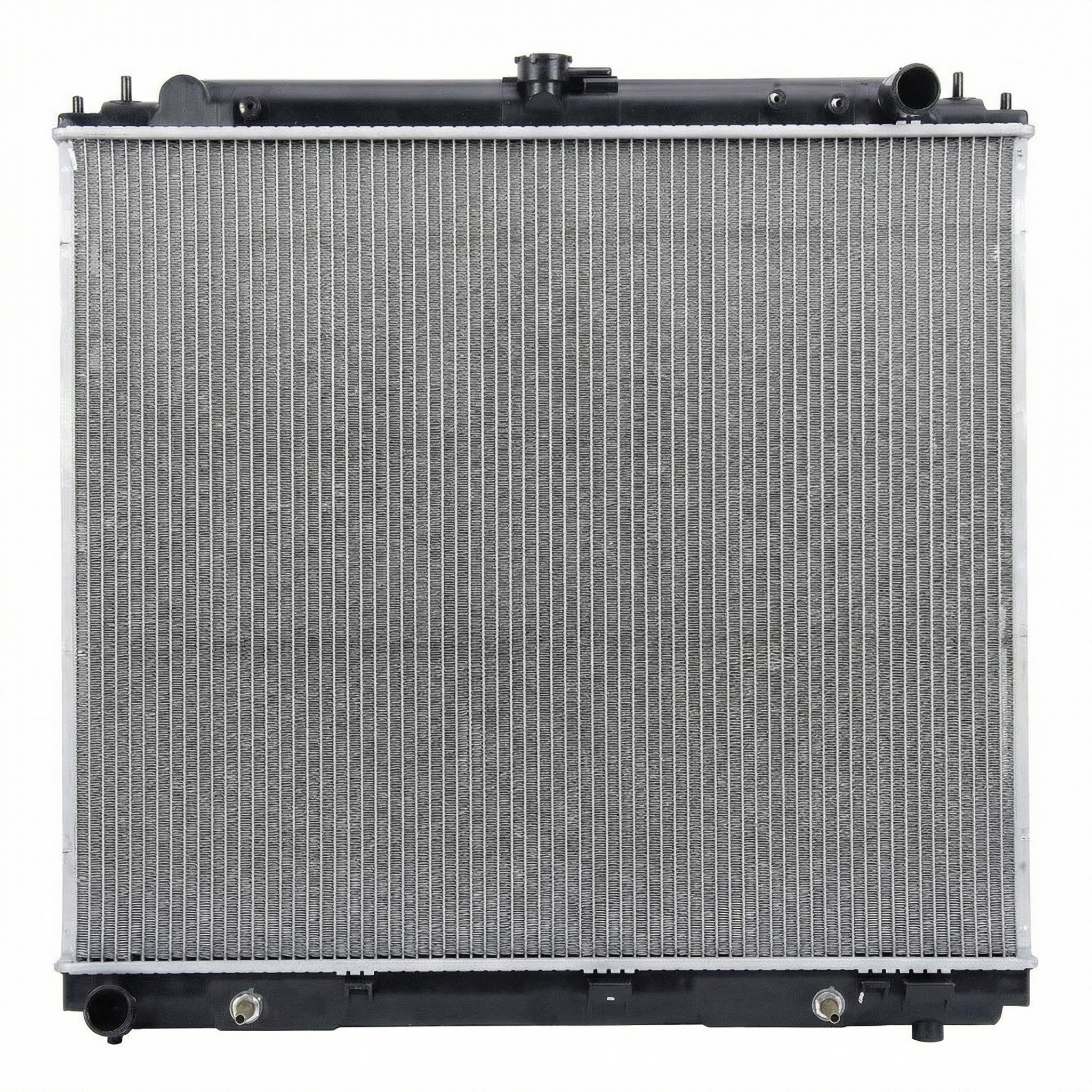
Used OEM Parts in Stock
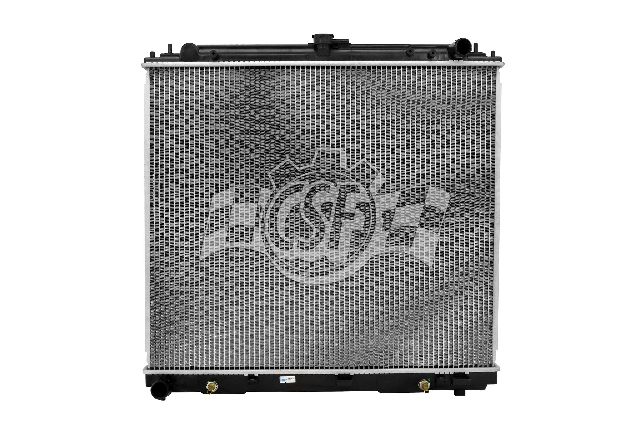
New Aftermarket Parts Available


The information in this article is provided for general reference and educational purposes only. Vehicle specifications, procedures, and part compatibility can vary by production date, trim level, and region. Always consult your vehicle's factory service manual and verify part numbers before purchasing or performing repairs. Safety-critical components such as airbags, seat belts, and braking systems should be installed by a qualified professional.
- Suzuki Equator:
- 🧭 Diagnostic Flowchart
- 🎬 Helpful Videos
- 🛍️ Shop This Part
- What's Unique About the 2009-2012 Suzuki Equator
- Symptoms You May Notice
- Most Likely Causes
- Rare But Worth Checking
- Diagnosis Steps
- Parts You'll Likely Need
- Related Codes That Often Appear With This One
- Technical Service Bulletins (TSBs) & Recalls
- Platform-Specific Known Issues
- Mechanic-Grade Diagnostic Values
- Scan Tool Commands That Help
- Wiring & Ground Locations
- Real Owner Repair Stories
- OEM Part Supersession History
- Model Year Variations Within This Range
- Other Known Issues on This Vehicle
- Used vs. New Parts: Buying Guide for This Vehicle
- Real Owner Stories
- 2009 Suzuki Equator 4.0L V6
- 2010 Suzuki Equator 4.0L V6 — ~105000 miles
- 2009 Suzuki Equator 4.0L V6
- Related OBD-II Codes
- Frequently Asked Questions
- 🎟️ Get 5% Off