

P1776 on 2006-2010 Jeep Commander 5.7L: Solenoid Switch Valve Causes and Fixes
On a Jeep Commander with the 5.7L V8, P1776 is almost always caused by a faulty transmission solenoid pack or a worn valve body, putting the vehicle in 'limp mode.' The most common fix is replacing the solenoid pack, which costs around $250-$450 for the part, but the root cause can be a worn valve body requiring a more involved repair. A key diagnostic step is checking the 'TRS Code' with a scan tool; an 'OD' code points to an internal issue like the valve body, while 'TR2' suggests a simpler sh
- P1776 on a 5.7L Commander means the transmission is in 'limp mode' because a valve is stuck in the Low/Reverse position.
- The most common repair is replacing the transmission solenoid pack, but the true cause is often a worn-out valve body that the solenoid bolts to.
- Do not drive extensively with this code. The resulting 'limp mode' can overheat the transmission and cause much more expensive damage.
- Always use ATF+4 transmission fluid when servicing this vehicle.
- Due to the complexity and risk of further damage, this repair is recommended for professional mechanics or highly experienced DIYers.
What's Unique About the 2006-2010 Jeep Commander
The Jeep Commander (XK) only had one generation and was built on the Grand Cherokee (WK) platform. The 5.7L V8 consistently used the 545RFE transmission, a durable but complex unit known for specific issues. This transmission family (45RFE/545RFE/68RFE) is well-known for problems related to the solenoid pack and the valve body. While many technicians replace the electronic solenoid pack to fix P1776, Chrysler TSB 21-001-13 explicitly states that the 'Solenoid Switch Valve' (SSV) is a mechanical valve within the valve body itself. The core issue is often wear in the aluminum valve body bore caused by the steel SSV, which can cause the valve to stick or leak pressure. Simply replacing the solenoid pack may not be a permanent solution if this underlying mechanical wear is not addressed.
Symptoms You May Notice
- Check Engine Light is on
- Transmission is in 'limp mode' (stuck in a single gear, usually 2nd or 3rd)
- Harsh or delayed shifting
- Inability to shift into higher gears
- Vehicle has limited power and poor acceleration
- Stalling at low speeds or idle in some cases
- Replacing the solenoid pack when the actual fault is a worn bore in the valve body. The code may return after a short period if the mechanical valve continues to stick.
Most Likely Causes
- Sticking/Worn Solenoid Switch Valve (SSV) in Valve Body 🔴 High Probability → Shop Transmission Valve Body The aluminum valve body bore for the steel SSV can wear over time, causing the valve to stick or leak pressure. This is a well-documented design issue in the RFE transmission family.
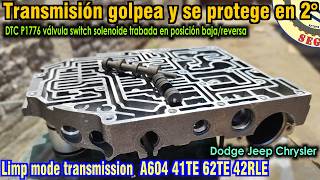
How to confirm: This requires removing the valve body and physically inspecting the SSV for free movement. It should slide smoothly without binding. A transmission specialist can also use vacuum testing on the bore to check for leaks, which is a more definitive test.
Typical fix: A transmission shop can ream the worn bore and install an oversized valve from a kit (e.g., Sonnax). Alternatively, the entire valve body can be replaced with a quality remanufactured unit that has already been repaired and tested.
Est. part cost: $50 - $150 (repair kit) or $400 - $700 (remanufactured valve body) - Failed Transmission Solenoid Pack (Solenoid Block) 🔴 High Probability → Shop Transmission Assembly The solenoid pack on the RFE transmission family is a known high-failure item due to heat and contamination causing electronic and mechanical failures within the unit. Flexing of the internal circuit board can also cause intermittent pressure switch codes.
How to confirm: A professional scan tool can monitor pressure switch data. However, this is often diagnosed by replacing the part, as it's a very common culprit and must be removed to inspect the valve body anyway. It is often replaced preventatively during a valve body service.
Typical fix: Replace the entire solenoid pack assembly, which is bolted to the valve body inside the transmission oil pan. It's recommended to use an updated Mopar part. The original black connector style is often updated to a white connector style.
Est. part cost: $250 - $450 - Low or Contaminated Transmission Fluid 🟡 Medium Probability → Shop Transmission Assembly
How to confirm: Check the transmission fluid level and condition using the dipstick. The fluid should be at the correct level, red in color, and not have a burnt smell. This vehicle requires ATF+4 fluid only.
Typical fix: Perform a transmission fluid and filter change. If the fluid is extremely dirty or contains clutch material, this is a sign of a larger internal issue requiring a rebuild.
Est. part cost: $50 - $100 - Misadjusted Shifter Cable ⚪ Low Probability
How to confirm: Chrysler TSB 21-001-13 advises using a scan tool to check the 'TRS Code' in the P1776 event data. If it reads 'TR2', the shifter cable may be out of adjustment, preventing the manual valve from fully seating in the Overdrive position. This can be visually inspected and adjusted at the transmission linkage.
Typical fix: Inspect and adjust the shifter cable linkage per the factory service manual. This is often a simple adjustment of a nut or clip on the cable at the transmission lever.
Est. part cost: $0
Rare But Worth Checking
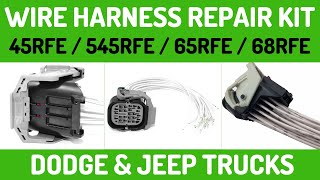
- Wiring Harness Issue: An intermittent short to ground or voltage on the L/R pressure switch sense circuit can mimic a stuck valve. This should be investigated if replacing the solenoid pack and servicing the valve body does not resolve the code.
- Faulty Powertrain Control Module (PCM): In very rare cases, the PCM itself can fail and misinterpret the signals from the transmission, leading to a false P1776 code. This should be the last item to consider after all other possibilities are exhausted.
Diagnosis Steps
- Check and verify the transmission fluid level and condition. Ensure it is filled with Mopar ATF+4 fluid only.
- Use a professional scan tool to read the fault codes and check the P1776 event data for the 'TRS Code'. If it shows 'TR2', inspect and adjust the shifter cable first. If it shows 'OD', the problem is internal to the transmission.
- Inspect the transmission wiring harness and connectors for any damage, corrosion, or loose connections.
- Drop the transmission oil pan and inspect for excessive metal or clutch debris, which would indicate a more severe internal failure requiring a rebuild.
- Remove the valve body assembly. It is highly recommended to replace the solenoid pack as it is a common failure point and a preventative measure. Torque bolts to 50 in-lb (5.7 Nm).
- While the valve body is out, inspect the Solenoid Switch Valve (SSV) for free movement in its bore. If it feels sticky or gritty, the valve body needs to be repaired (e.g., with a Sonnax kit) or replaced with a remanufactured unit.
- Install the new solenoid pack onto the repaired/new valve body.
- Reinstall the valve body assembly with a new filter set (sump and spin-on) and pan gasket, torquing all bolts to factory specifications.
- Refill the transmission with the correct amount of ATF+4 fluid (typically 5-7 quarts for a pan drop service).
- Clear the trouble codes and perform a transmission 'Quick Learn' or relearn procedure with a capable scan tool.
- Perform a test drive to ensure the issue is resolved.
Parts You'll Likely Need
- Transmission Solenoid Pack (Block)
(OEM #68353383AC)— This is the most common part replaced to fix P1776. It contains the pressure switches and solenoids that control the transmission. The original part number 5170877AF has been superseded multiple times by Mopar to improve reliability.
Trusted brands: Mopar
OEM price range: $300-$450
Aftermarket price range: $150-$300 - Transmission Filter Kit (Pan Gasket, Sump Filter, Spin-on Filter)
(OEM #5013470AC)— These parts must be replaced whenever the transmission pan is removed for service.
Trusted brands: Mopar, Wix, ATP
OEM price range: $50-$80
Aftermarket price range: $30-$60 - Solenoid Switch Valve Repair Kit
(OEM #Sonnax 44836-01K)— If the valve body bore is worn, this kit allows a specialist to repair it by installing an oversized valve, which is more cost-effective than replacing the entire valve body. This requires special tools.
Trusted brands: Sonnax, TransGo
OEM price range: N/A
Aftermarket price range: $50-$150 - Mopar ATF+4 Transmission Fluid — This specific fluid is required for the 545RFE transmission. Using universal fluids can cause shifting problems and damage.
Related Codes That Often Appear With This One
- P0700 — This is a generic Transmission Control Module (TCM) fault code. It simply means the TCM has stored a specific code (like P1776) and has requested the Check Engine Light to be turned on.
- P1775 — This is the sister code for 'Solenoid Switch Valve Latched in TCC Position.' Seeing both P1775 and P1776 strongly points to a problem with the Solenoid Switch Valve or the solenoid pack, as the valve is stuck between its two operational positions.
- P0841 — This code ('LR Pressure Switch Rationality') can appear with P1776 as it also relates to implausible signals from the Low/Reverse pressure switch circuit, often pointing to the same solenoid pack or valve body issues.
Technical Service Bulletins (TSBs) & Recalls
- Chrysler TSB 21-001-13: This is the primary document for diagnosing P1776. It instructs technicians to check the 'TRS Code' in the event data. A 'TR2' code points to a shifter cable adjustment issue, while an 'OD' code points to a sticking Solenoid Switch Valve within the valve body. It explicitly notes the SSV is in the valve body, not the solenoid pack.
Platform-Specific Known Issues
- The 545RFE transmission is known for solenoid pack failures that can cause a variety of shifting issues, including P1776.
- Wear in the aluminum valve body is a common long-term issue that leads to sticky valves and hydraulic pressure leaks.
Mechanic-Grade Diagnostic Values
- Solenoid Coil Resistance — expected: Approximately 1.3 Ohms for shift solenoids (LR/TCC, Overdrive, Underdrive, 2C, 4C) and 4.9 Ohms for the Pressure Control Solenoid, when measured at room temperature.. Failure: A reading that is significantly higher (open circuit) or lower (short circuit) than the specification indicates a failed solenoid coil.
- (T50) L/R Pressure Switch Sense Circuit Resistance — expected: Less than 5.0 Ohms when measured between the transmission solenoid connector and the PCM harness connector (using Miller tool #8815).. Failure: Resistance above 5.0 Ohms indicates excessive resistance or an open circuit in the wiring harness, which could set the code falsely.
- Low Clutch Circuit Pressure — expected: When in Park or Neutral, pressure should be around 121 PSI with the LR/CC solenoid modulated. When shifting into higher gears (3rd, 4th, 5th), this pressure should drop to 0.. Failure: If pressure is detected in the Low/Reverse clutch circuit when the torque converter clutch is commanded on (in higher gears), it confirms the valve is stuck or leaking, triggering P1776.
Hidden / Shadow Codes Worth Checking
- TRS Code: 'TR2': This is a data parameter found within the P1776 event data. 'TR2' indicates the Transmission Range Sensor (TRS) detected that the manual valve was not fully in the Overdrive (D) position when the fault occurred. (see via A professional scan tool (like Chrysler's wiTECH) capable of reading manufacturer-specific freeze frame and event data.)
- TRS Code: 'OD': This data parameter within the P1776 event data indicates the manual valve was correctly in the Overdrive (D) position when the fault was detected. (see via A professional scan tool (like Chrysler's wiTECH) capable of reading manufacturer-specific freeze frame and event data.)
Scan Tool Commands That Help
- Chrysler wiTECH or equivalent: Quick Learn — This procedure should be performed after replacing the valve body or solenoid pack. It resets adaptive values and allows the TCM to relearn clutch fill volumes and shift points for the new components.
- Chrysler wiTECH or equivalent: View Event Data / Freeze Frame — This is a critical first diagnostic step. Checking the 'TRS Code' within the P1776 event data can immediately differentiate between an external shifter cable issue ('TR2') and an internal transmission fault ('OD'), saving significant diagnostic time.
Wiring & Ground Locations
- Transmission Main Connector (C2 / 23-way case connector) — On the driver's side of the transmission case, typically a large, round, 23-pin connector.. This is the main electrical interface for the entire transmission. The L/R Pressure Switch Sense circuit (Pin 2 on some diagrams) runs through this connector. Corrosion or a pushed-out pin here can cause an open or short, mimicking a P1776 fault.
- G102 — A primary engine/chassis ground point, typically located on the right or left front of the engine compartment near the shock tower or inner fender.. A poor ground at G102 can cause a variety of electrical issues for the PCM and other modules, leading to erratic sensor readings and potentially false transmission codes. While not a direct cause, it should be checked for any electronic fault.
- PCM Connector C4 — One of the large multi-pin connectors at the Powertrain Control Module (PCM), located in the engine bay.. Diagnostic procedures for testing the wiring harness require disconnecting this specific connector to check for continuity and shorts between the PCM and the transmission connector.
Real Owner Repair Stories
- AgTalk Forum User (Jeep CRD (with 545RFE swap)) — Lost 4th and 5th gears.
❌ Tried (didn't work) Installed a used transmission from a 2012 Ram 1500 (with a black connector solenoid)., Took to a transmission shop that could not diagnose., Replaced the black connector solenoid pack with a brand new white connector solenoid pack and new shift plate.
✅ What actually fixed it The issue was ultimately traced to a wiring problem in the original vehicle. The transmission that was thought to be faulty was installed in another Jeep and worked perfectly, proving the issue was external to the transmission itself. The user was proceeding with diagnosing the harness with a scan tool. - YouTube video by Todd Morrill (1997 Chrysler Van (41TE transmission, but demonstrates a relevant failure mode)) — Recurring P1776 code.
❌ Tried (didn't work) Replacing the solenoid pack., Replacing the valve body.
✅ What actually fixed it The root cause was a failed input shaft seal (the middle one). This leak allowed pressure to cross-feed between clutch circuits, sending unexpected pressure back to the solenoid pack's pressure switches and triggering the P1776 code. This represents a deep internal mechanical failure that mimics an electronic or valve body fault.
OEM Part Supersession History
Black Connector Solenoid Pack (e.g., 4799937AD for early models)→White Connector Solenoid Pack (e.g., 5170877AA, now 68353383AC)— The white connector solenoid is an updated, more reliable design intended to replace earlier black and grey connector versions.
Heads up: When upgrading a pre-2004 vehicle from a black connector to a white connector solenoid, you MUST also replace the TRS cam plate (shifter plate) inside the transmission for the new solenoid to function correctly.
Model Year Variations Within This Range
- 2009-2010: In 2009, Chrysler eliminated the separate Overdrive solenoid from the RFE valve body and solenoid pack design. While the Commander was discontinued in 2010, this change applies to the late-model 545RFE transmissions it used. This means a valve body or solenoid from a 2009+ vehicle is physically different from a pre-2009 version.
Diagnostic Flowchart
Other Known Issues on This Vehicle
Issues unrelated to this code that are worth knowing about as an owner of this generation:
- Sunroof Drain Leaks 🔴 High — Extremely common across all model years. The drain tubes clog or disconnect, causing water to flood the front and rear floorboards.
- HEMI Tick / Lifter Failure 🔴 High — A well-known issue on the 5.7L HEMI engine, often starting as a ticking noise that can progress to a failed lifter and damaged camshaft, requiring major engine repair.
- Front Differential Mount Bushing Failure 🟠 Medium — The rubber bushings on the front differential mounts wear out, causing a 'clunking' noise from the front end, especially during acceleration or when shifting.
- Electrical System Malfunctions 🟠 Medium — Owners report a wide range of electrical gremlins, including malfunctioning gauges, warning lights (especially the 'Service 4WD System' light), and issues with power windows. (Ref: TSB 21-022-14 addresses reprogramming the FDCM for false 4WD warnings.)
- Ignition Switch Failure (Recall) 🔴 High — Common on 2006-2007 models. The driver's knee can bump the key and turn the engine off while driving. A recall (Chrysler P41 / NHTSA 14V-373) was issued to replace the ignition switch. (Ref: Recall NHTSA 14V-373)
- Transfer Case Shifting to Neutral (Recall) 🔴 High — Affects all model years. An electrical failure in the transfer case can cause it to shift into neutral unexpectedly, resulting in a loss of motive power. A recall (Chrysler P41 / NHTSA 14V-373) was issued to address this. (Ref: Recall NHTSA 14V-373)
Used vs. New Parts: Buying Guide for This Vehicle
When a used part is the smart pick: A complete, low-mileage used transmission assembly from a reputable salvage yard can be a cost-effective option if the cost of a valve body and solenoid pack replacement plus labor approaches the price of the used unit. Buying individual used electronic parts like the solenoid pack is a significant gamble and generally not recommended.
Donor-vehicle mileage cap: roughly under 80000 miles for the part to have meaningful remaining life.
What to inspect on the donor part:
- Check the fluid from the donor transmission. It should be reddish-pink and not smell burnt. Dark or metallic fluid is a major red flag.
- Ask for a vehicle history report (VIN) for the donor car to check for reported accidents or maintenance issues.
- Prefer parts from a vehicle that was a rear-end collision rather than one with a front-end impact near the engine/transmission.
- Ensure the warranty period from the salvage yard is at least 90 days.
OEM-only on this vehicle (don't cheap out):
- Transmission Solenoid Pack: While aftermarket options exist, the Mopar solenoid pack has undergone multiple revisions for reliability. Given the labor involved, using a proven OEM part is the safest bet to avoid a repeat failure.
- ATF+4 Fluid: The 545RFE is notoriously sensitive to fluid type. Do not use 'universal' or 'multi-vehicle' fluids. Only use licensed Mopar ATF+4 or a licensed equivalent.
Aftermarket brands forum-validated for this vehicle:
- Sonnax: For valve body repair kits (oversized valves) and solenoid pack rebuild kits (spacers, seals). They are a highly respected brand in the transmission repair industry for fixing OEM design flaws.
- TransGo: Offers shift kits and valve body repair components that are well-regarded by transmission professionals.
Brands owners have reported issues with on this vehicle:
- Unbranded, no-name solenoid packs from online marketplaces. These often have high failure rates out of the box or fail shortly after installation, leading to a repeat of the entire, labor-intensive repair.
Real Owner Stories
Aggregated from forums and TSBs cited above. Mileages and costs reflect what owners reported in those sources.
2007 Jeep Grand Cherokee 5.7L V8
Symptoms: Vehicle entered limp mode with a P1776 code present.
What fixed it: The solenoid pack was replaced, which resolved the issue.
Source hint: JeepForum.com - P1776 Code, Limp Mode
2006 Jeep Commander 5.7L V8
Symptoms: Owner received the P1776 code and sought advice on whether to replace the solenoid pack or the valve body.
What fixed it: Replacing the solenoid pack and filters was the recommended first step by the community.
Source hint: JeepCommander.com - P1776 Code
Related OBD-II Codes
Frequently Asked Questions
Does Chrysler TSB 21-001-13 apply to my Jeep Commander with the P1776 code?
Can I just replace the solenoid pack to fix P1776 on my 5.7L V8 Commander?
What specific transmission fluid should I use for my 2006-2010 Jeep Commander?
Is there a specific part I should look for when replacing the solenoid pack?
If my Commander is in 'limp mode' due to P1776, what behavior should I expect?
How can a technician confirm if the Solenoid Switch Valve (SSV) is the culprit?
Helpful Videos
We Have This Part in Stock

The information in this article is provided for general reference and educational purposes only. Vehicle specifications, procedures, and part compatibility can vary by production date, trim level, and region. Always consult your vehicle's factory service manual and verify part numbers before purchasing or performing repairs. Safety-critical components such as airbags, seat belts, and braking systems should be installed by a qualified professional.
- Jeep Commander:
- 🧭 Diagnostic Flowchart
- 🎬 Helpful Videos
- 🛍️ Shop This Part
- What's Unique About the 2006-2010 Jeep Commander
- Symptoms You May Notice
- Most Likely Causes
- Rare But Worth Checking
- Diagnosis Steps
- Parts You'll Likely Need
- Related Codes That Often Appear With This One
- Technical Service Bulletins (TSBs) & Recalls
- Platform-Specific Known Issues
- Mechanic-Grade Diagnostic Values
- Hidden / Shadow Codes Worth Checking
- Scan Tool Commands That Help
- Wiring & Ground Locations
- Real Owner Repair Stories
- OEM Part Supersession History
- Model Year Variations Within This Range
- Other Known Issues on This Vehicle
- Used vs. New Parts: Buying Guide for This Vehicle
- Real Owner Stories
- 2007 Jeep Grand Cherokee 5.7L V8
- 2006 Jeep Commander 5.7L V8
- Related OBD-II Codes
- Frequently Asked Questions
- 🎟️ Get 5% Off