

P1890 on 2004-2015 Ford F-150: 4WD Mode Select Circuit Failure Causes and Fixes
For a 2004-2015 F-150, code P1890 almost always points to a problem with the 4x4 system's transfer case shift motor. The most likely fix is replacing the shift motor itself, which costs around $150-$200 for an aftermarket part. Corrosion at the motor's electrical connector due to its exposed location is also a very common cause.
- P1890 on your F-150 means there's an electrical fault in the 4WD system.
- The most likely culprit is a failed transfer case shift motor, located on the side of your transfer case.
- Before buying parts, always check the simple things first: 4WD fuses and the wiring connector at the shift motor.
- This is a DIY-friendly repair for many, typically requiring basic hand tools and about an hour of work.
- Don't confuse this electrical code with the common IWE vacuum system issues; while both affect 4WD, they have different causes and fixes.
What's Unique About the 2004-2015 Ford F-150
The 2004-2015 F-150's Electronic Shift-On-the-Fly (ESOF) 4WD system is generally reliable, but its components are exposed to the elements. The transfer case shift motor and its electrical connector are mounted on the transfer case itself, making them highly susceptible to water, salt, and road debris. This exposure is the primary reason the shift motor and its wiring are the most common failure points for this code, rather than a more complex internal module issue.
Generation note: This guide covers the 11th generation (2004-2008), 12th generation (2009-2014), and the first year of the 13th generation (2015) F-150. While the fundamental design of the 4x4 system is similar, specific part numbers for the shift motor, connectors, and control module may vary between these generations. For example, the 2004-2008 motor is a different part than the 2009-2011 motor. The diagnostic principles remain the same.
Symptoms You May Notice
- "Check 4x4" or "Service 4x4" warning light on the dashboard.
- Inability to switch into or out of 4WD modes (4H, 4L).
- 4WD mode indicator lights on the switch may flash and then return to the previous setting without engaging.
- Audible clicking from relays under the dash, but no engagement of the 4x4 system.
- Grinding or humming noise from the front wheels, which is often a related IWE vacuum system issue rather than a direct symptom of P1890.
- 4x4 system appears to shift mechanically, but the light on the dash does not confirm the new mode.
- Replacing the IWE solenoid or vacuum lines. While IWE system failure is extremely common on these trucks and causes grinding noises, it operates on a separate vacuum system. A bad IWE system will not typically set the P1890 electrical code. It may set codes like C1979 or C1980.
Most Likely Causes
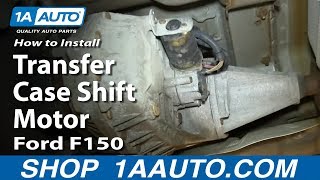
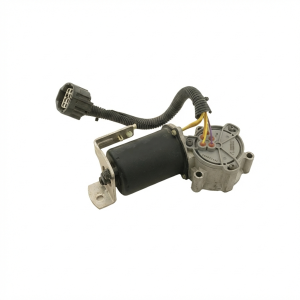
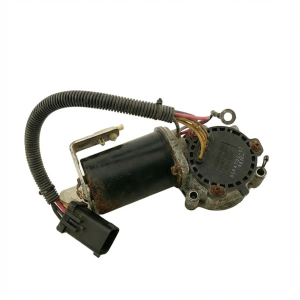
- Faulty Transfer Case Shift Motor 🔴 High Probability → Shop Transfer Case Motor The motor is located externally on the transfer case, where it is exposed to moisture and road debris, leading to internal corrosion and electrical failure of the motor and the integrated position sensor.
How to confirm: After confirming fuses and wiring are good, test the motor. You can try tapping on the motor housing with a hammer or mallet while a helper operates the 4WD switch; if it engages, the motor is failing. A more definitive test is to apply 12V power directly to the motor's two large power pins (often orange and yellow wires) to see if it actuates.
Typical fix: Replacement of the transfer case shift motor assembly.
Est. part cost: $150 - $350 - Damaged Wiring or Corroded Connector 🟡 Medium Probability The wiring harness leading to the shift motor runs underneath the truck and is vulnerable to chafing, road debris, and moisture intrusion at the connector pins. Water and salt can wick up into the connector causing green/white corrosion and open circuits.
How to confirm: Visually inspect the entire length of the harness from the frame to the transfer case motor. Unplug the connector and check for green or white corrosion, bent pins, or broken wires. In one documented case, an intermittent P1891 (a related code) was traced to a bad connector on the wiring harness.
Typical fix: Clean the connector terminals with an electrical contact cleaner and apply dielectric grease. If the harness or connector is damaged beyond cleaning, it will need to be repaired with a pigtail kit or replaced.
Est. part cost: $10 - $100 - Blown 4WD System Fuse(s) ⚪ Low Probability A voltage spike or a short in the shift motor can cause a fuse to blow.
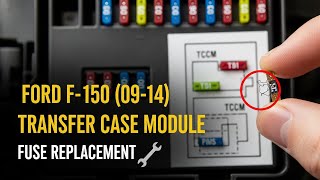
How to confirm: Consult the owner's manual for the location of the 4WD-related fuses in both the passenger compartment fuse panel (often behind the passenger kick panel) and the under-hood power distribution box. Visually inspect the fuses or test them with a multimeter.
Typical fix: Replace the blown fuse. If the new fuse blows immediately, a short circuit exists in the system that must be diagnosed.
Est. part cost: $1 - $5 - Faulty Transfer Case Control Module (TCCM) ⚪ Low Probability → Shop Transfer Case Motor While less common, the TCCM can fail internally due to electrical faults or moisture intrusion, especially if the vehicle has had water leaks into the cabin/kick panel area where the module is often located.
How to confirm: This is typically diagnosed by exclusion. If the fuses, wiring, switch, and shift motor are all confirmed to be good, the TCCM is the likely culprit. A scan tool with advanced diagnostics may show a specific internal failure code for the module, like U3000.
Typical fix: Replacement of the TCCM and possible reprogramming by a dealer or qualified shop.
Est. part cost: $100 - $250
Rare But Worth Checking
- Faulty 4WD Selector Switch: The switch on the dashboard can fail, but it's less common than motor or wiring issues. It can be tested by checking for specific resistance values with a multimeter as you turn the dial. For many F-150s, the expected values are approximately 3.9k ohms in 2H, 1.1k ohms in 4H, and 360 ohms in 4L. The switch operates on a 5V reference signal from the control module, not 12V.
Diagnosis Steps
- Read the Code: Confirm P1890 is present using an OBD-II scanner. Note any other codes, especially P1867 or P1891.
- Check the Fuses: Inspect all fuses related to the 4WD system and TCCM in both the interior and under-hood fuse boxes. Replace as needed.
- Inspect the Wiring: Get under the truck and perform a thorough visual inspection of the wiring harness and 7-pin connector at the transfer case shift motor. Unplug it and check carefully for corrosion, moisture, or pushed-out pins.
- Test the Switch: Have a helper turn the 4WD selector switch inside the cab. Listen for a 'click' from the relay (usually in the passenger kick panel area) and a 'whirring' sound from the transfer case shift motor.
- Test the Shift Motor: If there's no sound from the motor, unplug its connector. Use a multimeter to check for 12V power at the two larger pins when the switch is operated. If voltage is present but the motor doesn't run, the motor has failed. If no voltage is present, the problem is upstream (TCCM, relay, wiring).
- Test the Mode Select Switch: If other tests are inconclusive, test the dashboard switch. Using a multimeter set to ohms, check the resistance between the two center pins of the switch connector. It should read approximately 3.9kΩ in 2H, 1.1kΩ in 4H, and 360Ω in 4L.
- Evaluate TCCM: If all other components (motor, wiring, fuses, switch) test good, the Transfer Case Control Module (TCCM) may be faulty. This is a diagnosis by elimination.
Parts You'll Likely Need
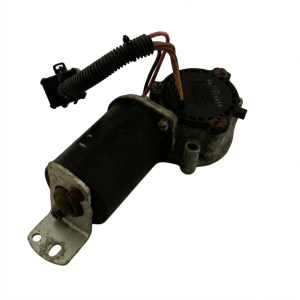
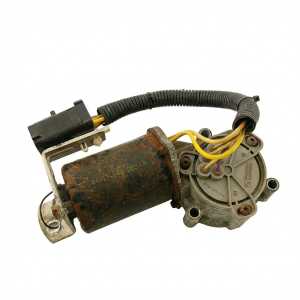
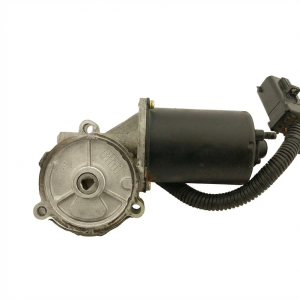
- Transfer Case Shift Motor
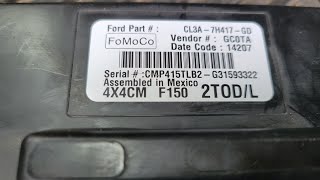
(OEM #8L3Z-7G360-A (2004-2008); 9L3Z-7G360-A (2009-2011))— This is the most frequent failure point for code P1890 due to its exposed location, leading to internal electrical failure or corrosion.
Trusted brands: Motorcraft, Dorman, SKP
OEM price range: $250-$400
Aftermarket price range: $150-$250
Related Codes That Often Appear With This One
- P1867 — This code for 'Transfer Case Contact Plate General Circuit Failure' points more specifically to the position sensor inside the shift motor assembly. If you see P1867, the shift motor is almost certainly the cause.
- P1815 — A code for '4x4 Mode Select Short Circuit to Ground' often appears with other circuit faults, pointing to a wiring harness issue or a failed component (like the shift motor) causing a short.
- P1891 — This code for 'Transmission Transfer Case Contact Plate Ground Return Open Circuit' is very similar and points to an open circuit, often in the wiring, connector, or the shift motor's internal contact plate.
Technical Service Bulletins (TSBs) & Recalls
- TSB 06-8-15: Addresses intermittent IWE noise and 4x4 in-op issues on 2004-2006 models due to water ingestion in the IWE solenoid, which can cause related electrical codes C1979 and C1980. While not directly for P1890, it highlights the system's vulnerability to water damage.
- TSB 20-2028: Pertains to intermittent grinding noises from the IWE system on 2013-2018 F-150s. The fix involves a TCCM reprogram and potential replacement of vacuum components. This shows that the TCCM logic itself has been a point of revision for Ford.
Platform-Specific Known Issues
- Part Number Varies by Generation: The transfer case shift motor is not the same across all years. The 2004-2008 models use a different part (e.g., Motorcraft 8L3Z-7G360-A) than the 2009-2011 models (e.g., Motorcraft 9L3Z-7G360-A). Always verify the correct part number for your specific year and model before purchasing.
Mechanic-Grade Diagnostic Values
- Transfer Case Shift Motor Power Test — expected: 12V at the two larger pins (often orange and yellow) of the 7-pin connector when the 4WD switch is operated.. Failure: No voltage indicates an issue upstream (fuse, relay, TCCM, wiring). Voltage present but no motor action indicates a failed motor.
Scan Tool Commands That Help
- Ford IDS (Integrated Diagnostic System): Self-Test or Active Command — The Ford IDS software allows technicians to run a self-test on the TCCM, which can retrieve manufacturer-specific codes not visible to generic OBD-II scanners. It also has bidirectional controls to command the shift motor to actuate, directly testing the motor, relays, and wiring harness, bypassing the dashboard switch.
Wiring & Ground Locations
- TCCM (Transfer Case Control Module) — For 2004-2008 models, it's typically located behind the passenger side kick panel, near the A-pillar. For 2009-2014 models, it's often found above the passenger compartment fuse box, accessible by removing the glove box.. The TCCM is the brain of the 4WD system. Its location in the passenger footwell area makes it susceptible to water damage from windshield or door seal leaks, and a bad ground connection here can cause a variety of 4WD codes, including P1890.
- G202 / G203 — Behind the passenger side kick panel, near the Central Junction Box (fuse box). These are common ground points for multiple interior modules.. The TCCM relies on a solid ground connection to function. These grounds are known to rust on trucks in northern climates, causing high resistance and intermittent electrical gremlins, including 4WD system faults. A visual inspection for rust and a voltage drop test are key diagnostic steps.
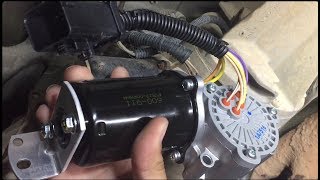
- Shift Motor Connector (C-number varies) — The 7-pin connector on the transfer case shift motor itself.. This is the most common point of failure. The two largest pins are for the motor power (often orange and yellow). The other five smaller pins are for the internal position sensor (contact plates) that report the motor's position back to the TCCM. A failure in these sensor circuits is what directly sets code P1890.
Real Owner Repair Stories
- f150forum.com user 'joshlobe' (2011 F-150 Lariat Supercrew, 100,000 miles) — Battery would be dead every morning. Clicking noise from behind the passenger side dash when the truck was off.
❌ Tried (didn't work) Replacing the battery.
✅ What actually fixed it A Ford dealership diagnosed that the Transfer Case Control Module (TCCM) was drawing power when the truck was off, draining the battery. The owner replaced the TCCM himself, which resolved the parasitic drain and clicking.
OEM Part Supersession History
4L3Z-7G360-BA, 5L3Z-7G360-A, 5L3Z-7G360-BA→8L3Z-7G360-A— Standard part evolution and consolidation by Ford.CL3Z-7G360-A→FL3Z-7G360-A— Part update for newer model years.
Heads up: The motor for 2012-2014 F-150s (CL3Z-7G360-A) is not interchangeable with the motor for 2015+ F-150s (FL3Z-7G360-A), despite looking similar.
Model Year Variations Within This Range
- 2004-2008 vs. 2009-2014: The location of the Transfer Case Control Module (TCCM) can differ. On earlier 11th gen trucks, it is often behind the passenger kick panel trim. On 12th gen trucks, it is more commonly located above the fuse box, requiring removal of the glove box for access.
Diagnostic Flowchart
Other Known Issues on This Vehicle
Issues unrelated to this code that are worth knowing about as an owner of this generation:
- Ford 5.4L 3-Valve V8 Cam Phaser Failure 🔴 High — Extremely common on 2004-2010 models with the 5.4L 3V engine. Often presents as a diesel-like ticking or knocking noise at hot idle. (Ref: TSB 14-0114)
- Spark Plug Breakage/Ejection (5.4L & 4.6L 3-Valve) 🔴 High — A notorious issue on 2004-2008 models where the two-piece spark plugs break apart in the cylinder head during removal, requiring a special extraction tool.
- Integrated Wheel End (IWE) System Failure 🟠 Medium — Very common across all 4x4 models in this range. Caused by vacuum leaks in the lines or a faulty solenoid, leading to a grinding noise from the front hubs as they partially engage. (Ref: TSB 06-8-15, TSB 20-2028)
- Cracked Exhaust Manifold 🟠 Medium — Common on 4.6L and 5.4L V8 engines, causing a ticking noise that is most noticeable when the engine is cold and may diminish as it warms up.
- Power Rear Sliding Window Defroster Failure 🟡 Low — Common on trucks equipped with this feature. The electrical contacts for the defroster grid fail, requiring replacement of the entire rear window assembly to fix.
- Transmission Downshifts to 1st/2nd Gear Unexpectedly 🔴 High → Shop Transmission Assembly — Subject of a recall on some 12th gen (2009-2014) models. A software or lead frame issue could cause the transmission to suddenly downshift at speed. (Ref: NHTSA Recall 16V248000, 19S07)
Used vs. New Parts: Buying Guide for This Vehicle
When a used part is the smart pick: A used OEM (Motorcraft) shift motor from a low-mileage, non-salt-belt donor vehicle can be a cost-effective option. Given that the primary failure mode is corrosion and water intrusion, a part from a dry climate has a higher chance of a long service life. Avoid used aftermarket parts.
Donor-vehicle mileage cap: roughly under 80000 miles for the part to have meaningful remaining life.
What to inspect on the donor part:
- Check the electrical connector pins for any signs of green or white corrosion.
- Inspect the case seam for evidence of prying or previous opening.
- Look for excessive rust on the housing, which indicates prolonged exposure to harsh conditions.
- If possible, verify the donor vehicle's location history to avoid parts from the rust belt.
OEM-only on this vehicle (don't cheap out):
- While not strictly OEM-only, Motorcraft is highly recommended for the Transfer Case Shift Motor. Forum discussions and mechanic experience suggest aftermarket units, particularly from brands like Dorman, can have a higher premature failure rate, sometimes failing within a single winter season.
Aftermarket brands forum-validated for this vehicle:
- SKP is sometimes mentioned as a viable alternative to Dorman, but OEM Motorcraft remains the most reliable choice.
Brands owners have reported issues with on this vehicle:
- Dorman and Cardone (remanufactured) transfer case motors for this application have mixed reviews, with some owners reporting failures in under a year, while others have success. It is generally considered a gamble compared to OEM.
Real Owner Stories
Aggregated from forums and TSBs cited above. Mileages and costs reflect what owners reported in those sources.
2018 Ford F-150
Symptoms: Intermittent 'Check 4x4' light on the dashboard and a P1891 code.
What fixed it: The dealer traced the problem to a bad connector on the wiring harness after a shift motor replacement failed to fix the issue.
Source hint: f150forum.com - Thread: ''18 F150 - "Check 4X4", P1891???'
Related OBD-II Codes
Frequently Asked Questions
I have a 2005 F-150 with the 5.4L engine; is there a TSB for 4x4 issues related to water damage?
Can I use the same shift motor for my 2008 F-150 that I found for a 2010 model?
My 2014 F-150 is making a grinding noise from the front wheels; does this mean the TCCM is bad?
How can I test the 4WD selector switch on my dashboard to see if it's causing the P1890 code?
Is the P1890 code common on the Lincoln Mark LT as well?
I hear clicking under my dash but the 4x4 won't engage. Does this mean the fuse is blown?
Helpful Videos
We Have This Part in Stock

The information in this article is provided for general reference and educational purposes only. Vehicle specifications, procedures, and part compatibility can vary by production date, trim level, and region. Always consult your vehicle's factory service manual and verify part numbers before purchasing or performing repairs. Safety-critical components such as airbags, seat belts, and braking systems should be installed by a qualified professional.
- Ford F-150:
- 🧭 Diagnostic Flowchart
- 🎬 Helpful Videos
- 🛍️ Shop This Part
- What's Unique About the 2004-2015 Ford F-150
- Symptoms You May Notice
- Most Likely Causes
- Rare But Worth Checking
- Diagnosis Steps
- Parts You'll Likely Need
- Related Codes That Often Appear With This One
- Technical Service Bulletins (TSBs) & Recalls
- Platform-Specific Known Issues
- Mechanic-Grade Diagnostic Values
- Scan Tool Commands That Help
- Wiring & Ground Locations
- Real Owner Repair Stories
- OEM Part Supersession History
- Model Year Variations Within This Range
- Other Known Issues on This Vehicle
- Used vs. New Parts: Buying Guide for This Vehicle
- Real Owner Stories
- 2018 Ford F-150
- Related OBD-II Codes
- Frequently Asked Questions
- 🎟️ Get 5% Off