

P1890 on 2002-2010 Mercury Mountaineer: 4WD Mode Select Circuit Failure Causes and Fixes
On a 2002-2010 Mercury Mountaineer, code P1890 almost always points to a problem with the four-wheel-drive system. The most common fix is replacing the transfer case shift motor, which costs between $70-$150 for an aftermarket part. Before replacing it, check the 4WD dash switch and wiring, as corrosion in the underbody connector is also a frequent culprit.
- P1890 on your Mountaineer means there's an electrical problem with the 4WD system, not a major mechanical transmission failure.
- The most likely cause is a bad transfer case shift motor, located on the transfer case underneath the vehicle.
- Before buying parts, always check the simple things first: 4WD-related fuses and the wiring connector at the shift motor for corrosion or damage.
- The 2002-2005 and 2006-2010 models use different parts. Double-check that you are buying the correct shift motor for your specific year.
What's Unique About the 2002-2010 Mercury Mountaineer
The Mercury Mountaineer, a sibling to the Ford Explorer, uses an electronic 'Control-Trac' shift-on-the-fly 4WD system. Unlike purely mechanical systems, it relies on a dash switch, a control module (TCCM), and an electric motor to engage the different drive modes. This electronic complexity is the primary source of P1890 faults on this platform. The components, particularly the transfer case shift motor and its wiring, are located underneath the vehicle and are highly exposed to moisture, road salt, and debris, leading to a high rate of failure for the motor's internal position sensor (often called an encoder or contact plate) or its electrical connector.
Generation note: The 2002-2010 range covers two Mountaineer generations, which are based on the Ford Explorer. The second generation runs from 2002-2005 and the third from 2006-2010. While the causes and symptoms are similar, key parts like the transfer case shift motor are different between these two generations. Always verify the part number for your specific model year before purchasing.
Symptoms You May Notice
- Inability to switch between 2WD, 4WD High, and 4WD Low modes.
- The '4WD' or '4x4' indicator light on the dashboard may flash or stay illuminated.
- The vehicle may be stuck in one particular 4WD mode.
- A 'Service 4WD' message may appear on the instrument cluster.
- Clicking or grinding noise from under the vehicle when attempting to shift 4WD modes.
- Replacing the entire transfer case. This code points to an electronic control circuit failure, not a mechanical failure within the transfer case itself. Replacing the transfer case is expensive and will not fix the issue if the fault is in the motor, switch, or wiring.
Most Likely Causes
- Faulty Transfer Case Shift Motor 🔴 High Probability → Shop Transfer Case Motor The shift motor is mounted on the transfer case, where it's exposed to road salt, water, and dirt. This leads to internal corrosion and failure of the electric motor or, more commonly, the integrated position sensor (encoder) that reports the gear position back to the TCCM.
How to confirm: After confirming the switch and wiring are good, a technician can use a scan tool to command the motor to shift. If it doesn't move or makes a grinding noise, it has failed. Another method is to provide direct power and ground to the motor pins to see if it actuates. Tapping the motor housing with a hammer while a helper tries to shift can sometimes temporarily restore function, confirming a bad motor.
Typical fix: Replacement of the transfer case shift motor assembly.
Est. part cost: $70-$250 - Damaged Wiring or Corroded Connector 🟡 Medium Probability The wiring harness to the transfer case shift motor runs along the vehicle's underbody and is susceptible to damage from road debris, heat from the exhaust, and corrosion from moisture, especially in the 'Rust Belt'.
How to confirm: Visually inspect the entire length of the wiring harness from the frame to the transfer case motor. Unplug the 8-pin rectangular connector at the motor and check for green or white corrosion, bent pins, or melted plastic. Perform a continuity test on each wire if visual inspection is inconclusive.
Typical fix: Repair the damaged section of wire or replace the corroded connector pigtail. Clean the pins on the shift motor if they are corroded but salvageable.
Est. part cost: $15-$50 - Faulty 4WD Selector Switch ⚪ Low Probability The switch on the dashboard can fail from normal wear and tear over time, causing it to send an incorrect or no signal to the Transfer Case Control Module (TCCM). Spilled drinks are also a known cause of failure for this switch.
How to confirm: A scan tool can monitor the switch position data as you turn the knob. If the reading doesn't change, the switch is likely bad. Alternatively, you can test the switch's internal resistance with a multimeter according to the service manual's specifications for each position.
Typical fix: Replacement of the 4WD mode selector switch on the dashboard.
Est. part cost: $40-$90
Rare But Worth Checking
- Failed Transfer Case Control Module (TCCM): → Shop Transfer Case Motor While not common, the TCCM itself can fail. This should only be considered after the motor, wiring, and switch have all been tested and confirmed to be working properly. A TCCM failure might also be accompanied by communication codes (U-codes), like U0102.
Diagnosis Steps
- Check for blown fuses related to the 4WD system or TCCM in the vehicle's fuse box.
- Connect an OBD-II scanner and check for any other related trouble codes, such as P1867.
- Using a scan tool that can read live data, monitor the 4WD selector switch position as you turn the knob. If the position does not change on the scan tool, the switch is likely faulty.
- If the switch is working, raise and safely support the vehicle.
- Locate the transfer case shift motor on the back of the transfer case. Carefully inspect the wiring harness leading to it for any signs of chafing, melting, or physical damage.
- Disconnect the electrical connector from the shift motor. Inspect the pins on both the harness side and the motor side for corrosion, moisture, or damage. Clean any corrosion with an electrical contact cleaner.
- If the wiring and connector appear to be in good condition, the transfer case shift motor is the most likely culprit.
- Confirm by either commanding the motor with a bi-directional scan tool or by replacing it. Replacement is a common and effective diagnostic step when other components check out. If the old motor failed while stuck in 4WD, the transfer case's triangular shaft may need to be manually turned with pliers to match the 2WD position of the new motor before installation.
Parts You'll Likely Need
- Transfer Case Shift Motor
(OEM #1L2Z-7G360-AA (2002-2005), 8L2Z-7G360-A (2006-2010))— This is the most common failure point for code P1890, as its internal position sensor fails due to exposure to the elements. Part numbers vary by generation; 2002-2005 and 2006-2010 use different motors.
Trusted brands: Motorcraft, Dorman, Cardone
OEM price range: $200-$350
Aftermarket price range: $70-$150 - 4WD Mode Selector Switch
(OEM #1L2Z-14B166-AA (2002-2003), 4L2Z-14B166-AA (2004-2005), 6L2Z-14B166-A (2006-2010))— This dash-mounted switch can wear out, preventing it from sending the correct mode request to the control module.
Trusted brands: Motorcraft, Standard Motor Products
OEM price range: $60-$110
Aftermarket price range: $40-$90
Related Codes That Often Appear With This One
- P1867 — This is a Ford-specific code for 'Transfer Case Contact Plate General Circuit Failure'. The contact plate is the position sensor inside the shift motor. P1890 is a more general return circuit fault, while P1867 points more directly at the shift motor's internal sensor, making a failed shift motor assembly the almost certain cause.
Platform-Specific Known Issues
- Owner Experience with Shift Motor Failure: A user on explorerforum.com with a 2002 Explorer (identical system) reported the classic P1890 symptoms: 4x4 lights flashing and inability to switch modes. After verifying the dash switch was good, they replaced the transfer case shift motor (Dorman part 600-912 for that year) which completely resolved the issue. This is a very typical repair story for this platform. 🎬 Watch: How to fix flashing 4x4 lights on 2002-up models.
Mechanic-Grade Diagnostic Values
- 4WD Mode Selector Switch (MSS) Resistance — expected: 2WD: 3,705-4,095 Ohms; 4WD HIGH: 1,045-1,155 Ohms; 4WD LOW: 342-378 Ohms. Failure: Readings are open (infinite resistance), shorted (zero resistance), or significantly outside these ranges for any given position.
- Transfer Case Control Module (TCCM) Power Supply — expected: Battery voltage (12V+) at the TCCM power input pins.. Failure: Voltage is low or absent, indicating a problem with the fuse, relay, or wiring from the Battery Junction Box.
Hidden / Shadow Codes Worth Checking
- Mode 6, Test ID $53: On Ford vehicles of this era, Mode 6 data can reveal misfire counts per cylinder before a P030x code is set. While not directly for P1890, it demonstrates a key diagnostic capability. A similar principle applies where internal self-tests for the 4WD system's contact plates might fail and increment a counter visible in Mode 6 on a capable scanner (like FORScan) before P1890 or P1867 is set as a hard fault. (see via Advanced OBD-II scanner with Mode 6 capability or Ford-specific software like FORScan.)
Scan Tool Commands That Help
- Ford IDS (Integrated Diagnostic System) or equivalent: GEM Active Command CW/CCW (Clockwise/Counter-Clockwise) — This is a bidirectional control used to directly command the transfer case shift motor to rotate. It allows a technician to bypass the dash switch and TCCM logic to verify if the motor itself is capable of moving. If the command is sent and the motor does not actuate, the motor or its direct wiring/power feed is faulty.
Wiring & Ground Locations
- Transfer Case Control Module (TCCM) — On 2006-2010 models, this function is integrated into the Smart Junction Box (SJB) located behind the left side of the dashboard. On earlier 2002-2005 models, it is part of the Generic Electronic Module (GEM) located behind the glove box or radio area.. This module receives the signal from the dash switch and sends the command to the shift motor. It is the 'brain' of the 4WD system. Power and ground issues at this module will prevent the entire system from working.
- Battery Junction Box (BJB) Fuses F23 & F26 — Located in the fuse box in the engine compartment on the driver's side.. These 20-amp fuses provide the primary power to the Transfer Case Control Module. If either is blown, the TCCM will be inactive, leading to a loss of 4WD function and potentially communication codes.
- Shift Motor 8-Pin Connector — On the transfer case shift motor itself, under the vehicle.. This is the most common location for corrosion and wiring damage due to its exposed location. The two largest pins are for the motor itself, while the other smaller pins are for the internal position sensor (contact plates) that send the mode confirmation signal back to the TCCM.
- TCCM Ground Wire — While a specific ground point number is elusive, the primary ground for the control module is typically located inside the cabin, often at a common grounding point behind the driver's or passenger's kick panel. A separate, critical ground connection for the 4WD system can be found on the frame rail, which is prone to corrosion.. A corroded or broken ground on the frame rail can cause the 4x4 lights to flash and prevent the system from operating, mimicking a failed module or motor.
Real Owner Repair Stories
- YouTube video by user Nathan Rohrbough (Ford Explorer (mechanically identical)) — Flashing 4x4 light on the dashboard.
❌ Tried (didn't work) The owner did not report trying other parts first.
✅ What actually fixed it The owner discovered a corroded and broken ground wire on the vehicle's frame. After cleaning the contact point on the frame and re-securing the ground wire with a new connector, the flashing light issue was completely resolved and all 4WD functions were restored.
OEM Part Supersession History
1L2Z-7G360-AA (Motorcraft)→Dorman 600-912 (Aftermarket equivalent)— Standard aftermarket replacement for the first generation motor.
Heads up: This part is for 2002-2005 models ONLY. It is physically and electrically incompatible with 2006-2010 models.8L2Z-7G360-A (Motorcraft)→Dorman 600-929 (Aftermarket equivalent)— Standard aftermarket replacement for the second generation motor.
Heads up: This part is for 2006-2010 models ONLY. It will not work on the earlier 2002-2005 models.
Model Year Variations Within This Range
- 2002-2005: This generation uses a Generic Electronic Module (GEM) for 4WD control and the earlier style of transfer case shift motor (OEM P/N 1L2Z-7G360-AA).
- 2006-2010: This generation uses a dedicated Transfer Case Control Module (TCCM), often integrated into the Smart Junction Box (SJB), for 4WD control. It uses a different transfer case shift motor (OEM P/N 8L2Z-7G360-A).
Diagnostic Flowchart
Other Known Issues on This Vehicle
Issues unrelated to this code that are worth knowing about as an owner of this generation:
- Cracked Rear Liftgate Applique 🟠 Medium — Extremely common on both 2002-2005 and 2006-2010 generations. The plastic panel below the rear window develops a crack, often around the emblem. This allows water intrusion, which can damage the liftgate latch mechanism. (Ref: No recall, but the issue was widespread enough to trigger class-action lawsuits.)
- 4.0L SOHC V6 Timing Chain Cassette Failure 🔴 High — A notorious issue for the 4.0L SOHC engine. Plastic timing chain guides become brittle and break, often starting around 100,000 miles. Symptoms begin with a rattling noise ('death rattle') on startup or deceleration. Failure to repair can lead to jumped timing and catastrophic engine damage. The repair is very labor-intensive as one of the cassettes is at the rear of the engine, requiring engine or transmission removal.
- 5R55S/5R55W Automatic Transmission Failures 🔴 High → Shop Transmission Assembly — Common after 80,000-120,000 miles. The aluminum servo bores in the transmission case wear out, causing pressure loss. This leads to delayed or harsh shifts (especially the 2-3 shift), shift flares, and eventually burnt bands/clutches. Another common failure is the solenoid pack, which can cause erratic shifting.
Used vs. New Parts: Buying Guide for This Vehicle
When a used part is the smart pick: A used transfer case shift motor from a junkyard is a reasonable choice, especially if the budget is tight. Since the failure is often electronic (the internal sensor) rather than purely mechanical wear, a used part can function perfectly. It is a relatively simple part to access and replace, reducing labor risk if the used part is faulty.
Donor-vehicle mileage cap: roughly under 120000 miles for the part to have meaningful remaining life.
What to inspect on the donor part:
- Inspect the electrical connector pins for any signs of green or white corrosion. Do not buy if corrosion is present.
- Check the plastic housing for cracks or severe damage.
- If possible, source the part from a vehicle in a dry, southern climate to minimize the risk of internal corrosion from road salt.
- Ask about the donor vehicle's history; a part from a vehicle with collision damage is preferable to one from a flood vehicle.
OEM-only on this vehicle (don't cheap out):
- For this specific P1890 repair, there are no parts that are strictly 'OEM-only'. The control modules (GEM/TCCM) are best replaced with OEM, but they are a rare cause of this code.
Aftermarket brands forum-validated for this vehicle:
- Dorman is a widely available and commonly used aftermarket brand for the shift motor and is generally considered a reliable choice for this repair.
- Cardone (often sold as a remanufactured unit) is another acceptable alternative.
Brands owners have reported issues with on this vehicle:
- Avoid unbranded, 'white box' parts from online marketplaces with no warranty or clear manufacturer identity, as quality control can be highly inconsistent.
Real Owner Stories
Aggregated from forums and TSBs cited above. Mileages and costs reflect what owners reported in those sources.
2002 Ford Explorer
Symptoms: 4x4 lights flashing and inability to switch modes.
What fixed it: After verifying the dash switch was good, they replaced the transfer case shift motor (Dorman part 600-912 for that year) which completely resolved the issue.
Source hint: explorerforum.com
Related OBD-II Codes
Frequently Asked Questions
My 2005 Mountaineer has a P1890 code. Can I use a transfer case shift motor from a Ford Explorer of the same year to fix it?
I'm getting 4x4 warning lights and a P1890 code. Could this be related to the notorious 4.0L V6 timing chain rattle?
Before I buy an expensive part for my Mountaineer, is there a simple fuse I should check for the P1890 code?
My mechanic says the transfer case shift motor is bad. Is this a common failure on the 2002-2010 Mountaineer?
I found a used shift motor from a Mountaineer in a southern state. Is it a good idea to use it?
My Mountaineer is stuck in 4WD and has the P1890 code. Is it more likely to be the switch on the dash or the motor underneath?
Helpful Videos
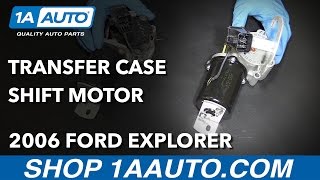
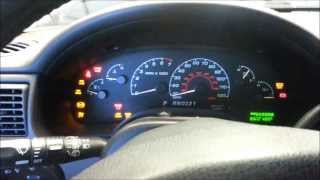
We Have This Part in Stock
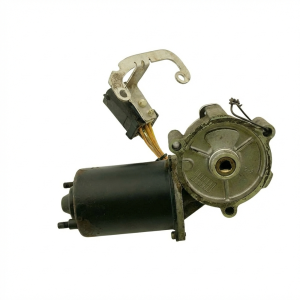

The information in this article is provided for general reference and educational purposes only. Vehicle specifications, procedures, and part compatibility can vary by production date, trim level, and region. Always consult your vehicle's factory service manual and verify part numbers before purchasing or performing repairs. Safety-critical components such as airbags, seat belts, and braking systems should be installed by a qualified professional.
- Mercury Mountaineer:
- 🧭 Diagnostic Flowchart
- 🎬 Helpful Videos
- 🛍️ Shop This Part
- What's Unique About the 2002-2010 Mercury Mountaineer
- Symptoms You May Notice
- Most Likely Causes
- Rare But Worth Checking
- Diagnosis Steps
- Parts You'll Likely Need
- Related Codes That Often Appear With This One
- Platform-Specific Known Issues
- Mechanic-Grade Diagnostic Values
- Hidden / Shadow Codes Worth Checking
- Scan Tool Commands That Help
- Wiring & Ground Locations
- Real Owner Repair Stories
- OEM Part Supersession History
- Model Year Variations Within This Range
- Other Known Issues on This Vehicle
- Used vs. New Parts: Buying Guide for This Vehicle
- Real Owner Stories
- 2002 Ford Explorer
- Related OBD-II Codes
- Frequently Asked Questions
- 🎟️ Get 5% Off