

P2002 on 2017-2024 Audi Q5 2.0L TDI: DPF Efficiency Below Threshold Causes and Fixes
On the 2.0L TDI (DETA) engine, code P2002 is most commonly caused by a clogged low-pressure EGR cooler, not the DPF itself. This blockage creates backpressure that the ECU misinterprets as a DPF efficiency problem. The fix is almost always replacing the EGR cooler, which is a labor-intensive job, and should not be misdiagnosed as a failed DPF.
- Code P2002 on your Audi Q5 2.0L TDI is most likely caused by a clogged EGR cooler, not a failed DPF.
- Do not replace the expensive DPF until the EGR cooler and DPF pressure sensor have been properly diagnosed.
- The EGR cooler replacement is a complex, labor-intensive job that is best left to a professional familiar with this specific engine.
- Driving habits like frequent short trips can contribute to soot buildup, but they are unlikely to be the sole cause of this specific fault code on this engine.
- A forced DPF regeneration is not a fix for this problem and will likely result in the code returning quickly.
What's Unique About the 2017-2024 Audi Q5
On this specific Audi 2.0L TDI engine (often found in Euro 6 vehicles like the A4, A6, and Q5), the P2002 code is frequently a misleading fault. The true culprit is often not the DPF itself, but a design issue related to the low-pressure Exhaust Gas Recirculation (EGR) cooler. This cooler, located after the DPF, is prone to clogging with a mixture of soot and crystallized AdBlue deposits. When the EGR valve opens, the blocked cooler creates backpressure in the exhaust system. A pressure sensor on the low-pressure EGR side detects this, and the ECU incorrectly assumes the DPF is clogged or has failed, triggering the P2002 code. 🎬 Watch: Why the P2002 code is triggered on Euro 6 engines Forced regenerations will not clear this blockage.
Generation note: The 2017-2024 Audi Q5 belongs to the second generation (Typ 80A or B9) which uses the MLB Evo platform. This issue is common across VAG (Volkswagen Audi Group) vehicles using this Euro 6 2.0L TDI engine design with a longitudinal layout, such as the Audi A4 and A6. A facelift occurred for the 2021 model year, but the underlying engine and emissions architecture related to this fault remained largely the same.
Symptoms You May Notice
- Check Engine Light illuminated.
- Glow plug light may be on or flashing.
- Vehicle enters 'limp mode' with significantly reduced engine power.
- Noticeable loss of performance, especially under load.
- Increased fuel consumption.
- Engine may cut out if the blockage becomes severe.
- Car may be stuck in a loop of frequent, failed DPF regenerations.
- Replacing the Diesel Particulate Filter (DPF). Many owners and shops replace the expensive DPF, only for the P2002 code to return a few thousand miles later because the root cause—the clogged EGR cooler—was not addressed.
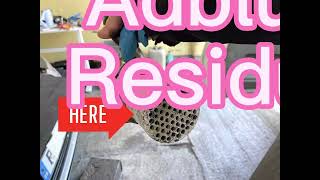
- Performing repeated DPF regenerations. A forced regeneration will not clear a clogged EGR cooler and provides only a very temporary fix, if any. The light will typically come back on within a short period. 🎬 See why this frustrating DPF fault keeps coming back
Most Likely Causes
- Clogged Low-Pressure EGR Cooler 🔴 High Probability The EGR cooler on these engines has small passages that are susceptible to clogging with soot and crystallized AdBlue because it operates at temperatures too low (around 150-200°C) to burn off deposits. An updated cooler design (e.g., part number 04L131512D) uses rectangular slots instead of round holes to mitigate this. The cooler's position and operating temperature are not sufficient to burn off these deposits.
How to confirm: A technician must diagnose this. It involves checking DPF pressure sensor readings during EGR valve actuation. If pressure spikes when the EGR valve opens, it points to a blockage in the cooler. Visual inspection is the ultimate confirmation, but requires significant disassembly. A specialist described it as a "horrible, horrible job" due to the tight access.
Typical fix: Replacement of the EGR cooler assembly. This is a labor-intensive job often costing over $3000 at a shop. 🎬 Watch: Step-by-step low pressure EGR cooler replacement walkthrough Cleaning is sometimes attempted but often fails, with the fault returning within a few thousand miles.
Est. part cost: $400-$800 - Faulty DPF Differential Pressure Sensor 🟡 Medium Probability These sensors (like the G450) measure the pressure difference before and after the DPF to calculate soot load. They operate in a harsh environment and can fail, sending incorrect data to the ECU. There have been multiple part revisions over the years.
How to confirm: Monitor the sensor's readings with a diagnostic scan tool (like VCDS) at idle and under load. Expected values for a clean DPF are around 5-10 mbar at idle and 15-40 mbar at 2500 rpm. A reading that is stuck, erratic, or significantly above 0 mbar with the engine off indicates a faulty sensor. A hairline crack in the DPF can also trigger P2002.
Typical fix: Replace the DPF differential pressure sensor. This is a relatively easy and inexpensive repair. A common OEM part is from Bosch. After replacement, an adaptation must be performed using a scan tool.
Est. part cost: $50-$150 - Driving Habits (Short Trips) ⚪ Low Probability While a clogged EGR cooler is the more likely platform-specific issue, all DPF systems require long, high-speed drives to reach temperatures needed for 'passive regeneration' (burning off soot). Frequent short trips prevent this, leading to soot accumulation. This is a common issue for all modern diesels, not just this platform.
How to confirm: Review the vehicle's driving history. If it's used exclusively for short, stop-and-go trips, this is a likely contributing factor. A diagnostic tool can show the 'soot mass calculated' value and 'kilometers since last regeneration'.
Typical fix: Perform a forced regeneration using a diagnostic tool, or drive the vehicle at highway speeds (e.g., over 40 mph / 60 km/h) with engine RPMs around 2000-2500 for 20-30 minutes. This is often a temporary fix if the root cause is the EGR cooler.
Est. part cost: $0
Rare But Worth Checking
- Faulty ECU Software: A Technical Service Bulletin (TSB 2041944/1) was issued for 2014-2015 models for an issue where the ECU software could misinterpret a momentary rise in DPF backpressure, triggering P2002 and P2463. While this TSB is for an earlier generation, software-related issues can sometimes persist or reappear in similar forms. Another TSB, 26E6, relates to emissions system updates for some 2.0L TDI engines. Some specialists have developed custom software solutions to prevent the ECU from being 'confused' by the pressure changes caused by EGR valve operation.
- Exhaust Leak Upstream of DPF: A leak in the exhaust system before or at the DPF can alter pressure readings, confusing the differential pressure sensor and potentially triggering the code.
- Failed DPF: While often misdiagnosed as the primary failure, the DPF can genuinely fail or become permanently clogged with ash (a non-combustible byproduct of soot regeneration) over high mileage (e.g., over 200,000 km). However, this should only be considered after ruling out the more common EGR cooler and sensor issues.
Diagnosis Steps
- Scan the ECU for all stored fault codes. Note if P2002 is present, especially with P2463 or P0401.
- Using a capable scan tool (like VCDS), check the live data for the DPF differential pressure sensor (G450) at idle, 2500 RPM, and with the engine off (should be near 0 mbar). A clean DPF should show around 5-10 mbar at idle.
- Check live data for 'soot mass calculated' and 'soot mass measured' values. Also, check 'kilometers since last regeneration'. A large discrepancy between calculated and measured soot mass (e.g., calculated is 17g, measured is 4g) can be an indicator of a sensor or system logic problem.
- If pressure readings seem plausible and soot mass is low, the next step is to suspect the low-pressure EGR cooler. This is an advanced diagnostic step. A technician may monitor DPF pressure while commanding the EGR valve to open and close. A significant pressure spike when the valve opens indicates a blockage in the cooler.
- Inspect the DPF pressure sensor hoses for cracks, leaks, or blockages.
- If all other components are confirmed to be working correctly, inspect the DPF itself for physical damage or signs of melting, which could indicate a past uncontrolled regeneration event. A visual check of the tailpipe for black soot can indicate a cracked DPF.
Parts You'll Likely Need
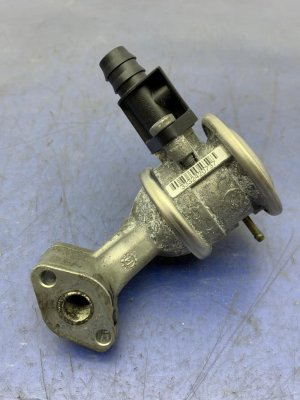
- EGR Cooler
(OEM #04L131512D)— This is the most common root cause of code P2002 on this engine. The original unit is prone to clogging, and replacement is the only reliable fix. An updated part with rectangular slots (04L131512D or supersessions like 04L131512BH) is recommended over the original with round holes.
Trusted brands: Audi Genuine, Wahler, Mahle, Nissens
OEM price range: $600-$800
Aftermarket price range: $200-$600 - DPF Differential Pressure Sensor
(OEM #059906051C (verify by VIN))— This sensor is a common failure point and should be tested early in the diagnosis. It is much cheaper and easier to replace than the EGR cooler or DPF.
Trusted brands: Bosch, Audi Genuine
OEM price range: $100-$150
Aftermarket price range: $40-$90
Related Codes That Often Appear With This One
- P2463 — This code means 'Diesel Particulate Filter Restriction - Soot Accumulation'. It often appears with P2002 because the blocked EGR cooler causes backpressure, which the ECU interprets as both an efficiency problem (P2002) and a soot blockage (P2463).
- P0401 — This code for 'Exhaust Gas Recirculation Flow Insufficient Detected' can sometimes accompany P2002. This happens when the EGR cooler is so blocked that the system detects insufficient gas flow when the EGR valve is commanded open, directly pointing to the root cause.
Technical Service Bulletins (TSBs) & Recalls
- TSB 2041944/1 - For earlier 2014-2015 models, addresses an ECU software issue that could incorrectly trigger P2002.
- TSB 26E6 - A known emissions-related service action for some 2.0L TDI engines that may involve a software update.
Platform-Specific Known Issues
- The primary specific issue is the ECU's tendency to log a DPF efficiency fault (P2002) when the actual problem is a flow restriction in the low-pressure EGR cooler. This is a well-documented issue in online forums for longitudinal 2.0 TDI engines.
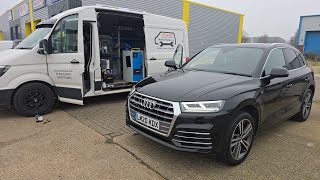
- A video from a specialist in Manchester, UK, details the extreme difficulty of this repair, showing how the cooler is buried deep in the engine bay with only 'two finger widths' of room next to the chassis leg.
- Owners report being charged for DPF cleaning or replacement, only for the P2002 code to return because the clogged EGR cooler was the true, unaddressed root cause.
Mechanic-Grade Diagnostic Values
- DPF Differential Pressure (G450) at idle, after regeneration — expected: ~5 mbar. Failure: Significantly higher readings, such as 15-30 mbar at idle, suggest a blockage.
- DPF Differential Pressure (G450) at ~2500 RPM — expected: 15-40 mbar for a clean DPF.. Failure: Readings significantly above this range indicate a blockage. Readings that don't change with RPM suggest a faulty sensor.
- DPF Soot Mass Measured vs. Soot Mass Calculated (VCDS) — expected: The values should be relatively close to each other.. Failure: A large discrepancy, such as a calculated value of 17.77g and a measured value of 4.76g, points towards a sensor or system logic issue rather than a simple clog. A negative measured soot value after a forced regeneration is also a known anomaly.
- DPF Differential Pressure Sensor (G450) Supply Voltage — expected: +5V stabilized from the ECU.. Failure: Incorrect or missing voltage at Pin 1 of the sensor connector indicates a wiring or ECU problem.
Hidden / Shadow Codes Worth Checking
- P2002 00 or P200200: This is not a true hidden code, but many diagnostic tools, including VCDS and those used by specialists, display the code with extra digits like '00' or a freeze frame status like '' or ''. These suffixes confirm the fault status and conditions but the root code remains P2002. The 'P200200' format is commonly referenced by UK specialists. (see via VCDS, ODIS, Launch, Autel, and other professional-grade scan tools.)
Scan Tool Commands That Help
- VCDS (or equivalent): Basic Settings: 'Adapt differential pressure sensor for particulate filter' — This is a mandatory step after replacing the DPF differential pressure sensor (G450). The ECU needs to learn the zero-offset of the new sensor. Failure to perform this adaptation will lead to incorrect soot calculations and recurring faults.
- VCDS (or equivalent): Security Access (Login Code), then Adaptation: 'Particle filter initialization' or 'Adaptation of ash mass' — This function is used to reset the learned ash mass value in the ECU to zero after installing a brand new DPF. It should NOT be used after simply cleaning a DPF, as the ash content is still present.
- VCDS (or equivalent): Basic Settings: Service Regeneration of Particulate Filter — Used to command a forced, stationary regeneration of the DPF. This is only effective for soot buildup, not for an ash-filled DPF or a clogged EGR cooler. For this engine, it may require holding the brake and accelerator pedals.
Wiring & Ground Locations
- G450 DPF Pressure Sensor Connector — The sensor is typically mounted on a bracket in the engine bay, connected by two rubber hoses to the DPF. The electrical connector has three pins.. A faulty connection or damaged wire here will cause incorrect pressure readings. Pin 1 is the +5V supply, Pin 2 is Ground, and Pin 3 is the signal wire back to the ECU. Checking for 5V at Pin 1 is a key diagnostic step.
- Engine Bay Ground Point — There is a primary ground connection point on the left front long member (chassis rail) in the engine compartment. Another is located in the plenum chamber (under the windshield).. A poor ground connection for the ECU or its sensors can cause erratic sensor readings, potentially triggering false codes. The ECU relies on a stable ground reference. On Audi vehicles, ground wires are typically brown.
- Battery Monitor Control Unit -J367- — Connected directly to the negative terminal of the battery.. While not directly related to P2002, it's critical for overall electrical system health. When charging the battery, the negative charger clamp must be connected to a chassis ground point, NOT the battery's negative terminal. Connecting directly to the terminal bypasses the monitor, which can cause the start/stop system to malfunction and lead to incorrect battery state-of-charge calculations.
Real Owner Repair Stories
- Ross-Tech Forums user (2018 Audi A4 Avant quattro, 2.0L [DETA] TDI, ~56,000 miles) — MIL light on, slight decrease in performance. Codes P2002 and P0401 (EGR System) were present.
❌ Tried (didn't work) Replacing the DPF pressure sensor., Attempting a forced regeneration., Using a DPF cleaning additive in the fuel tank.
✅ What actually fixed it The owner ultimately had to remove the DPF and EGR cooler assembly. Upon inspection, the DPF was found to be 'badly crystallized from the AdBlue' and the EGR Cooler flow was 'definitely restricted'. The final fix was replacing both the DPF and the EGR Cooler with new parts. - O'Rileys Autos (YouTube Specialist) (Audi Q5 2.0 TDI with 43,000 miles) — Engine management light on with code P200200.
❌ Tried (didn't work) The specialist notes that simply replacing the DPF and EGR often fails, with the light returning after ~3,000 miles because the rest of the engine is still contaminated with soot which quickly clogs the new parts.
✅ What actually fixed it The fix involved a multi-step on-car chemical cleaning of the entire DPF and EGR system, followed by a proprietary ECU software modification developed with another company to prevent the EGR valve operation from confusing the DPF pressure readings. This combination provided a 100% success rate in their experience.
OEM Part Supersession History
Unknown, but parts with round internal holes.→04L131512D (and subsequent revisions like 04L131512BH)— The original EGR cooler design used small, round holes for the exhaust gas to pass through, which were highly prone to clogging with soot and AdBlue crystals.
Heads up: The updated part with rectangular slots is a direct replacement and is designed to be less restrictive and less prone to clogging. Always install the latest revision available.
Model Year Variations Within This Range
- 2017-2024: While the fundamental 2.0L TDI (DETA) engine and emissions layout remained consistent, Audi, as part of the VW Group, was subject to ongoing emissions-related software updates following the 'Dieselgate' scandal. Vehicles may have received software updates during routine servicing that altered the sensitivity and logic of the emissions monitoring systems, though this did not change the underlying mechanical failure pattern of the EGR cooler.
Diagnostic Flowchart
Other Known Issues on This Vehicle
Issues unrelated to this code that are worth knowing about as an owner of this generation:
- Water Pump Failure 🔴 High — Common failure point. Can occur as early as 60,000-80,000 miles. Leaks can be internal (coolant into vacuum system) or external.
- Start-Stop System Malfunctions 🟡 Low — Common on 2017-2020 models, often causing hesitation or system errors.
- Leaking Panoramic Sunroof 🟠 Medium — A known issue where clogged drain tubes can cause water to leak into the cabin, potentially damaging electronics. (Ref: Subject of recalls on some earlier models.)
- S-Tronic (DL382) Mechatronic Issues 🟠 Medium — Some owners report jerky shifting or mechatronic unit failures, though less common than on previous generations. Can be expensive to repair.
- Turbocharger Actuator Failure 🟠 Medium — The electronic actuator on the turbo can fail, leading to loss of power. Often requires replacing the entire turbocharger assembly.
Used vs. New Parts: Buying Guide for This Vehicle
When a used part is the smart pick: For this specific P2002 fault, sourcing used parts is highly discouraged for the primary culprits. A used DPF Pressure Sensor is a minor risk but given the low cost of a new aftermarket part, it's not a logical saving. A used DPF is a significant gamble as its remaining ash life is unknown. A used EGR cooler is almost guaranteed to be a poor investment.
Donor-vehicle mileage cap: roughly under 30000 miles for the part to have meaningful remaining life.
What to inspect on the donor part:
- For an EGR Cooler: DO NOT BUY USED. The part fails due to a design flaw, so a used part likely has the same issue or will develop it shortly.
- For a DPF: Visually inspect the inlet and outlet for any black soot, which indicates a cracked core. A borescope can be used to check the internal matrix for melting or blockages. Ask for the donor vehicle's mileage; anything over 80,000 miles will have significant ash accumulation.
- For a Sensor: Visually inspect the plastic housing for cracks and the connector pins for corrosion. However, internal failure is common and cannot be seen.
OEM-only on this vehicle (don't cheap out):
- EGR Cooler: While good aftermarket options exist (Mahle, Wahler), the safest bet is a Genuine Audi part that is guaranteed to be the latest revision (e.g., 04L131512D or newer) with the improved rectangular slot design.
Aftermarket brands forum-validated for this vehicle:
- DPF Pressure Sensor: Bosch is a primary OEM supplier and a reliable aftermarket choice.
- EGR Cooler: Mahle, Wahler, and Nissens are reputable OEM-quality aftermarket manufacturers.
Brands owners have reported issues with on this vehicle:
- Unnamed, no-brand EGR coolers or DPFs from online marketplaces. The complex design and material science of these components mean cheap alternatives are very likely to fail prematurely, leading to a repeat of the expensive labor.
Real Owner Stories
Aggregated from forums and TSBs cited above. Mileages and costs reflect what owners reported in those sources.
2017 Audi Q5 2.0 TDI — 83000 miles
Symptoms: Engine management light illuminated with code P200200.
What fixed it: Replacement of the EGR cooler as advised by a specialist.
Source hint: https://www.audiownersclub.com/forums/topic/26949-engine-management-light-p200200/
2018 Audi Q5 2.0 TDI — 38000 miles
Symptoms: P2002 fault code; owner performed a regeneration but the light returned shortly after.
What fixed it: Suspected EGR system fault (consistent with low-pressure EGR cooler blockage issues).
Source hint: https://www.audiworld.com/forums/q5-sq5-mkii-discussion-218/fault-code-p2002-3070444/
2018 Audi Q5 2.0 TDI — ~40000 miles
Symptoms: P2002 code present despite low soot levels recorded after a regeneration.
What fixed it: Diagnosis pointed toward an EGR fault rather than a blocked DPF.
Source hint: https://forums.ross-tech.com/index.php?threads/29729/
2019 Skoda Superb 2.0 TDI (EA288 engine family) — ~50000 miles
Symptoms: P2002 fault code caused by AdBlue crystallization in the EGR system.
What fixed it: Installation of a new EGR cooler featuring updated oval holes to prevent clogging.
Source hint: https://www.briskoda.net/forums/topic/516220-p2002-fault-code-2019-superb-20-tdi/
Related OBD-II Codes
Frequently Asked Questions
Does TSB 2041944/1 apply to my 2017-2024 Audi Q5?
Is there an updated part for the EGR cooler to prevent this code from returning?
Can I just clean the DPF or EGR cooler to fix P2002 on my Q5?
How can a technician confirm if the EGR cooler is the cause without taking the engine apart?
What are the expected VCDS readings for a healthy DPF on the 2.0L TDI DETA engine?
Is the P2002 code on my Audi Q5 related to the 26E6 service action?
Helpful Videos

We Have This Part in Stock

The information in this article is provided for general reference and educational purposes only. Vehicle specifications, procedures, and part compatibility can vary by production date, trim level, and region. Always consult your vehicle's factory service manual and verify part numbers before purchasing or performing repairs. Safety-critical components such as airbags, seat belts, and braking systems should be installed by a qualified professional.
- Audi Q5:
- 🧭 Diagnostic Flowchart
- 🎬 Helpful Videos
- 🛍️ Shop This Part
- What's Unique About the 2017-2024 Audi Q5
- Symptoms You May Notice
- Most Likely Causes
- Rare But Worth Checking
- Diagnosis Steps
- Parts You'll Likely Need
- Related Codes That Often Appear With This One
- Technical Service Bulletins (TSBs) & Recalls
- Platform-Specific Known Issues
- Mechanic-Grade Diagnostic Values
- Hidden / Shadow Codes Worth Checking
- Scan Tool Commands That Help
- Wiring & Ground Locations
- Real Owner Repair Stories
- OEM Part Supersession History
- Model Year Variations Within This Range
- Other Known Issues on This Vehicle
- Used vs. New Parts: Buying Guide for This Vehicle
- Real Owner Stories
- 2017 Audi Q5 2.0 TDI — 83000 miles
- 2018 Audi Q5 2.0 TDI — 38000 miles
- 2018 Audi Q5 2.0 TDI — ~40000 miles
- 2019 Skoda Superb 2.0 TDI (EA288 engine family) — ~50000 miles
- Related OBD-II Codes
- Frequently Asked Questions
- 🎟️ Get 5% Off